

By Eduardo Bacci, The Investigative Journal
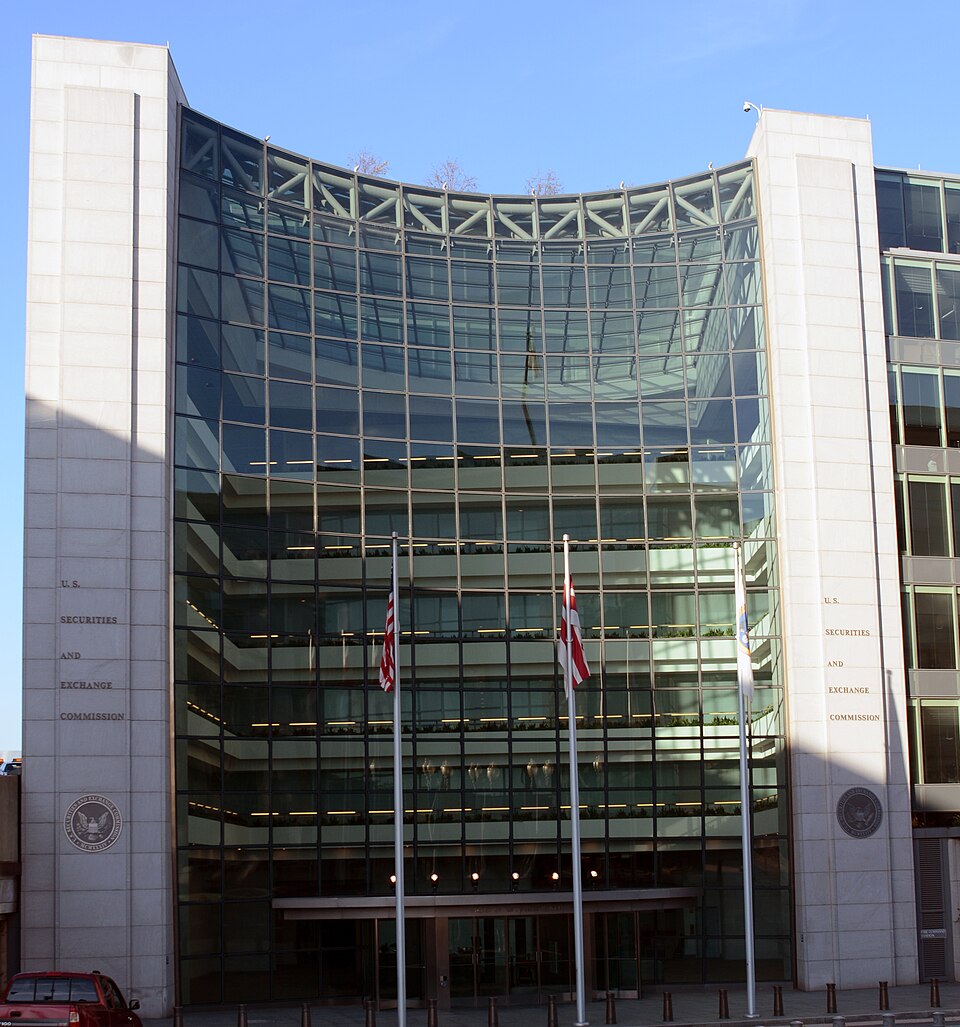
Public companies and securities regulators packed the SEC’s electronic filing window over the past several days, with disclosures spanning a $50 million private equity fraud complaint, a 1-for-20 reverse stock split at a struggling private aviation operator, and a CEO succession at one of the country’s oldest industrial conglomerates. Filings reviewed by The Investigative Journal also included a freshly closed initial public offering, a registered direct stock sale, the resignation of a chief medical officer at a leading liquid biopsy company, and the SEC’s announcement of new enforcement leadership. The following digest summarizes the most consequential disclosures records suggest investors and accountability watchdogs should track.
1. SEC charges private equity adviser Jay Lucas in alleged $50 million fraud
The SEC’s New York office on April 24, 2026 filed civil fraud charges against Jay S. Lucas and his unregistered investment adviser, Lucas Brand Equity, LLC, alleging that between 2013 and 2025 the defendants induced hundreds of investors to commit more than $50 million to three private equity funds focused on the wellness, beauty, and skincare sectors, according to Litigation Release No. 26538. The complaint, filed in the U.S. District Court for the Southern District of New York, alleges Lucas and the firm misappropriated millions of dollars to fund Lucas’s personal expenses, including rent on residences, alimony, wedding expenses, real estate investments, payments to a political consultant, and the operation of a New Hampshire newspaper Lucas owned.
The SEC further alleges that Lucas concealed material conflicts of interest tied to a fund portfolio company that received the largest share of investor money, and that he misappropriated capital from a special-purpose vehicle created to invest in Flags of Valor, LLC, a Virginia-based maker of patriotic décor. The complaint seeks permanent injunctions, disgorgement with prejudgment interest, and civil penalties under Section 17(a) of the Securities Act, Section 10(b) of the Exchange Act and Rule 10b-5, and Sections 206(1), 206(2), and 206(4) of the Investment Advisers Act of 1940.
Records indicate the case is paralleled by a December 18, 2025 criminal indictment from the U.S. Attorney’s Office for the Southern District of New York charging Lucas with securities fraud, investment adviser fraud, wire fraud, and money laundering. As filings indicate the matter remains a pending allegation rather than an adjudicated finding, all claims should be characterized as alleged. Right of reply: counsel of record for Lucas was not identified in the SEC’s filing.
2. Wheels Up Experience executes 1-for-20 reverse stock split
Private aviation operator Wheels Up Experience Inc. (NYSE: UP) on April 27, 2026 disclosed in a multi-item Form 8-K that its 1-for-20 reverse stock split became effective immediately after the close of trading on the New York Stock Exchange on April 24, 2026. Filings indicate the company concurrently filed a Certificate of Amendment with the Delaware Secretary of State reducing its authorized shares of Class A common stock from 1.5 billion to 75 million, and reducing total authorized capital stock to 100 million shares.
The company’s board approved the 1-for-20 ratio on April 13, 2026 within the range of 1-for-5 to 1-for-20 that shareholders authorized at the 2025 annual meeting. The 8-K also discloses Amendment No. 4 to the Seventh Amended and Restated Limited Liability Company Agreement of Wheels Up Partners Holdings LLC, the operating subsidiary, to reflect adjusted membership interests stemming from the consolidation. Reverse stock splits are typically used by companies seeking to maintain minimum-bid-price listing standards or to broaden institutional ownership eligibility, though the underlying rationale for any specific filer warrants further review of past disclosures.
3. Crane Company completes scheduled CEO transition
Industrial diversified manufacturer Crane Company (NYSE: CR) on April 27, 2026 confirmed in a Form 8-K that Alejandro (Alex) Alcala, previously executive vice president and chief operating officer, has assumed the role of president and chief executive officer effective April 27, 2026. Max Mitchell, who had held the chairman, president, and CEO roles, transitions to executive chairman and continues to serve on the board. The board also appointed Mr. Alcala as a director and as a member of the executive committee.
The transition was previously announced and disclosed on January 26, 2026, indicating the move had been telegraphed to investors months in advance. Crane Company traces its corporate lineage to 1855 and operates across aerospace and electronics, process flow technologies, and engineered materials. Smooth, pre-announced succession is generally viewed as a governance positive; nevertheless, the post-transition strategic agenda and capital allocation posture under Mr. Alcala will be tracked by analysts.
4. Yesway closes IPO; convenience-store chain debuts on public markets
BW Ultimate Parent’s convenience-store operator Yesway, Inc. on April 27, 2026 filed a multi-item Form 8-K reporting completion of its initial public offering pursuant to a prospectus dated April 21, 2026. Filings indicate the company entered into a Tax Receivable Agreement, a Fourth Amended and Restated LLC Agreement of BW Ultimate Parent, LLC, a Stockholders Agreement, and a Registration Rights Agreement, and issued approximately 15.1 million shares of Class A common stock to Blocker Shareholders and roughly 32 million shares of Class B common stock to Continuing Equity Owners.
The Up-C structure—paired with a Tax Receivable Agreement that typically directs a substantial percentage of certain future tax savings back to pre-IPO holders—has become a standard feature of private-equity-backed offerings, particularly those involving Brookwood-affiliated sponsors. Records suggest investors should review the Tax Receivable Agreement disclosed as Exhibit 10.1 closely to understand the long-term cash drag and the alignment of incentives between continuing equity owners and public shareholders.
5. Velo3D prices $50 million underwritten direct offering
Metal additive manufacturing company Velo3D, Inc. on April 27, 2026 disclosed in a Form 8-K that it had entered into an underwriting agreement with Cantor Fitzgerald & Co. for the firm-commitment registered direct offering of 3,571,428 shares of common stock at $14.00 per share, for expected gross proceeds of approximately $50 million before expenses. The transaction is expected to close on or about April 28, 2026 pursuant to the company’s effective shelf registration on Form S-3 (No. 333-294876).
The agreement provides for a 6.0% underwriting discount and 60-day lock-ups for the company, its directors, executive officers, and certain stockholders. Records indicate the capital raise comes amid an ongoing restructuring of the company’s commercial footprint following its 2024 financial reorganization. The use of proceeds, capital adequacy implications, and the extent to which the offering is dilutive to retail holders should be evaluated against the prospectus supplement filed under Rule 424(b).
6. Pfizer shareholders re-elect entire board; reject independent chair proposal
Pharmaceutical giant Pfizer Inc. (NYSE: PFE) on April 27, 2026 filed a Form 8-K reporting voting results from its April 23, 2026 annual meeting. All twelve director nominees were elected, KPMG LLP was ratified as independent auditor, the Pfizer 2019 Stock Plan as amended in April 2026 was approved, and the advisory vote on 2026 named-executive-officer compensation passed.
The shareholder proposal to adopt an independent chair policy was not approved, with roughly 1.02 billion votes cast in favor and 2.51 billion against, according to the filing. Filings indicate CEO Albert Bourla received approximately 272 million “against” votes—materially higher than most other director nominees—and Joseph J. Echevarria drew approximately 612 million “against” votes, the highest dissent of any nominee. Investor support patterns of this kind warrant attention from governance researchers when assessing future succession or refreshment dynamics.
7. Guardant Health discloses chief medical officer’s resignation
Liquid biopsy diagnostics company Guardant Health, Inc. (Nasdaq: GH) on April 27, 2026 filed a Form 8-K announcing the resignation of Chief Medical Officer Craig Eagle, M.D., effective May 8, 2026. The filing did not disclose a successor or an interim arrangement, and did not characterize the resignation as the result of any disagreement with the company on operations, policies, or practices.
The CMO position is pivotal in molecular diagnostics, where clinical evidence generation and key-opinion-leader relationships drive payer coverage and physician adoption. Investors and reporters should monitor subsequent 8-K filings for any successor announcements, separation arrangements, and updated guidance on the company’s clinical pipeline.
8. SEC names David Woodcock as Director of Enforcement
The Securities and Exchange Commission on April 8, 2026 announced that David Woodcock, currently a partner at Gibson, Dunn & Crutcher LLP and chair of its Securities Enforcement Practice Group, will become Director of the Division of Enforcement effective May 4, 2026, according to Press Release 2026-35. Sam Waldon, who had been serving as acting director, will continue in that role until Mr. Woodcock’s start date.
Mr. Woodcock previously led the SEC’s Fort Worth Regional Office from 2011 to 2015 and chaired the agency’s Financial Reporting and Audit Task Force. SEC Chairman Paul S. Atkins, in a statement included in the press release, said the Enforcement Division has undergone “a significant course correction, restoring Congressional intent by prioritizing cases that provide meaningful investor protection and strengthen market integrity.” The appointment caps a months-long transition that began with the resignation of prior enforcement director Judge Margaret A. Ryan on March 11, 2026.
Filings warranting deeper TIJ investigation
Several disclosures from the past week may warrant additional accountability reporting. The Lucas Brand Equity matter—particularly the alleged use of investor capital to fund a New Hampshire newspaper and payments to a political consultant—raises questions about adviser governance in unregistered private equity vehicles and whether ancillary outlets received undisclosed support from misappropriated funds. The Yesway IPO’s Tax Receivable Agreement is a candidate for plain-language analysis, given the recurring concern that such agreements transfer significant economic value from public investors to legacy holders.
Separately, the SEC and CFTC’s April 20, 2026 joint proposal to amend Form PF—raising the filing threshold from $150 million to $1 billion in private fund AUM and reducing reporting obligations for nearly half of current filers—will reshape the data available to systemic-risk regulators. The Investigative Journal will track public comment, particularly from investor protection groups and academic researchers, and report on whether the new threshold materially diminishes oversight of the largest concentrations of private capital. As with all matters discussed above, allegations remain allegations until adjudicated, and corporate disclosures should be read alongside subsequent filings, proxy materials, and public statements.
Sources: U.S. Securities and Exchange Commission EDGAR; SEC Newsroom press releases; SEC Enforcement and Litigation litigation releases; company investor relations filings (Wheels Up Experience, Crane Company, Yesway, Velo3D, Pfizer, Guardant Health). All filings cited above are public records available through SEC.gov.