

The Investigative Journal’s Afternoon Wire is a daily digest of the developments that matter across government, the courts, and international affairs. Every item below is drawn from court filings, official releases, and wire reporting linked inline.
Washington closed out the last weekend of August with the legal fight over mail voting effectively reset, a new First Amendment lawsuit aimed at the Pentagon’s civilian leadership, and a humanitarian catastrophe in the Himalayas that has left hundreds dead and dozens of Americans unaccounted for. Abroad, Europe lost its oldest reigning monarch, and allied militaries in the Pacific set a date for their next joint exercise over Pyongyang’s objections. Here is where the day’s major stories stand as of Saturday afternoon — and what to watch when Congress returns to work Monday.
Government
Childhood vaccine overhaul enters a decisive comment phase. The administration’s restructuring of the federal childhood immunization schedule — set in motion by an August 10 presidential memorandum on “gold standard” childhood vaccine recommendations — remains open for public input, with the Department of Health and Human Services seeking feedback on how its new immunization categories should work in practice. Under the revised framework, announced by HHS and implemented by the CDC, ten “consensus” vaccines — covering measles, mumps, rubella, polio, pertussis, tetanus, diphtheria, Haemophilus influenzae type B, pneumococcal disease, and HPV — carry universal recommendations, while other immunizations move to risk-based or shared clinical decision-making categories. The comment docket is worth watching closely: how the universal, risk-based, and shared decision-making categories are ultimately defined will shape insurer coverage practices and state school-entry policies, and hospital and physician groups have signaled they intend to weigh in.
Postal Service mail-ballot rule takes effect on paper — and lands in court. Following the Supreme Court’s procedural ruling earlier this week, the administration moved from executive order to formal rulemaking, issuing a rule governing whether the U.S. Postal Service will deliver states’ mail ballots, according to Votebeat’s reporting on the fast-moving dispute. The rule represents the administration’s effort to place its mail-voting directive on firmer administrative footing after courts faulted the original order’s process. As detailed in the Courts section below, that new footing was tested almost immediately.
Flags remain at half-staff for Dolly Parton through September 1. A presidential proclamation published in Friday’s Federal Register, “Honoring the Memory of Dolly Parton,” directs that the flag be flown at half-staff at the White House, federal buildings, military posts, naval vessels, and U.S. facilities abroad. Parton died Tuesday in Nashville at age 80, and The Hill reports the order runs through September 1 — a notably extended tribute for a private citizen. Several governors have issued parallel state-level orders, according to state announcements compiled Friday.
Courts
Mail-ballot executive order halted again, days before ballots go out. A federal judge in Massachusetts this week put a fresh 14-day hold on implementation of the president’s executive order limiting mail voting, PBS News reports — the second time U.S. District Judge Indira Talwani has stalled the directive, and this time roughly a week before the first mail ballots are due to be sent to voters for the midterm elections. In an 11-page decision, Talwani concluded the order amounted to an unconstitutional attempt to assume powers the Constitution assigns to the states over the administration of elections, according to the ruling as described in press accounts. The procedural background matters here: on August 24 the Supreme Court lifted one of two earlier injunctions, with the majority faulting the timing of Talwani’s original intervention rather than resolving the order’s legality. The administration then issued its formal Postal Service rule, plaintiffs refiled, and the block was reimposed. PBS reports an appeal is expected swiftly, meaning the question could return to the Supreme Court within days. The practical stakes are concrete: election officials in early-mailing states need certainty about postal handling of ballots almost immediately.
Fired Stars and Stripes journalists sue the Pentagon’s leadership. Three journalists at the federally funded military news outlet — publisher Max Lederer, editor-in-chief Erik Slavin, and reporter Lara Korte — filed suit in federal court Thursday against Defense Secretary Pete Hegseth, Pentagon spokesman Sean Parnell, and aide Andrew Brey, CBS News reports. The complaint alleges the three were unlawfully targeted for removal — their separation notices cited insubordination — in retaliation for the outlet’s reporting on conditions, morale, and mental-health strains aboard the USS Abraham Lincoln during its Middle East deployment, and for speaking publicly in defense of press access to military operations. The filing, quoted by TheWrap, frames the case as a challenge to “extraordinary censorship efforts” in violation of the First Amendment and the Defense Department’s own regulations. These are allegations in a newly filed complaint, not judicial findings; the named officials had not filed a response in court as of the initial reports, and the department’s position will be reflected in future briefings when it is entered on the record.
DOJ signals appeal on Epstein files redactions. The Justice Department has indicated it will appeal a court ruling requiring the removal of certain redactions in the Jeffrey Epstein files, The Hill reports. The dispute — over which names and details in the long-sought records the public is entitled to see — has become a recurring test of how courts balance privacy interests of uncharged third parties against the strong public interest in disclosure. An appeal would leave the contested material sealed while the litigation proceeds, extending a disclosure fight that has already run through multiple rounds of briefing.
International
Himalayan flood toll passes 500 as search widens; 90 Americans among the missing. Three days after a glacier collapse sent a wall of water, mud, and debris through a river valley on the Nepal-Tibet border, NPR reports more than 500 people are confirmed dead, and a State Department spokesperson said some 90 Americans remain unaccounted for. Figures are evolving and vary by source: Nepal’s National Disaster Risk Reduction and Management Authority reported 579 dead in Nepal with more than 1,900 missing as of Friday, while Chinese authorities reported five dead and 558 missing on the Tibetan side, according to weather.com’s compilation of official statements. More than 500 foreigners from 32 countries are reportedly among the missing in a region popular with trekkers and pilgrims; thousands of police personnel have been deployed, and more than 4,400 injured people have been rescued, per the same reporting. The numbers should be treated as provisional — mass-casualty tolls in remote terrain are routinely revised — but the scale already places this among the deadliest Himalayan disasters on record.
Norway’s King Harald V dies at 89; son becomes King Haakon VIII. King Harald V, Europe’s oldest reigning monarch, died Friday morning at Oslo University Hospital, where he had been treated for a bacterial bloodstream infection, NPR reports. Under Norway’s constitution the succession was automatic: Crown Prince Haakon became king immediately upon his father’s death, expected to reign as Haakon VIII, with no coronation or parliamentary act required, according to NBC News. His wife Mette-Marit becomes queen, and their daughter Ingrid Alexandra is now crown princess and first in line. Harald reigned for 35 years and was a stabilizing figure through Norway’s transformation into one of Europe’s wealthiest states; formal mourning and funeral arrangements are expected from Oslo in the coming days.
U.S., South Korea, and Japan set trilateral drill as Pyongyang protests. Seoul announced Friday that the three allies will proceed with the Freedom Edge exercise beginning September 7 for a five-day run in waters off Jeju Island, the Associated Press reports. The exercise — launched in 2024 and focused on ballistic-missile defense, anti-submarine warfare, and joint surveillance — is described by officials as defensive and aimed at North Korean nuclear and missile threats. The announcement came a day after North Korea vowed retaliation against what it called U.S. hostilities; Pyongyang has previously denounced the trilateral format as a “reckless show of strength.” The timing makes the first week of September a live window for North Korean signaling, whether rhetorical or by weapons test.
Ukraine presses deep-strike campaign; Russia answers with drones. The Institute for the Study of War’s latest assessment, carried by Kyiv Post, records Ukrainian strikes on a Russian strategic bomber at the Engels-2 air base in Saratov Oblast and repeat strikes intended to keep Russian oil refineries offline, alongside Ukrainian military claims of hits on more than twenty energy facilities in occupied territory over three days. Russia launched 164 drones against Ukraine overnight, per the same assessment, and conducted an intercontinental ballistic missile test launch that ISW characterizes as nuclear signaling. These operational claims originate largely with the respective militaries and should be read accordingly, but the pattern ISW describes — Ukrainian long-range pressure on Russian energy and aviation assets, met with mass drone salvos — has held consistent across recent weeks and is compounding what the institute describes as Russia’s budgetary strains.
Tomorrow’s Watch
Sunday, August 30: Search-and-rescue operations continue on the Nepal-Tibet border, with official casualty figures likely to be revised again; the State Department is expected to update the status of missing Americans. Watch Oslo for mourning arrangements and the new king’s first formal statements. Any appeal of the mail-ballot ruling could hit the docket at any point — PBS reports the administration is expected to move quickly.
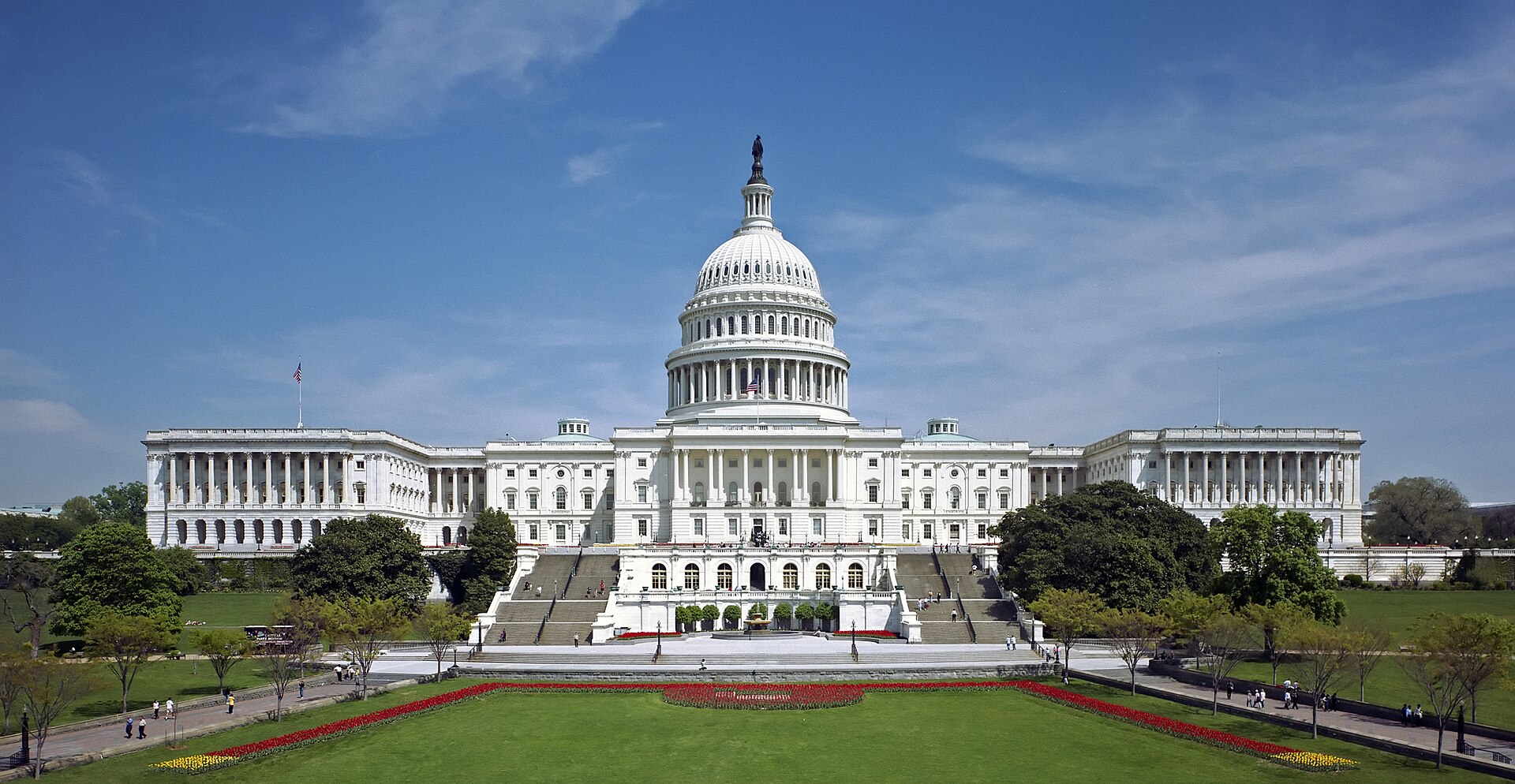
Monday, August 31: Congress returns from its month-long recess to a compressed calendar, Scripps News reports, with a short-term government funding bill topping the agenda ahead of the September 30 shutdown deadline. The stopgap under discussion would reportedly fund the government into mid-December, deferring the larger appropriations fight until after the midterms. House members, all facing voters in November, are expected to move first.
Later this week: Flags return to full staff after September 1 under the Parton proclamation. The Bureau of Labor Statistics releases the August employment report Friday, September 4, at 8:30 a.m. Eastern, per the BLS release schedule — the last major economic data point before the fall legislative session hardens. And September 7 brings the start of Freedom Edge in the waters off Jeju.
This briefing was compiled from the court filings, official releases, and news reports linked above. Where litigation is pending, claims described are allegations unless a court has ruled. Parties facing allegations are entitled to respond, and responses entered on the record will be reflected in subsequent briefings. Corrections: editor@tij.news.