

Afternoon Wire for Wednesday, October 14, 2026. This briefing draws on government press releases, court dockets and published reporting. Allegations described below are unproven unless a court has ruled otherwise, and all defendants are presumed innocent.
Government
1. White House unveils a multi-agency science package
According to a White House fact sheet dated October 8, the administration announced more than $6 billion in investments across government, industry, academia and philanthropy at a Washington summit. The document lists $2.4 billion in computing tools and credits pledged by 11 industry partners to a federal consortium, including $1 billion from NVIDIA and $500 million from AMD. It also describes $215 million for a quantum computing competition and $1.8 billion for a “virtual cell” biology initiative.
The figures are the administration’s own and reflect commitments and announcements rather than appropriated spending. Readers should watch for follow-through in agency budgets and in the details of how the industry pledges are delivered, since the fact sheet describes credits and tools as well as cash. The package also revives a youth math program at the National Science Foundation and creates several fellowships tied to Department of Energy laboratories.
2. Diesel executive order targets trucking and farm costs
A White House fact sheet from October 5 says the President signed an order temporarily allowing dyed, off-road diesel to be used on highways and deferring the federal excise tax on that use through the end of the year, without interest or penalties. The document directs Treasury, Transportation and Agriculture to coordinate on implementation and encourages states to adopt matching policies.
The administration attributes diesel price pressure to the war in Ukraine and global refining shortfalls, and it says truckers could save more than $100 per refill. Those savings are an administration estimate. The order leaves open how states will handle inspections and tax liability, which the fact sheet says governors may choose to waive. The practical effect will depend on how many states follow and how Treasury structures the deferral.
3. Medicare Part B payments for seniors
Per a fact sheet dated October 2, the administration announced a one-time $90 payment to more than 20 million Medicare Part B enrollees, drawn from the Medicare Improvement Fund that Congress funded with $2 billion. The document says most recipients would receive direct deposits in early October, with checks mailed to others. People whose premiums are paid by Medicaid, or who pay an income-related surcharge, are listed as ineligible.
The release describes this as the first use of the fund to lower senior costs. Beneficiaries with questions are directed to 1-800-MEDICARE, and to the Social Security Administration for payment status.
4. Senate in recess; permitting reform vote set for November
The Senate Daily Press page for October 13 shows the chamber held only a pro forma session on Tuesday, with no business and no votes. The next pro forma session is listed for Thursday, October 15. The Senate is scheduled to return for business on Monday, November 9, when it will resume consideration of the motion to proceed to H.R. 2347, described as the legislative vehicle for a permitting reform bill, with a cloture vote expected that evening.
With no floor votes this week, legislative action on permitting is effectively on hold until after the recess. The schedule is subject to change.
Courts
1. Supreme Court hears a video privacy case today
The Court’s October argument calendar lists Salazar v. Paramount Global, No. 25-459, for argument today. SCOTUSblog reports that the plaintiff subscribed to a 247Sports.com newsletter and alleges the site shared his Facebook ID and video-viewing history with Facebook through a tracking pixel, in violation of the Video Privacy Protection Act. A federal district judge in Nashville dismissed the case, and a divided Sixth Circuit affirmed.
The question is whether the statute’s definition of “consumer” is limited to subscribers of audiovisual content or reaches any goods or services a video provider offers. The plaintiff argues there is no such limit; Paramount argues the law covers only the audiovisual goods or services that make a business a video provider. A ruling is not expected today. The decision could shape how many online privacy class actions can proceed.
2. Sentencing Guidelines deference case argued Tuesday
On Tuesday the Court heard Beaird v. United States, No. 25-5343. According to the SCOTUSblog case page, review is limited to whether Stinson v. United States (1993) still correctly states the deference courts owe to Sentencing Guidelines commentary. The Court appointed an amicus to defend Stinson, and the Solicitor General supports vacatur.
The outcome matters because Guidelines commentary often affects how long federal defendants are sentenced. The Court is expected to rule later in the term.
3. Ninth Circuit cases dominate the opening of the term
The Daily Journal reported on October 2 that six merits appeals from the Ninth Circuit are before the Court this term. They include Suncor Energy v. Boulder County, a climate-related state-law dispute in which the Trump administration backs the energy companies, and consolidated challenges to Illinois and Connecticut rifle bans set for argument December 2. The report says the administration sided with the challengers in the firearms cases.
Those arguments are the main constitutional events on the calendar after Bruen‘s “history and tradition” test left lower courts divided.
4. CVS settles opioid claims for $315 million
The Justice Department announced yesterday that CVS agreed to pay $315 million to resolve allegations under the Controlled Substances Act and False Claims Act. The government alleged pharmacists filled invalid prescriptions and that CVS billed federal health programs for them. The release states the claims are allegations only and that there has been no determination of liability.
The case began with a whistleblower suit in the District of Rhode Island that the government joined. CVS also signed a memorandum of agreement with the DEA that includes a reporting hotline and monitoring of dispensing patterns.
5. Federal complaint alleges recording device at OpenAI
The Justice Department said that Abdulrahman Alfozan, an OpenAI engineer, was arrested October 9 and made an initial appearance October 13 in the Northern District of California. The complaint alleges a hidden audio device was placed behind a television in an executive conference room. The charge carries a maximum of five years in prison. Mr. Alfozan has not been found guilty, and the filings are allegations. No response from the defendant was included in the release.
6. Election-crime charges in 11 districts
The Department announced October 12 charges against 16 people in 11 federal districts for alleged illegal voting and false voter registration, mostly involving noncitizens allegedly voting. The release notes the charges are accusations only. Each case will turn on its own records, including registration forms and voting histories.
International
1. Energy ceasefire claim disputed in Ukraine
PBS NewsHour reported Monday that President Trump said on October 11 that Russia and Ukraine had agreed to an energy ceasefire. Ukrainian President Volodymyr Zelenskyy said Russian strikes on energy facilities continued, and Kremlin spokesman Dmitry Peskov would not confirm an agreement, saying contacts were ongoing. An earlier pause announced September 14 did not hold, according to the report.
Mr. Zelenskyy said Ukraine would honor a mutual pause if Russia did. EU foreign policy chief Kaja Kallas welcomed the idea but saw no sign Moscow would comply. The report ties the dispute to U.S. diesel prices, noting that Ukraine’s refinery strikes have contributed to high prices and that six senators urged reversal of a diesel import deal with Russia. These claims come from the cited report; Kremlin statements should be treated as unverified.
2. Treasury sanctions Iran’s remaining shadow fleet
In an October 8 release, Treasury announced it designated 17 vessels and 17 companies under Executive Order 13902 as part of “Operation Economic Outcast,” saying the action neutralizes the vast majority of Iran’s remaining shadow fleet. Two vessels were removed from the sanctions list after being sold to non-sanctioned operators.
The release warns foreign financial institutions of possible secondary sanctions. Enforcement will depend on whether shippers and Asian buyers adjust.
3. Justice Department targets North Korean IT worker schemes
The Justice Department announced coordinated actions yesterday. An indictment in the Northern District of Ohio charges 14 people, two of them under seal, with wire fraud, money laundering and identity theft. Two U.S. nationals were arrested. The FBI searched more than 40 Texas residences in September and seized about 187 devices, according to the release.
The department alleges the scheme ran from 2019 to about July 2025, affected more than 70 U.S. companies, and generated about $3 million that may have gone to sanctioned North Korean entities. These are allegations from an indictment, and all defendants are presumed innocent.
4. Bessent speaks with South Korea’s new finance chief
Treasury’s readout says Secretary Scott Bessent held an introductory call yesterday with South Korean Deputy Prime Minister Lee Hyoung-il, discussing shared economic priorities. The readout lists no decisions or commitments.
Tomorrow’s Watch
Thursday, October 15, brings a Senate pro forma session at 9:30 a.m., with no business expected, per the Senate schedule. The Supreme Court’s calendar lists no arguments for October 15 or 16, so attention turns to any orders after today’s Salazar argument.
Also watch whether Moscow publicly confirms or rejects the energy pause, whether states announce participation in the diesel order, and for court filings in the OpenAI and North Korean IT worker cases. The next Senate votes on permitting reform are not expected until November 9.
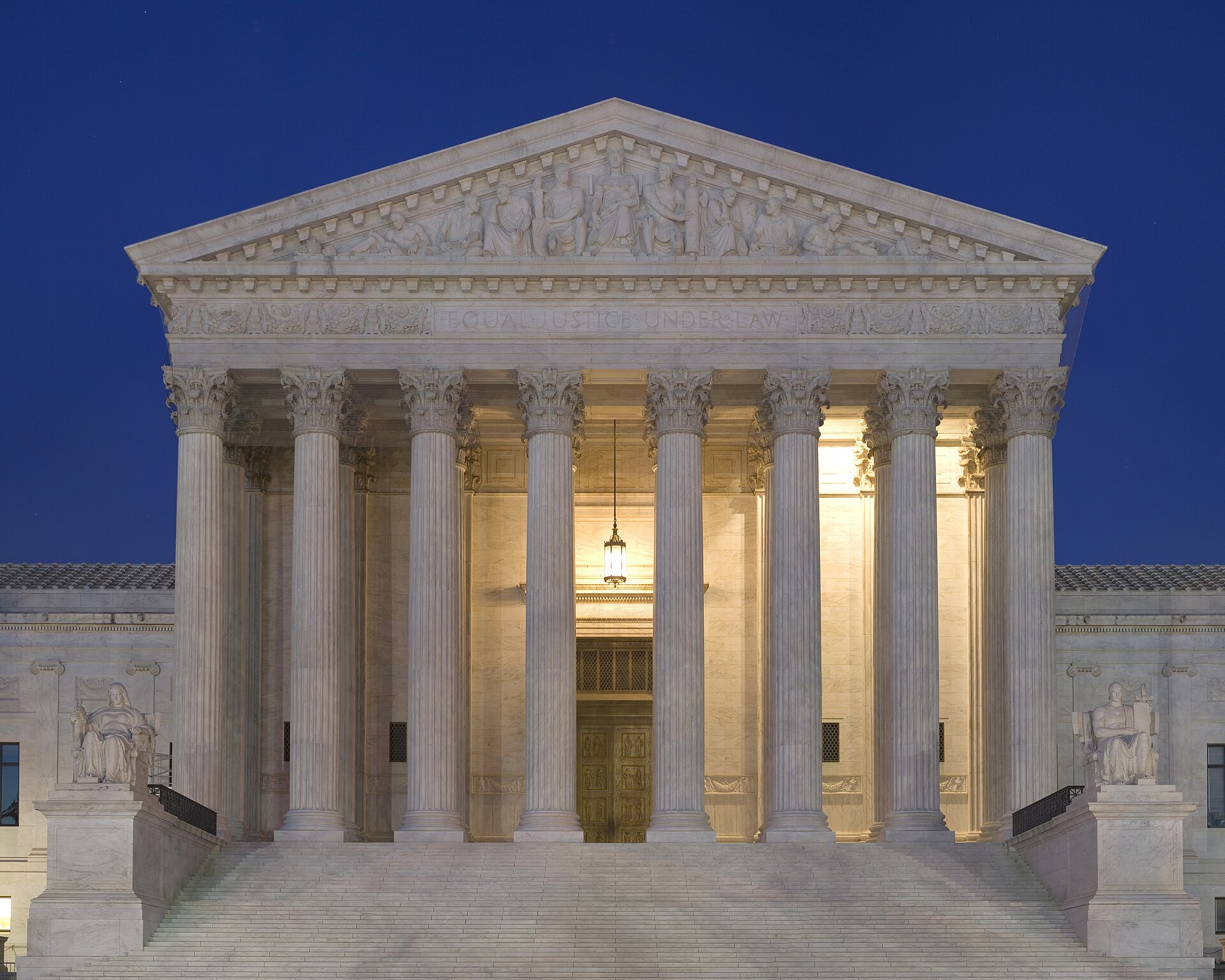
Right of reply: The Investigative Journal welcomes responses from any person or organization named above. Contact the editor through tij.news. Corrections will be published promptly. Featured image: U.S. Supreme Court building, released into the public domain by its author via Wikimedia Commons.