

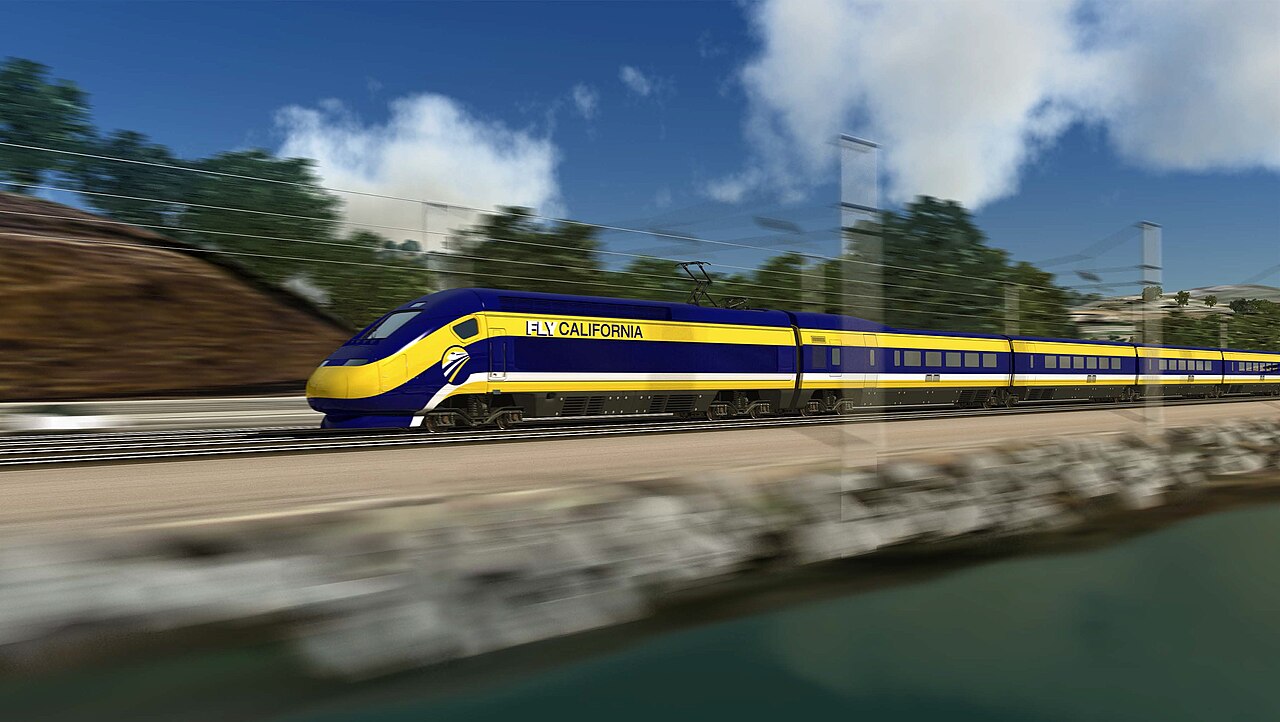
A 2023 retrospective on the California High-Speed Rail project — where the cost has ballooned from $33 billion to $128 billion, over 1,000 change orders have been approved, and the only guaranteed beneficiaries are the consulting firms billing by the hour.
Image directive: Create a line chart showing CA HSR cost estimates over time: 2008 ($33B), 2012 ($68B), 2020 ($22.8B for Central Valley segment), 2023 ($35B for segment / $126-135B total). Source a public domain aerial image of Central Valley construction from Caltrans or CA HSR Authority public gallery. Search Unsplash for “empty railroad tracks” or “construction site aerial.”
The Numbers at Year’s End
As 2023 draws to a close, California’s High-Speed Rail project stands as perhaps the most expensive infrastructure failure in American history — a monument to bureaucratic ambition unchecked by fiscal reality. The numbers tell the story with brutal clarity.
When voters approved Proposition 1A in 2008, they were promised a San Francisco-to-Los Angeles rail system for $33 billion. Governor Gavin Newsom announced in 2020 that the 171-mile Central Valley segment alone would cost $22.8 billion, with an operating target of 2030. By March 2023, the California State Auditor revealed that even the Central Valley segment had ballooned to $35 billion — exceeding its secured funding by $10 billion. The full San Francisco-to-Los Angeles cost? Between $126 billion and $135 billion, with a funding shortfall of approximately $90 billion.
As board member Anthony Williams noted on 60 Minutes, the current cost estimate exceeds the entire funding history of Amtrak — the national passenger railroad — combined.
Death by Change Order
Over 1,000 approved change orders have inflated the project’s cost far beyond original contracts. A single category — barrier safety measures — accounted for over $500 million across just 20 change orders. Each change order represents a modification to original plans that increases the contract price, and with over a thousand of them approved, the cumulative cost impact has been staggering.
The change order process is where consulting firms and contractors extract maximum value from public projects. Original bids are kept competitive to win contracts; profits come from the modifications that follow. When the client is a government agency with unlimited political commitment to a project’s completion, the incentive to control costs evaporates.
The Consulting Ecosystem
The California High-Speed Rail Authority’s contractor and consultant ecosystem has become one of the largest consumers of state transportation dollars in history. Program management, environmental review, engineering design, construction management, legal services, and public relations — each function generates its own stream of billings, and each billing is tied to a project timeline that keeps extending.
The perverse incentive is obvious: the longer the project takes, the more consultants earn. The more complex the regulatory environment, the more legal and environmental services are required. The more change orders are approved, the more construction management oversight is needed. Every delay creates billable hours.
What 2023 Delivered
In concrete terms, 2023 delivered more studies, more revised timelines, and more cost increases. The Central Valley construction — the easiest segment, running through flat agricultural land — continued to miss milestones. The mountain crossings connecting the Central Valley to the Bay Area and Los Angeles remain in environmental review, with no construction start date in sight.
The March 2023 State Auditor report identified systemic problems: inadequate cost controls, insufficient oversight of contractor performance, and a governance structure that prioritized political messaging over project management. These findings echoed previous audits, previous legislative hearings, and previous media investigations — all of which produced the same recommendations and the same lack of meaningful reform.
The Political Prison
California’s political class is trapped. The project is too expensive to complete and too politically toxic to cancel. Billions in federal and state funds have already been spent — money that cannot be recovered. Cancellation would require returning federal grants, writing off state bond expenditures, and acknowledging that one of the most ambitious public works projects in American history was a failure.
So the project continues, consuming billions annually, employing thousands of consultants, and producing periodic press releases about construction progress on a segment that, even if completed, will connect Bakersfield to Merced — two Central Valley cities that no one was demanding high-speed rail service between.
The $128 billion question isn’t whether the project will ever connect San Francisco to Los Angeles. It’s how many more billions will be spent before someone admits it won’t.
Eduardo Bacci is an investigative journalist at The Investigative Journal. Data sources include California State Auditor reports, CA HSR Authority financial disclosures, and Congressional oversight records.