

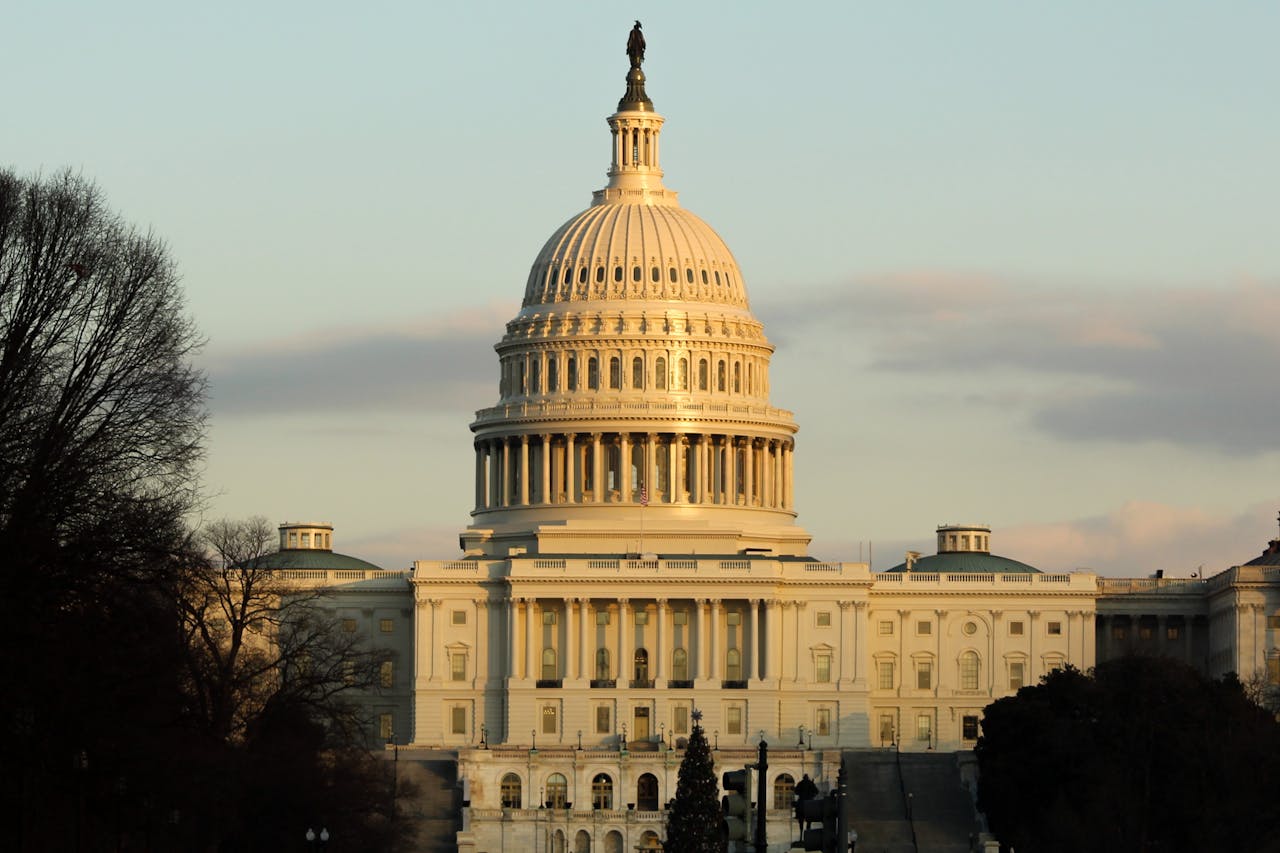
Capitol Watch is The Investigative Journal’s daily digest tracking floor votes, committee hearings, oversight actions, and budget developments on Capitol Hill. Today’s edition covers Senate floor action on April 28, 2026, and the committee calendar for Wednesday, April 29.
Senate Rejects Cuba War Powers Resolution on 51-47 Vote
The Senate on Tuesday declined to take up a War Powers Resolution that would have directed the removal of U.S. Armed Forces from hostilities “within or against the Republic of Cuba” that had not been authorized by Congress, voting 51-47 to sustain a procedural objection raised against the measure. The resolution was sponsored by Sens. Tim Kaine (D-Va.), Adam Schiff (D-Calif.), and Ruben Gallego (D-Ariz.), who pushed the privileged motion in response to what Kaine characterized as an active U.S. blockade of Cuban energy supplies.
According to the Senate roll call record, Sens. Susan Collins (R-Maine) and Rand Paul (R-Ky.) joined Democrats in support of advancing the measure. The vote followed a point of order from Sen. Rick Scott (R-Fla.) arguing that the resolution was not privileged because, in his telling, U.S. forces were not engaged in hostilities triggering War Powers Act protections. Kaine countered on the floor that the administration “is using force to block energy from going to Cuba,” a claim he tied to recent Treasury and Defense Department actions.
The vote is the latest in a series of war powers measures Kaine has forced to the floor over the past decade, and it underscores the institutional tension between Article I authorities and executive military discretion. Records suggest the procedural posture, rather than the substantive policy, drove most Republican opposition; several GOP offices indicated to reporters that they viewed the resolution as legally premature absent a formal declaration of hostilities by the executive branch.
Senate Advances 49-Nominee En Bloc Package Toward Final Confirmation
Earlier in the day, the Senate voted 52-47 along party lines to proceed to executive session on S. Res. 690, a resolution authorizing en bloc consideration of 49 pending Trump administration nominees on the Executive Calendar. Majority Leader John Thune (R-S.D.) filed cloture on the package, setting up a final confirmation vote later in the week. Sen. Tommy Tuberville (R-Ala.) did not vote on the motion to proceed.
The en bloc procedure, formalized by Senate rule changes earlier in the 119th Congress, allows the chamber to dispose of multiple sub-Cabinet and judicial nominations in a single roll call. Democrats have repeatedly objected to the practice, arguing it short-circuits individualized scrutiny. Filings indicate the package includes nominees to inspector general slots, U.S. attorney positions, and several boards. The Senate calendar shows additional procedural votes are expected before final passage.
Separately, the chamber confirmed Robert Cekada to be Director of the Bureau of Alcohol, Tobacco, Firearms and Explosives, an oversight-relevant appointment given ATF’s expanding regulatory portfolio under the administration. The vote tally and roll-call breakdown are posted on the Senate’s nominations confirmed page.
King Charles III Delivers Historic Joint Address
In a rare ceremonial interlude, members of the House and Senate convened in the House chamber Tuesday afternoon for a joint meeting to hear an address by King Charles III, the second British monarch to address Congress and the first king to do so. The 20-minute speech, delivered as part of a four-day state visit timed to the 250th anniversary of American independence, focused on the U.S.-U.K. alliance, shared democratic values, and global security challenges. Records of the event are archived by C-SPAN.
According to multiple chamber accounts, Charles drew bipartisan applause when he referenced “checks and balances on executive power” and called for a negotiated peace in Ukraine. He also acknowledged the recent shooting at the White House Correspondents’ Dinner, expressing condolences. Lawmakers from both parties described the chamber atmosphere as notably more cordial than recent State of the Union addresses, with standing ovations from both aisles. The visit is being conducted under standard state-visit protocols and does not implicate domestic policy authorities.
House Appropriations Committee Approves $47.3 Billion State-Foreign Operations Bill
The House Appropriations Committee on Tuesday approved the Fiscal Year 2027 National Security, Department of State, and Related Programs Appropriations Act on a vote of 35-27, with Chairman Tom Cole (R-Okla.) and State-Foreign Operations Subcommittee Chairman Mario Díaz-Balart (R-Fla.) leading the markup. The bill total of $47.32 billion represents a roughly six percent reduction from FY 2026 enacted levels, according to committee documents.
The measure pares Global Health Programs to $8.9 billion — $532 million below the FY 2026 enacted figure but approximately $3.8 billion above the President’s budget request — and cuts Contributions for International Peacekeeping Activities by 60 percent to $489.5 million. The International Organizations and Programs account is eliminated outright. The bill also creates a $1.5 billion “America First Opportunity Fund” intended as a flexible diplomatic and assistance vehicle, a structural change that committee Democrats objected to during markup as insufficiently constrained by program-specific reporting requirements.
The bill now moves to the Rules Committee for floor consideration. Markup transcripts and the committee report will be posted on the Appropriations Committee site in the coming days. The companion Senate measure has not yet been introduced; the Senate Appropriations Committee’s FY 2027 markup schedule shows State-Foreign Operations later in the calendar.
Senate Banking Set to Vote Wednesday on Warsh Federal Reserve Nomination
The Senate Banking, Housing, and Urban Affairs Committee will meet in executive session at 10:00 a.m. Wednesday in Dirksen 538 to vote on the nomination of Kevin Warsh to be a Member and Chairman of the Board of Governors of the Federal Reserve System. Notice of the markup is posted on the committee hearing calendar.
Warsh, a former Fed governor, was nominated by President Trump to succeed Chairman Jerome Powell, whose term as chair expires in mid-May. The path to a committee vote cleared last week after Sen. Thom Tillis (R-N.C.) lifted his hold on the nomination. Tillis had conditioned his support on the Justice Department closing its criminal inquiry into Powell; U.S. Attorney Jeanine Pirro announced earlier in April that the department was abandoning the probe, removing the principal obstacle. With Tillis’s support secured, filings indicate Warsh has a clear committee path and is positioned for floor confirmation before Powell’s term ends.
At his April 21 confirmation hearing, Warsh defended his personal financial disclosures and stated that the President had not demanded interest-rate cuts in any conversations with him, according to the hearing transcript. Senate Democrats are expected to oppose the nomination on independence grounds, but with the committee’s Republican majority intact and Tillis on board, the markup is expected to clear without difficulty.
House Judiciary Subcommittee to Examine “Kayleigh’s Law” Victim-Protection Bill
The House Judiciary Subcommittee on Crime and Federal Government Surveillance will convene Wednesday at 10:00 a.m. in 2141 Rayburn for a hearing titled “Peace of Mind: Strengthening Victim Protections Under Kayleigh’s Law.” Subcommittee Chairman Andy Biggs (R-Ariz.) will preside; Rep. Lucy McBath (D-Ga.) is the ranking member.
The hearing focuses on H.R. 8481, the Kayleigh’s Law Act of 2026, sponsored by Rep. Abraham Hamadeh (R-Ariz.). The bill would amend federal law to authorize “natural lifetime injunctions” — court orders barring a convicted defendant from contacting the victim for the duration of the defendant’s life — for victims of certain serious offenses including domestic violence, sexual assault, and child abuse. Bill text indicates the measure would supplement existing protective-order frameworks rather than replace them, and would establish federal contempt remedies for violations.
The hearing is one of several this Congress addressing victim-protection reform, an area that has drawn cross-party interest. Committee filings list testimony from victim-advocacy organizations, prosecutors, and a representative of the Justice Department’s Office for Victims of Crime. Right-of-reply status for any witnesses identified in committee records will be noted in the hearing transcript when posted.
Senate Armed Services to Hold Closed-Open Hearing on SOCOM and Cyber Command Posture
The Senate Armed Services Committee is scheduled to convene Wednesday for a closed posture hearing on U.S. Special Operations Command and U.S. Cyber Command in connection with the FY 2027 Defense Authorization Request, immediately followed by an open session at 11:00 a.m. in SD-G50, according to the committee hearings page. Testimony will address force structure, persistent-cyber operations, and the Future Years Defense Program. The committee’s earlier session on Department of Energy atomic-energy defense activities and DoD nuclear weapons programs remains a related touchstone for FY 2027 markup priorities.
The Banking and Armed Services agendas, paired with House Appropriations action, illustrate the volume of FY 2027 budget activity moving in parallel with the en bloc nominations push and ongoing oversight inquiries. Committee documents indicate that markups on additional FY 2027 appropriations subcommittee bills will accelerate through May.
CBO: One Big Beautiful Bill Act Adds $3.4 Trillion to Primary Deficit Through 2034
The Congressional Budget Office released its final conventional score of the recently enacted reconciliation package known as the One Big Beautiful Bill Act, estimating the law will add approximately $3.4 trillion to the primary deficit through 2034 and $4.1 trillion when interest costs are included. On a dynamic basis, CBO projects deficits will grow by $4.2 trillion from FY 2025 through 2034 and by $4.7 trillion from 2026 through 2035, according to analysis from the Committee for a Responsible Federal Budget.
House Budget Committee ranking member Rep. Brendan Boyle (D-Pa.) issued a statement criticizing the score and reiterating concerns about long-term fiscal trajectory. Republican committee leaders defended the dynamic projections by citing growth assumptions associated with the law’s tax provisions. CBO’s most recent Monthly Budget Review separately reports that the federal deficit totaled $1.2 trillion in the first half of FY 2026, $139 billion below the comparable period a year earlier — a near-term trajectory driven primarily by receipt growth.
The score will inform debate over the FY 2027 budget resolution, expected to be marked up in the Budget Committees later this spring. Filings indicate CBO has scheduled additional analytical products on the law’s distributional and labor-market effects.
Oversight: Comer’s Epstein Probe Continues, Bondi Subpoena Status Unresolved
The House Oversight and Government Reform Committee’s Jeffrey Epstein investigation remains active. Chairman James Comer (R-Ky.) issued a deposition subpoena last month to former Attorney General Pam Bondi, but the Department of Justice indicated Bondi would not appear because she is no longer attorney general following her removal by the President. Committee records suggest Comer is reviewing options for compelling a deposition, including possible referral. Earlier this year, the committee held former President Bill Clinton and former Secretary of State Hillary Clinton in contempt for initially declining to comply with deposition subpoenas; both subsequently sat for depositions in March, according to committee releases.
Subpoenas remain outstanding for former FBI Director James Comey, former Attorneys General Loretta Lynch, Eric Holder, Merrick Garland, William Barr, Jeff Sessions, and Alberto Gonzales, and former Special Counsel Robert Mueller. The committee has stated that the depositions are intended to develop a record on federal handling of Epstein-related investigations. Pending witnesses have not been charged with any crime, and the committee has not made findings; allegations referenced in subpoena cover letters reflect the committee’s investigative theory rather than adjudicated conclusions.
Looking Ahead — Items on the TIJ Investigative Beat
Several items on the Wednesday-Thursday calendar are particularly relevant to ongoing accountability reporting. The Senate Banking markup of the Warsh nomination has implications for monetary-policy independence and DOJ-Fed relations, given the closed Powell probe. The House Judiciary subcommittee hearing on H.R. 8481 will be an early opportunity to test the bill’s interaction with state protective-order regimes. The Senate Armed Services posture hearing on SOCOM and Cyber Command, even in its open portion, typically yields testimony relevant to the persistent-cyber authorities granted by recent NDAAs. And the FY 2027 State-Foreign Operations bill’s elimination of the IO&P account warrants continued scrutiny as it moves to the floor — particularly the structural shift toward the new “America First Opportunity Fund,” which records suggest carries broader executive discretion than legacy assistance accounts.
TIJ will continue to track committee filings, roll-call records, and the en bloc nominations package as it advances. Readers can review primary documents at Congress.gov, the Senate Floor Proceedings log, and the House Clerk’s roll-call database.
Sources: Congress.gov; Senate.gov; House.gov; Senate Banking, Armed Services, Judiciary, and Appropriations committee pages; Congressional Budget Office; Committee for a Responsible Federal Budget; House Oversight Committee releases; C-SPAN. All factual claims are sourced to public records or contemporaneous reporting; pending committee actions are noted as such, and no findings have been adjudicated against any individuals named in oversight subpoenas.