

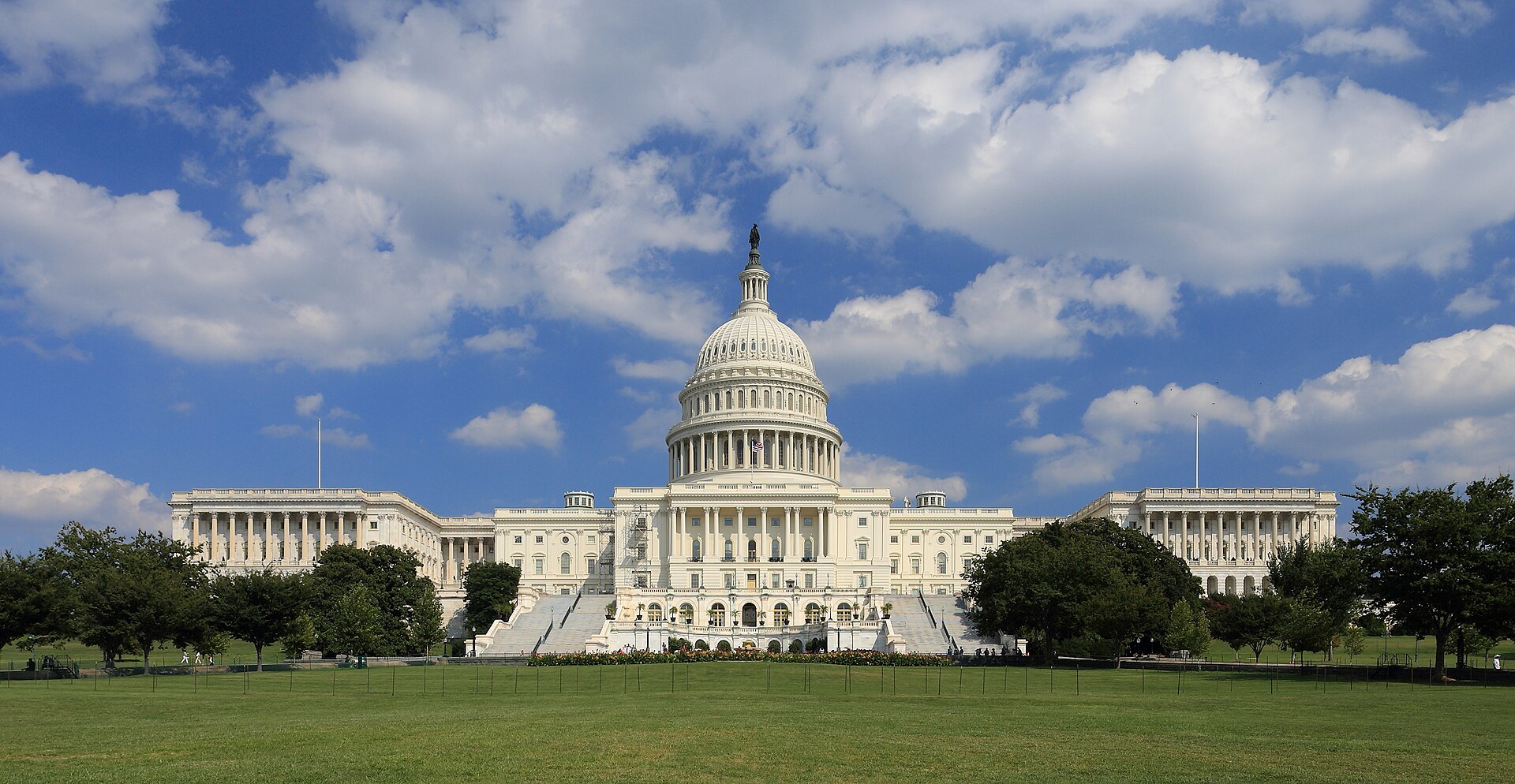
WASHINGTON — The Capitol is quiet this week, but only because of how loudly last week ended. In a session that stretched to nearly 5:00 a.m. on Saturday, August 8, the Senate passed a stopgap funding bill to keep the government open through December 11, approved a sweeping Russia sanctions package named for the late Sen. Lindsey Graham, confirmed Todd Blanche as attorney general by a single vote, and cleared 74 executive-branch nominees in one bloc before adjourning until September 14, according to the official floor record kept by the Senate Press Gallery. The House, which left town in late July, returns August 31 — and it will find the Senate’s homework waiting. Here is where every major action stands, with links to the records.
1. Senate Passes Stopgap Funding Through December 11 — and Sends It Back to the House
The headline act: senators voted 90-6 at 3:59 a.m. Saturday to pass a continuing resolution, using H.R. 6500 as the legislative vehicle, that funds the government through December 11, according to the Senate Press Gallery record. Senators Cassidy, Kaine, Markey, Paul, Sanders and Warren voted no; the substitute amendment from Appropriations Chair Susan Collins (R-Maine) had cleared cloture 91-6 earlier in the day. The Congressional Budget Office scored the measure, titled the Continuing Appropriations and Extensions Act, 2027, on August 5.
The Senate bill is not the one the House passed. House lawmakers approved their own, shorter continuing resolution — H.R. 9770, sponsored by Rep. Tom Cole (R-Okla.) — on July 21 by a 220-205 vote, funding the government only through December 4. The Senate version runs a week longer and, more significantly, carries policy “anomalies” the House text deliberately omitted. The most consequential is Section 157, which would bar the Office of Management and Budget from implementing its overhaul of the Uniform Guidance governing federal grants for the duration of the CR, according to analysis by Akin Gump’s appropriations team. That OMB rule — which drew roughly 500,000 public comments and bipartisan concern from appropriators that it would shift grant decisions from career officials toward political appointees — is otherwise set to take effect October 1.
The Senate text also adds disaster-relief funding for FEMA and lets public housing authorities repurpose unobligated rental-assistance funds for households with expiring vouchers, per a summary by the National Low Income Housing Coalition. It does not include language sought by Appropriations Vice Chair Patty Murray (D-Wash.) to restrict executive rescissions of enacted spending, a demand she outlined in a statement on the CR text. Because the Senate amended the House bill, the House must act on the changes after it returns August 31 — leaving roughly a month of floor time before the September 30 shutdown deadline.
2. Russia Sanctions Bill Clears the Senate 86-11, Named for the Late Lindsey Graham
In its final full day, the Senate passed H.R. 5334, the legislative vehicle for the Lindsey O. Graham Sanctioning Russia Act of 2026, by a vote of 86-11. The bill would impose mandatory sanctions on senior Russian officials, banks, state-owned enterprises and the “shadow fleet” of tankers moving Russian oil, and it would authorize the president to impose tariffs of up to 100 percent on the largest importers of Russian oil and gas — a mechanism aimed squarely at pressuring buyers such as China and India, according to NPR. An amendment from Sen. Rand Paul (R-Ky.) was rejected 32-64 before final passage, per the floor record.
The vote carried unusual emotional weight. Graham, the South Carolina Republican who negotiated the framework with the White House, died unexpectedly in July at 71, and colleagues renamed the bill in his honor. His sister, Sen. Darline Graham (R-S.C.), appointed to serve out his term, told the chamber the legislation “hits Putin where it hurts,” arguing Russia’s war effort is funded primarily by energy revenue. The measure now heads to the House, where reporting indicates Speaker Mike Johnson supports it but some Democrats have raised concerns about granting new unilateral tariff authorities to the executive.
3. Blanche Confirmed as Attorney General, 50-49; Senate Clears 74 Nominees in One Vote
At 4:30 a.m. Saturday, the Senate confirmed Todd Blanche as attorney general by a vote of 50-49, with Republicans Susan Collins and Lisa Murkowski joining all Democrats in opposition and Sen. Mitch McConnell (R-Ky.) absent, according to the Senate Press Gallery. Blanche had served as acting attorney general since April, when he replaced Pam Bondi, and his path cleared only after Sen. Bill Cassidy (R-La.) announced his support on Friday morning, NPR reported.
Hours earlier, the Senate confirmed 74 civilian nominees en bloc, 51-47 along party lines, under the procedure set out in S.Res.817 — a device that has become the majority’s preferred answer to a backlogged executive calendar. Roll call details for all of last week’s votes are posted on the Senate’s official vote menu.
4. Voter ID Bill Blocked on a Party-Line Vote
Not everything moved. A motion to proceed to S. 5271, which would amend the Help America Vote Act to require photo identification to vote, failed to clear its 60-vote cloture threshold, 52-46, on a party-line vote just before adjournment, per the floor record. The vote positions the issue for the fall campaign rather than for enactment: with the chamber gone until mid-September and appropriations dominating the calendar, records suggest the bill’s near-term path is messaging, not law.
5. Fauci Contempt Referral Goes to the Justice Department
The Senate Homeland Security and Governmental Affairs Committee voted 8-5 on August 6 to hold Dr. Anthony Fauci in contempt of Congress after he invoked the Fifth Amendment more than 100 times at the panel’s July 29 hearing on the federal pandemic response, to which he had been subpoenaed by Chairman Rand Paul. Rather than seek a full Senate vote, Paul sent the contempt resolution directly to the Justice Department as a referral, CBS News reported. It is worth underscoring that invoking the Fifth Amendment is a constitutional right and not evidence of wrongdoing, and no charges have been filed.
Fauci’s attorney, David Schertler, called the vote “a crude political stunt intended to punish Dr. Fauci for exercising his constitutional rights,” per NPR. The dispute now shifts to the Justice Department — newly led by Blanche — which has discretion over whether to act on the referral. House Oversight Chairman James Comer (R-Ky.), whose committee is conducting a parallel review, has argued that if the pardon issued to Fauci at the end of the Biden administration is valid, the Fifth Amendment should offer him no shield — a legal theory that courts have not tested.
6. CBO: Deficit Hits $1.8 Trillion Through Ten Months
The Congressional Budget Office’s Monthly Budget Review released August 10 estimates the federal deficit reached $1.8 trillion over the first ten months of fiscal year 2026 — $169 billion more than the same period last year. The figure lands as appropriators head home to defend spending choices and gives deficit hawks in both chambers fresh ammunition for the September funding fight.
Separately, a CBO report published August 5 estimates the Navy’s new nuclear-powered battleship program would cost about $275 billion in 2026 dollars to build 15 ships through 2056, with the lead ship alone at roughly $23 billion, per the agency’s analysis — numbers likely to feature in the Senate’s defense authorization debate this fall.
7. Defense Authorization Waits on the Senate
The House passed its $1.15 trillion FY2027 National Defense Authorization Act, H.R. 8800, on July 22 (Roll Call 278), including a 5-to-7 percent pay raise for service members, “right to repair” provisions, and funds for a second destroyer, according to committee materials and trade press reporting. The Senate’s companion measure has yet to reach the floor, leaving one of Congress’s few must-pass bills stacked against appropriations in a compressed fall calendar.
8. Crypto Market-Structure Bill Teed Up for September 14
Before adjourning, Majority Leader John Thune (R-S.D.) filed cloture on the motion to proceed to H.R. 3633, the Digital Asset Market Clarity Act, guaranteeing the crypto market-structure fight is among the first orders of business when the Senate returns, per the floor record. The chamber had been under pressure to act before the break but ran out of runway, CoinDesk reported. Thune also filed cloture on the nomination of Matthew R. Byrne to be a district judge for the Southern District of Ohio, with a vote set for 5:30 p.m. on September 14.
The Weeks Ahead
The House returns August 31 and must decide whether to accept the Senate’s December 11 CR with its OMB grants-rule freeze, amend it, or force a conference-by-volley exchange with 30 days left on the clock. The Senate reconvenes September 14 at 3:00 p.m., with the Byrne cloture vote at 5:30 p.m. and the CLARITY Act motion queued behind it. Hanging over everything: the September 30 funding deadline, the October 1 effective date of OMB’s grants overhaul, and twelve FY2027 appropriations bills that remain unreleased in the Senate — even as subcommittee chairs Lisa Murkowski, John Hoeven and Jerry Moran have all signaled their drafts are essentially ready, per Akin Gump’s tracking.
On TIJ’s Accountability Radar
Three threads from last week bear on this publication’s investigative beats. First, the OMB Uniform Guidance fight is at bottom a records story: filings indicate roughly half a million public comments on a rule that would move grant-making influence toward political appointees, and Section 157 of the Senate CR is now the only legislative brake before October 1. Second, the GAO’s first report to House Oversight on fraud risks in federally funded, state-administered programs, delivered July 23, opens a documented trail on improper payments that TIJ will continue to mine. Third, the Oversight Committee’s Epstein-files review keeps generating primary-source material — including the newly released Kathryn Ruemmler transcript and the earlier Leon Black and Doug Band transcripts — that merits close reading alongside the committee’s outstanding subpoenas. As always, we note that transcribed interviews reflect allegations and recollections, not adjudicated findings.
Eduardo Bacci is an investigative journalist and editor at The Investigative Journal. Sourcing for this digest: Congress.gov, the U.S. Senate Press Gallery, the Congressional Budget Office, committee records, and the linked reporting. Featured image: U.S. Capitol, west side, by Martin Falbisoner via Wikimedia Commons, CC BY-SA 3.0.
