

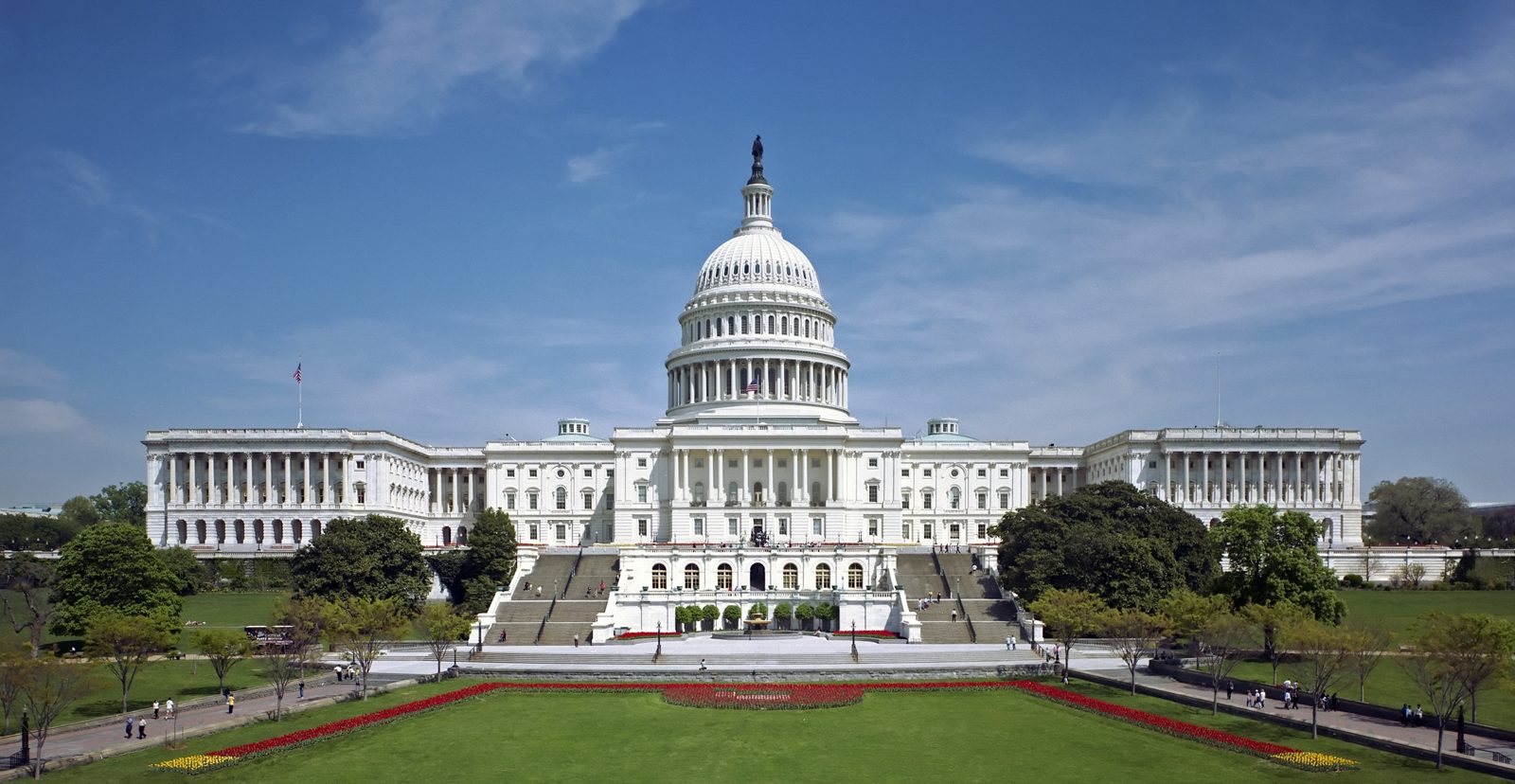
The Investigative Journal’s daily digest of congressional activity. All items are drawn from official records and public statements, with direct links to Congress.gov, roll call votes, committee notices and government reports.
The Capitol is quiet this week, but only on the surface. The Senate gaveled in for a pro forma session at 10:00 a.m. Wednesday and adjourned 33 seconds later, with another brief session scheduled for 8:00 a.m. today, according to the Congressional Record floor summary. No roll call votes were taken in either chamber, and the House floor recorded no activity. The House is not expected back until August 31, and the Senate is in recess until mid-September. What the pro forma calendar conceals is a stack of unfinished business — a government funding bill caught between the chambers, a landmark sanctions package awaiting a House vote, a stalled defense authorization, and a fresh warning from Congress’s own budget office that arrived after lawmakers left town.
CBO: Deficit Hits $1.8 Trillion Through July, Full-Year Projection Climbs
The most consequential document produced on Capitol Hill this week came not from a member of Congress but from the Congressional Budget Office. In its Monthly Budget Review released August 10, CBO estimates the federal budget deficit totaled $1.8 trillion in the first 10 months of fiscal year 2026 — $169 billion more than the deficit recorded over the same period last fiscal year.
According to reporting by The Hill on the new data, CBO now expects the full fiscal 2026 deficit to reach roughly $2.1 trillion, about $200 billion above the agency’s February projection. The data show revenues rose by $139 billion in the first 10 months compared with a year earlier, while outlays climbed $308 billion — with some of that increase attributable to timing, as payments otherwise due August 1 shifted into July because the date fell on a weekend.
The numbers matter because they form the fiscal backdrop for everything Congress must do in September: reconcile a stopgap funding bill, resolve fiscal 2027 appropriations, and decide whether to attempt another party-line reconciliation package. Whatever the political framing when members return, the arithmetic they will be working against is now on the record.
The Stopgap: Senate Passes December 11 Funding Bill, but the House Must Still Act
Before departing in the early hours of Saturday, August 8, the Senate passed H.R. 6500, a continuing resolution funding the government through December 11, on a 90-6 vote. Cloture on the substitute amendment carrying the text was invoked a day earlier, 91-6. CBO’s cost estimate for the Continuing Appropriations and Extensions Act, 2027, scored the measure as posted by the Senate Appropriations Committee on August 2.
The strong bipartisan margin masks an unresolved problem: because the Senate amended the House-passed vehicle, the two chambers now hold different versions that must be reconciled before the fiscal year ends September 30, as Government Executive reported. The House returns August 31, leaving roughly a month of legislative runway. Separately, reports indicate senators cleared a three-bill appropriations package totaling more than $180 billion covering the Departments of Veterans Affairs and Agriculture, the FDA, military construction, rural development and the legislative branch.
A December 11 expiration date would set up a funding decision in a post-election lame-duck session — a recurring pattern that appropriators in both parties have publicly said they want to break. The Senate has still not passed the bulk of its individual fiscal 2027 bills, and the House has passed three of twelve, according to The Hill.
Russia-Iran Sanctions Pass 86-11, Named for the Late Sen. Lindsey Graham
The Senate’s other landmark pre-recess action was passage of H.R. 5334, the sanctions package championed by Sen. Lindsey O. Graham (R-S.C.), by a vote of 86-11. The official title of the roll call describes the measure as an act “to impose sanctions and other measures with respect to the Russian Federation, as championed by the late Senator Lindsey O. Graham.” Graham died July 11, and CNBC reported he had announced shortly before his death that he and President Trump had agreed to move the legislation forward.
The bill targets the finances of Russia’s leadership and authorizes tariffs of up to 100 percent on goods from countries that continue purchasing Russian oil and gas — a provision aimed principally at cutting off energy revenues funding the war in Ukraine, according to NBC News. That secondary-tariff mechanism survived a direct challenge on the floor: an amendment by Sen. Rand Paul (R-Ky.) to strike the duties was rejected 32-64.
The measure now heads to the House, where reports indicate leaders are expected to bring it up under suspension of the rules — a fast-track procedure requiring a two-thirds majority — after the chamber returns August 31. A bipartisan group of House members has introduced companion legislation honoring Graham.
Todd Blanche Confirmed as Attorney General, 50-49
In a vote held during the overnight session, the Senate confirmed Todd Blanche, previously the acting attorney general, to be Attorney General of the United States, 50-49. The nomination record is available at PN1078.
According to Government Executive, Sens. Susan Collins (R-Maine) and Lisa Murkowski (R-Alaska) opposed the nomination, making Sen. Bill Cassidy (R-La.) the determinative vote, while Sen. Mitch McConnell (R-Ky.) was absent as he recovers from a health issue. The one-vote margin on a cabinet officer who leads the Justice Department — an agency currently responding to congressional records subpoenas — is a data point worth remembering as oversight disputes reach the courts this fall.
74 Nominees Confirmed in a Single Vote
Hours earlier, the Senate confirmed 74 executive branch nominees en bloc under the terms of S.Res. 817, on a single 51-47 roll call. The Hill reported the package included Cameron Hamilton to lead the Federal Emergency Management Agency, David Cummins to head the Transportation Security Administration, Francis Brooke as deputy Treasury secretary and Hal Duncan as deputy director of the Office of Management and Budget, along with more than a dozen ambassadors and District of Columbia court judges.
The Hill noted this was the fifth time the majority has used the en bloc process, which bundles dozens of lower-level appointments into one up-or-down vote. The procedure clears backlogs efficiently, but it also compresses the Senate’s individualized scrutiny of nominees into a single party-line tally — a trade-off both parties have embraced when holding the majority, and one worth monitoring as vacancies at agencies with large spending portfolios get filled, per Government Executive’s rundown.
Voter ID Bill Falls Short; NDAA Standoff Rolls Into September
The Senate’s session ended with a failed procedural vote on election legislation: a motion to proceed to S. 5271, Sen. Jon Husted’s (R-Ohio) bill to require photo identification to vote in federal elections, fell short of the 60 votes needed, 52-46. Sen. Mike Lee (R-Utah) vowed afterward to continue pressing the issue, saying, “This fight’s not over,” per Government Executive.
The vote is a proxy for a larger fight that will define September: the House-passed National Defense Authorization Act for Fiscal Year 2027 (H.R. 8800) carries the SAVE America Act — proof-of-citizenship and voter ID requirements — after conservatives blocked floor action for weeks to force the pairing. Time reported the House passed the $1.15 trillion defense measure in late July.
In the Senate, the defense bill has not advanced: Democrats blocked the NDAA amid disputes over the conflict with Iran, war powers and the budget topline, according to Breaking Defense. With the photo-ID cloture vote demonstrating the 60-vote math has not changed, the two chambers are on a collision course over whether a must-pass defense bill can carry election law — with the annual defense authorization, unbroken for six decades, as the stakes.
Oversight Watch: Epstein Records, a GAO Fraud Report, and Medicare Billing
Committee oversight work continues through the recess. In the House Oversight and Government Reform Committee’s review of the federal investigations into Jeffrey Epstein and Ghislaine Maxwell, the committee on July 29 released the transcript of former White House counsel Kathryn Ruemmler’s July 15 transcribed interview. Committee releases indicate the panel has published 33,295 pages of Epstein-related records produced by the Justice Department and roughly 20,000 additional pages from the Epstein estate; the Justice Department maintains its own public Epstein records library.
Chairman James Comer (R-Ky.) also issued a statement July 29 saying Dr. Anthony Fauci invoked the Fifth Amendment at a Senate hearing that day. The characterizations in that statement are the chairman’s; invoking the Fifth Amendment is a constitutional right and is not evidence of wrongdoing, and no charges have been filed against Dr. Fauci.
On the accountability ledger, the Government Accountability Office delivered its first report to the committee on fraud risks in federally funded, state-administered programs — a review Comer requested in March — which the committee says supports its pending anti-fraud legislation. And at a July 21 roundtable on Medicare spending, subcommittee chairman Glenn Grothman (R-Wis.) cited a 7,100 percent spike in Medicare claims for skin substitutes — a billing category The Investigative Journal will continue to examine.
Also on the Radar
Two additional items from the official record merit attention. CBO published an analysis of the Navy’s new battleship program on August 5, estimating it would cost about $275 billion in 2026 dollars to build 15 of the planned nuclear-powered ships through 2056, with the first ship costing roughly $23 billion. And CBO scored H.R. 3087, the Civil Rights Cold Case Records Collection Reauthorization Act of 2026, ordered reported by the House Oversight Committee — a records-access measure relevant to researchers and journalists working with federal cold-case files.
What’s Ahead
Key dates as Congress works through its recess calendar:
- Through August: Pro forma sessions continue in both chambers; no floor votes are scheduled, per the Senate floor schedule and House legislative activity calendar.
- August 31: The House returns, with the Graham sanctions bill expected on the suspension calendar and the continuing resolution requiring action, per CNBC.
- September 14: The Senate returns, facing the NDAA, remaining fiscal 2027 appropriations and further nominations, per The Washington Post.
- September 30: Fiscal year 2026 ends; the December 11 stopgap must be enacted by both chambers before this date to avoid a lapse in funding.
For The Investigative Journal’s beats, the files to watch are the Justice Department’s continuing production of Epstein-related records to the Oversight Committee, GAO’s new line of fraud reporting on state-administered federal programs, the Medicare skin-substitute billing data, and whatever riders surface when the two chambers reconcile the continuing resolution — stopgap bills have historically been vehicles for provisions that receive little debate.
Editor’s note: This digest is compiled from official government records, roll call votes and public statements linked above. Individuals and entities referenced were not separately contacted for comment for this compilation; characterizations attributed to committee statements reflect the views of their authors.