

WASHINGTON — The Senate returns at 3:00 p.m. today for what is scheduled to be its final stretch before the August recess, with a government-funding test vote on the calendar tonight, a sweeping Russia-Iran sanctions package pending on the floor, and a possible contempt referral brewing in committee. The House, which completed its pre-recess business at the end of July, is out of session. Here is where congressional activity stands as of Monday, August 3, 2026, based on official schedules, roll call records, and committee announcements.
1. Senate opens the week with a shutdown-prevention test vote
The Senate’s first roll call of the week comes at approximately 5:30 p.m. today: a motion to invoke cloture on the motion to proceed to H.R. 6500, the legislative vehicle for a continuing resolution, according to the official floor schedule published July 30. Majority Leader John Thune filed cloture on the motion before the chamber adjourned last week, per the Senate Daily Press gallery.
The vote follows House passage of a stopgap funding measure on July 21 by a 220-205 margin, a bill that Roll Call reported “heads for a Senate rewrite.” According to NPR’s account of the House vote, the measure is designed to avoid an election-year shutdown ahead of the September 30 funding deadline, and reports indicate it would extend current funding levels through December 4. Rep. Thomas Massie (R-Ky.) was reported as the lone Republican opposed, while six Democrats crossed over in support.
The procedural posture matters. If cloture is invoked tonight, the Senate can begin debate on its own version of the stopgap this week — leaving August and early September for conference-style negotiations rather than a last-minute scramble. If the motion fails, appropriators return in September facing a compressed calendar with the midterm elections looming five weeks after the funding deadline. Records of tonight’s vote will post to the Senate’s roll call vote index for the 119th Congress, second session.
2. Russia-Iran sanctions package clears first hurdle, 86-12
Before adjourning last week, the Senate voted 86-12 to invoke cloture on the motion to proceed to H.R. 5334, the legislative vehicle for the Lindsey O. Graham Sanctioning Russia Act of 2026, according to the Senate Daily Press record for July 29. The bill is named for its late author, Sen. Lindsey Graham (R-S.C.), whose funeral was held the same day; The Hill reported that Ukrainian President Volodymyr Zelenskyy watched the vote from the Senate gallery as a tribute to the bill’s author.
As described in reporting by Roll Call, the package would ratchet up economic pressure on Moscow over the war in Ukraine and restrict Iran’s energy revenues, including through additional tariffs on imports from Russia and from countries — China and India among them — that continue purchasing significant volumes of Russian oil and gas or that help Russia evade existing sanctions. The measure’s tariff mechanism has produced an unusual coalition of skeptics: reports indicate the twelve senators opposing the procedural motion included progressive Democrats concerned about delegating additional tariff authority to the executive branch, along with Sen. Rand Paul (R-Ky.).
Floor consideration is expected to continue this week alongside the funding measure, and the amendment process will bear watching — particularly any proposals to narrow the secondary-tariff provisions or to add congressional review mechanisms before penalties take effect.
3. Clayton confirmed as Director of National Intelligence, 51-47
The Senate on July 28 confirmed Walter “Jay” Clayton III as Director of National Intelligence on a 51-47 vote, Roll Call reported. According to CBS News, the vote fell along party lines, and Clayton succeeds Bill Pulte, who had held the post in an acting capacity. Clayton previously served as chairman of the Securities and Exchange Commission and as U.S. Attorney for the Southern District of New York.
The confirmation closes out one of the administration’s highest-profile national security vacancies heading into the fall. Senate records for the confirmation vote are available in the chamber’s roll call index. The cloture vote preceding confirmation ran 51-43, according to floor records from last week.
4. Fauci invokes the Fifth 111 times; contempt vote expected this week
Dr. Anthony Fauci, the former director of the National Institute of Allergy and Infectious Diseases, invoked his Fifth Amendment right against self-incrimination repeatedly — 111 times, by multiple counts — at a July 29 Senate Homeland Security and Governmental Affairs Committee hearing on the origins of COVID-19, according to PBS NewsHour and STAT News.
Committee Chairman Rand Paul (R-Ky.) said the panel would vote this week on whether to hold Fauci in contempt of Congress over his refusal to answer questions, per STAT’s account. Fauci, for his part, told the committee he was acting on the advice of counsel and asserted that the hearing’s purpose was to elicit testimony that could expose him to legal jeopardy — a characterization the chairman disputes. It should be noted that invoking the Fifth Amendment is a constitutional right and is not evidence of wrongdoing, and Fauci has not been charged with any crime. House Oversight Chairman James Comer (R-Ky.) issued a statement on the matter the same day, reflecting parallel interest from House investigators.
If the committee approves a contempt resolution, the matter would still require action by the full Senate before any certification to the U.S. Attorney for the District of Columbia — a multi-step process with few modern precedents involving a witness who appeared but declined to testify. The committee’s schedule will post to hsgac.senate.gov.
5. Stock-trading limits pass House; Senate committee advances a broader ban
Congressional stock trading — a perennial accountability issue this publication has followed closely — saw movement on both sides of the Capitol in the final full week of July. The House on July 22 passed H.R. 7008, the Stop Insider Trading Act, on a 232-198 vote, according to Roll Call. As CNN reported, the bill would bar members, spouses, and dependent children from purchasing new stock in publicly traded companies while in office, though it stops short of forced divestment — lawmakers may retain existing holdings — and adds advance-notice requirements for sales. Only 13 Democrats supported the measure; The Hill reported that Democratic opposition centered on a voter-identification provision attached to the package. House roll call records are available via the Clerk’s 2026 vote index.
Across the rotunda, the Senate Homeland Security and Governmental Affairs Committee advanced bipartisan legislation led by Sens. Gary Peters (D-Mich.) and Josh Hawley (R-Mo.) that goes further — banning members of Congress, the President, the Vice President, and their spouses and dependent children from holding, buying, or selling covered stocks, according to an announcement from Sen. Jeff Merkley’s office and Sen. Jon Ossoff’s office. Whether leadership schedules floor time remains an open question — a similar measure cleared the same committee last Congress and never received a vote. The gap between the House-passed purchase restriction and the Senate committee’s divestment-style ban would need to be reconciled before anything reaches the President’s desk.
6. Ways and Means subpoenas nonprofits tied to CCP-linked funding network
House Ways and Means Committee Chairman Jason Smith (R-Mo.) announced July 24 that the committee has issued subpoenas to three tax-exempt organizations — The People’s Forum, BreakThrough News, and Tricontinental — after what the committee describes as repeated failures to comply with document requests dating to 2025. The subpoena letters, dated July 21, are posted on the committee’s website.
According to the committee, the organizations are connected to Neville Roy Singham, a technology entrepreneur residing in Shanghai whom the panel describes as having ties to the Chinese Communist Party. The subpoenas are part of a broader inquiry into whether existing tax law adequately guards against foreign influence operating through the U.S. tax-exempt sector. The subpoenas are compulsory document demands, not findings of wrongdoing, and none of the organizations has been charged with a violation; the committee’s characterizations reflect its own investigative record. The organizations’ response to the subpoenas was not publicly available as of this writing.
7. Nominations en bloc, this week’s hearings, and fresh CBO scores
Before leaving last week, the Senate adopted S.Res. 817 on a 50-47 vote, a framework providing for en bloc consideration of 74 Executive Calendar nominations, according to Senate floor records. Watch for a large batch of confirmations to clear before the chamber departs for recess — a procedural innovation that compresses what would otherwise be weeks of individual cloture votes.
On the committee calendar this week, per the Congress.gov weekly schedule: the Senate Budget Committee examines “the reality of Medicaid” (10:00 a.m., 608 Dirksen); the Senate Finance Subcommittee on Health Care takes up biotechnology and health-system resilience (10:00 a.m., 215 Dirksen); and the Senate Judiciary Subcommittee on Crime and Counterterrorism holds a hearing titled “Data and Profit,” examining the consumer cost of AI surveillance pricing (2:30 p.m., 226 Dirksen). The AI-pricing session is notable as one of the first congressional hearings squarely focused on algorithmic price discrimination driven by consumer surveillance data.
The Congressional Budget Office closed the week with a run of cost estimates, including scores for H.R. 2985, the Modernizing Government Technology Reform Act, and H.R. 5517, the Northern Border Security Enhancement and Review Act (both July 30), and S. 4668, the Protect College Sports Act (July 31) — the last of which arrives as Senate Commerce weighs floor strategy on college athletics legislation this fall.
On TIJ’s radar
Three threads from this digest connect directly to our ongoing accountability files. First, the Ways and Means subpoenas to the Singham-linked network are the most aggressive congressional use of compulsory process against alleged foreign-influence conduits in the tax-exempt sector this Congress; document production deadlines will tell us whether the committee moves toward enforcement. Second, the divergence between the House and Senate stock-trading bills — purchase restrictions versus divestment — will determine whether the final product has enforcement teeth; we will track the STOCK Act’s well-documented penalty gaps against whatever emerges. Third, the HSGAC contempt question tests how far a committee can push a witness who appears but declines to testify, and any referral will generate a paper trail worth reading closely. We will also be watching tonight’s 5:30 p.m. cloture vote, the sanctions amendment queue, and the en bloc confirmation slate as the Senate races toward recess.
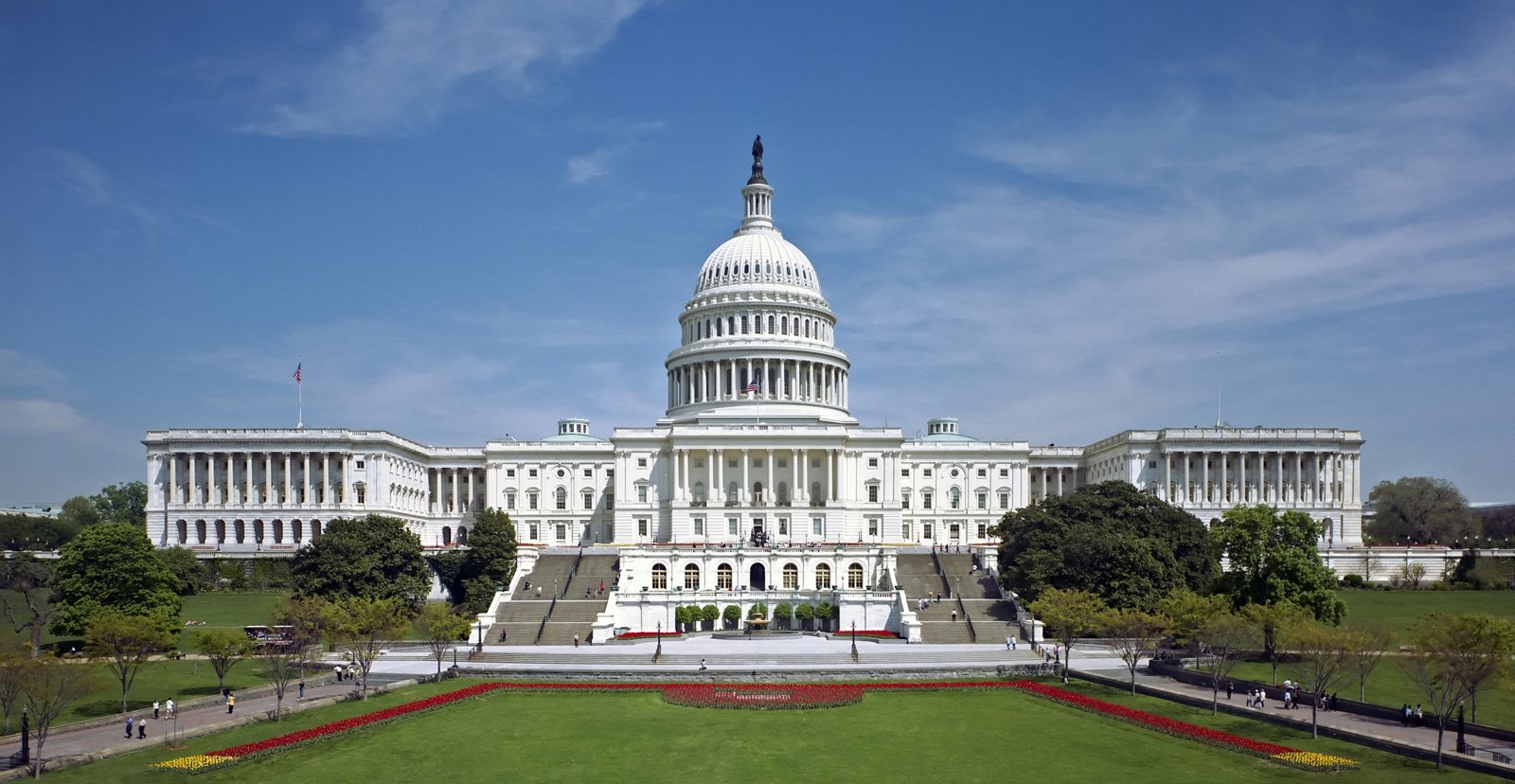
Featured image: The United States Capitol, west front. Photo by David Iliff via Wikimedia Commons, licensed CC BY-SA 3.0.
The Investigative Journal contacted no individuals for comment in preparing this digest; it is compiled from public records, official schedules, and committee publications linked above. Corrections: editor@tij.news.