

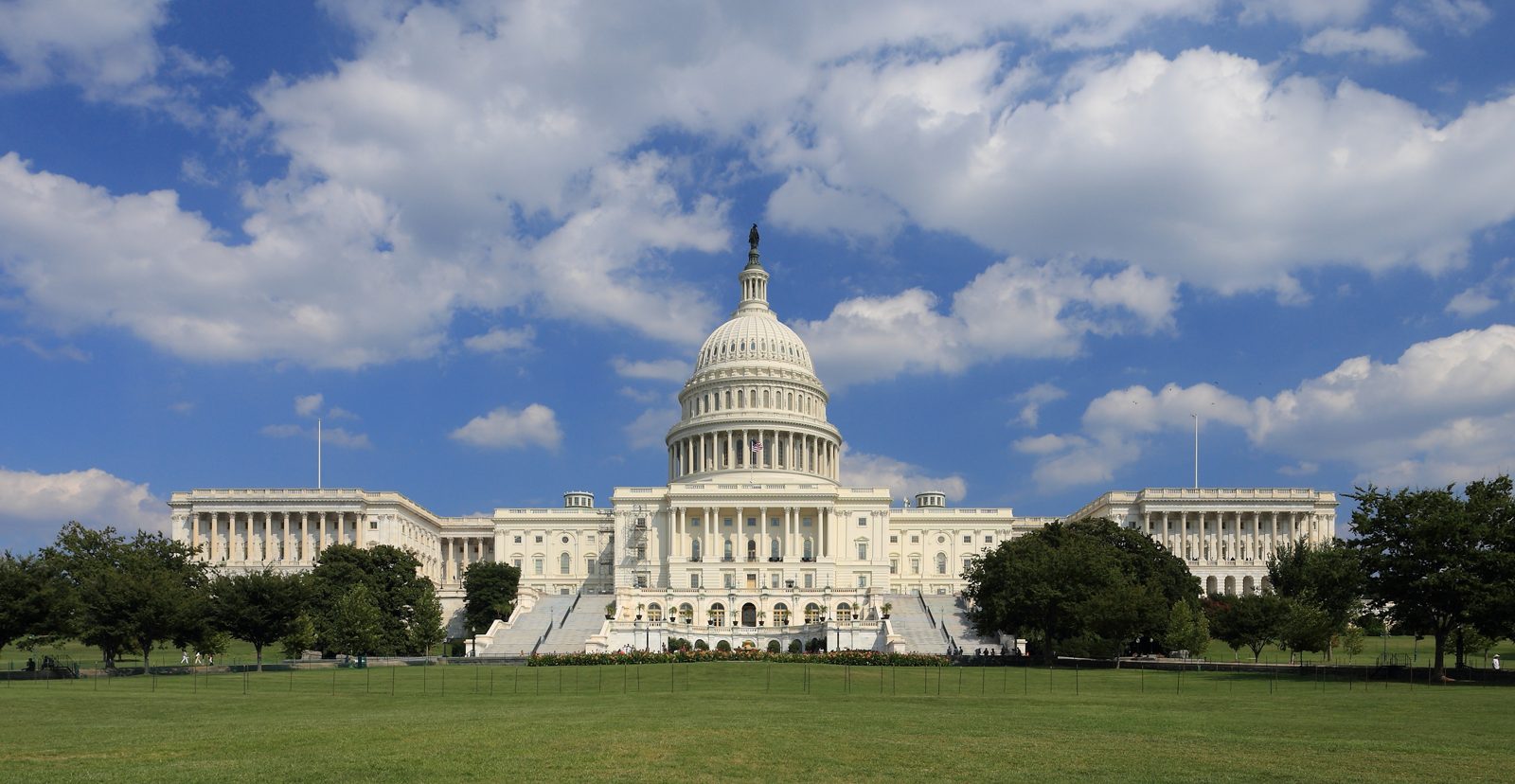
The Investigative Journal’s daily accounting of what Congress actually did — votes taken, nominations moved, subpoenas issued, and dollars scored — with links to the primary record.
With the House already home for its five-week district work period, the Senate spent Tuesday clearing the runway for its own August departure — and the two biggest items on the manifest are a government funding deal and an attorney general. Senate records show a stopgap spending vehicle advancing with broad bipartisan support, while the Judiciary Committee sent Acting Attorney General Todd Blanche’s nomination to the floor on a party-line vote. Here is the state of play as of Wednesday morning.
1. Shutdown clock: Senate moves first on a stopgap through December 11
The Senate’s top order of business this week is H.R. 6500, an African Growth and Opportunity Act extension that leadership is using as the legislative vehicle for a continuing resolution to fund the government past the September 30 deadline. Official Senate records show the chamber invoked cloture on the motion to proceed on Monday evening by a vote of 89-4 — a margin that suggests the measure has far more than the 60 votes it will need at final passage. According to Roll Call, the underlying agreement, negotiated between Senate Appropriations Chair Susan Collins (R-Maine) and Vice Chair Patty Murray (D-Wash.), would keep the government funded through December 11.
The timing is the story. NBC News reported that leaders in both parties want the shutdown question settled before the fall campaign season consumes the calendar — the House’s own 2026 calendar shows members out of Washington for nearly all of August and October ahead of the midterms, with next House votes expected August 31. The Senate Daily Press gallery reported the chamber resumed consideration of the measure post-cloture on Tuesday and that votes are expected Wednesday, though a final passage time had not been locked in as of this writing.
A December 11 end date would set up a lame-duck funding fight after the November elections — a familiar pattern, and one that appropriators in both parties have said they hope to soften by moving full-year fiscal 2027 bills in the interim. Whether the House ratifies the Senate’s product quickly on August 31 or seeks changes will be the first test of that plan.
2. Blanche nomination clears Judiciary, 12-10, after intra-party negotiations
The Senate Judiciary Committee on Tuesday advanced Acting Attorney General Todd Blanche’s nomination to be U.S. Attorney General by a vote of 12-10, according to the committee’s official release. Chairman Chuck Grassley (R-Iowa) said in a statement accompanying the vote that he was voting “for the safety of the American people,” crediting the department’s enforcement record under Blanche’s acting leadership.
The committee vote followed a holdup within the majority. NBC News reported that Sens. John Cornyn (R-Texas) and Thom Tillis (R-N.C.) agreed to advance the nomination after securing commitments that included formally rescinding a proposed $1.8 billion fund the senators had questioned and clarifying the scope of a related IRS agreement — an account consistent with Washington Post reporting on the negotiations. On the floor, the math remains tight: ABC News reported that Sen. Collins has said she will vote no, meaning Republicans can afford few additional defections if Democrats are united in opposition. Senate floor coverage indicates leadership intends to reach the nomination before the chamber leaves for recess; Minority Leader Chuck Schumer devoted floor remarks to the nomination Tuesday morning, per the Daily Press gallery log.
3. Oversight: Jack Smith invited to testify September 22 in Arctic Frost probe
Chairman Grassley has invited former special counsel Jack Smith to testify before the Judiciary Committee on September 22, the committee announced Monday, citing Politico’s report of the invitation letter. The appearance would be part of the committee’s ongoing Arctic Frost investigation into the FBI inquiry that preceded Smith’s appointment and the investigative methods used against members of Congress. Grassley’s office says committee records show Smith’s team obtained text messages sent by 44 members of Congress and subpoenaed phone toll records from a dozen senators; the committee has also pressed telecom carriers over their handling of the related subpoenas, according to its published releases.
Notably, the committee release states that Smith himself has requested to testify — suggesting the September session, if it proceeds, will feature a willing witness rather than a subpoena fight. Smith’s federal cases against then-candidate Donald Trump were dismissed after the 2024 election under longstanding Justice Department policy, and his defenders have characterized the investigations as properly predicated; the September hearing is likely to air both accounts. TIJ will cover the testimony and the underlying document record when it becomes public.
4. AI “surveillance pricing” gets its first dedicated Senate hearing of the summer
The Judiciary Subcommittee on Crime and Counterterrorism held a Tuesday hearing titled “Your Data, Their Profit: The Consumer Cost of AI Surveillance Pricing”, examining how companies use personal data — purchase history, location, browsing behavior, even cursor movements — to set individualized prices. Witness testimony, as reported by The Center Square, included Groundwork Collaborative CEO Lindsay Owens and a United Food and Commercial Workers representative warning that electronic shelf labels and in-store tracking could bring dynamic pricing to grocery aisles, while an industry-side economist defended personalized pricing as capable of delivering discounts as well as markups. The hearing record and witness statements are posted on the committee’s hearing page.
The session fits a broader pattern this Congress of bipartisan interest in data-broker and algorithmic-pricing practices — an area where legislative text has so far lagged behind hearing activity. No markup has been noticed.
5. Nominations queue: CDC director and a 74-nominee bloc teed up
Before the Senate leaves town, leadership has stacked the executive calendar. According to the Senate Daily Press gallery, cloture has been filed on the nomination of Dr. Erica Schwartz to be Director of the Centers for Disease Control and Prevention, followed by a package of 74 nominations to be considered en bloc under S.Res. 817 — the executive resolution the Senate adopted 50-47 on July 30. The HELP Committee advanced Schwartz’s nomination late last month with Republican support plus Sen. Tim Kaine (D-Va.), per PBS News. If confirmed, Schwartz would take over an agency whose leadership has been a persistent point of Senate contention since the director’s post became subject to confirmation.
6. War powers and sanctions crosscurrents
Last week’s floor record contains a data point worth flagging for the national security docket: the Senate rejected, 49-50, a motion to discharge S.J.Res. 181, a war powers resolution that would direct the removal of U.S. forces from unauthorized hostilities involving Iran. The single-vote margin — the closest war powers tally of this Congress — indicates continued Senate unease over the scope of ongoing operations, even as the discharge effort failed. Meanwhile, floor remarks Tuesday from Sen. John Kennedy (R-La.) addressed a pending Russia- and Iran-related sanctions measure, per the Daily Press gallery log, though no floor time for a sanctions bill has been announced.
7. By the numbers: CBO’s Tuesday batch
The Congressional Budget Office released a stack of cost estimates August 4, per its publications feed. Three stand out. The NSF AI Education Act of 2026 (H.R. 5351) was scored as ordered reported by House Science — a marker for where AI workforce legislation stands in the queue. The Modernizing and Improving the National Terrorism Advisory System Act (H.R. 7448) received its estimate from House Homeland Security. And the Protecting Investors’ Personally Identifiable Information Act (H.R. 1483), out of House Financial Services, addresses data-handling at the SEC — another node in the data-privacy cluster described above. None of the three has floor time scheduled.
On the calendar
Wednesday, August 5: Senate votes expected on the funding vehicle and queued nominations; the Judiciary Committee has a nominations hearing on its schedule. Thursday, August 6: the Homeland Security and Governmental Affairs Committee holds a business meeting at 8:30 a.m. in Dirksen 342, per the committee’s revised notice. August 31: House returns, with the Senate-passed funding measure expected at the top of its docket. September 22: Jack Smith’s invited testimony before Senate Judiciary.
On TIJ’s radar
Three threads from this week’s record connect to our standing investigative beats. First, the Arctic Frost file — particularly the question of what carriers disclosed, and when, about congressional phone records — remains a live government-accountability story with a paper trail that is still being pried loose. Second, the surveillance-pricing hearing surfaced testimony about in-store tracking infrastructure that merits independent verification; we will be requesting the underlying witness documents. Third, the Daily Press gallery log shows S. 5221, the “Stop Corrupt Trading Act,” was placed directly on the Senate calendar Tuesday under Rule XIV — a procedural move worth watching given ongoing congressional scrutiny, documented in House Oversight correspondence this spring, of alleged insider trading on prediction markets tied to military operations. Records requests are pending on all three.
Sources and methods: This digest is compiled from official records — Senate roll call votes, committee notices and releases, the Congressional Record, and CBO publications — supplemented by attributed reporting from established outlets. Claims characterizing investigations reflect the public statements of the officials making them; allegations noted above are allegations, not findings. Individuals or organizations referenced who wish to respond may contact the editorial desk at tij.news.