

UPDATE (Aug. 7, late afternoon): The Senate completed Friday’s four-vote sequence: it rejected the Paul amendment 32–64, passed H.R. 5334 — the vehicle for the Sanctioning Russia Act of 2026 — by a vote of 86–11, confirmed the 74 en bloc nominations under S.Res. 817 by 51–47 along party lines, and invoked cloture on the Collins substitute amendment #6732 to H.R. 6500, the stopgap funding vehicle, with six senators opposed. Sen. Bill Cassidy announced he will vote in favor of the Blanche nomination; a final confirmation vote had not occurred as of this update, and further votes were expected during the session.
WASHINGTON — The Senate stayed at work deep into an election-year August this week, and the schedule now points to a consequential Friday: a series of votes beginning at 11:30 a.m. that could clear the path for a stopgap government funding bill and advance the nomination of Todd Blanche to be Attorney General. The House, by contrast, has scattered to the districts, holding brief pro forma sessions until members return August 31. Here is where things stand, based on official floor schedules, committee notices, and public records.
Stopgap funding bill reaches decisive votes
The top action item is H.R. 6500, the legislative vehicle for what Senate leadership has described as the Continuing Appropriations and Extensions Act of 2027. According to the official Senate floor schedule, Majority Leader John Thune filed cloture Wednesday on both the Collins substitute amendment (#6732) and the underlying bill, with those cloture motions ripening today, Friday, August 7. The filing deadline for first-degree amendments to the substitute passed at 1:00 p.m. Thursday.
The measure would extend government funding through December 11, pushing the next spending confrontation past the November midterm elections. The Senate’s first procedural step came Monday, August 3, when the chamber voted 89–4 to invoke cloture on the motion to proceed — a lopsided margin suggesting broad, bipartisan reluctance to stage a shutdown fight before the fiscal year ends September 30. Trade press coverage indicates the path has not been frictionless: Engineering News-Record reports a split over how the stopgap treats infrastructure law transportation programs, one of several policy riders senators have contested in the substitute.
Because the House is in recess until August 31, any Senate changes to the vehicle would await House action at month’s end — a timing cushion that exists only because this year’s funding deadline fight is being run nearly two months early. Roll call results, once posted, will appear on the Senate’s official vote menu.
Blanche nomination for Attorney General hits the floor
Cloture also ripens today on Executive Calendar #914 — the nomination of Todd Blanche, of Florida, to be Attorney General, per the Senate schedule. The Senate Judiciary Committee advanced the nomination Tuesday on a 12–10 party-line vote, and reporting indicates a final confirmation vote could come as soon as Saturday.
The floor math is tight. CNBC reports that Sen. Susan Collins (R-Maine) will oppose the nomination, while The Washington Post and CBS News report that Republican Sens. John Cornyn and Thom Tillis came aboard only after Blanche moved to wind down a $1.8 billion fund intended to compensate individuals the administration describes as victims of government “weaponization” — a fund those senators had questioned. With Sen. Mitch McConnell reported absent from recent votes, press tallies suggest the nomination can afford few Republican defections before Vice President JD Vance would be needed to break a tie. Blanche was confirmed as Deputy Attorney General in March 2025; the confirmation vote, if held this weekend, would install him atop the Justice Department. TIJ will report the roll call when it posts.
Senate confirms Schwartz to lead CDC — first permanent director in a year
On Wednesday the Senate confirmed Dr. Erica Schwartz as director of the Centers for Disease Control and Prevention by a vote of 51–44, largely along party lines. PBS NewsHour and NPR report that Schwartz, a former deputy surgeon general and retired U.S. Coast Guard officer, becomes the agency’s first Senate-confirmed permanent director in roughly a year, and the first Black woman to hold the post. The Hill notes that Sen. Tim Kaine (D-Va.) was the lone Democratic vote in favor.
The confirmation ends an extended stretch of acting leadership at the agency. Coverage of the confirmation hearings indicates Democratic members pressed Schwartz on vaccine policy and on how she would respond to directives from the Health and Human Services Secretary; those exchanges are preserved in the committee record for readers who want the primary source.
Seventy-four nominations move as a bloc
The Senate spent much of Thursday — convening at 10:00 a.m. and adjourning at 9:43 p.m. — processing the 74 nominations packaged under S.Res. 817, the en bloc authorization covering nominees to the Departments of Defense, Energy, the Interior, State, and the Treasury, plus ambassadorial posts including the United Nations, the OECD, Brazil, Cambodia, Cyprus, and the Gambia. Cloture on the package was invoked Wednesday, 50–44.
The en bloc mechanism — adopted after the Senate GOP’s rules reform — has become the dominant channel for staffing the executive branch. According to the Senate Republican Leader’s office, this batch brings total civilian nominations confirmed en bloc since the reform to roughly 375 — about 63 percent of all confirmations in the president’s second term. Final disposition of the package was expected before senators depart; the Senate Daily Press digest and the official floor proceedings log will carry the definitive result.
College sports bill queued; crypto bill slips
Also ripening today is cloture on the motion to proceed to S. 4668, the Protect College Sports Act of 2026 — the Cruz–Cantwell framework establishing a national standard for college athletes’ name, image, and likeness (NIL) agreements. The bill bars schools, conferences, and athletic associations from restricting athletes’ NIL deals (with specified limits), requires athletes to report NIL compensation above $600, caps agent fees at 5 percent, and grants a limited antitrust exemption for pooled media-rights sales. The Commerce Committee advanced it 19–9 with notable cross-party support, and the Congressional Budget Office has published its cost estimate for the measure — worth reading for its projection of federal administrative costs attached to the new reporting regime.
One measure that did not make the pre-recess queue: industry press reported that the CLARITY Act, the digital-asset market structure bill, was dropped from Monday’s Senate schedule, leaving its supporters to seek a path after the break.
In committee: judges, an assistant attorney general, and three ambassadors
Per the Congress.gov weekly committee schedule, the Senate Judiciary Committee held hearings this week on the nominations of Anna St. John of Louisiana to the Fifth Circuit Court of Appeals, Gregory Carl Cook to be a district judge for the Northern District of Alabama, D. Adam Candeub to be an Assistant Attorney General, and John Peter Cronan and Jason Manion to the U.S. Sentencing Commission. The Foreign Relations Committee, meanwhile, took testimony from ambassadorial nominees Peter McCoy (Montenegro), Daniel Travis (Sierra Leone), and Nathaniel Morris (Colombia).
The Sentencing Commission nominations bear watching: the commission has operated without a full slate during a period of active litigation over guideline amendments, and restored quorum would carry practical consequences for federal sentencing policy.
House: pro forma sessions until August 31
The House held pro forma sessions Monday at 4:00 p.m. and Thursday at 9:00 a.m., with no legislative business conducted; the House Press Gallery calendar and the official House schedule show next votes on Monday, August 31. Members are spending the month in their districts ahead of the midterms. For readers interested in the mechanics — including why pro forma sessions are held at all — the Congressional Research Service maintains a useful primer on sessions, adjournments, and recesses of Congress.
Accountability watch: the ActBlue subpoena fight grinds on
On the oversight front, the tri-committee investigation into the Democratic fundraising platform ActBlue remains the live wire. The House Judiciary, Administration, and Oversight Committees’ joint interim staff report — “Fraud on ActBlue, Part II” — alleges illicit foreign donations and documents what the committees describe as mass departures from the platform’s legal and compliance teams; the committees state that five current or former employees deposed in the probe invoked the Fifth Amendment a combined 146 times. In April, Chairmen Steil, Jordan, and Comer demanded compliance with outstanding subpoenas, and a June letter shows the committees rejecting the platform’s privilege claims and raising the prospect of contempt.
These remain allegations in an ongoing congressional investigation, not adjudicated findings. ActBlue has exercised its right of reply and disputes the committees’ characterizations; its public response is posted here. Separately, Rep. Chris Pappas (D-N.H.) has called for subpoenas of prediction-market operators over alleged insider trading — a reminder that platform-accountability oversight now runs in both partisan directions.
What to watch
Today: a four-vote sequence beginning at 11:30 a.m. — the Paul amendment to and passage of H.R. 5334, the Russia sanctions vehicle; confirmation of the S.Res. 817 en bloc nominations; and cloture on the Collins substitute to H.R. 6500 — with additional votes, including on the Blanche nomination, expected during the session. Possibly Saturday: final confirmation vote on Blanche. August 31: the House returns, and with it, action on whatever funding package the Senate sends over. For TIJ’s investigative beats, the documents to pull are the CBO estimate on S. 4668, the amendment text of the Collins substitute once filed amendments post to the Congressional Record, and the deposition transcripts referenced in the ActBlue interim report as they become public. Roll call results for the House are archived at the Office of the Clerk.
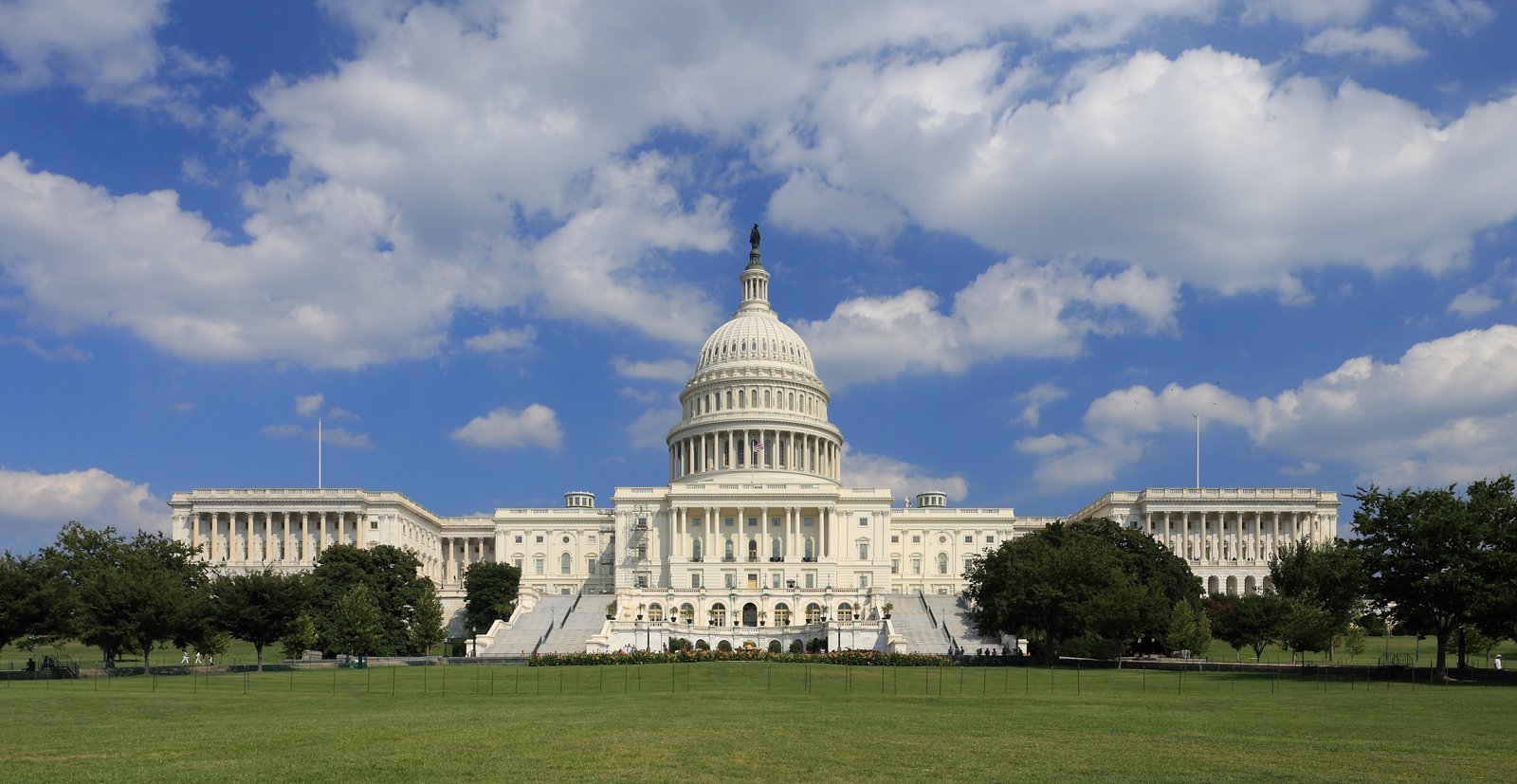
The Investigative Journal compiles this digest from official congressional schedules, roll call records, committee notices, and cited press reports. Claims drawn from committee documents are attributed to those committees and should be read as allegations where matters remain under investigation. Corrections: editor@tij.news. Featured image: the west front of the U.S. Capitol; photo by Martin Falbisoner via Wikimedia Commons, CC BY-SA 3.0.