

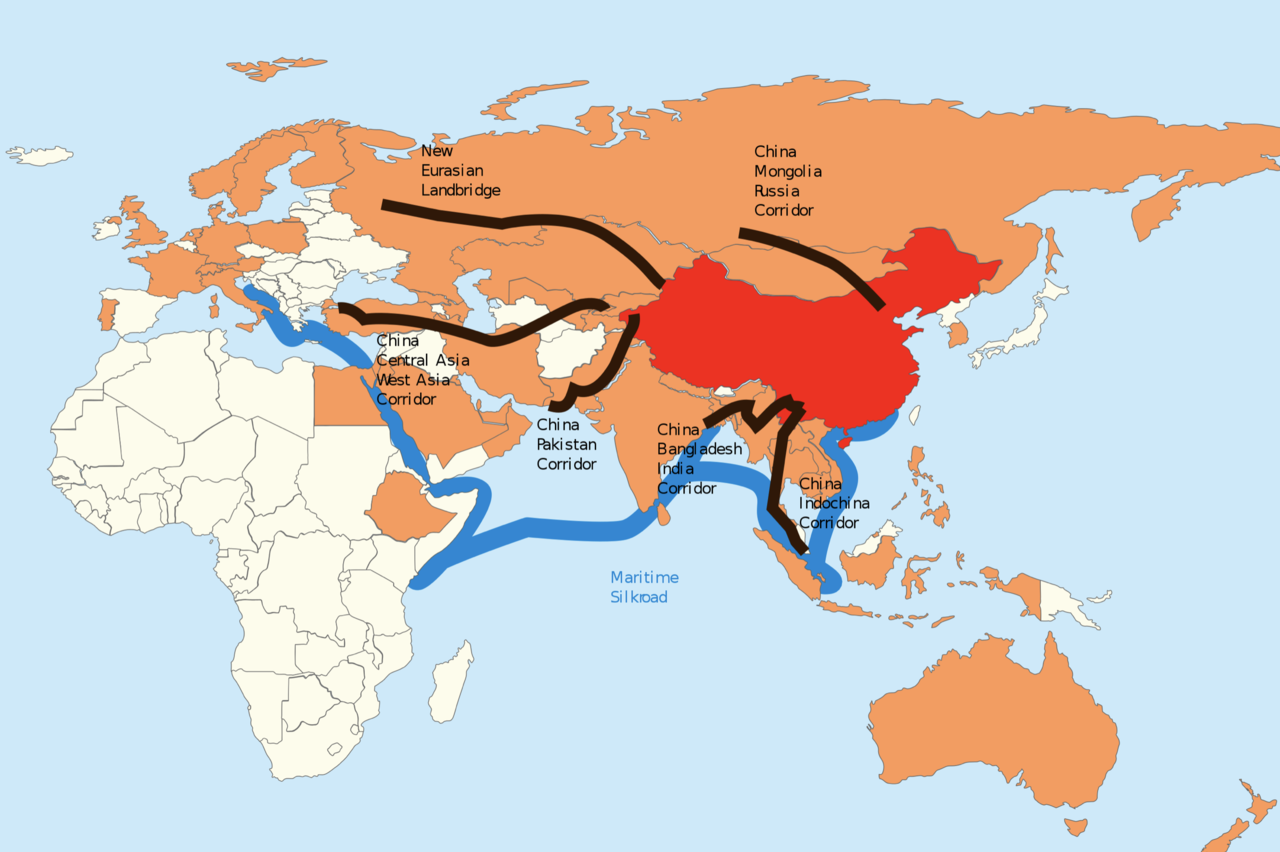
China’s Belt and Road Initiative was launched in 2013 as the most ambitious infrastructure program in modern history — a trillion-dollar vision to connect Asia, Africa, and Latin America through ports, railways, highways, and power plants financed by Chinese state-backed lending. A decade later, the initiative’s legacy is increasingly defined not by the infrastructure it built but by the debt it created, the projects it abandoned, and the sovereignty it compromised. According to AidData’s comprehensive 2023 assessment, China has provided over $1.1 trillion in total loans to developing countries through the BRI. The World Bank’s analysis of these financial returns has been sobering: eighty percent of China’s government loans to developing countries have gone to nations now in debt distress, according to Wilson Center research, and sixty percent of China’s overseas lending is owed by borrowers currently in arrears, restructuring, or at war.
The poster child for BRI’s predatory dynamics remains Sri Lanka. Chinese loans for the Hambantota Port totaled $1.3 billion, representing 4.8 percent of Sri Lanka’s total government foreign debt at the time the port’s 99-year lease was signed over to a Chinese state-owned company. The Mattala International Airport, built with $109 million in Chinese financing, became notorious as the world’s emptiest international airport, failing to attract commercial traffic or international investors. The Puttalam Coal Power Plant carried $639 million in outstanding Chinese loans. Sri Lanka declared bankruptcy in May 2022, and while the BRI projects were not the sole cause of the fiscal crisis, they contributed meaningfully to a debt burden the country could not sustain.
Africa’s Reckoning
The pattern has repeated across Africa with alarming consistency. Angola is China’s largest African debtor, carrying between $25 billion and $49.2 billion in Chinese loans across 271 separate loan agreements. Kenya owes China between $10 billion and $50 billion across 62 loans and in October 2025 converted $3.5 billion worth of debt to yuan — a restructuring that effectively tied Kenya’s fiscal future more tightly to Beijing rather than loosening the relationship. Ethiopia, the continent’s second-highest Chinese debtor, carries between $5.4 billion and $14 billion in obligations across 64 loans. Zambia counts China as its biggest bilateral creditor and has been in sovereign default since 2020. Ghana sits at the top of default risk lists after pandemic-era economic stress compounded pre-existing debt vulnerabilities.
China’s response to this cascade of debt distress has been notably different from the approach taken by Western creditors and multilateral institutions in similar situations. Most Chinese debt restructurings involve only maturity extensions — pushing repayment dates further into the future — with no face-value write-offs, according to World Bank research. This approach preserves China’s claim on the full principal while providing temporary breathing room to debtors who, absent genuine debt relief, will likely face the same crisis in a matter of years. It is, in effect, a strategy for perpetuating financial dependency rather than resolving it.
The Strategic Retreat
The scale of defaults and distress has forced a recalibration in Beijing. Chinese lending to Africa fell 46 percent as the strategy shifted from large-scale infrastructure projects toward smaller, more commercially viable investments, according to Boston University’s Chinese Loans to Africa Database. Lending commitments dropped to $2.1 billion in 2024, a fraction of the billions that flowed annually during the BRI’s peak years. Panama withdrew from the BRI framework entirely in 2025. Academic research published in Taylor and Francis Online documented multiple Latin American BRI proposals that failed with public reversals, suggesting that the initiative’s reputational damage has begun to limit its geographic expansion.
The BRI’s defenders argue that Chinese infrastructure investment filled a genuine gap left by Western institutions and that many projects have delivered real economic benefits. There is truth in this. Roads, ports, and power plants built with Chinese financing have improved connectivity and economic capacity in parts of the developing world that Western investors considered too risky to touch. But the terms on which that financing was provided — high interest rates, collateral requirements that included sovereign assets, and opaque contract terms that limited public scrutiny — created vulnerabilities that have been ruthlessly exploited.
The Belt and Road Initiative is not dead, but its transformative promise has given way to a more modest and defensive posture. China is lending less, restructuring grudgingly, and watching as the countries it courted most aggressively struggle under the weight of obligations they cannot service. The trillion-dollar question is whether the developing world’s experience with Chinese development finance will serve as a cautionary tale or merely a prelude to the next creditor willing to offer easy money on hard terms. History suggests the latter, but the graveyards of abandoned BRI projects — the empty airports, the unfinished railways, the ports that generate traffic only for Chinese vessels — stand as monuments to a model of development that enriched the lender far more than the borrower.
Sources: Dept. of Education Section 117 Database | GAO Foreign Gift Investigation | CFIUS Overview | Qatar Foundation | Department of Education