
Federal officials say Duke University and the University of North Dakota filed late, incomplete or mislabeled foreign-funding reports. Both schools face a 30-day records deadline that expires this week, and the public database that would let outsiders check the claims is harder to use than it should be.
The U.S. Department of Education and the State Department opened parallel investigations in mid-September into whether Duke University and the University of North Dakota (UND) complied with federal rules requiring colleges to disclose foreign money. According to the agencies’ joint announcement, the review concerns “untimely and incomplete” disclosures under Section 117 of the Higher Education Act. Each school was given 30 days to hand over records, a clock that runs out in the coming days.
The allegations are officials’ claims, not findings. Neither university had publicly responded in the coverage reviewed for this article, and The Center Square reported that Duke and UND did not answer its requests for comment. No dollar amount for any undisclosed funding has been made public.
What the record does show is a familiar pattern: a disclosure law with a low enforcement record, a public dataset that is difficult to search, and two institutions whose China-linked programs have drawn congressional attention for years.
What Officials Allege
Under Secretary of State for Public Diplomacy Sarah Rogers said the reviews “found real gaps” in how the two schools handled their obligations, citing late filings, omitted details and at least one foreign government partner described as non-governmental, according to Valley News Live’s account of the announcement. Under Secretary of Education Nicholas Kent said the schools provided “untimely and incomplete foreign funding disclosures.”
The specifics differ by school:
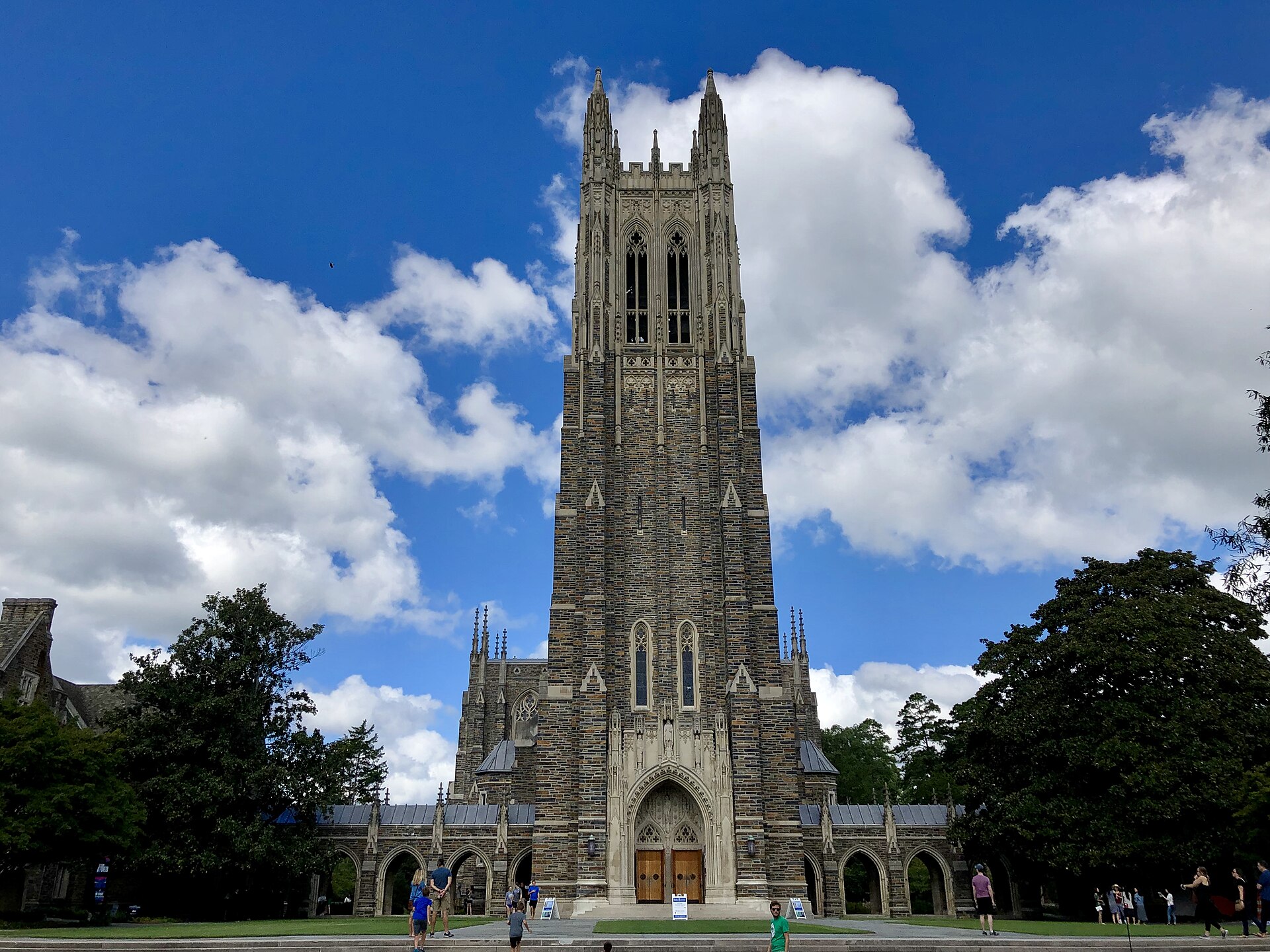
- Duke: The inquiry centers on Duke Kunshan University (DKU), the joint campus Duke opened in 2013 with China’s Wuhan University. The agencies point to Wuhan’s oversight by a Chinese government body involved in defense science and technology, and to a 2025 House Select Committee letter alleging the university trains cyber specialists.
- North Dakota: Officials focus on the School of Aerospace Sciences and its uncrewed aircraft systems program, saying Chinese aviation companies with close ties to the Chinese military have invested in the research. Reporting on the announcement does not name the companies.
- Requested records: Tax records related to foreign involvement, Section 117 compliance documentation, agreements with foreign entities on students, faculty and researchers, international research collaborations, and records of faculty participation in foreign government talent programs.
The announcement followed an August notice from the Department of War to more than 30 universities asking them to review foreign ties, according to the House Select Committee on the Chinese Communist Party’s press release welcoming the probes. That release also cites committee work, including a report titled “Joint Institutes: Divided Loyalties,” alleging that Chinese government documents describe DKU as a platform for municipal talent recruitment and that DKU faculty were offered funding through a Chinese defense-linked academic fund. These are the committee’s characterizations; Duke has not been shown in the sources reviewed to have conceded them.
The Law, and How Rarely It Has Bitten
Section 117 requires colleges that receive federal student aid to report foreign gifts and contracts totaling $250,000 or more in a calendar year from the same source, with reports due by January 31 and July 31. Duke’s own compliance policy says the University Controller is responsible for submitting the reports.
The Congressional Research Service’s overview of the statute sets out the enforcement history:
- The law dates to 1986, but the Education Department began proactively investigating disclosures only in 2019.
- From 2019 to 2021 the department opened 19 investigations; by the end of the Biden administration it had resolved 10.
- Earlier reviews, a 2019 Senate subcommittee report and a 2020 Education Department counsel report, found that up to 70 percent of colleges had not complied and that those who reported substantially underreported.
- The most severe sanction, termination of Title IV aid eligibility, has historically not been used; the department has relied on resolution agreements requiring reforms.
That last point matters for what the current probes can realistically produce. Based on the CRS description, the likelier outcome is a negotiated compliance agreement and corrected filings rather than a loss of federal aid, though the department retains the power to fine schools or limit their participation.
A Public Dataset That Is Hard to Audit
Section 117 reports are public by statute. The Education Department’s data page hosts the disclosures as downloadable spreadsheets, the most recent dated February 28, 2025, with no aggregate totals. The older online search tool was decommissioned in June 2024, according to the page, meaning anyone checking a specific school must open and filter the raw files themselves.
The format also complicates the “non-governmental partner” allegation. The CRS summary notes the dataset’s largest entries span a wide range of foreign sources, from a $458 million 2023 gift attributed to Bermuda to restricted government contracts from Kuwait and Oman. Whether a counterparty is a government is a classification the reporting institution makes in the first instance, which is exactly the judgment federal officials say Duke or UND got wrong.
Records that suggest scale for China-linked arrangements come from the same CRS summary: more than 6,500 gifts and contracts in the dataset are tied to China, the largest a $60 million contract to the University of California, Los Angeles reported in 2018. It also notes a 2023 congressional inquiry into a $220 million contract connected to a Shenzhen satellite campus of UC Berkeley. These are other institutions and do not bear on Duke or UND, but they show the order of magnitude at which China-related reporting questions have arisen.
The Duke Kunshan Structure
DKU’s financing and governance were laid out in contemporaneous campus coverage. A 2013 column in The Duke Chronicle, citing Christian Science Monitor reporting, said the Kunshan municipal government had committed $260 million to the campus while Duke planned to invest $37 million over the first six years. It described a separate DKU board in which Wuhan University and Kunshan representatives held more seats than other members, with at least one Duke vote required to pass any policy. Those figures are more than a decade old and were reported at the planning stage; current numbers would need to come from Duke’s filings.
The structure is why DKU sits at the center of the dispute. Section 117 reporting turns on funds flowing from foreign sources to the U.S. institution. When a municipal government funds a campus operated jointly by a U.S. university and a state-overseen Chinese partner, the question of which payments count as reportable gifts or contracts, and how the funders are labeled, is not trivial. Whether Duke’s filings treated those arrangements correctly is the question the 30-day records demand is designed to answer.
Beyond the Two Schools
The committee release adds allegations that go beyond paperwork. It says Duke researchers co-authored hundreds of publications from 2020 through 2025 with researchers at Chinese defense-linked institutions, and that a federally funded Duke professor co-directed a hypersonics laboratory with Northwestern Polytechnical University, a school the release places among China’s “Seven Sons of National Defense.” It also alleges that technology from an Air Force-funded Duke project was transferred to China by a former doctoral student. These are the committee’s assertions, and the release does not include Duke’s response.
For UND, the public record is thinner. The aerospace program’s research is described by officials as national-security relevant, but the Chinese investors have not been named in the coverage reviewed, and UND’s own filings have not been summarized publicly.
What to Watch
Three open questions will determine whether these investigations amount to more than a headline. First, whether the Education Department publishes what it receives or any resulting resolution agreement, as it has in some earlier Section 117 cases. Second, whether the schools’ amended filings, if any, appear in the next public spreadsheet, which would reveal the dollar figures that are currently missing. Third, whether the Department of War’s August outreach to roughly 30 universities leads to further Section 117 probes, as the sequence of events suggests it may.
What remains unknown is the core of the matter: how much money is at issue, which foreign entities are involved at UND, and whether the mislabeling officials describe was an error or a pattern. Duke and UND have the opportunity to respond, and this article will be updated if they do.