

The Investigative Journal’s weekly review of federal and state environmental enforcement, compiled from EPA enforcement records, Department of Justice Federal Register notices, and public court dockets. Every item below is drawn from a public record linked in the text.
Keystone operator’s $26.9 million spill penalty nears the finish line
The largest item moving through the federal environmental docket this week is the proposed Clean Water Act consent decree between the United States, the State of Kansas, and South Bow (USA) LP and South Bow Infrastructure Operations Inc., the owner and operator of the Keystone Pipeline. According to EPA’s settlement summary, the agreement resolves claims arising from the December 2022 rupture near Washington, Kansas, which discharged approximately 12,937 barrels of diluted bitumen overland and into Mill Creek. The Federal Register notice states the decree was lodged in the U.S. District Court for the District of Kansas on July 10, 2026, and its 30-day public comment window — which opened with the July 15 notice — closes in the coming days.
The numbers are substantial. EPA records show a settlement package valued at roughly $69 million: a civil penalty of $26,867,789 payable to the Oil Spill Liability Trust Fund, approximately $40 million in injunctive work to strengthen stress prevention and leak detection on the pipeline, and more than $3 million to Kansas for natural resource restoration and state-law claims. The government’s complaint alleges the rupture resulted from years of undetected stress on the pipeline. The full consent decree and complaint are posted on EPA’s site.
The significance is twofold. First, filings indicate this is among the larger Clean Water Act Section 311(b) oil spill penalties in recent years, and the injunctive package — inspection schedules, operational limits, and integrity and engineering assessments — reads as a template for pipeline enforcement going forward. Second, the decree accounts for corrective actions South Bow has already taken, a structure that rewards early remediation. The settlement remains subject to public comment and final court approval; comments can be filed through the Justice Department’s consent decree page.
Domtar to pay $1.5 million over air violations at Arkansas kraft mill
On July 24, the Justice Department lodged a proposed consent decree in the Western District of Arkansas resolving Clean Air Act claims against Domtar A.W., LLC, according to the notice published July 30. The United States filed the action jointly with the Arkansas Division of Environmental Quality. The complaint alleges violations of New Source Performance Standards and National Emission Standards for Hazardous Air Pollutants at the company’s kraft paper and pulp mill in Ashdown, Arkansas, along with violations of the Arkansas Water and Air Pollution Control Act.
Under the proposed decree, Domtar has agreed to pay a $1,500,000 penalty and perform injunctive relief, including two mitigation projects. The pulp and paper sector is a recurring focus of federal air toxics enforcement, and the joint federal-state posture here is worth noting: state co-plaintiffs have appeared in several of the summer’s larger lodgings. The comment period runs 30 days from the July 30 publication, and the decree can be examined on the Justice Department’s website.
Alaska contractor and owners settle unpermitted discharge claims
The freshest lodging of the week: on August 4, DOJ published notice of a proposed consent decree in United States and State of Alaska v. Duran Construction Co. LLC, Marciano Duran, and Josette Duran, lodged with the U.S. District Court for the District of Alaska on July 30. The complaint, brought under Clean Water Act Section 309, alleges the defendants discharged pollutants without a permit into waters of the United States.
The proposed decree requires the defendants to restore the impacted areas or perform mitigation, and to pay a civil penalty; the notice does not state the penalty amount, which should become public when the decree posts to the DOJ consent decree library. The case is a reminder that federal water enforcement reaches individual owners of small operations, not just corporate entities — both named individuals are parties to the settlement alongside the company. Comments are due 30 days from the August 4 publication. As with all consent decrees, the settlement resolves allegations; it is not a finding or admission of liability.
Chemours PFAS decree: comment period closes, court approval pending
EPA updated its settlement summary page for the Chemours consent decree on August 3, as the landmark PFAS agreement moves toward final court approval in the Southern District of West Virginia. Announced June 24 with DOJ and the West Virginia Department of Environmental Protection, the settlement is described by EPA as the first comprehensive federal settlement with a major PFAS manufacturer. The agency alleges Chemours released PFAS into the Cape Fear River in North Carolina, the Delaware River in New Jersey, and the Ohio River in West Virginia — in some cases without required permits, in others in violation of them — implicating the Clean Water Act, TSCA, RCRA, and West Virginia law.
The package exceeds $450 million in combined penalty and injunctive value: a $22.5 million civil penalty that EPA says reflects the company’s ability to pay, a court-supervised $90 million multi-year PFAS mitigation program, PFAS pollution controls for surface water discharges in West Virginia, clean drinking water for communities surrounding the West Virginia and New Jersey facilities, and evaluation and controls to cut releases from the Fayetteville Works site in North Carolina. The consent decree and EPA’s announcement carry the details. TIJ will track the docket for entry of the decree and any comment-driven modifications.
Two deadline decrees would put EPA’s own rulemaking on the clock
Two proposed consent decrees open for comment this month run against the agency itself. In Environmental Defense Alliance and Waterkeepers Florida v. Zeldin (M.D. Fla.), a proposed decree noticed July 23 would require the EPA Administrator to sign a final rule establishing new and revised human health water quality criteria for Florida waters by December 1, 2026 — closing out a rulemaking proposed in December 2023 and never finalized. Comments are due August 24 on docket EPA-HQ-OGC-2026-5083.
In Center for Biological Diversity et al. v. Zeldin (N.D. Cal.), a proposed decree noticed July 16 would set staggered deadlines — beginning August 28, 2026, for the Hayden, Arizona plan and running into 2027 for Texas and Tennessee — for EPA to act on overdue sulfur dioxide State Implementation Plan submissions. Comments close August 17. Whatever one’s view of sue-and-settle practice, these decrees show citizen suits continuing to shape the agency’s regulatory calendar, and both dockets deserve attention from affected states and industry.
Small-dollar corner: $3,978 pretreatment settlement in Illinois
At the other end of the scale, EPA Region 5 has noticed an expedited settlement agreement with Elite Powder Coating & Technologies, LLC of Dieterich, Illinois, over alleged Clean Water Act Section 301 violations — failure to conduct semi-annual compliance monitoring from 2023 to 2025 and failure to complete a baseline monitoring report. The agreed penalty is $3,978, and comments are due August 10. The notice is one of a cluster of Region 5 expedited CWA settlements posted this summer, a pattern consistent with the program’s use of streamlined agreements to clear routine industrial pretreatment violations quickly.
Patterns in the docket
Three threads stand out this week. Water enforcement dominates: four of the seven matters above arise under the Clean Water Act, from a $26.9 million pipeline penalty to a sub-$4,000 monitoring settlement. Enforcement is running barbell-shaped — headline consent decrees negotiated with DOJ at one end, high-volume expedited administrative settlements at the other. And the PFAS and oil spill matters align with EPA’s published National Enforcement and Compliance Initiatives, which include addressing PFAS exposure and chemical accident risk. Readers can benchmark this activity against EPA’s FY2025 annual enforcement results and search underlying facility records in the ECHO enforcement and compliance database.
What TIJ is watching
Deeper reporting is warranted on several fronts: whether the South Bow and Chemours decrees are entered as lodged or modified after comments; the undisclosed penalty figure in the Duran Construction settlement once the decree posts; whether EPA meets a December 1 deadline on Florida water standards if that decree is approved; and the volume of Region 5’s expedited CWA settlements, which we will tally in a future edition. Readers with knowledge of these matters can reach the desk through the contact page.
Sources and documents: EPA South Bow settlement summary; 91 FR 43406; 91 FR 48197 (Domtar); 91 FR 49449 (Duran); EPA Chemours settlement summary; 91 FR 46432 (Florida WQS); 91 FR 43632 (SO2 SIPs); EPA Region 5 public notice CWA-05-2026-0016; DOJ ENRD consent decree library; EPA ECHO database.
Editorial notes: All matters described are civil enforcement actions resolved or proposed to be resolved by settlement unless otherwise stated. Consent decrees and settlement agreements resolve alleged violations; they are not judicial findings of liability, and settling parties generally do not admit the allegations. Proposed decrees remain subject to public comment and court approval and may change before entry. Figures and characterizations are drawn from the linked public records. Companies and individuals named in this digest are invited to submit responses or corrections via the contact page, and this article will be updated to reflect any substantiated response.
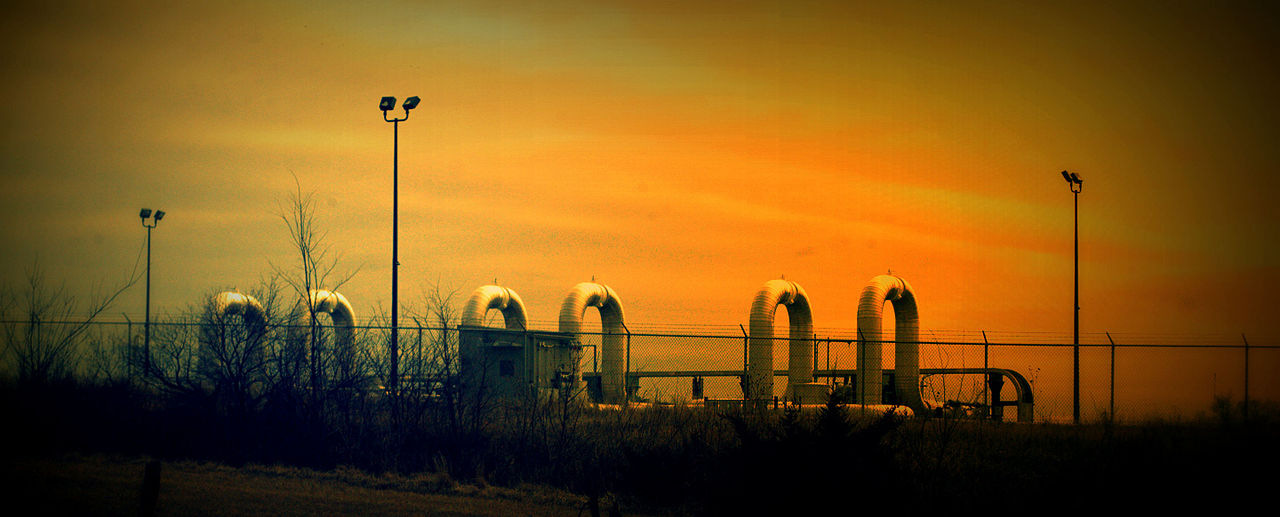
Photo: Keystone pipeline construction. Credit: shannonpatrick17 via Wikimedia Commons, CC BY 2.0.