

WASHINGTON — This week produced an unusually dense run of checkable public claims: a presidential boast about inflation rankings, dueling congressional statements on the July Consumer Price Index, a new attack ad in Maine’s closely watched Senate race, and a series of assertions made during the signing of an executive order on childhood vaccines. For this week’s Fact-Check Spotlight, The Investigative Journal went to the primary records — Bureau of Labor Statistics data, Senate roll-call votes, Congressional Budget Office estimates, official transcripts, and peer-reviewed research — to test five claims from across the political spectrum.
Claim 1: President Trump — “I’m the lowest of the last 10 presidents on inflation”
The claim: In an interview with commentator Wayne Allyn Root posted online Aug. 11, President Donald Trump said, “I’m the lowest of the last 10 presidents on inflation. I mean, it’s crazy. It’s a chart.” The reference was to a video infographic the president posted to Truth Social on Aug. 9, which ranks cumulative inflation across the last 10 presidential terms and shows “Trump II” finishing lowest at month 48.
The evidence: The chart’s construction drives its conclusion. It plots cumulative price growth for each term through 48 months — but the current term is only 18 months old, so the “Trump II” line stops growing at month 18 while every completed term keeps climbing. The comparison effectively assumes zero inflation for the remaining two and a half years of the term.
TIJ ran the like-for-like comparison using the Bureau of Labor Statistics’ seasonally adjusted Consumer Price Index (also available via the St. Louis Fed’s FRED database). BLS data show prices rose 4.34% between January 2025 and July 2026. Measured at the same 18-month mark, that ranks fourth highest among the last 10 presidential terms: only Joe Biden (12.27%, January 2021–July 2022), George H.W. Bush (7.67%) and George W. Bush’s second term (5.90%) saw faster cumulative price growth at this point. The remaining terms ranged from roughly 2.4% to 3.9% at 18 months, according to TIJ’s calculations from the same BLS series.
Asked about the statistic by other outlets, White House spokesman Kush Desai did not defend the chart’s methodology but said the president “inherited the worst inflation crisis in a generation” and pointed to price declines for prescription drugs, eggs and auto insurance. BLS detailed expenditure data indicate those specific categories have indeed declined over the past year, even as the overall index rose 3.4%.
Verdict: Not supported. By the only apples-to-apples measure available — cumulative inflation at the same point in each term — federal data place the current term fourth highest of the last 10, not lowest. The chart’s ranking depends on comparing 18 months of this term against 48 months of the others.
Claim 2: Rep. Jason Smith — Core inflation is “less than half” its Biden-era peak
The claim: After Tuesday’s CPI release, House Ways and Means Chairman Jason Smith said that “core inflation remains less than half of the peak that families experienced during the Biden Administration.”
The evidence: The BLS July 2026 CPI report, released Aug. 12, shows the index for all items less food and energy — core CPI — up 2.5% over the past 12 months. The Biden-era peak for the same measure was 6.6% in September 2022, the largest 12-month increase since 1982, according to the BLS news release from October 2022. Half of 6.6% is 3.3%; the current 2.5% reading sits comfortably below that threshold. TIJ independently verified both figures against the BLS public data API.
Verdict: Accurate. Core CPI at 2.5% is less than half its September 2022 peak of 6.6%. Worth noting for context: headline inflation, at 3.4%, remains above the roughly 3.0% rate recorded when the current administration took office in January 2025.
Claim 3: Affordable Maine ad — Susan Collins “voted to support Donald Trump on the largest Medicaid cut in history”
The claim: A television and digital ad from Affordable Maine, a Democratic-aligned outside group that ad tracker AdImpact records as having spent more than $473,000 on the spot as of Aug. 12, features a nurse saying, “Susan Collins voted to support Donald Trump on the largest Medicaid cut in history.”
The evidence: The Senate’s official roll-call record for July 1, 2025, shows Collins voted “Nay” on passage of the One Big Beautiful Bill Act — one of only three Republicans to do so, alongside Sens. Rand Paul and Thom Tillis. The bill passed 51-50 on Vice President JD Vance’s tie-breaking vote. In a statement issued that day, Collins said her opposition was “primarily” driven by the bill’s Medicaid provisions, citing an estimated $5.9 billion reduction in federal Medicaid funding for Maine over a decade.
The “largest Medicaid cut” description of the law itself is consistent with official estimates: the Congressional Budget Office projects the law will reduce federal Medicaid spending by more than $900 billion over 10 years and increase the number of uninsured by 7.5 million. But the ad’s central assertion concerns Collins’ vote — and the roll call shows she voted against the bill, not for it.
There is a genuine dispute underneath the ad. Senate records show Collins voted yes on the June 28, 2025, motion to proceed to debate on the bill, and the Maine Democratic Party has argued that procedural vote “greenlit” the cuts. Records suggest the procedural vote was unlikely to have been decisive, however: without Collins the motion would have stood 50-50, and the vice president was present to break the tie. Press accounts indicate Affordable Maine had not responded to media inquiries about the ad as of Aug. 12.
Verdict: False on the central claim. Official Senate records show Collins voted against the legislation containing the Medicaid reductions. Criticism of her procedural vote is a legitimate argument — but it is not the claim the ad makes.
Claim 4: President Trump — America is “requiring 72 jabs for our beautiful, healthy, lovely, delicate little children”
The claim: At the Aug. 10 signing of the “Gold Standard Childhood Vaccine Recommendations” executive order, the president said, per the official transcript, that the U.S. is “requiring 72 jabs for our beautiful, healthy, lovely, delicate little children.” He and HHS Secretary Robert F. Kennedy Jr. also suggested the growth of the vaccine schedule explains rising autism rates, with Kennedy contrasting a 1970 estimate of “0.8 per 10,000” with the CDC’s current 1-in-31 figure.
The evidence: The word “requiring” does the heavy lifting. The CDC’s childhood immunization schedule is a recommendation, not a mandate; there is no federal vaccine requirement. School-entry requirements are set by states, and compilations of state law maintained by Immunize.org show no state requiring anywhere near 72 doses — figures in the 70s are reachable only by counting recommended (not required) annual flu shots through age 18 plus optional dose-counting choices.
On autism, the 1-in-31 prevalence figure comes from the CDC’s Autism and Developmental Disabilities Monitoring Network. The 1970 comparison point is a Wisconsin records-review study that used far narrower diagnostic criteria and did not evaluate children directly — a methodological mismatch that researchers say inflates the apparent trend. As for causation, the largest direct tests find none: a 2019 Danish cohort study of 657,461 children published in the Annals of Internal Medicine found no increased autism risk from MMR vaccination, and a 2014 meta-analysis covering more than 1.2 million children found no association between vaccines and autism. The administration’s own case for the narrower schedule is set out in an HHS comparative assessment of 20 peer nations; a federal judge blocked an earlier version of the schedule changes after the American Academy of Pediatrics sued, and litigation over the policy remains pending — a point readers should weigh when assessing what the order will actually change.
Verdict: False on the “requiring 72 jabs” claim; the autism linkage is unsupported by the peer-reviewed record. The policy debate over the right size of the schedule is real, but official records show no 72-dose requirement exists.
Claim 5: Rep. Brendan Boyle — “Trump’s promise to lower costs on ‘Day One’ was a lie”
The claim: Responding to the CPI report, House Budget Committee Ranking Member Brendan Boyle said: “Today’s report is yet another reminder that Trump’s promise to lower costs on ‘Day One’ was a lie.”
The evidence: The promise itself is well documented. At an Aug. 9, 2024, rally in Bozeman, Montana, candidate Trump said, per the transcript, “Starting on day one, we will end inflation and make America affordable again, to bring down the prices of all goods.” The price record since is also clear: BLS data show the overall CPI has risen 4.34% since January 2025, and the annual inflation rate — 3.0% in January 2025 — stood at 3.4% in July 2026. Overall consumer prices have not come down; they have continued rising, though certain categories the White House highlights, including eggs, prescription drugs and auto insurance, have declined over the past year.
Verdict: The factual core is supported — official data show overall costs have risen, not fallen, since January 2025, and the “Day One” pledge is on the record. But “lie” asserts intent, which no dataset can establish; that portion is characterization rather than verifiable fact.
How TIJ conducts fact-checks
The Investigative Journal verifies claims against primary sources only: government statistical releases, official legislative records, court filings, agency documents and peer-reviewed research. For this article, TIJ independently recomputed all inflation figures from the Bureau of Labor Statistics’ public data series rather than relying on secondary reporting, and reviewed Senate roll-call records, CBO cost estimates and official transcripts directly. Where a claim’s subject has responded publicly — as the White House did on inflation, and as HHS has done in its written assessment of the vaccine schedule — that response is linked and summarized. Verdicts describe what the documentary record shows and are limited to the checkable portion of each statement; characterizations of motive are noted as such and left to readers. Corrections and right-of-reply requests may be sent to the editor.
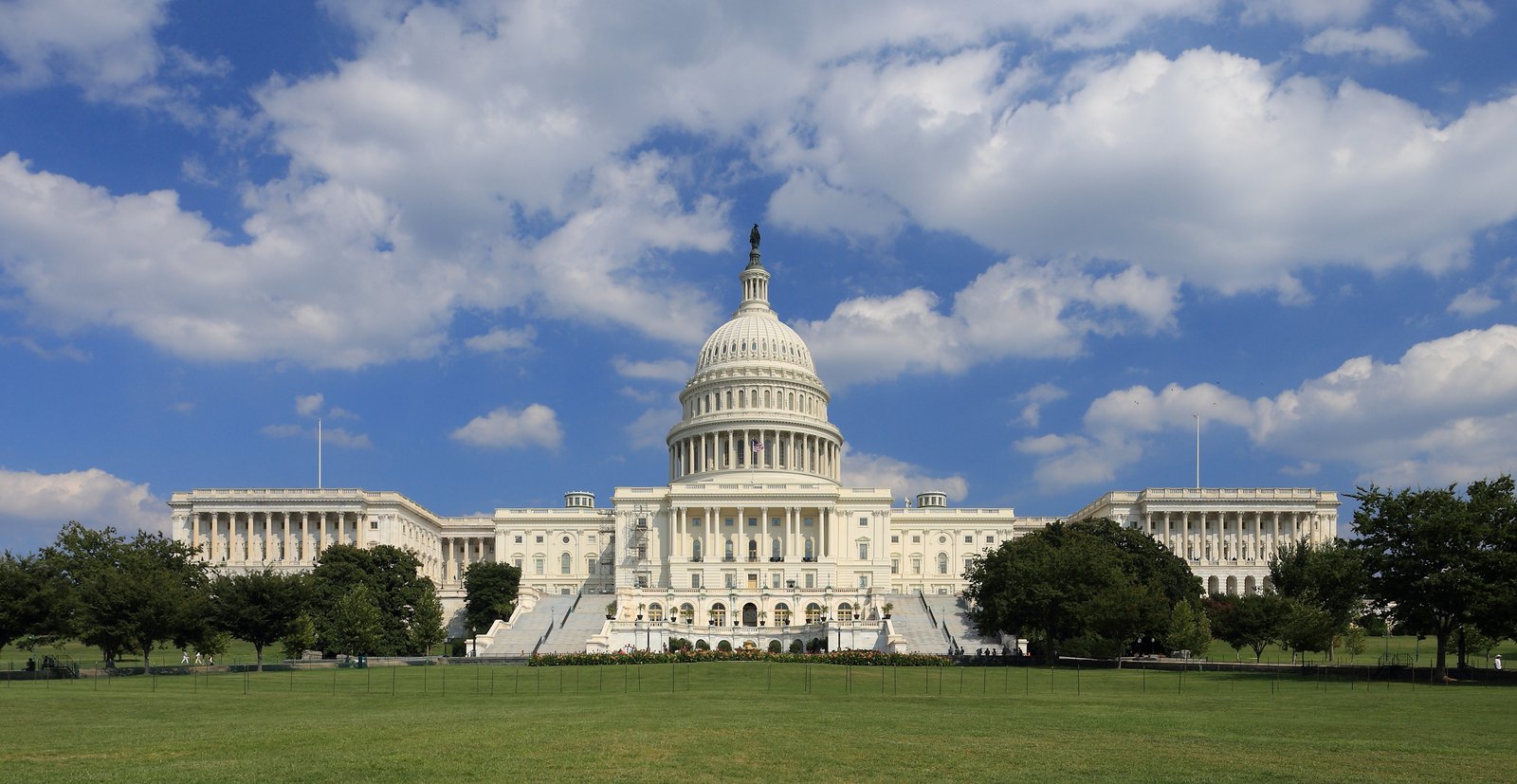
Featured image: U.S. Capitol west front. Architect of the Capitol via Wikimedia Commons (public domain).