

The Investigative Journal’s daily review of the Federal Register. Every item below is drawn directly from documents published in the September 14, 2026 issue, with links to the primary records.
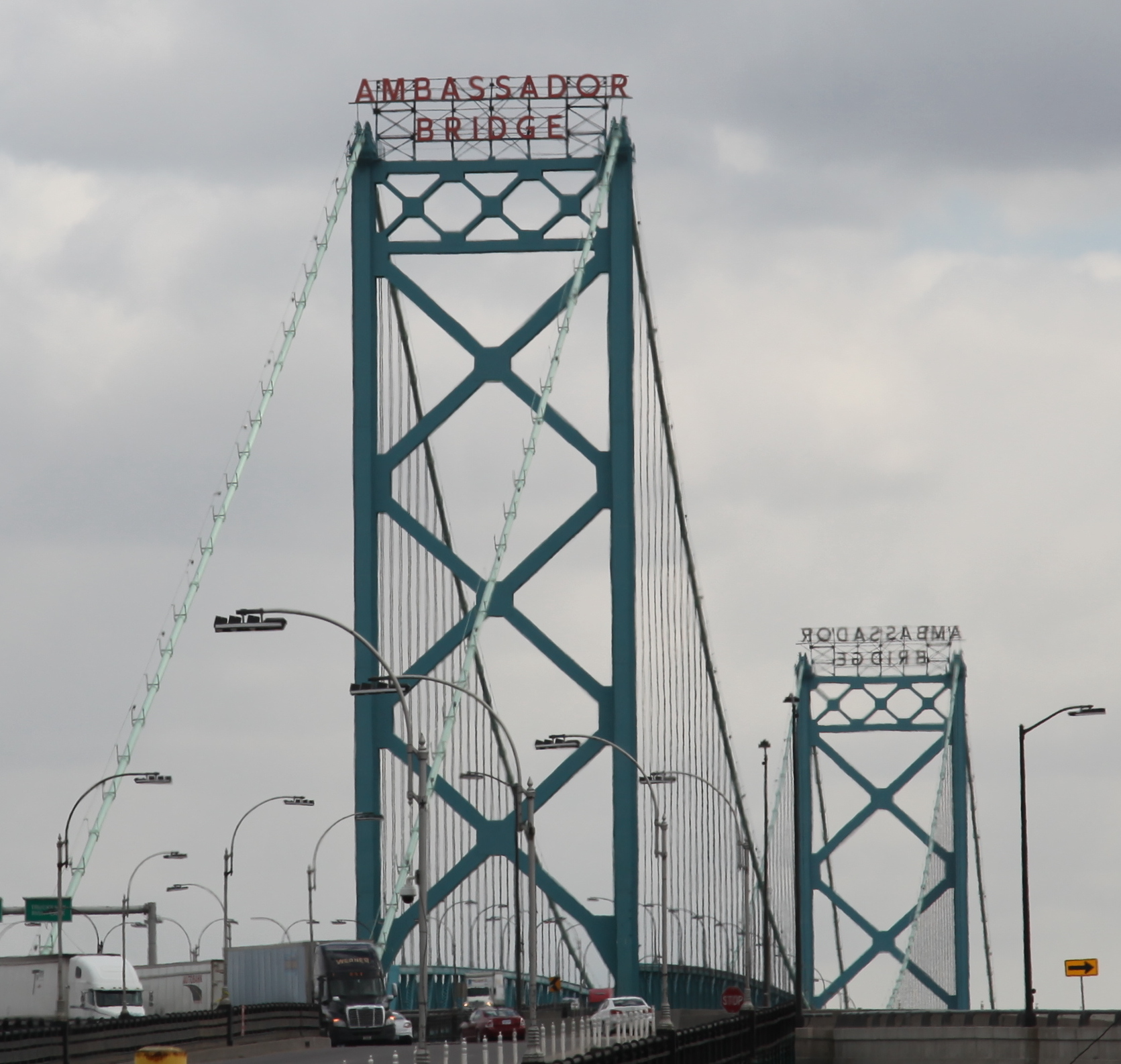
Monday’s Federal Register runs 338 pages and contains 156 documents from 39 agencies, according to the issue’s table of contents: 6 final rules, 8 proposed rules, 137 notices and 5 presidential documents. The presidential documents dominate the day — a five-proclamation package that converts steep tariffs on Canadian goods into outright import bans beginning September 29. Below, the entries with the broadest economic and policy reach, and the comment clocks now running.
1. White House moves from 50 percent tariffs to import bans on Canadian autos, dairy and alcohol
Five proclamations signed September 8 and published today escalate the trade confrontation with Canada. Three of them — Proclamation 11063 (motor vehicles), Proclamation 11062 (dairy) and Proclamation 11061 (alcoholic beverages) — direct that certain Canadian products now subject to 50 percent additional duties be excluded from importation altogether, effective 12:01 a.m. Eastern on September 29, 2026. Two companion proclamations (11065 and 11064) modify which products remain under the duty regime rather than the ban.
The legal vehicle is Section 338 of the Tariff Act of 1930 — a Depression-era statute, little used for decades, that authorizes the President to impose duties of up to 50 percent on, and ultimately to exclude, products of countries found to discriminate against U.S. commerce. The proclamations recount the administration’s version of a rapid summer escalation: duties imposed by Proclamation 11048 on July 20 over Canada’s motor vehicle tariff scheme, a three-day suspension granted August 18 after Ottawa signaled a commitment to remove the measures at issue, and the administration’s finding that Canada “reneged on its commitment” on August 21, after which the 50 percent duties took effect August 22. Canada’s own account of the negotiations is not part of the record published today.
The operative text matters for importers: goods imported but not yet entered for consumption before September 29 remain subject to the 50 percent duty rather than the ban, and U.S. Customs and Border Protection is directed to issue implementing rules and any needed Harmonized Tariff Schedule modifications. A severability clause states that if the ban is invalidated in court, the underlying 50 percent duty springs back — drafting that filings indicate anticipates litigation. Section 338 actions have almost no modern judicial track record, so any challenge would test novel ground.
2. Banking regulators quietly extend the exam cycle for banks under $6 billion
The OCC, Federal Reserve Board and FDIC jointly issued an interim final rule implementing section 903 of the 21st Century ROAD to Housing Act. The rule raises the asset threshold — to $6 billion — under which qualifying insured depository institutions may be examined on-site every 18 months rather than every 12, with parallel changes for U.S. branches and agencies of foreign banks under the International Banking Act.
The rule is effective immediately, September 14, with comments due October 14, 2026 (Docket ID OCC-2026-0761; Federal Reserve Docket No. R-1898). The practical effect is lighter supervisory touch for a substantial tier of community and regional institutions. Supporters of expanded cycles have long argued they free examiner resources for riskier institutions; the interim-final posture means the change takes effect before public comment is weighed — a sequencing worth watching for accountability reporters tracking how the statute is implemented.
3. USTR opens the 2027 foreign trade barriers docket — with a new focus on duty evasion
The U.S. Trade Representative published its annual request for comments for the 2027 National Trade Estimate Report, the statutory inventory of foreign trade barriers used to drive negotiations and enforcement. Submissions are due by 11:59 p.m. EDT on Thursday, October 29, 2026 (Docket USTR-2026-0498), and commenters are asked to estimate potential U.S. export gains from removing each barrier.
The notice lists fifteen categories of barriers, including a category for duty evasion, circumvention and transshipment — covering undervaluation, misclassification, smuggling and policies that support evasion — alongside familiar headings such as subsidies, state-owned enterprises and non-market excess capacity. Canada appears among the more than 70 export markets on which USTR seeks input, meaning the same docket that feeds next spring’s report will collect industry complaints about the very trading partner now facing import bans.
4. NIH proposes to replace its 50-year-old biosafety framework
The National Institutes of Health published a request for information on a draft NIH Biosafety Policy for Research Involving Biohazards that, when finalized, would replace the NIH Guidelines for Research Involving Recombinant or Synthetic Nucleic Acid Molecules — the framework, dating to the 1970s, that has anchored institutional biosafety review for much of modern biomedical research.
According to the notice, the draft expands the scope of NIH oversight from recombinant-DNA work to all biohazards, while removing requirements the agency characterizes as red tape for low-risk research. It would also strengthen the role of Institutional Biosafety Committees, aligning them with IRBs and animal-care committees as pillars of institutional oversight. The proposal follows a modernization initiative NIH announced on September 9, 2025 and a series of regional listening sessions. Comments are due October 19, 2026 through the NIH Office of Science Policy’s online form — a short window for a policy of this breadth, and one biosafety and biosecurity stakeholders will not want to miss.
5. FCC adopts $416 million fee schedule; payments due September 24
The Federal Communications Commission’s final rule setting FY 2026 regulatory fees is effective today, and the order states fees should be paid by September 24, 2026 to avoid penalties and interest. The Commission must collect its full $416.112 million appropriation — up roughly 6.6 percent from $390.192 million in FY 2025 — allocated across payor categories: about $122.7 million from Media Bureau regulatees, $118.4 million from wireline, $112.3 million from wireless, $52.9 million from Space Bureau payors and $9.9 million from international-affairs payors such as submarine cable operators.
The order rejects industry requests to soften the increases. Satellite operators Kepler and SES sought a moratorium or buffer on space-fee increases, submarine cable groups called the international bureau increases excessive, and the National Association of Broadcasters proposed capping earth-station fees at $2,500 per license — all declined, with the Commission stating that Section 9 of the Communications Act requires fees to track its full-time-equivalent staffing methodology and full appropriation.
6. FAA floats letting firefighters ride restricted-category aircraft to wildfires
The FAA published an advance notice of proposed rulemaking evaluating whether to permit ground firefighters to be transported to and from wildfire sites aboard certain restricted-category aircraft — typically surplus military or special-purpose airframes that current rules bar from carrying persons not essential to the special-purpose operation. Comments are due November 13, 2026 (Docket FAA-2026-10991). With federal and state agencies straining to position crews during longer fire seasons, the rulemaking could meaningfully change wildfire logistics; the safety trade-offs will be the crux of the docket. Separately, the FAA proposed a new airworthiness directive for Airbus SAS airplanes, with comments due October 29, 2026.
7. EPA finalizes California ozone budgets, proposes sign-offs for D.C. and Maryland
EPA took final action approving revisions to California’s San Joaquin Valley motor vehicle emissions budgets for ozone — figures that discipline transportation conformity in one of the nation’s most persistent nonattainment areas — and issued a companion clean data determination for the Sacramento Metro area under the 1997 8-hour ozone standards. The agency also proposed approving negative declarations from the District of Columbia and Maryland certifying that no “other solid waste incinerator” units operate in their jurisdictions; comments on both are due October 14, 2026.
Comment deadlines to calendar
- October 14, 2026 — OCC/Fed/FDIC interim final rule on 18-month exam cycles; EPA’s D.C. and Maryland incinerator proposals.
- October 19, 2026 — NIH draft biosafety policy.
- October 29, 2026 — USTR 2027 National Trade Estimate barriers docket; FAA’s Airbus airworthiness directive.
- November 13, 2026 — FAA firefighter-transport ANPRM; USCIS information-collection renewals, including the DACA consideration form.
On TIJ’s radar
Several smaller filings intersect with this publication’s accountability beats. Treasury’s Office of Foreign Assets Control published two sanctions notices formally listing designation actions — the paper trail behind enforcement we track. The Justice Department lodged a proposed supplemental consent decree under the Clean Water Act and a proposed settlement under the Toxic Substances Control Act, both open for public comment before courts act — settlements, it should be noted, that remain proposals until entered. The International Trade Commission is soliciting public-interest comments on a new Section 337 complaint targeting video-capable devices including smart televisions, and Commerce instituted antidumping and countervailing duty investigations of corrugated pizza boxes from China, Malaysia and Turkey — a reminder that trade enforcement now reaches deep into everyday supply chains. And the Small Business Administration published a cluster of presidential and administrative disaster declarations, including for Indiana, Texas and Utah, that will steer federal loan assistance in the weeks ahead.
Methodology and sourcing: every item above is sourced to the linked Federal Register documents, which are public records; characterizations of agency reasoning are drawn from the documents’ own text. FederalRegister.gov postings are the unofficial edition; official versions are published by the Government Publishing Office on govinfo.gov. No individuals are the subject of allegations in this digest, so no requests for comment were required. The Investigative Journal will follow the Canada proclamations, the banking exam-cycle rule and the NIH biosafety docket as they develop.