

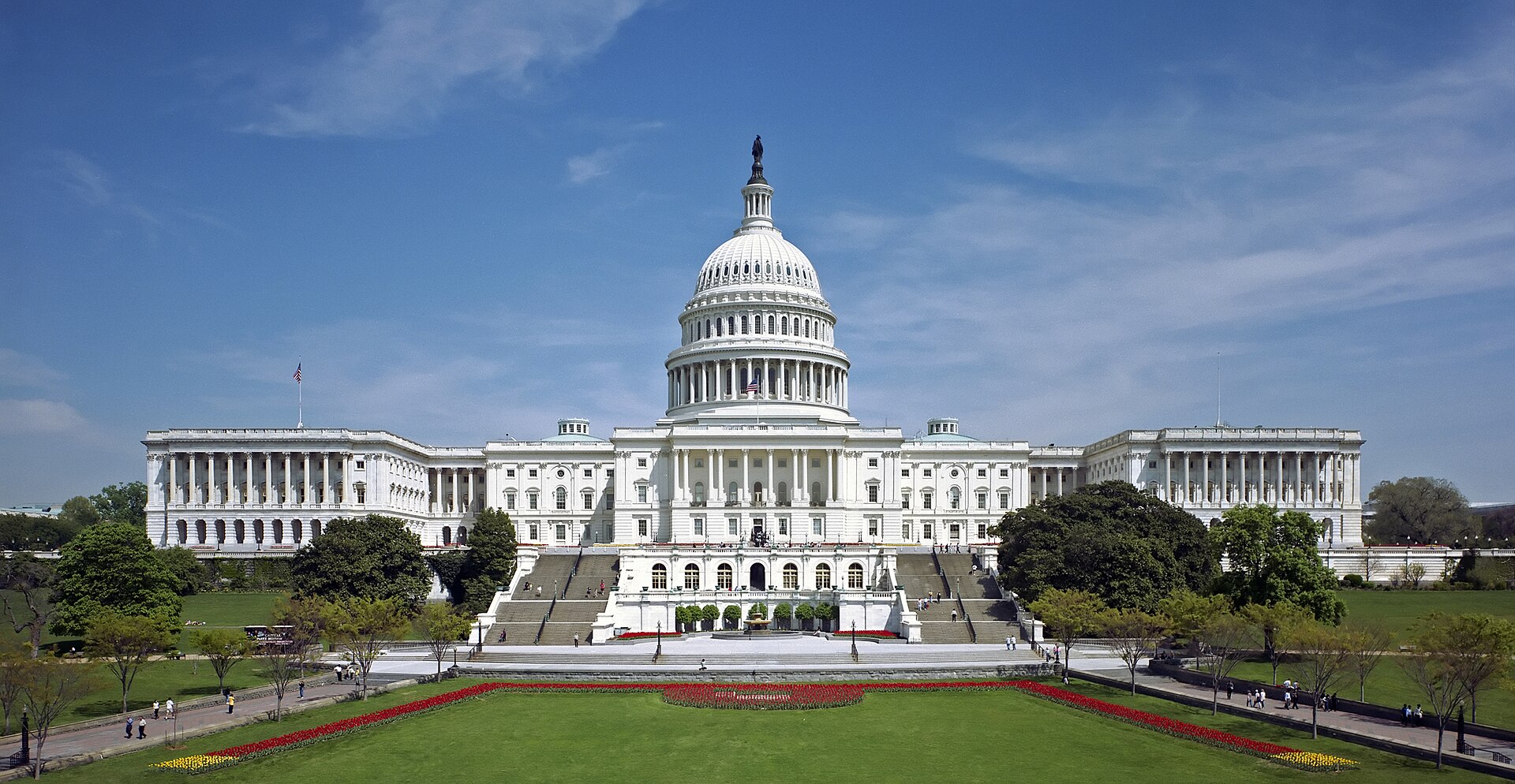
WASHINGTON — Congress closed out its mid-September work period with a third bipartisan rebuke on war powers, a contempt citation against a billionaire investor, and a Senate floor fight over college athletics that will stretch into next week. The House adjourned after its Wednesday evening votes and is not scheduled to return until Monday, September 21, at 10:30 a.m., according to the Office of the Clerk. The Senate held a pro forma session Friday and reconvenes Tuesday, September 22, at 3:00 p.m.
Below is The Investigative Journal’s accounting of the week’s most consequential floor actions, committee decisions, and budget scores — each traced to the public record.
1. House Adopts Iran War Powers Resolution, 220–204, as Seven Republicans Cross Over
The most significant floor action of the week came late Tuesday, when the House agreed to H. Con. Res. 93, directing the President, pursuant to section 5(c) of the War Powers Resolution, to remove United States Armed Forces from hostilities with Iran. The vote was 220 yeas to 204 nays, with nine members not voting, per Roll Call 307.
The resolution was introduced on April 28, 2026, by Rep. Seth Moulton (D-Mass.) with eight original cosponsors, several of them veterans of the armed services, and referred to the Committee on Foreign Affairs. Its operative text carves out forces necessary to defend the United States or an ally against imminent attack, and conditions the directive on the absence of a declaration of war or a specific authorization for the use of military force against Iran.
The Clerk’s party breakdown shows the majority was assembled across the aisle: 213 Democrats voted yea with no Democratic defections recorded, joined by seven Republicans. 203 Republicans and one independent voted nay. In a chamber where the Republican conference holds 218 seats, a seven-member defection was sufficient to carry the measure. It is the third time this year the House has adopted a war powers measure on Iran, after votes in June and July; none has reached the President’s desk.
An important procedural caveat applies. H. Con. Res. 93 is a concurrent resolution. Under long-settled practice, concurrent resolutions are not presented to the President and do not carry the force of law even when both chambers adopt them; whether the War Powers Resolution’s concurrent-resolution mechanism survives INS v. Chadha has been contested since 1983. The measure’s practical significance is therefore as a formal expression of the House’s institutional position and as a marker for how a floor majority would vote if a privileged joint resolution reached the same stage. No companion action has been scheduled in the Senate as of this writing.
2. House Holds Leon Black in Contempt by Unanimous Consent in Epstein Records Probe
The House approved a resolution by unanimous consent on Wednesday finding private equity executive Leon Black in contempt of Congress for defying two subpoenas issued by the Committee on Oversight and Government Reform, according to a statement released by Chairman James Comer (R-Ky.). Because the resolution cleared by unanimous consent, no roll call was recorded.
The action followed a committee vote the prior day. On September 15, the Oversight Committee advanced the contempt report on a bipartisan basis — reported at 41-0 in contemporaneous news accounts — as part of its investigation into the federal government’s handling of the Jeffrey Epstein and Ghislaine Maxwell criminal cases. Committee records indicate Black was subpoenaed for a deposition and for production of nondisclosure agreements, did not appear for a rescheduled deposition on September 3, 2026, produced a single NDA despite counsel indicating more existed, and filed suit against the chairman and the committee.
Committee materials state that Black paid Epstein at least $158 million after Epstein became a registered sex offender. Black has not been charged with any crime in connection with the committee’s inquiry, and his litigation against the committee remains pending. A contempt finding by the House is a referral, not an adjudication; the matter now sits with the Department of Justice, which retains prosecutorial discretion. The bipartisan committee margin is the notable data point here — contempt resolutions in the 118th and 119th Congresses have typically split on party lines.
3. Senate Breaks Through on College Sports Bill; Thune Fills the Tree
The Senate agreed Thursday to the motion to proceed to S. 4668, the Protect College Sports Act, by a vote of 77 to 22 with one senator not voting (Roll Call Vote 236). The bill would establish federal standards for the name, image, and likeness rights of student athletes and address competition rules across intercollegiate athletics.
The roll call is worth reading closely, because it did not track party. The 22 nays comprised 18 Democrats, one independent — Sen. Bernie Sanders (I-Vt.) — and three Republicans: Sens. Ashley Moody (R-Fla.), Rand Paul (R-Ky.), and Rick Scott (R-Fla.). Majority Leader John Thune (R-S.D.) and Minority Leader Chuck Schumer (D-N.Y.) both voted yea. Sen. Jerry Moran (R-Kan.) did not vote.
Leadership moved immediately to lock down the amendment process. According to the Senate Democratic Caucus floor notice, Thune filled the amendment tree and filed cloture on a Cruz-Cantwell substitute, Senate Amendment 6776, and on the underlying bill. The filing deadline for first-degree amendments to both the substitute and the bill is 3:30 p.m. Tuesday. Filling the tree blocks non-leadership amendments from being offered — a procedural posture that frequently produces a cloture fight, and one worth watching given that the 77-22 vote on the motion to proceed masked real substantive disagreement over federal preemption of state NIL statutes.
4. Judicial Confirmations Continue; Second Texas Seat Teed Up for Tuesday
The Senate confirmed Kasdin Miller Mitchell to be United States District Judge for the Northern District of Texas by a vote of 49 to 45 on Thursday afternoon. Mitchell is a litigation partner at Kirkland & Ellis; published accounts of her record indicate she clerked for Justice Clarence Thomas and for Judge William H. Pryor Jr. Her nomination record is available at PN999-4.
Next in the queue is Angela Veronica Colmenero, nominated to be United States District Judge for the Southern District of Texas. The floor notice sets a cloture vote on the Colmenero nomination for approximately 5:30 p.m. on Tuesday, September 22 — the Senate’s first roll call after it returns. The near-party-line margin on Mitchell suggests the Colmenero cloture vote will be similarly close.
5. Two EPA Waiver Disapprovals Clear the House on Narrow Margins
The House passed two Congressional Review Act resolutions this week nullifying Environmental Protection Agency decisions on California nonroad engine standards. H.J. Res. 210, addressing the ocean-going vessels at-berth rule, passed 216-211 on Tuesday. H.J. Res. 213, addressing commercial harbor craft regulations, passed 214-208 on Wednesday.
The party breakdown on H.J. Res. 213 (Roll Call 311) shows 210 Republicans, three Democrats and one independent in favor, with one Republican and 207 Democrats opposed. Both resolutions moved under the rule adopted Tuesday, H. Res. 1530, which itself cleared only 214-208 on the previous question and 214-211 on adoption — margins that illustrate how little room the majority had to operate this week.
Related and easy to miss: on September 14 the Senate Homeland Security and Governmental Affairs Committee reported S. 164, the Midnight Rules Relief Act, which would amend the CRA to let Congress disapprove more than one regulation in a single joint resolution when the rules were submitted during a President’s final year. The CBO estimate published September 15 finds the bill would have no direct budgetary effect, while noting any downstream fiscal consequences would flow from whatever future disapproval resolutions Congress enacted. If S. 164 becomes law, the one-rule-per-resolution constraint that produced this week’s two separate California votes would no longer apply.
6. A Fraud Enforcement Package Moves — One Piece Nearly Party-Line
The House cleared three anti-fraud measures in 48 hours, with markedly different coalitions.
H.R. 9576, the National Fraud Enforcement Division Act of 2026, passed 352-72 (Roll Call 309). The bill would give statutory footing to a National Fraud Enforcement Division at the Department of Justice, led by a Senate-confirmed Assistant Attorney General, to investigate and prosecute fraud against federal programs and taxpayer funds. The administration issued a Statement of Administration Policy supporting passage. Codifying a division in statute matters institutionally: a division created by departmental reorganization can be undone by the next attorney general, while one established by law cannot.
The companion measure fared far worse. H.R. 10326, the PROOF Act — Preventing Rip-offs and Obtaining Oversight of Funds — passed 217-207 — a ten-vote margin, and close enough that a swing of five votes would have defeated it. Sponsored by Rep. Jefferson Van Drew (R-N.J.) and introduced only on September 10, the bill would expand information sharing between federal law enforcement and state agencies to detect fraud in federal programs while, per its text, protecting individual privacy. The speed from introduction to floor passage — six days — and the narrow margin both merit scrutiny as the bill moves to the Senate Judiciary Committee. Privacy architecture assembled that quickly warrants a close read.
Meanwhile, H.R. 9500, the Tax Relief for Fraud Victims Act, passed under suspension 408-17. Separately, an Oversight subcommittee chaired by Rep. Tim Burchett (R-Tenn.) held a hearing on fraud and failure in federally funded homelessness services on September 15, and Chairman Comer introduced the Survivor’s Voice Protection Act on September 16, according to committee releases.
7. WRDA 2026 Sails Through, 415–9
H.R. 9497, the Water Resources Development Act of 2026, passed under suspension of the rules 415-9 on Wednesday (Roll Call 313). The biennial Army Corps of Engineers authorization sets policy for navigation, flood control, hydropower, recreation, water supply, and emergency management. Public reporting indicates the bill authorizes 131 new feasibility studies and 10 new construction projects, following a 66-0 committee vote in July.
WRDA remains one of the few reliably bipartisan authorization vehicles in Congress, which is precisely why it draws scrutiny: project authorizations are the currency of the bill, and authorization is not appropriation. The Senate has its own vehicle, S. 4949, awaiting floor time. The conference — formal or informal — is where the project list will be settled.
8. ESOP Valuation Bill Heads to the President’s Desk
S. 2403, the Retire through Ownership Act, cleared the House 401-14 under suspension (Roll Call 314), completing congressional action. The bill, introduced by Sens. Roger Marshall (R-Kan.) and Tim Kaine (D-Va.) and passed by the Senate in October 2025, establishes a statutory safe harbor allowing employee stock ownership plan fiduciaries to rely in good faith on independent appraisals using IRS Revenue Ruling 59-60 methodologies when valuing privately held stock.
The practical effect is to narrow the Labor Department’s enforcement posture on ESOP valuations, a decade-long source of litigation. Supporters frame it as removing a compliance cloud that has deterred employee ownership transitions; critics of similar safe harbors have argued they reduce recourse for plan participants when appraisals prove inflated. Records indicate the measure now goes to the President.
Also on the Board
The House disposed of a privileged impeachment resolution on Tuesday, agreeing to a motion to table H. Res. 1486 by 232-147 with 47 members voting present (Roll Call 298). The Clerk’s breakdown shows 213 Republicans, 18 Democrats and one independent voting to table, 147 Democrats opposed, and 46 Democrats plus one Republican voting present — a split within the minority caucus that is itself the story.
Other suspension votes: the Whistleblower Protection Act (H.R. 4646) passed 424-0; the Ratepayer Protection Act (H.R. 9340) passed 417-3; the FUTURES in Supervision Act (H.R. 8278) passed 417-7; the GUARD Act (H.R. 2978) passed 414-7; and the Diesel Emissions Reduction Act (H.R. 2140) passed 343-79. The House also concurred in Senate amendments to H.R. 5334, extending the educator expense deduction to early childhood educators, 262-159.
CBO scores filed this week: The Congressional Budget Office published estimates on September 17 for S. 4259, the Blue Skies for Taiwan Act of 2026 — $2 million over 2026-2031, subject to appropriation, to fund a State Department working group on Taiwanese drone production and expedited export licensing; H.R. 1640, the HEIRS Act, as reported by House Financial Services; and S. 2801, a heritage area study authorization.
On the Calendar
Monday, September 21: House convenes at 10:30 a.m.
Tuesday, September 22: Senate convenes at 3:00 p.m. Amendment filing deadline on S. 4668 and the Cruz-Cantwell substitute is 3:30 p.m. Cloture vote on the Colmenero nomination at approximately 5:30 p.m.
Relevant to TIJ’s Investigative Beats
Three threads from this week warrant continued tracking.
Federal law enforcement oversight. FBI Director Kash Patel appeared before the Senate Judiciary Committee for an oversight hearing on September 15; his written testimony is posted on the committee site. The hearing sits alongside Chairman Chuck Grassley’s (R-Iowa) continuing “Arctic Frost” inquiry, which the committee majority says has documented subpoenas for records of more than 400 Republican-affiliated individuals and organizations and telephone records of sitting members of Congress. These are the majority’s characterizations of documents it has released; the underlying records are posted publicly, and the Justice Department has not concluded any parallel review. TIJ will continue to report from the primary documents rather than the press releases.
Congressional subpoena enforcement. The Black contempt referral is the second data point this year suggesting the House will pursue enforcement against private parties, not only executive branch officials. Whether DOJ acts on the referral — and how quickly — is the test of whether contempt retains practical force. Black’s suit against the committee raises separate speech-or-debate questions likely to be litigated before any prosecution decision.
Procurement and supply chain. The Blue Skies for Taiwan Act and the pending U.S. Technology Procurement and Access to Trusted Hardware Act (S. 4570) both target hardware sourcing and export licensing tied to Chinese-affiliated supply chains — an area where authorization language routinely outpaces the appropriations and enforcement capacity behind it. The CBO scores on both bills are small precisely because the costly work is left to agencies operating under existing budgets.
All vote totals and dates in this report are drawn from the Office of the Clerk of the House, the Office of the Secretary of the Senate, Congress.gov, the Congressional Budget Office, and official committee releases. Where a claim reflects a committee’s own characterization of evidence rather than an adjudicated finding, it is attributed as such. Parties named in pending litigation or investigations are entitled to a response; TIJ will publish any statement provided.