

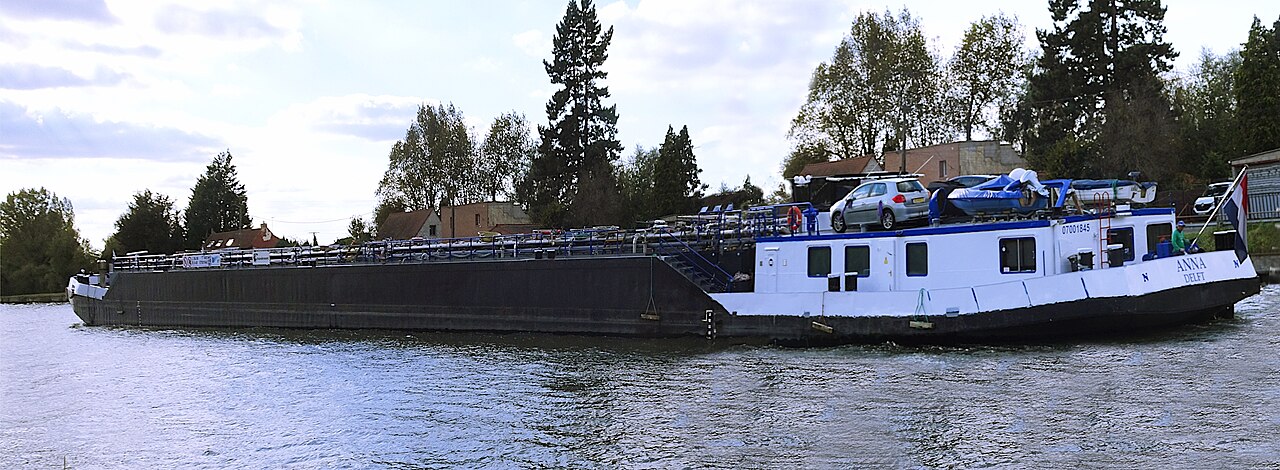
Somewhere in the waters of the Riau archipelago, off the coast of Indonesia, a CBS News investigation documented twelve ship-to-ship oil transfers in a single day — an unprecedented concentration of the covert logistics that keep Iran’s petroleum economy alive despite years of American sanctions. The transfers follow a pattern refined over nearly a decade of sanctions evasion: Iranian tankers load crude at terminals in the Persian Gulf, switch off their Automatic Identification System transponders to become invisible to commercial tracking platforms, rendezvous with intermediary vessels in international waters, and transfer their cargo at sea. The oil is then relabeled, re-documented, and delivered to refineries in China, which receives approximately ninety percent of Iran’s crude exports.
The scale of the operation is enormous. Iran earned an estimated $43 billion from oil exports in 2024, according to U.S. Energy Information Administration estimates, though revenue for the fiscal year ending March 2025 fell to $23.2 billion — still a substantial sum for a nation under comprehensive American sanctions. Western officials estimate that $8.4 billion in Iranian oil payments flow annually through Chinese financial channels, creating a revenue stream that funds Tehran’s nuclear program, its support for proxy forces across the Middle East, and the Islamic Revolutionary Guard Corps. The sanctions-evasion infrastructure consumes roughly twenty percent of oil revenues through shipping costs, buyer discounts, and intermediary fees, according to Iran Open Data analysis — a tax on illegality that Tehran has proven willing to pay.
The Mechanics of Invisibility
The tankers that comprise Iran’s shadow fleet employ multiple layers of deception. AIS manipulation — described by maritime security analysts as an “invisibility cloak” — allows vessels to disappear from commercial tracking systems for days or weeks at a time. In one notable incident, dozens of Iranian shadow fleet vessels briefly activated their tracking systems simultaneously before going dark again, a pattern that suggested coordinated operational security measures. Flag-hopping between low-oversight maritime registries in Panama, Liberia, and other jurisdictions allows vessels to change their legal identity, complicating enforcement efforts that rely on vessel designation. Ownership structures are layered through shell companies in multiple countries, ensuring that no single entity can be easily connected to the Iranian state.
The primary buyers are Chinese “teapot refineries” — small, independent refining operations concentrated in Shandong Province that operate at roughly 54 percent capacity on razor-thin margins. These refineries purchase Iranian crude at discounts of fifteen to thirty percent below market price, a spread that makes sanctions evasion commercially attractive despite the legal risks. Front companies with generic names execute multimillion-dollar transactions, and some deals are conducted directly with entities linked to the IRGC. The Chinese government has shown no meaningful interest in disrupting these transactions, which provide its manufacturing economy with discounted energy while advancing its strategic partnership with Tehran.
Enforcement Theater
American sanctions enforcement has intensified in recent months but remains fundamentally reactive. On February 25, 2026, the Treasury Department’s Office of Foreign Assets Control sanctioned twelve shadow fleet vessels, and the following day the State Department designated more than thirty individuals, entities, and vessels linked to shadow fleet networks. A Turkish petrochemical trader, DIAKO IC VE DIS TICARET, was sanctioned for importing more than $700,000 in Iranian products. These actions generate press releases but have limited operational impact on a network designed specifically to absorb and adapt to sanctions pressure.
The enforcement challenge is structural. Sanctioned crude oil makes up an estimated eighteen percent of global tanker capacity, and six to seven percent of total global unrefined petroleum flows come from sanctioned sources including Russia and Venezuela in addition to Iran. The shadow fleet is not a marginal phenomenon but a significant component of global energy logistics, operating in a regulatory gray zone that no single government has the jurisdiction or the political will to shut down. Vessel designations are quickly circumvented through ownership transfers, service provider changes, and routing adjustments that exploit gaps in monitoring capabilities.
The uncomfortable truth is that Iran’s oil sanctions have become a policy of managed leakage rather than genuine economic isolation. The United States lacks the naval capacity to physically interdict Iran’s exports, the diplomatic leverage to compel China to stop buying Iranian crude, and the political consensus to escalate enforcement to the point where it might actually work. Tehran understands this calculus perfectly. The shadow fleet is not a desperate improvisation but a sophisticated logistics operation that has been refined over years and now functions with the reliability of a commercial shipping line. Until Washington is prepared to confront the Chinese financial networks that enable Iranian sanctions evasion — a confrontation that would carry significant economic and diplomatic costs — the ghost ships will continue to sail, the oil will continue to flow, and the sanctions will continue to serve primarily as a symbol of American intent rather than an instrument of American power.
Sources: ICIJ Pandora Papers | OFAC Enforcement | Transparency International | FinCEN Beneficial Ownership | Treasury Press Releases