

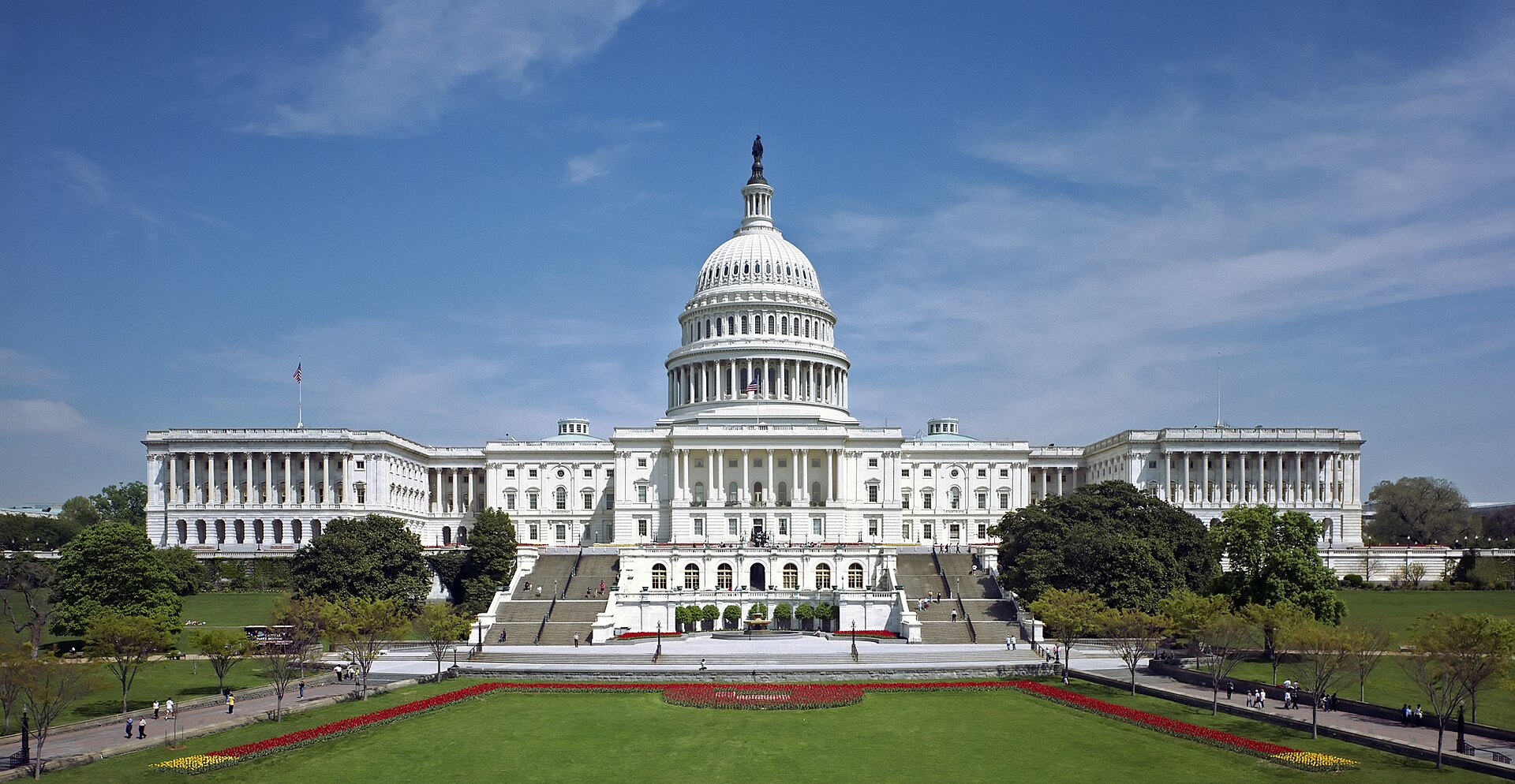
Congress is out of town this week, but the clock is not. Three separate authorities — government funding, federal highway programs, and the farm bill extension — all lapse on September 30, and the two chambers left Washington holding competing stopgap bills. Here is where the major files stood during the week of August 24, 2026.
1. Dueling stopgaps set up the September funding fight
The defining fiscal question of the fall is already on the table: which chamber’s continuing resolution survives. On July 21, the House passed a stopgap that would fund the government through December 4 by a 220–205 vote, according to the Committee for a Responsible Federal Budget’s FY 2027 appropriations tracker. The Senate answered on August 8, passing its own continuing resolution — running one week longer, through December 11 — by a lopsided 90–6 margin. The Senate measure now sits with the House, which returns for an abbreviated session the week of August 31.
The margins tell the story. The House bill passed on near-party lines; the Senate bill drew broad bipartisan support, which gives the upper chamber leverage in the exchange to come. The House Appropriations Committee has framed its measure as a proactive step to protect the full-year funding process; Senate appropriators counter that their version’s stronger vote count is the realistic path to the President’s desk before October 1.
The underlying appropriations math remains unfinished. CRFB’s tracker shows the House has passed three of the twelve FY 2027 bills — Military Construction–VA (400–15 on May 15), Agriculture (213–210 on June 4), and National Security–State (217–209 on July 15) — while the Senate has yet to pass any. The stakes are elevated by recent history: fiscal year 2026 saw three separate funding lapses, including a Department of Homeland Security shutdown that ran from February 14 to April 30 before an agreement was reached, per CRFB’s records.
2. CBO raises the FY 2026 deficit picture
The Congressional Budget Office’s Monthly Budget Review for August 2026 estimates the federal deficit reached $1.8 trillion over the first ten months of the fiscal year — $169 billion more than the comparable period last year, according to a CRFB analysis of the release. Revenues rose by roughly $139 billion year over year, but outlays climbed faster, by about $308 billion, with a portion of that increase attributable to payment-timing shifts.
Reporting by The Hill indicates the agency now projects a full-year FY 2026 deficit of roughly $2.1 trillion, about $200 billion above its February projection. The revision is driven largely by customs receipts coming in below expectations after the Supreme Court struck down certain tariffs earlier this year; CBO reportedly estimates 2026 tariff and customs collections will land roughly $250 billion under prior projections. The figures will frame every fiscal argument of the fall — from the CR fight to any third reconciliation package.
3. NDAA: passed in the House, parked in the Senate
The House passed its $1.15 trillion National Defense Authorization Act for Fiscal Year 2027 (H.R. 8800) on July 22 by a narrow 216–212 vote, according to Breaking Defense. The Senate companion, S. 4784, cleared the Armed Services Committee in June with a written report but stalled on the floor: a mid-July cloture vote on the motion to proceed failed 50–46, and Congress.gov records show the motion was withdrawn on July 23.
With floor consideration blocked, members are reportedly conducting informal pre-conference negotiations between the House-passed text and the committee-reported Senate version during the recess. A Congressional Research Service product, FY2027 NDAA: Status of Legislative Activity, tracks the procedural state of play. The NDAA has become law annually for more than six decades; the question is whether that streak survives a compressed fall calendar that must also absorb the funding fight.
4. Crypto market structure heads toward a September floor test
The Senate Banking Committee advanced the Digital Asset Market Clarity Act in mid-May on a 15–9 vote, with two Democrats joining Republicans, according to the ABA Banking Journal and the committee’s markup release. The bill would assign jurisdictional lanes for digital-asset markets, restrict yield on idle stablecoin balances, and add illicit-finance and customer-property protections, per a committee section-by-section.
A floor vote slipped past the recess amid disagreements over ethics provisions and banking-industry objections; industry trackers report a cloture vote on the motion to proceed is expected around mid-September. The measure must still be squared with the Senate Agriculture Committee’s companion framework for digital commodity intermediaries before final passage becomes realistic, according to Latham & Watkins’ crypto policy tracker.
5. Kids’ online safety: two chambers, two theories
Just before the recess, the Senate Commerce Committee approved the Kids Online Safety Act (S. 1748) by voice vote on August 5, sending it to the floor, per the committee and CNBC reporting. The Senate bill retains a “duty of care” requiring platforms to exercise reasonable design care to mitigate defined harms to minors. Congress.gov shows S. 1748 pending on the Senate calendar.
The House took a different route: on June 29 it passed the KIDS Act (H.R. 7757) by a 267–117 suspension vote. Legal analyses, including from Crowell & Moring, note the House package omits the Senate’s duty-of-care standard and adds preemption language limiting state-level regulation — the central disputes any conference will have to resolve. Both chambers have now demonstrated large majorities for some version of minors’ online-safety rules; the design details remain contested.
6. Highway bill: a $580 billion package waits as authorities near expiration
Surface transportation programs authorized by the 2021 infrastructure law expire September 30, and the National Association of Counties is urging Congress to preserve full funding levels in any extension. The House Transportation and Infrastructure Committee ordered the BUILD America 250 Act (H.R. 8870) reported on May 22 by a strikingly bipartisan 62–2 vote — a five-year package reported at roughly $580 billion for highway, transit, freight, rail, and safety programs.
The bill has not yet received House floor time, and the Senate has not produced a companion. Given the calendar, a short-term extension of current law appears the most probable outcome; observers note that every surface transportation reauthorization since 1991 has required at least one extension before enactment.
7. Farm bill: Senate committee action, then a SNAP standoff
The House passed its farm bill, the Farm, Food, and National Security Act of 2026 (H.R. 7567), on April 30 by a 224–200 vote, Congress.gov records show. The Senate Agriculture Committee held a markup of its own version, the Agricultural Act of 2026, on August 6, though the measure remains in committee, according to the National Association of Counties.
The chief dividing line between the chambers — and the parties — remains nutrition policy, specifically how the bill treats changes made to SNAP in last year’s reconciliation law. With the current farm bill extension expiring September 30, another short-term extension is a live possibility if negotiators cannot close the gap this fall.
8. CBO works through the queue during recess
The scorekeepers did not take August off. On August 21, CBO released its cost estimate for H.R. 2870, the Working Families Flexibility Act, which would amend the Fair Labor Standards Act to let private-sector employees elect compensatory time off in lieu of overtime pay. CBO estimates implementation would cost about $3 million over 2026–2031 — roughly $2 million for Labor Department rulemaking and training and $1 million for GAO reporting — subject to appropriation. The underlying bill, H.R. 2870, awaits House floor action.
9. State watch: California’s AI transparency law takes effect
With Washington quiet, the states moved. California’s AI Transparency Act (SB 942) took effect August 2, requiring covered generative-AI providers to offer content watermarks, latent disclosures, and detection tools, according to analyses by Cooley and Software Improvement Group. Connecticut’s SB 5, described by TechPolicy.Press as among the most comprehensive state AI laws of the 2026 session, adds a regulatory sandbox and chatbot controls.
The volume is national in scale: lawmakers in 45 states had introduced more than 1,500 AI-related bills by March, per industry tallies. That patchwork is fueling the federal preemption debate — a discussion draft of the Great American AI Act would preempt certain state AI-development laws for three years, according to the Center for Democracy and Technology — a fight likely to sharpen when Congress returns.
10. Watch list: a third reconciliation package
Behind the appropriations fight sits a larger question: whether Republicans attempt a third reconciliation bill this Congress. The second package, signed in June, provided roughly $70 billion for Immigration and Customs Enforcement and Customs and Border Protection, funding those agencies through the end of the current term, according to NPR and the National Low Income Housing Coalition.
Discussions about a third bill — potentially covering additional defense spending and tax provisions — have been reported since spring, but its contents and viability remain unclear. CRFB’s appropriations analysis notes the administration is separately seeking $350 billion in defense resources through reconciliation, on top of its record $1.15 trillion discretionary defense request. Whether the votes exist is the open question of the fall.
On TIJ’s beats
For accountability reporting, three threads from this week’s tracker merit follow-up. First, the tariff-revenue shortfall CBO flags — roughly $250 billion below projections, per The Hill’s reporting — will pressure every spending negotiation and deserves line-item scrutiny as updated Treasury data arrives. Second, the roughly $70 billion in enforcement funding now flowing to ICE and CBP outside the annual appropriations process raises standing oversight questions about transparency and reporting requirements that this publication will continue tracking. Third, the preemption provisions moving in both the kids’ online-safety and AI debates would reshape the federal-state regulatory balance — a structural story that will outlast any single bill. The Investigative Journal will follow the documents: bill text, CBO scores, and committee reports, as they post.
Sources and documents: CRFB Appropriations Watch FY 2027; CBO Monthly Budget Review, August 2026; H.R. 8800; S. 4784; CRS IN12704; S. 1748; H.R. 7757; H.R. 8870; H.R. 7567; CBO estimate for H.R. 2870.