

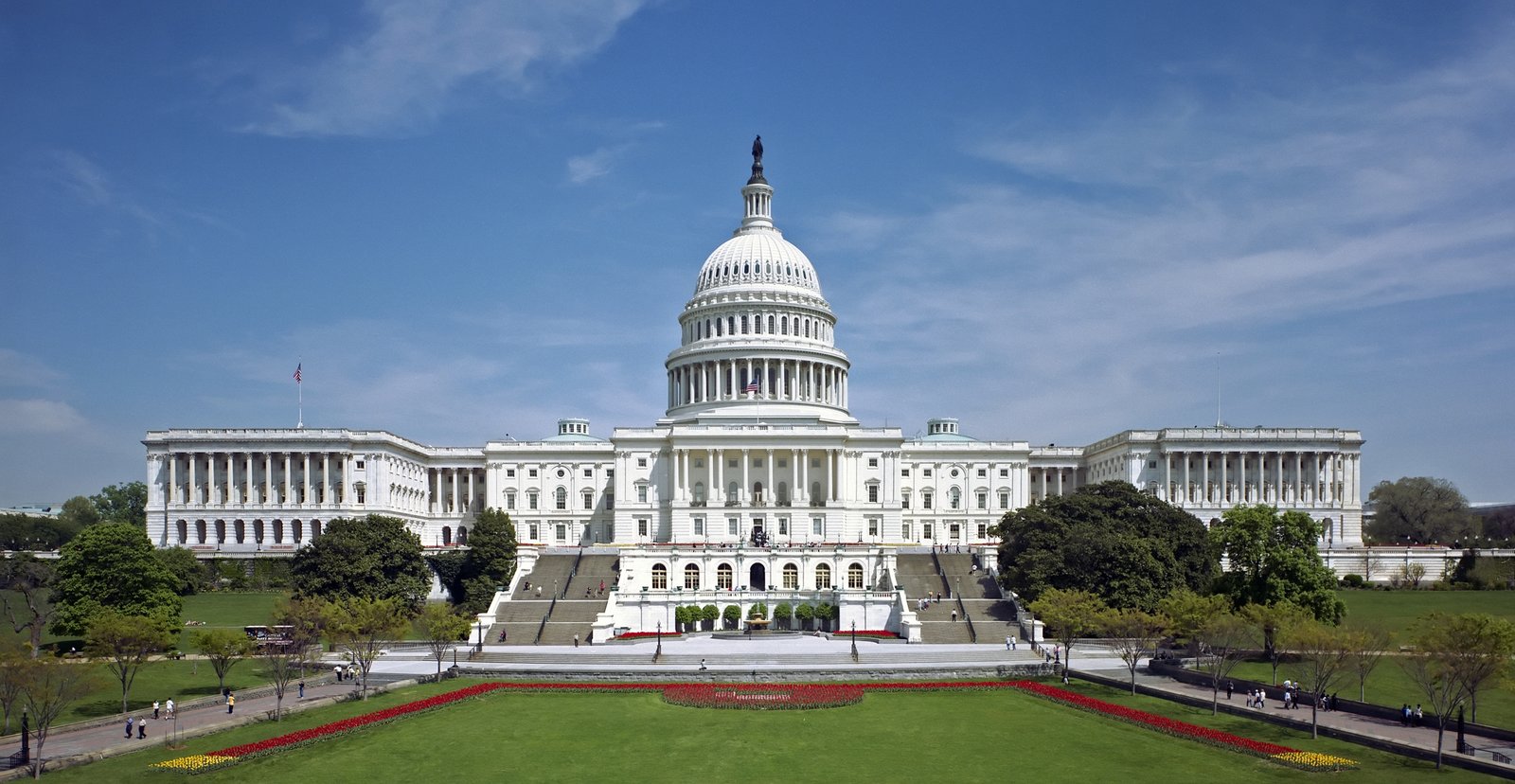
WASHINGTON — Both chambers of Congress gaveled in for only seconds this morning — the Senate at 8 a.m., the House at 9 a.m. — in the pro forma sessions that have marked the August district work period. But the quiet is deceptive. According to the House Press Gallery, the House is expected to hold its next votes on Monday, August 31, and the first item waiting on the calendar is consequential: the Senate’s 90-6 stopgap funding bill, passed in the early hours of August 8, which differs from the version the House approved in July. With the fiscal year ending September 30, the distance between those two bills is now the central question in Washington.
Today’s Capitol Watch reviews where the funding fight stands, the sanctions bill awaiting House action, a Department of Homeland Security Inspector General finding that grew out of a House Oversight investigation, the stalled defense authorization, and a heavy month of Congressional Budget Office analysis — along with the recess-week paper trail of bill introductions and oversight letters that official records show continued even with members back home.
Two stopgaps, one deadline
Before leaving town, the Senate passed its version of a continuing resolution — using H.R. 6500 as the legislative vehicle — by a 90-6 vote at 3:37 a.m. on Saturday, August 8, according to the Senate’s official roll call record. The measure, shaped by a substitute amendment from Senate Appropriations Chair Susan Collins (R-Maine), would fund the government through December 11. The House passed its own, shorter stopgap, H.R. 9770, on July 21 by a 220-205 vote, running only through December 4. The Committee for a Responsible Federal Budget’s appropriations tracker notes the Senate bill also carries technical anomalies and policy riders the House bill omits — reporting by the Brownstein firm’s appropriations team and the Afterschool Alliance indicates those include WIC adjustments, disaster relief, shipbuilding funds, and a temporary block on the Office of Management and Budget’s pending revisions to the Uniform Grant Guidance.
The stakes are informed by recent history. As CRFB’s tracker records, fiscal year 2026 saw three separate lapses in appropriations: a shutdown from October 1 to November 12, 2025, during the fight over Affordable Care Act tax credits; a short partial lapse from January 31 to February 3; and a Department of Homeland Security shutdown that ran from February 14 until April 30, when Congress enacted a DHS bill that excluded contested Immigration and Customs Enforcement and Border Security Operations funding. Against that backdrop, the 90-6 Senate margin — and the House’s 220-205 party-line vote — suggests the Senate’s bipartisan patch is the likelier landing zone, but the House must still act before October 1.
On the full-year bills, the two chambers are far apart. House appropriators have moved all twelve fiscal 2027 bills through committee and passed three on the floor — Agriculture (213-210 on June 4), Military Construction-VA (400-15 on May 15), and National Security-State (217-209 on July 15). The Senate Appropriations Committee, by contrast, has not reported any of its twelve bills, with members still at odds over topline allocations, according to the CRFB status table and the National Low Income Housing Coalition.
Russia-Iran sanctions bill heads back to the House
In its final pre-recess session, the Senate also passed H.R. 5334, the vehicle for the Lindsey O. Graham Sanctioning Russia and Iran Act of 2026, by an 86-11 vote, per the Senate floor wrap-up. The bill is named for the late senator from South Carolina, its longtime champion. NBC News reported that the measure targets major purchasers of Russian oil and gas, adds sanctions on Russian officials and oligarchs, and authorizes targeted tariffs on goods from the largest importing countries — and that Ukrainian President Volodymyr Zelenskyy watched the vote from the Senate gallery. Because the Senate amended the House-passed text, the bill must return to the House before it can go to the President’s desk, making it another early-September agenda item.
The same weekend session produced a burst of other floor action recorded in the official wrap-up: confirmation of Todd Blanche as Attorney General on a 50-49 vote, confirmation of 74 other nominations en bloc, passage of a slate of smaller bills including the Stop Secret Spending Act, and a failed 52-46 cloture vote on S. 5271, a proposed amendment to the Help America Vote Act.
Watchdog file: IG finds FEMA crew unlawfully skipped homes with Trump signs
On August 25, House Oversight and Government Reform Chairman James Comer (R-Ky.) announced that the DHS Office of Inspector General had issued a final report (OIG-26-21) finding that a FEMA disaster response crew violated law and agency policy by skipping homes displaying Trump campaign signage during the Hurricane Milton response in 2024. The finding closes the loop on a controversy the committee began investigating in November 2024, when members questioned then-FEMA Administrator Deanne Criswell about whistleblower allegations of political bias in relief operations.
According to the committee’s release, the employees responsible were previously terminated, and FEMA implemented additional training on political neutrality in disaster response. Comer called on FEMA to “immediately implement the Inspector General’s recommendations to ensure this kind of political discrimination never happens again.” The IG’s confirmation matters beyond the individual case: records of the episode have figured in broader congressional debates over accountability structures for the career federal workforce. Readers can review the inspector general’s report directly at the DHS OIG website.
Recess oversight: Fauci records letter and a McKinsey inquiry
The Oversight Committee’s paper trail continued through the recess. On August 19, Chairman Comer sent a letter to former Health and Human Services Secretary Xavier Becerra demanding answers, within two weeks, about why Dr. Anthony Fauci’s diary — composed on government-issued computers between 2019 and 2022 — and his phone were not produced in response to the Select Subcommittee on the Coronavirus Pandemic’s November 2023 records request, according to the committee’s release. The committee separately stated in late July that Dr. Fauci invoked the Fifth Amendment during a deposition. These are the committee’s characterizations; a public response from Mr. Becerra had not been identified in the records reviewed for this article, and the two-week response window the letter sets expires next week.
On August 17, Rep. Brandon Gill (R-Texas) opened an inquiry into McKinsey & Company over what the committee describes as the firm’s promotion of discriminatory hiring practices. The announcement reflects allegations at the inquiry stage, not findings; no public response from McKinsey was identified in the records reviewed for this article.
Defense bill stalled — as CBO prices a battleship fleet
The fiscal 2027 National Defense Authorization Act remains in limbo. The House passed its version, H.R. 8800, in late July, authorizing roughly $1.15 trillion, including right-to-repair provisions and $500 million toward a second destroyer, per Breaking Defense. The Senate Armed Services Committee completed markup of its roughly $1.14 trillion bill in June, but the measure has not reached the Senate floor amid objections from Senate Democrats tied to U.S. hostilities with Iran and the size of the topline, according to Breaking Defense. The Congressional Research Service maintains a running status report at IN12704. Notably, the Senate’s pre-recess agreement schedules floor consideration of H.Con.Res. 89 — a War Powers Resolution measure directing the removal of U.S. forces from hostilities with Iran — no later than October 2, with six hours of debate, per the Senate wrap-up.
Congress will weigh the Navy’s shipbuilding ambitions with fresh numbers in hand. A CBO report published August 5, The Navy’s New Battleship Program, estimates that building 15 of the Navy’s planned nuclear-powered battleships would cost about $275 billion in 2026 dollars through 2056 — roughly $23 billion for the first ship and an average of $18 billion for each of the next fourteen. Those figures will frame September’s authorization and appropriations debates over the shipbuilding industrial base.
CBO’s August ledger: a $1.8 trillion deficit pace
The Congressional Budget Office’s Monthly Budget Review for August, published August 10, estimates the federal deficit reached $1.8 trillion over the first ten months of fiscal year 2026 — $169 billion more than the same period a year earlier. That trajectory is the fiscal backdrop for the December funding negotiations both CRs would set up.
Two additional CBO releases merit attention. An August 26 report, The Taxation of Social Security Benefits, examines how benefit-taxation rules affect federal revenues and the distribution of taxes among beneficiaries — relevant to any year-end tax package. And an August 20 self-evaluation, An Evaluation of CBO’s Projections of Revenues From 1982 to 2025, compares four decades of the agency’s baseline revenue projections with actual collections — useful reading for lawmakers who lean on those baselines in scoring fights.
On the floor, and what to watch
The recess record shows Congress’s machinery never fully stops. During Monday’s pro forma session, House members introduced 20 public bills (H.R. 10118 through H.R. 10137) and one resolution, according to the Congressional Record for August 24, though no committee meetings were held. Today’s sessions in both chambers were likewise pro forma, with no business conducted.
Looking ahead: the House is expected to vote again beginning Monday, August 31, with the Senate-amended CR and the sanctions bill queued for decisions before the September 30 funding deadline. In the Senate, the pre-recess agreement locks in a cloture vote on the motion to proceed to S. 4668, the Protect College Sports Act of 2026 — a name, image, and likeness framework for college athletics — between September 15 and September 23, and the Iran war powers vote by October 2. Senate appropriators, meanwhile, still must resolve topline spending allocations before any of their twelve bills can move.
For the accountability file
Several threads from this digest feed The Investigative Journal’s ongoing beats. The FEMA inspector general report (OIG-26-21) offers a documented case study in politicized administration of federal relief — and a test of whether the IG’s recommendations are implemented and verified. The CR fight includes a little-noticed rider blocking OMB’s Uniform Grant Guidance revisions, a dispute over who controls the terms of hundreds of billions of dollars in federal grants. The Becerra letter’s two-week deadline expires in early September, setting up a potential records-production standoff. And the CBO battleship estimate gives appropriators — and taxpayers — a concrete number against which to measure the Navy’s largest procurement bet in generations. TIJ will follow the documents in each case.
Sources and records: Senate roll call vote 228 (H.R. 6500); House roll call 272 (H.R. 9770); Senate floor wrap-up, Aug. 7-8; H.R. 5334 at Congress.gov; H.R. 8800 at Congress.gov; DHS OIG report OIG-26-21; House Oversight release, Aug. 25; Comer letter to Becerra, Aug. 19; CBO Monthly Budget Review, Aug. 10; CBO battleship report, Aug. 5; CBO Social Security benefits taxation report, Aug. 26; Congressional Record, Aug. 24; CRFB Appropriations Watch FY 2027; CRS report IN12704.
Featured image: The United States Capitol, west front. Photo by David Iliff, License: CC BY-SA 3.0, via Wikimedia Commons.