

Morning Wire — Friday, July 17, 2026. A widening U.S. military campaign against Iran dominated the overnight cycle, with U.S. Central Command reporting a fourth consecutive day of strikes, a reimposed naval blockade of Iranian ports, and fresh Iranian missile fire that Qatar said it intercepted over Doha early Friday. In Washington, President Donald Trump used a Thursday-night primetime address to declassify what he described as evidence of Chinese interference in U.S. elections — claims that, records show, run counter to earlier assessments by U.S. intelligence agencies. Below, the developments accountability-minded readers should track this morning across government, the courts, and international affairs.
Government
Trump declassifies China election claims in primetime address. In a roughly 25-minute address Thursday evening, President Trump said newly declassified intelligence showed that China had “carried out what is believed to be the largest compromise of election data in history,” alleging that Beijing accessed some 220 million U.S. voter files and attempted to “manufacture illegal ballots,” according to CNBC’s account of the speech. Trump called for criminal charges against those he accused of meddling and urged that networks declining to air the address lose their broadcast licenses, CNN reported.
The claims revive long-running disputes over the 2020 election. As U.S. News noted, U.S. intelligence officials had previously assessed that China “did not deploy interference efforts” intended to change the 2020 outcome and “did not interfere with election infrastructure,” including vote tabulation. The White House said the new material was assembled by a task force and the president’s intelligence advisory board; the underlying files had not been independently reviewed as of publication. The address, first previewed by CBS News, lands roughly four months before November’s midterm elections, positioning election security as a central campaign theme.
DHS caps the duration of student, journalist and exchange visas. The Department of Homeland Security issued a final rule ending open-ended “duration of status” admissions, Time reported. Under the rule, F-1 international students and J exchange visitors will generally be admitted for fixed terms of up to four years, while I-visa foreign journalists will be admitted for up to 240 days at a time — and 90 days for Chinese nationals. Those seeking to stay longer must apply for extensions or depart and reapply.
DHS said the change addresses a “significant increase in the volume of such visitors” that it argues complicates monitoring. The rule takes effect 60 days after publication in the Federal Register, pending congressional review, per a Reuters dispatch carried by U.S. News. Filings indicate the State Department has revoked more than 100,000 visas since the start of the administration’s term, including roughly 8,000 held by students. Press-freedom and higher-education groups are expected to challenge or comment on the rule during the review window.
Senate Democrats block the $1 trillion defense bill over the Iran war. In a rare setback for must-pass legislation, the Senate voted 50-46 on Tuesday against opening debate on the annual National Defense Authorization Act, CBS News reported. Democratic Leader Chuck Schumer and most of his caucus withheld support as the war with Iran entered a fifth month. As Breaking Defense detailed, objections centered on the conflict, on provisions deepening U.S.–Israel military and intelligence cooperation, and on the White House’s push to raise the Pentagon topline toward $1.5 trillion. The stalemate delays a troop pay raise contained in the package.
Graham succession settled for now. Following the death of Senator Lindsey Graham (R-S.C.) — whose cause a medical examiner’s preliminary findings attributed to an aortic dissection — Governor Henry McMaster appointed Graham’s sister, Darline Graham Nordone, to serve on an interim basis. She was sworn in on the Senate floor, NPR reported, hours after Trump recommended her. A special Republican primary to choose a candidate for the seat is set for August 11, according to CBS News.
Courts
The war-powers question inches toward the judiciary. Trump notified Congress that “limited” strikes on Iran had resumed, a move that The Hill reported appears intended to reset the 60-day clock the War Powers Resolution allows for hostilities absent congressional authorization. Congress has already pushed back: the House passed a war-powers resolution 215-208 on June 3, per NPR, and the Senate followed later in June with four Republicans crossing over. As PBS and PolitiFact explained, such resolutions carry limited legal force, the administration has questioned the statute’s constitutionality, and courts have so far declined to rule — leaving the underlying dispute unresolved.
Immigration detention fight splits the circuits. Litigation over a July DHS memo requiring detention of immigrants who entered without inspection continues to divide federal appeals courts, NOTUS reported. A three-judge Fifth Circuit panel held on July 2 that indefinite detention without justification would violate the Constitution, but the full court vacated that decision after the government sought rehearing, with argument expected in September. Records indicate the Fifth and Eighth Circuits have sided with the administration while courts covering New York, Georgia, Ohio and Colorado have rejected the approach. The cases remain pending, and no nationwide precedent has been set.
Election-administration orders remain enjoined. Key portions of the administration’s executive actions on elections stay on hold. A federal judge blocked central pillars of an order restricting mail voting, finding “no law enacted by Congress delegates authority to control mail-in voting” to the Postal Service, Votebeat reported, while a separate ruling halted an effort to build a federal voter list. Appeals are anticipated; the matters are not final.
International
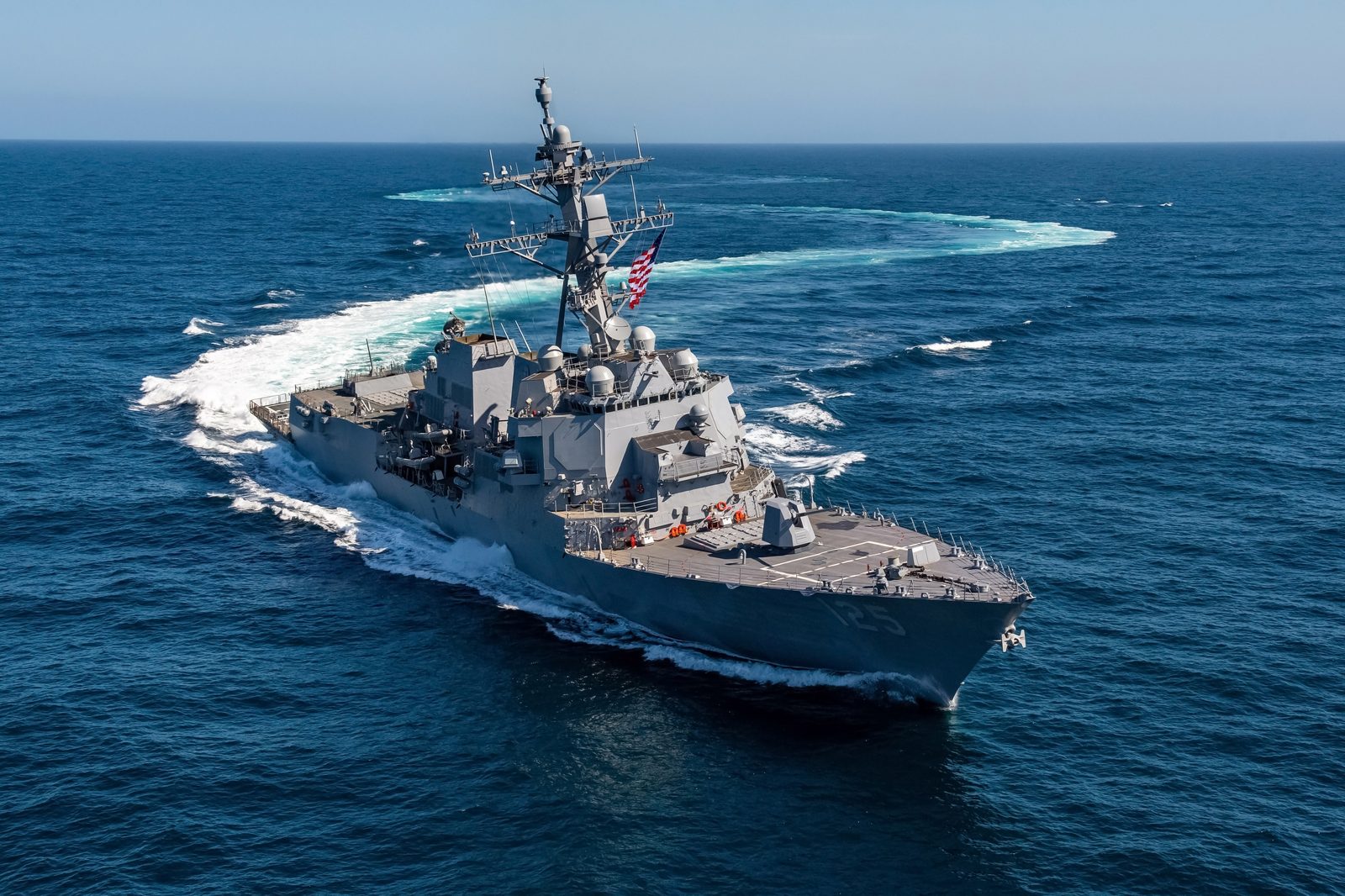
U.S.–Iran war widens across the Gulf. U.S. Central Command reported a fourth straight day of strikes, with Iranian outlets citing explosions in the port of Bandar Abbas and on the islands of Kish, Qeshm and Abu Musa, NPR reported. Washington reimposed a naval blockade of Iranian ports after Tehran said it disabled two United Arab Emirates supertankers in the Strait of Hormuz; the UAE reported the strikes occurred in Omani territorial waters and killed one crew member. CNN has tracked the escalation, which began with the blockade’s reactivation earlier in the week.
Qatar intercepts a missile barrage over Doha. Qatar’s Ministry of Defense said early Friday it intercepted a missile attack targeting the country, after residents reported loud blasts in the capital. A government alert first warned of an elevated threat and urged people to shelter before declaring the situation had “returned to normal.” Qatar’s Interior Ministry said a child was wounded by falling shrapnel from an intercepted strike, Gulf News reported; the country’s defense ministry confirmed the interception. Tehran had not publicly acknowledged the attack as of this writing.
Oil surges as the U.S. tightens the screws. The renewed conflict jolted energy markets: Brent crude settled up 9.59% at $83.30 a barrel — its biggest single-day percentage gain in more than six years — while U.S. benchmark WTI rose about 9.4% to $78.14, CNBC reported. Adding pressure, the Treasury Department revoked a temporary waiver that had permitted certain sales of Iranian oil; those transactions become impermissible after 12:01 a.m. EDT Friday, the same reporting indicates.
Ebola outbreak worsens in eastern Congo. Away from the Gulf, health officials warned that an Ebola outbreak in the eastern Democratic Republic of the Congo is spreading faster than responders can track it, with the death toll surpassing 700, NPR reported. Insecurity in the region has hampered contact tracing and vaccination efforts.
Worth Watching
Today and the days ahead. The Treasury’s revoked Iran oil waiver takes effect at 12:01 a.m. EDT Friday, and traders will watch whether the blockade and sanctions snapback push crude higher into the weekend. The 60-day War Powers clock is now running again following the administration’s latest notification, setting up a fresh confrontation with Congress over authorization. Watch for a possible refiling of the stalled NDAA and any movement on the Pentagon topline.
In the courts, the Fifth Circuit’s en banc rehearing on ICE detention is expected in September, and appeals of the election-order injunctions could advance in the coming weeks. Politically, South Carolina’s special Republican primary on August 11 will shape the race for Graham’s seat, while the DHS visa rule enters a 60-day review period before taking effect. Domestically, wildfire smoke from Canadian and Minnesota blazes continues to trigger air-quality alerts across the Midwest and Northeast, and the FDA is investigating an iceberg-lettuce supplier as a possible source in a cyclosporiasis outbreak now spanning thousands of reported cases. The Investigative Journal will update these threads as records and official statements develop.
— Eduardo Bacci, The Investigative Journal