

Good morning. Here is The Investigative Journal’s Morning Wire for Tuesday, September 15, 2026 — a digest of overnight developments across government, the courts, and international affairs, compiled from public records, court filings, and wire reports.
The morning’s dominant story sits at the intersection of the courts and the November midterms: the Supreme Court on Monday declined to revive a U.S. Postal Service rule restricting election mail, leaving mail voting procedures in place as states begin sending ballots. In Washington, the Federal Reserve opens a closely watched two-day policy meeting today, with a decision due Wednesday afternoon. Overseas, the BRICS bloc wrapped up its New Delhi summit with a unanimous declaration, and North Korea’s leader pledged to deepen his country’s involvement in Russia’s war against Ukraine.
Government
Federal Reserve opens two-day meeting with a hike on the table. The Federal Open Market Committee begins its September meeting today, with a rate decision scheduled for Wednesday at 2:00 p.m. ET followed by a press conference from Chair Kevin Warsh, according to the week-ahead economic calendar compiled by Kiplinger. The federal funds target range has stood at 3.50 to 3.75 percent since December 2025, and market previews indicate traders are weighing a hold against a quarter-point increase — an unusual setup in which recent remarks by Warsh reportedly pushed the implied probability of a hike above 50 percent, from roughly 36 percent beforehand.
Analysts cited in those previews say softer July employment and retail sales data argue for holding rates steady, while inflation running above the Fed’s 2 percent goal keeps a hike scenario live. Wednesday’s meeting also produces a quarterly Summary of Economic Projections — the “dot plot” of policymakers’ rate forecasts — making it one of the year’s most consequential Fed events, per Yahoo Finance’s week-ahead preview.
Funding secured through December 11; full-year talks remain unfinished. Federal agencies enter the final two weeks of the fiscal year with a shutdown off the table for now. The House passed a short-term funding extension on a 370-48 bipartisan vote earlier this month, carrying federal spending through December 11, according to NPR’s reporting on the vote and a release from Rep. Hal Rogers’s office. Lawmakers turned to the stopgap after bipartisan Senate negotiations on full-year appropriations broke down, Federal News Network reported — meaning the substantive fight over fiscal 2027 spending levels now lands in a post-election lame-duck session. The Committee for a Responsible Federal Budget’s deadline tracker lists December 11 as the next funding cliff.
Election mail moves as ballots go out. With the Postal Service rule paused, election officials are proceeding under existing mail-ballot procedures for the midterm cycle. Mail ballots have already begun going out in some states, NBC News reported, and a second federal judge late Sunday ordered the Postal Service not to implement the executive order limiting mail balloting while litigation proceeds, per NBC News. Court records indicate the practical effect is that state and local officials — not the Postal Service — will continue to set the terms for election mail this fall.
Courts
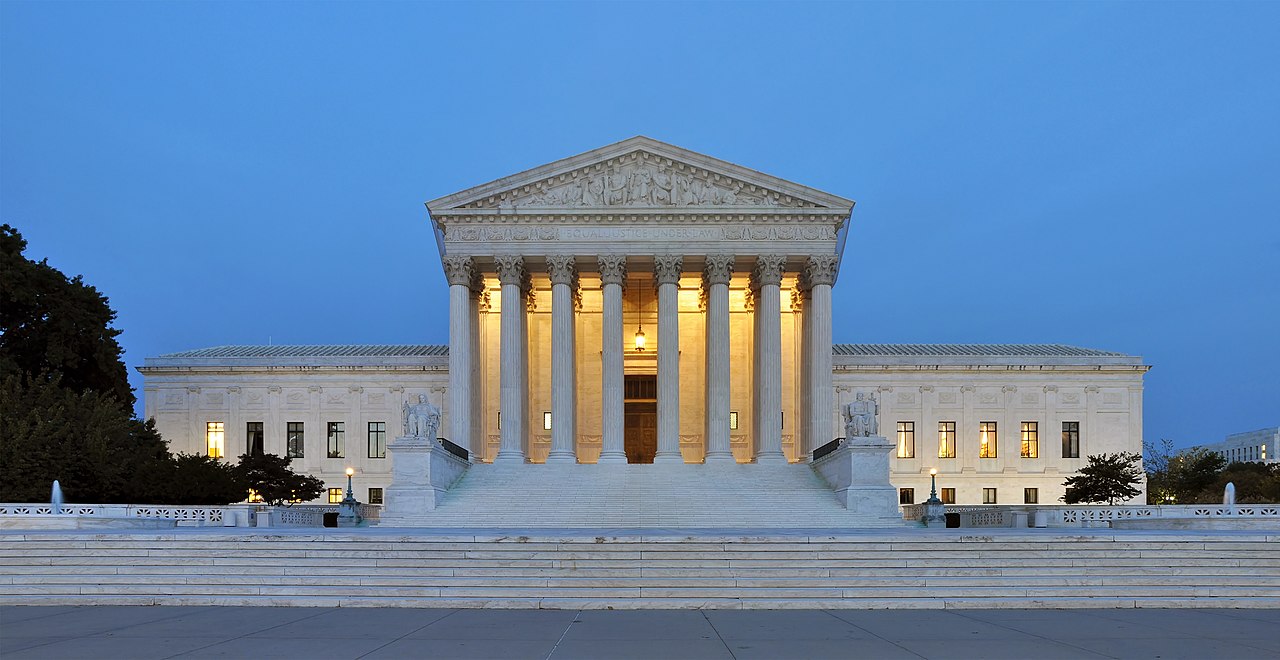
Supreme Court declines to revive mail-ballot restrictions for 2026. In the most consequential ruling of the young term, the Supreme Court on Monday rejected the administration’s bid to enforce a Postal Service rule restricting election mail ahead of the midterms, Roll Call reported. The brief order left in place a ruling by Judge Indira Talwani of the U.S. District Court for the District of Massachusetts, who held that the rule would violate federal law and constitutional provisions assigning primary responsibility for administering federal elections to state and local officials.
Justice Brett Kavanaugh wrote separately, reasoning that applying the rule in the 2026 elections would be arbitrary and capricious under the Administrative Procedure Act because election officials lack sufficient time to implement it before voting begins, according to NPR’s coverage of the order. Analysts at Votebeat note the order likely settles the question for this year’s elections, while the underlying legal challenge continues in the lower courts — meaning the merits of the executive order remain unresolved and could return to the justices after the midterms.
Judge finds FEMA workforce reduction unlawful. A federal judge ruled Friday that the administration’s directive to cut the Federal Emergency Management Agency’s workforce by half — including thousands of on-call reservists who deploy after disasters — violated federal law, The Washington Post reported. The decision is a first-instance ruling and subject to appeal; the filings in the case will determine how quickly any reinstatements or restorations proceed.
Civil-service “loyalty” question enjoined. U.S. District Judge George O’Toole in Boston blocked the administration from requiring civil-service applicants to answer what three federal-employee unions described in their suit as a partisan “loyalty question,” according to a report on the ruling. The injunction is preliminary, and the government’s response — including any appeal — had not been detailed in the initial reports reviewed for this briefing.
Birthright-citizenship order blocked again. Earlier this month, a federal judge blocked the administration’s latest executive order limiting birthright citizenship, CNN reported, the most recent turn in litigation that has been running since 2025. The rulings are preliminary, the government has consistently defended the orders in court, and the dispute is widely expected to reach the Supreme Court on the merits.
International
Kim pledges to “expand and deepen” cooperation with Moscow. North Korean leader Kim Jong Un vowed unwavering support for Russia’s war in Ukraine, calling it a “sacred war,” in a letter to President Vladimir Putin published Tuesday by North Korean state media KCNA — a state outlet whose claims cannot be independently verified — as reported by the Kyiv Post and wire coverage carried by Malay Mail. The letter replied to Putin’s congratulations on the North’s September 9 founding anniversary. Kyiv has said as many as 50,000 additional North Korean troops could eventually deploy to Russia, and Ukrainian officials told CNN last month that Pyongyang’s support now extends to drone operators.
BRICS closes New Delhi summit with unanimous declaration. The 18th BRICS summit concluded in New Delhi with all eleven member states adopting the New Delhi Declaration, a consensus document emphasizing sovereign equality, multilateralism, and de-escalation of regional conflicts, according to Eurasia Review and Business Today. Reports from the summit indicate negotiators worked into the early morning hours on language addressing conflict in West Asia before Iran and the United Arab Emirates accepted compromise text. For Washington, the takeaway is the bloc’s continued evolution from an economic grouping into a broader geopolitical platform spanning technology, energy, and supply chains.
Overnight strikes reported in Kharkiv and Zaporizhzhia regions. Ukrainian officials said Russian shelling of Izium, in the Kharkiv region, injured three people including a two-month-old child, and reported 876 attacks on 54 settlements in the Zaporizhzhia region over the past day, per Ukrinform, Ukraine’s state news agency; those battlefield figures are Ukrainian government claims and could not be independently verified. The Council on Foreign Relations conflict tracker notes Ukraine’s long-range drone campaign has knocked out as much as 40 percent of Russia’s refining capacity, while U.S.-mediated talks remain stalled over territorial questions and security guarantees.
Gaza ceasefire holds on paper as implementation lags. Nearly a year after the October 2025 ceasefire took effect, the Council on Foreign Relations’ guide to the peace deal records that Hamas has yet to disarm, an international stabilization force has not materialized, and reconstruction has not begun, even after the July agreement tying militant disarmament to Israeli withdrawal and rebuilding. Local health officials claim more than 900 Palestinians have been killed since the truce began — figures that, like most casualty counts from the territory, cannot be independently confirmed. PBS NewsHour reports that fighting across the region has worsened despite the formal truces.
Worth Watching
Today: The FOMC convenes for day one of its two-day meeting. On Capitol Hill, C-SPAN’s congressional chronicle lists a Senate Judiciary Committee hearing at 9:00 a.m. ET and a House Judiciary Subcommittee on Crime and Federal Government Surveillance hearing at 10:00 a.m. ET.
Wednesday: The Census Bureau releases August advance retail sales at 8:30 a.m. ET — the last major data point before the Fed’s 2:00 p.m. decision, dot plot, and Chair Warsh’s 2:30 p.m. press conference. A hike would be the first since the tightening cycle ended; a hold would keep the target range at 3.50 to 3.75 percent for a seventh consecutive meeting.
Through the week: Jobless claims and the Philadelphia Fed manufacturing index arrive Thursday. Mail ballots continue going out under the procedures the Supreme Court left in place Monday, and any administration filings signaling next steps in the mail-ballot, FEMA, or birthright-citizenship cases will indicate which disputes are headed for appellate review. The next government funding deadline is December 11.
The Morning Wire is compiled each weekday from public records, court filings, official releases, and wire reports. Claims attributed to state media or single-government sources are flagged as such and should be read accordingly.