

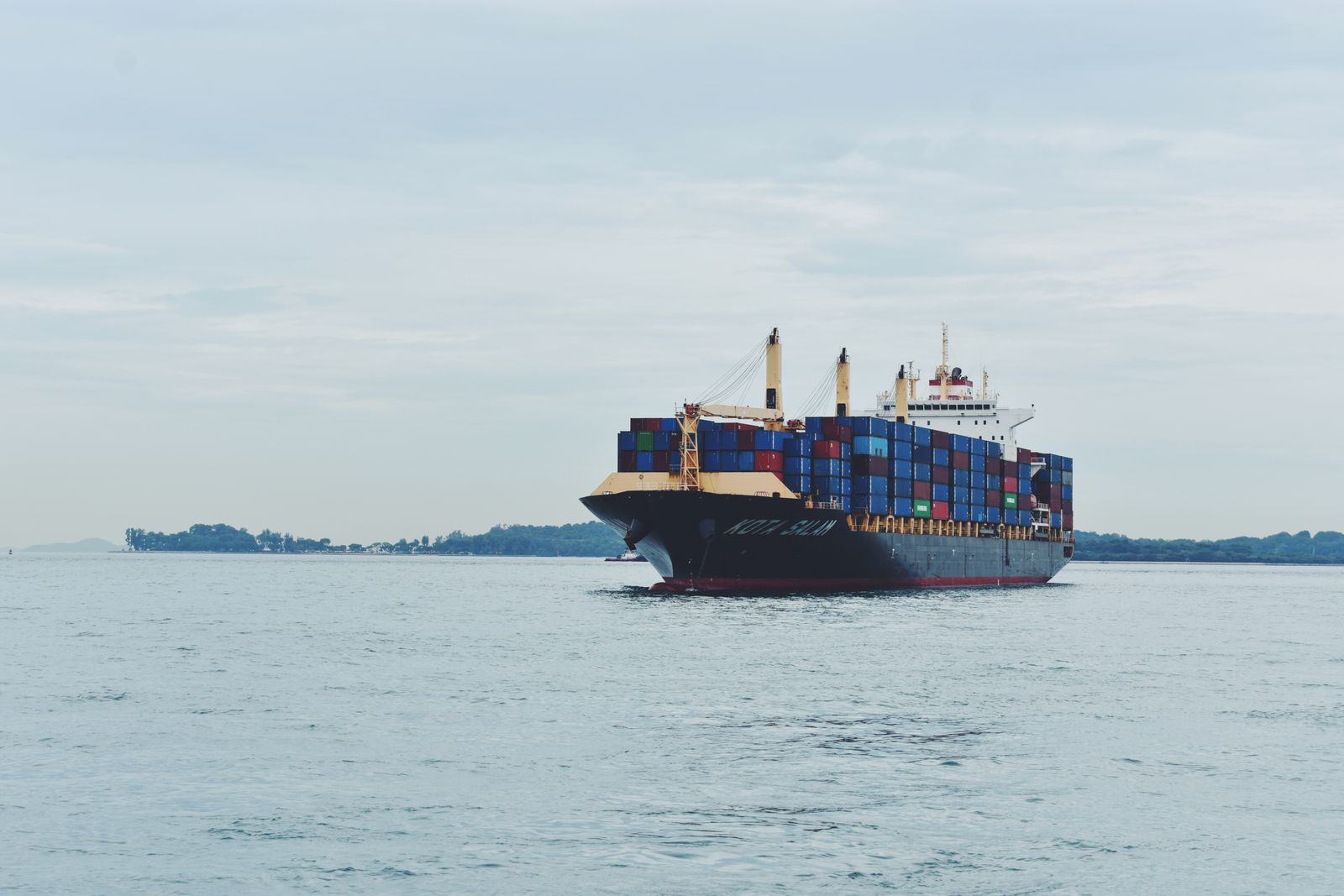
Treasury’s October 21 designations describe a corporate-services firm that allegedly supplied directors, shell companies and registered-agent cover to vessels carrying Iranian oil, petrochemicals and steel.
The U.S. Treasury Department on October 21 sanctioned a law firm. Not a tanker owner, an exchange house or a refinery, but Karnakis and Karnakis, a practice with addresses in Panama City and Piraeus, Greece, which Treasury says “supported illicit Iranian shipping activity for years.” According to the department’s press release, the firm, its two founders and three employees were designated under Executive Order 13902, the authority aimed at Iran’s petroleum and petrochemical sectors.
The action is notable for who it targets. Treasury alleges that the firm registered shipping companies, placed its own staff on their boards and thereby obscured who actually owned the vessels. The ships tied to the firm’s clients, the department says, moved “hundreds of millions of dollars” in Iranian steel, petroleum and petrochemicals. The same announcement disclosed that the Financial Crimes Enforcement Network (FinCEN) had used a new subpoena tool in an investigation of an unnamed Greek bank.
These are government allegations in a sanctions designation, not court findings, and no criminal charges against the firm have been announced. Reuters, as republished by Baird Maritime, reported that Karnakis and Karnakis had not replied to a request for comment. TIJ could not locate a public statement from the firm.
What Treasury Alleges About the Firm
The release names Sofianos Karnakis Kosmas and Konstantinos Karnakis Kosmas, both dual Panamanian-Greek nationals, as the firm’s founders and current owners. Three employees were also designated: Ioanis Karnakis Kosmas, Pedro Ortega Jones and Roberto Ortega Jones. Treasury says Roberto Ortega Jones and other employees act as directors and officers of the companies the firm registers. Records suggest that this arrangement, in which a firm’s own staff sit on the boards of client companies, can place a layer of professionals between a vessel and its true beneficiary.
The department’s release ties the firm to several previously sanctioned structures:
- Skyros Maritime and Trading S.A., Corfu Maritime and Trading S.A. and Elias Shipping and Trading Group S.A. were, according to Treasury, set up by the firm and later designated by OFAC for their role in the Iranian oil trade. Treasury’s April 24, 2026 action listed Skyros as the owner of the Panama-flagged tanker HH GLORY, which the department said carried hundreds of thousands of barrels of Iranian LPG since 2025.
- The RAMONA 1, owned by Elias Shipping, allegedly served as a front for Al-Qatirji Company, a Syrian firm that Treasury says sells Iranian oil for the Islamic Revolutionary Guard Corps-Qods Force and the Houthis. Treasury describes the IRGC-QF channel as generating hundreds of millions of dollars a year.
- Seyed Asadoollah Emamjomeh, an Iranian LPG magnate, used the firm as corporate agent for many of his companies, according to the department. Treasury designated Emamjomeh in April 2025, alleging that his network shipped hundreds of millions of dollars of Iranian LPG and crude oil.
- Roxette Maritime Shipping and Trading S.A., a Panama- and Greece-based operator for which the firm is corporate agent, manages seven Panama-flagged cargo vessels now treated as blocked property: ANEMOS, GLORIS, PRIDE, DESTINY, FLAMINGO 1, HARMONY and PRINCE. Treasury says the first three carried Iranian-origin petrochemicals and steel within the past year.
The department also designated two shipping agents: Singapore-based Amigoz Singapore PTE. Ltd. and Dubai-based Whales Shipping Line LLC, along with two Whales-owned, UAE-flagged vessels. The full list of designations is posted on OFAC’s recent-actions page.
Panama’s Registry Responds, and the Clock Runs
All seven Roxette vessels fly Panama’s flag. According to the Rio Times, the Panama Maritime Authority (AMP) said on October 22 that it had begun cancelling all seven registrations under Executive Decree No. 512 of 2024, would take “the corresponding measures” against the sanctioned company without specifying them, and had tightened pre-registration due-diligence checks on ships, owners, operators and charterers. The AMP did not give a completion date.
It was the second such response in two weeks. After Treasury’s October 8 action against 17 vessels and 17 companies, the AMP’s Communiqué No. 51 said it had restricted three Panama-flagged ships, BITU, STARWAY and MACKEREL, and begun cancelling their registrations. That communiqué addressed vessels only and mentioned no measures against any company. It also listed six other vessels whose registrations were cancelled between January and August 2026, before the UK published its own shadow-fleet list. Across the two U.S. actions, ten Panama-flagged ships have now been named.
Registry cancellation does not end a ship’s operations, and the timetable matters. Per the Rio Times, OFAC general licenses allow wind-down dealings with the designated parties until 12:01 a.m. EST on November 20, 2026, and one license covers safe docking, crew safety, emergency repairs and offloading of non-Iranian cargo loaded by October 21. It authorizes no new commercial contracts.
Why a Law Firm Is the Target
Panama’s role as a home for anonymous companies is long documented. The International Consortium of Investigative Journalists’ 2016 Panama Papers project examined more than 11.5 million records from the Panamanian firm Mossack Fonseca and identified more than 214,000 offshore entities. ICIJ reported that banks and other intermediaries registered thousands of hard-to-trace companies. Nothing in Treasury’s release links Karnakis and Karnakis to Mossack Fonseca; the comparison illustrates the industry model, in which intermediaries incorporate and staff companies on behalf of clients.
That model is what Treasury appears to be probing. Sanctions on a tanker can be sidestepped by renaming it or moving it to a new owner. Sanctions on the people who create the owners are meant to raise the cost of replacing them. In the Karnakis case, the department’s own account shows how the structure allegedly worked: a vessel is owned by a freshly incorporated company, the company is directed by an employee of the incorporating firm, and the firm acts as corporate agent. Treasury alleges the structures served Iranian customers; whether each client knew the ultimate cargo is not addressed in the release.
FinCEN Turns to the Banks
The same announcement carried a financial-sector component. Treasury said FinCEN issued its first administrative subpoena under Section 5318(k) of the Bank Secrecy Act, advancing an investigation into a Greek bank’s potential ties to Iran and its proxies. Treasury did not name the bank or say it violated any law. According to Greek City Times, citing Reuters, FinCEN also sent information requests to six other European banks about their relationships with sanctioned Iranian financial institutions.
The statute, 31 U.S.C. § 5318(k), lets the Treasury Secretary or Attorney General subpoena a foreign bank that holds a U.S. correspondent account, including for records kept abroad. A conflict with foreign secrecy law is not by itself grounds to quash the subpoena, bank staff may not tell account holders about it, and a bank that fails to comply risks daily penalties and the loss of its U.S. correspondent relationships.
A Campaign Moving From Hulls to Paper to Money
The law-firm action is the latest step in what Treasury calls Operation Economic Outcast, announced August 24, 2026. The sequence since then is telling. On October 8, OFAC targeted ships and their owning companies. On October 15, according to Treasury’s release on Iran’s financial networks, Treasury and the State Department designated offshore Iranian banks, exchange houses and a Cuban bank that Treasury said served an Iran-based lender. On October 21, it reached the corporate-services layer between the two, along with the first use of the new subpoena tool on a European bank.
The department has not published a measure of how much Iranian trade the campaign has disrupted, and Greek reports cited by Greek City Times said the latest measures had not caused immediate disruption to oil shipments.
What Remains Unknown
Several questions are open. The firm has not publicly responded, and designated parties may petition OFAC for removal. The identity of the Greek bank under subpoena is unknown, as is whether any institution will be found to have breached sanctions or anti-money-laundering rules. The AMP has not said when the seven cancellations will finish or what measures it will take against Roxette. And Treasury’s release does not say how many other companies the firm registered beyond those it named.
The next markers are the November 20 wind-down deadline and any follow-on designations or subpoena enforcement from FinCEN. Treasury’s description of a firm that built corporate vehicles rather than operating ships suggests that future actions may keep moving up the chain from vessels to the professionals who create the companies that own them. Whether that approach changes Iranian shipping behavior will depend on how quickly replacement structures appear.
All designations described above are allegations by the U.S. Treasury Department and are not findings of a court. Image: stock photograph of a container vessel, shown for illustration; it does not depict any sanctioned vessel.