

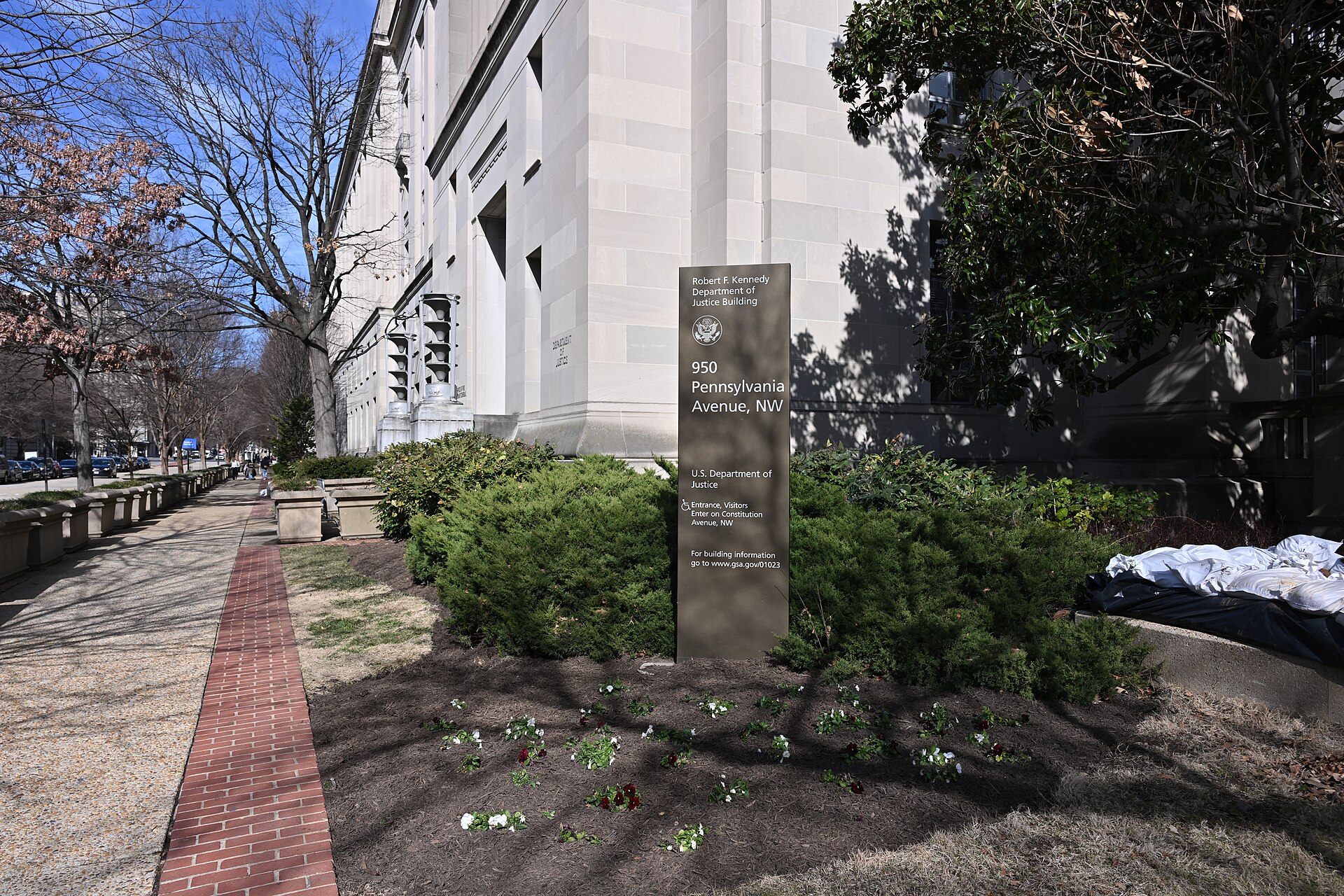
Federal watchdogs closed out the middle of August with a burst of activity: the Justice Department’s inspector general flagged a growing backlog of unscanned gun-sale records at the ATF’s National Tracing Center, GSA’s auditors concluded that the pricing data underpinning billions in federal purchasing is unreliable, and the Justice Department announced False Claims Act resolutions totaling more than $72 million — most of them set in motion by whistleblowers. Meanwhile, new analyses suggest the SEC’s whistleblower awards have shrunk to historic lows in average size, and a bipartisan Senate bill would shore up the CFTC’s cash-strapped whistleblower fund. Here is what the week’s public records show, and where The Investigative Journal sees threads worth pulling.
DOJ Inspector General: ATF’s Gun-Trace Operation Is Keeping Pace, but a Records Backlog Threatens It
The Department of Justice Office of the Inspector General on August 13 released an audit of the Bureau of Alcohol, Tobacco, Firearms and Explosives’ management of firearm trace requests at the National Tracing Center, the facility that traces crime guns for domestic and foreign law enforcement. The audit (Report 26-079) found the center has kept up with a rising volume of trace requests while cutting fulfillment times — a credit to the operation — but warned that further gains depend on navigating “multiple interrelated challenges that strain the limited personnel who fulfill the requests,” according to the OIG’s accompanying press release.
Three findings stand out in the report. First, a growing backlog of unscanned out-of-business firearm transaction records — which the center is legislatively required to receive and process before it can complete traces — is contributing to delays and missed performance goals. Second, the center lacks standardized, centralized tracing procedures documenting the entire process, which the OIG said leaves it exposed to the loss of institutional knowledge. Third, ATF has no outcome-based measures assessing whether traces actually contribute to arrests, prosecutions, or disruption of trafficking. The OIG made three recommendations; ATF agreed with all three. For a function that sits at the center of violent-crime investigations nationwide, the absence of any metric tying tracing work to law enforcement outcomes is a notable accountability gap.
GSA Watchdog: The Data Behind Federal Price Negotiations “Are Ineffective”
Also on August 13, the General Services Administration’s inspector general issued an audit bluntly titled “The Processes FAS Uses to Ensure It Awards and Collects Accurate Product Data Are Ineffective.” Auditors found inaccurate manufacturer names and part numbers throughout the GSA Advantage! online catalog and the agency’s Transactional Data Reporting system — including multiple variations for the same product and identifiers that did not match the manufacturer’s own records.
The stakes are practical: without reliable part numbers, the Federal Acquisition Service’s pricing tools cannot identify identical products across Multiple Award Schedule contracts, weakening contracting officers’ hands in negotiations. As a result, the report concludes, “federal customer agencies may overpay for products … and waste taxpayer dollars.” The OIG made six recommendations; the acting FAS commissioner agreed with one and partially agreed with the other five, per the agency’s written response included in the report — a lukewarm reception that bears watching when the corrective-action plans come due.
Veloxis Pharmaceuticals: $46 Million Kickback Resolution and the Largest “Sunshine Act” Recovery on Record
The Justice Department announced on August 10 that drug maker Veloxis Pharmaceuticals agreed to pay more than $46 million to resolve criminal and civil allegations that it paid kickbacks — lavish meals, luxury resort stays, sham consulting fees — to induce prescriptions of its kidney-transplant drug Envarsus XR. The company entered a deferred prosecution agreement in the District of Massachusetts with a criminal penalty exceeding $10 million, agreed to a $34.45 million civil False Claims Act settlement, and will pay a $1.55 million penalty for failing to report physician payments to CMS — which the department described as the largest Open Payments (“Sunshine Act”) recovery since the law’s 2010 passage.
According to admissions described in the government’s filings, Veloxis employees falsified expense reports to conceal the payments, at times deleting physicians’ names from attendee lists specifically to dodge Sunshine Act reporting. The civil claims were brought in part under the False Claims Act’s qui tam provisions by relator Toulsor1 Inc., and the case drew investigative work from an alphabet of inspectors general — HHS-OIG, the Defense Criminal Investigative Service, and the OIGs of the Office of Personnel Management, Veterans Affairs, and the Postal Service — alongside the FBI. Veloxis also entered a five-year corporate integrity agreement with HHS-OIG.
Qui Tam Roundup: $27 Million More in Whistleblower-Driven Recoveries
Three other False Claims Act resolutions announced in the first half of August underscore how heavily federal fraud enforcement now leans on private whistleblowers. On August 11, Continental Aerospace Technologies — an aircraft-engine maker that, per the settlement records, was part of a multinational group ultimately owned through China’s state-owned AVIC — agreed to pay $11,772,680 to resolve allegations it falsely certified eligibility for a Paycheck Protection Program loan. Relator GNGH2 Inc. will receive $1,765,902 of the recovery; a second suit was filed by relator Andrew McCarley in Alabama.
On August 3, Complete Health Partners Holdings, a Jacksonville-based management services organization, agreed to pay $14.1 million to resolve allegations it pushed unsupported drug-dependence and mood-disorder diagnosis codes into Medicare Advantage risk-adjustment submissions to inflate payments. The qui tam relator, former VIVA Health risk-adjustment official Karen Bowers, will receive roughly $2.47 million. And on August 10, Massachusetts manufacturer Judd Wire agreed to pay $1,014,000 over allegations it skipped required testing on wire and cable used by the Navy. In each of these settlements, the department noted the claims are allegations only, with no determination of liability; the companies’ agreed settlement documents are linked in the department’s releases.
HHS OIG: Department Still Not Fully Compliant With Improper-Payment Law
An audit posted by the HHS Office of Inspector General on August 5 (OAS-26-17-042) concluded that the Department of Health and Human Services met many requirements but “did not fully comply” with the Payment Integrity Information Act for fiscal year 2025. The review covered the programs deemed most susceptible to significant improper payments — Medicare fee-for-service, Medicare Advantage, Part D, Medicaid, CHIP, the Advance Premium Tax Credit, TANF, Foster Care, child care funds, and Head Start — most of which OMB designates as governmentwide “high-priority” programs.
PIIA compliance findings tend to read as technical, but they are the scaffolding of every improper-payment estimate Congress relies on. When the department administering the largest improper-payment programs in government cannot check every statutory box, the downstream numbers — and the corrective plans built on them — deserve added scrutiny. The full report is available here.
SEC Whistleblower Awards: More Orders, Historically Small Checks
The SEC’s whistleblower program is paying out faster but far smaller, according to an August 10 analysis by Whistleblower Network News of the Commission’s published award orders. The data show more than $88 million awarded so far in fiscal 2026 — up from roughly $60 million in all of FY 2025 — but nearly 90 percent of that total went to just three individuals, who received approximately $50 million, $20 million, and $7 million. Fourteen whistleblowers received less than $500,000 each, and the analysis puts the FY 2026 median payout below half a million dollars, against an average of $8.82 million per award as recently as FY 2023.
Whistleblower advocates argue the trend cuts against the incentive structure Congress wrote into Dodd-Frank, which contemplated awards of 10 to 30 percent of sanctions precisely because insiders risk their careers to report. “Large awards are the key to incentivizing high-level executive whistleblowers,” National Whistleblower Center chairman Stephen Kohn said in the WNN report. The SEC’s program page and its published final orders remain the primary record; the Commission does not typically explain individual award-size decisions beyond the orders themselves.
CFTC Whistleblower Fund: A Bipartisan Fix for a Program Running Dry
On the commodities side, Senators Chuck Grassley (R-Iowa) and John Fetterman (D-Pa.) introduced the CFTC Whistleblower Protection and Program Improvement Act of 2026 (S. 5161) on July 29, with Senators Susan Collins (R-Maine) and Raphael Warnock (D-Ga.) as cosponsors, according to the sponsors’ announcement. The bill would raise the Customer Protection Fund’s cap from $100 million to $300 million, require timely award processing, close a court-created loophole that has denied awards when a sanctioned company declares bankruptcy, and make permanent the account funding the whistleblower office.
The program’s finances have been a recurring worry: the fund is replenished only by collected sanctions, and payouts have accelerated — the CFTC awarded more than $8 million to five whistleblowers on June 1, part of a program that has paid over $430 million since 2014 against more than $3.7 billion in associated sanctions. The Commission has separately proposed amendments that would create a presumption of a 30 percent award for smaller claims. Taken together, the legislative and regulatory tracks suggest a rare point of bipartisan consensus: whistleblower programs pay for themselves.
IG Independence Watch: CIGIE’s Future Remains in Play
The Council of the Inspectors General on Integrity and Efficiency — the IG community’s coordinating body — remains at the center of a structural debate. H.R. 9725, sponsored by Representative Clay Higgins (R-La.), would abolish CIGIE a year after enactment and shift certain governmentwide IG-oversight functions to the Office of Management and Budget; the House Oversight and Government Reform Committee scheduled the measure for markup in late July, Government Executive reported. Supporters point to a Government Accountability Office review finding CIGIE frequently missed procedural requirements when investigating misconduct allegations against IGs themselves; a coalition of watchdog groups, in a letter organized by CREW, urged the committee to reject the bill, arguing it would impair independent oversight.
The capacity questions are not abstract. Government Executive’s reporting indicates IG offices lost 16.6 percent of their workforce between January 2025 and early 2026, outpacing overall federal staffing reductions, and that most Senate-confirmed IG vacancies still lack pending nominations. CIGIE itself weathered a funding lapse last fall, when OMB initially declined to apportion its fiscal 2026 funds before reversing course in November and apportioning just under $4.3 million following bipartisan requests from Senators Collins and Grassley. Wherever one lands on CIGIE’s structure, the question of who investigates the investigators — and with what resources — deserves a fuller public airing than an August recess allows.
What Warrants a Deeper Look
Several threads from this week merit sustained TIJ attention. The size, age, and cost of ATF’s unscanned records backlog is unquantified in the public summary — the underlying report and contracting data should show how far behind the National Tracing Center actually is. GSA’s product-data failures invite a data-driven analysis of price dispersion for identical items across Multiple Award Schedule contracts, a measurable proxy for taxpayer overpayment. The Complete Health settlement is the latest in a widening pattern of Medicare Advantage risk-adjustment cases involving management services organizations, suggesting a systemic business-model problem rather than isolated misconduct. And the divergence between the SEC’s shrinking award sizes and the Senate’s push to expand the CFTC’s fund frames a testable question: which approach actually produces more actionable tips? Finally, if H.R. 9725 advances this fall, the mechanics of moving IG-misconduct investigations into OMB — an office within the Executive Office of the President — will need careful, factual examination from all sides.
All settlement figures and findings above are drawn from the linked public records — inspector general reports, Justice Department releases, SEC and CFTC materials, and congressional documents. Civil settlements referenced resolve allegations only, and where noted there has been no determination of liability. Agency responses, where published, are linked within the relevant reports; entities named are invited to direct any response to TIJ via our contact page.
Sources: DOJ OIG Report 26-079; GSA OIG A240054; DOJ: Veloxis; DOJ: Continental Aerospace; DOJ: Complete Health; DOJ: Judd Wire; HHS OIG OAS-26-17-042; Whistleblower Network News; Sen. Grassley release on S. 5161; CFTC Release 9245-26; Government Executive on H.R. 9725; CREW coalition letter; Federal News Network on CIGIE funding.