

Oversight Watch is The Investigative Journal’s weekly digest of Inspector General reports, whistleblower program developments, and False Claims Act enforcement. Every claim below is sourced to a public record linked in the text.
1. Watchdog output is falling: 6% fewer audits, 25% fewer investigative reports
The week’s most consequential oversight data point came from the Partnership for Public Service, which published a report on July 29 finding that Cabinet-department Offices of Inspector General produced an average of 6 percent fewer audits and 25 percent fewer investigative reports in the first half of fiscal 2026 than the average for fiscal years 2020 through 2024. The data show that, as of May 31, the average Cabinet OIG workforce was 19 percent smaller than in December 2024, according to the report, first covered by Government Executive.
The researchers wrote that “every report that did not happen represents oversight that did not occur. An audit not conducted means a program went unexamined — no findings, no recommendations and no formal decision the agency must make and answer for. An investigation not opened means an allegation went unresolved and lost taxpayer dollars were never recovered.” The report found that the three offices with the largest staffing losses also recorded the largest declines in investigative reports, and noted that discretionary investigations are typically the first casualties when an office loses a quarter of its staff.
The stakes are measured in dollars. The Government Accountability Office reported in April that federal agencies estimated roughly $186 billion in improper payments across 64 programs in fiscal 2025 — up $24 billion from the prior year — concentrated in Medicare, Medicaid, the earned income tax credit, and SNAP. Fewer audits of those programs means fewer documented pathways to recovering that money.
2. House panel advances bill to dissolve CIGIE and move its functions to OMB
The House Oversight and Government Reform Committee on July 22 ordered reported the Restoring Integrity and Efficiency to Inspector General Oversight Act (H.R. 9725), introduced July 16 by Rep. Clay Higgins (R-La.). The bill would shutter the Council of the Inspectors General on Integrity and Efficiency — the coordinating body for the federal IG community — one year after enactment and transfer core functions, including training standards, interagency investigations, and jurisdictional disputes, to the Office of Management and Budget, according to the bill text.
Supporters point to a June Government Accountability Office review which found that CIGIE’s Integrity Committee frequently fell short of its own process requirements when investigating misconduct allegations against IGs, including a finding that complaints deemed “frivolous” were being set aside without the legally required review, as reported by Government Executive. A Republican committee aide said the record shows “the inspectors general cannot be trusted to investigate wrongdoing in their ranks.”
The Project on Government Oversight argued the opposite in a letter to the committee: moving CIGIE’s functions into OMB — an office whose own programs IGs audit — “would create an unavoidable conflict of interest, undermining both the perception and reality of inspector general independence,” wrote POGO Interim Executive Director Isabel Munilla. The structural question — who referees the referees — now heads to the House floor. CIGIE is currently chaired by Veterans Affairs Inspector General Cheryl Mason.
3. Two weeks, $76.8 million: DOJ’s False Claims Act settlements keep landing
Justice Department filings indicate a steady cadence of health-care fraud recoveries over the past two weeks, totaling roughly $76.8 million across four announced resolutions. On August 3, DOJ announced that Complete Health Partners Holdings of Jacksonville, Florida agreed to pay $14.1 million to resolve allegations that it caused the submission of clinically invalid diagnosis codes — in categories covering drug and alcohol dependence and major depressive disorders — to inflate Medicare Advantage risk-adjustment payments between 2020 and 2023. The case began as a qui tam suit by Karen Bowers, a former risk-adjustment director at an Alabama insurer, who will receive approximately $2,467,500 of the recovery.
The other three: Access DX Laboratory of Houston, its former CEO, and a Florida businessman agreed July 30 to pay a combined $36.4 million over alleged kickbacks and unnecessary genetic testing; Dallas-based Magnolia Diagnostics and its owners agreed July 23 to pay $24 million to resolve COVID-19 testing fraud allegations; and two New York ophthalmology practices agreed July 31 to pay $2.3 million over allegedly fraudulent cranial ultrasound claims. DOJ notes, and TIJ emphasizes, that the claims resolved by these settlements are allegations only; there has been no determination of liability. For context, DOJ reported more than $6.8 billion in False Claims Act settlements and judgments in fiscal 2025.
4. SEC whistleblower awards are running at more than 2.5x last year’s pace
An analysis published July 31 by the whistleblower practice at Outten & Golden found that the SEC had issued 18 final whistleblower award orders by July 8, 2026 — more than two and a half times the number issued in all of calendar 2025. The year’s largest award so far, granted in April, exceeded $50 million for information that the Commission said advanced three enforcement actions; awards of roughly $20 million and $7 million followed in June. The underlying orders are published on the SEC’s final orders page.
The orders also show the Commission enforcing discipline on timing. In one July order, the SEC awarded approximately $3.5 million but departed downward from its preliminary determination because the claimant waited at least 27 months after learning of the misconduct to report; another July order granted roughly $1 million while declining the 30 percent presumption for the same reason. A June order is notable in the other direction: a chief compliance officer — a role ordinarily excluded from eligibility — received the maximum 30 percent because the Commission found the executive reasonably believed reporting was necessary to prevent substantial investor harm. The message for insiders is consistent: original information pays, and delay costs.
5. CFTC whistleblower fund faces a September cliff; bipartisan fix introduced
Sens. Chuck Grassley (R-Iowa) and John Fetterman (D-Pa.), joined by Sens. Susan Collins (R-Maine) and Raphael Warnock (D-Ga.), introduced the CFTC Whistleblower Protection and Program Improvement Act on July 29. The bill would raise the cap on the Customer Protection Fund — which pays whistleblower awards and program expenses — from $100 million to $300 million, make permanent the separate operating account created by a 2021 stopgap that expires in September, and close a court-created loophole that has denied awards when a sanctioned company declares bankruptcy.
The numbers explain the urgency. According to Grassley’s office, the CFTC program has paid nearly $430 million in awards and generated more than $3.7 billion in sanctions since 2014, and the fund is depleting faster than the capped replenishment mechanism can refill it. The CFTC itself announced in June more than $8 million in awards to five whistleblowers in a single action, and has proposed a rule that would apply a 30 percent award presumption to awards of $5 million or less. If Congress does not act before the September expiration, filings indicate the whistleblower office could be left without a stable funding mechanism.
6. Whistleblower Day marked amid record vacancies in the IG corps
The Senate’s unanimous designation of July 30 as National Whistleblower Appreciation Day (S.Res. 821) — commemorating the first American whistleblower law, passed July 30, 1778 — landed against a strained backdrop for the oversight workforce that receives those disclosures. Partnership for Public Service data reported by the organization indicate that 28 of 72 IG positions were vacant as of early this year, with 22 vacancies lasting more than a year; the Social Security Administration has lacked a permanent IG for roughly a year and a half, and the Treasury Department for more than six years. A separate CREW analysis puts the vacancy rate among presidentially appointed IG posts above 55 percent.
The IG workforce declined 16.6 percent from January 2025 to the beginning of this year, versus 12 percent for the rest of the civil service, according to the Partnership’s data, and the administration’s fiscal 2027 budget request proposes further reductions to OIG funding. Whatever one’s view of any individual watchdog, the arithmetic is not in dispute: fewer investigators processing whistleblower disclosures means longer queues for the people Congress just spent a day honoring.
What warrants deeper TIJ investigation
Three threads from this week merit sustained reporting. First, the unrecovered-dollars question: if Cabinet OIGs are producing 25 percent fewer investigative reports while agencies book $186 billion in improper payments, the gap between fraud identified and fraud pursued is widening — TIJ will mine upcoming semiannual reports to Congress to quantify it. Second, H.R. 9725’s transfer of IG coordination to OMB deserves scrutiny from both directions: the GAO findings that motivated the bill are documented and serious, and so is the structural question of housing IG oversight inside an office IGs audit. Third, Medicare Advantage risk-adjustment coding is now a recurring engine of nine-figure annual recoveries; the Complete Health settlement suggests the coding-guidance practices of management services organizations are a target-rich environment for both DOJ and future whistleblowers.
Right of reply: The settlements described above resolve civil allegations only, with no determination of liability, and the entities named did not admit wrongdoing. Any person or organization named in this digest may contact The Investigative Journal with a response, which we will publish or append.
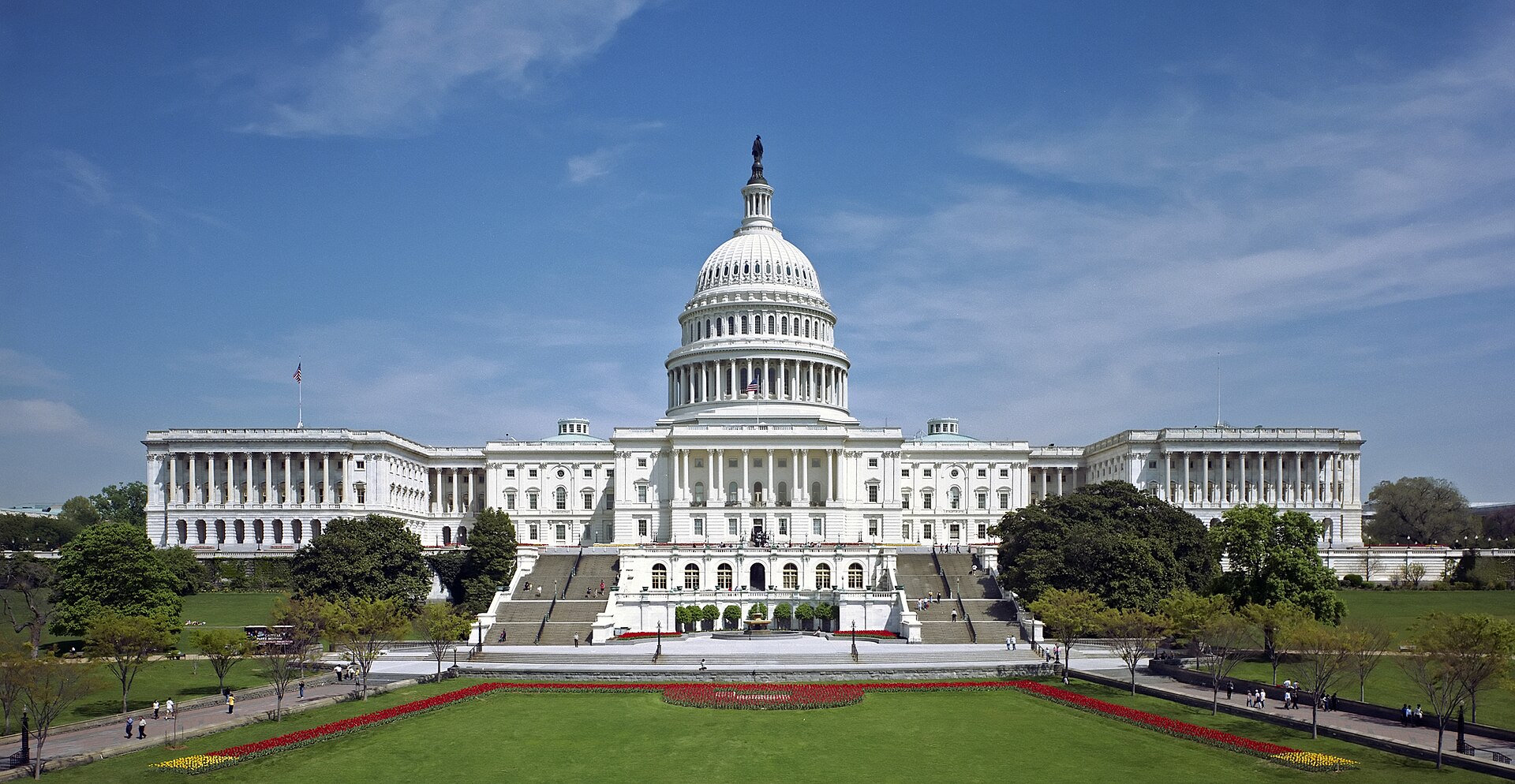
Featured image: United States Capitol, west front. Public domain, via Wikimedia Commons.