

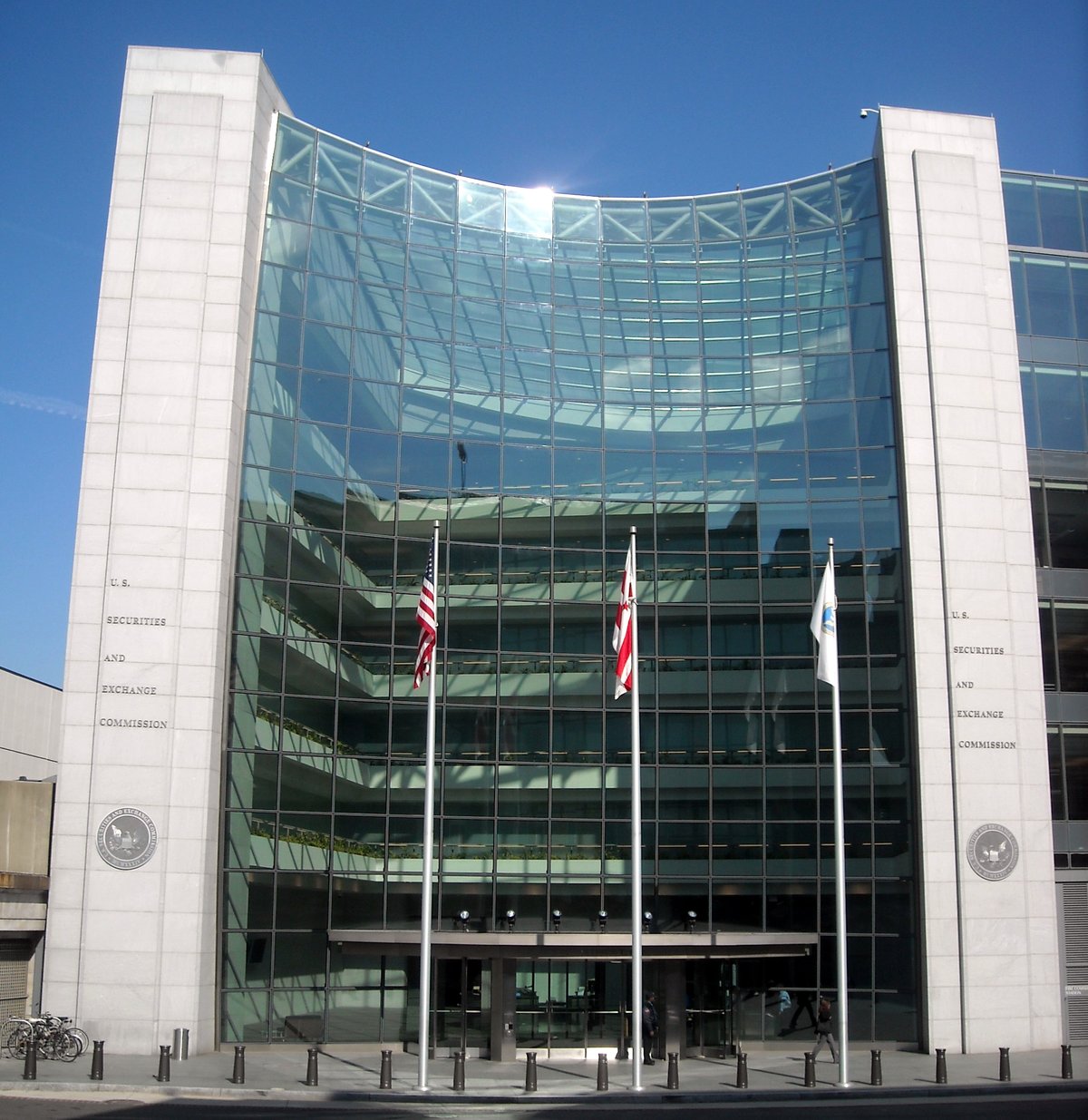
The Investigative Journal’s daily review of filings, enforcement actions, and rulemaking at the U.S. Securities and Exchange Commission. All claims below are drawn from public records; direct links to source documents are provided throughout.
The most consequential SEC document of the past two weeks is not an enforcement complaint against a fraudster. It is a subpoena enforcement application filed in a Philadelphia federal courthouse against the single most influential private actor in American corporate governance — the proxy advisory firm Institutional Shareholder Services. Paired with a Commission proposal, issued twelve days later, to rescind the shareholder proposal rule outright, the filings suggest a regulator systematically reexamining who holds power over the corporate proxy and on what authority.
Below, seven filings and actions from the current SEC docket that merit attention, followed by the matters this newsroom is tracking for deeper reporting.
1. SEC Goes to Court to Compel Documents From ISS
On September 4, the Commission filed a subpoena enforcement action in the U.S. District Court for the Eastern District of Pennsylvania seeking an order compelling Institutional Shareholder Services, Inc. — an SEC-registered investment adviser — to comply with an outstanding administrative subpoena issued July 21, 2026. The filing is docketed as SEC v. Institutional Shareholder Services, Inc., No. 2:26-mc-00078.
According to the SEC’s application and supporting papers, the Division of Examinations opened an examination of ISS in March 2026 and requested data relating to the firm’s proxy recommendations and votes — described in the Commission’s own filing as “the core of ISS’s business.” The application states that ISS failed to produce requested information in its possession, custody, and control, that the Division of Enforcement subsequently opened an inquiry into that failure, and that ISS continued to withhold materials even after a narrowly tailored administrative subpoena and repeated deadline extensions. More than four months elapsed between the original examination request and the court filing, according to the Commission.
Two points deserve emphasis. First, the SEC states explicitly in its own release that it “is continuing its fact-finding investigation and, to date, has not concluded that any individual or entity violated the federal securities laws.” Nothing has been adjudicated. Second, a subpoena enforcement action against a registrant of ISS’s scale is rare. ISS and its principal competitor, Glass Lewis, together shape the voting behavior of institutional investors holding trillions in assets. That a federal regulator has had to ask a judge for records on proxy recommendations is, by itself, a public-record fact worth noting. Litigation Release No. 26632.
2. Commission Proposes to Rescind Rule 14a-8 Entirely
On September 16, the Commission proposed to rescind Rule 14a-8 under the Securities Exchange Act of 1934 — the rule that since 1942 has given qualifying shareholders the right to place proposals in a company’s proxy statement. The proposing release states the rule “exceeds the scope of the Commission’s statutory authority and intrudes into matters of state law.”
The Commission offered independent policy reasons alongside the authority argument: that many original justifications for the rule “either have not been substantiated in practice or are less compelling today,” and that implied federal preemption may have discouraged states from developing their own shareholder-proposal law. Rescission, per the release, would return these determinations to state law and corporate charters.
Chairman Paul S. Atkins framed the action as one of two regulatory priorities — keeping the Commission within its statutory lane, and modernizing rules to reflect current market practice. A companion proposal would amend Rule 14a-4(c) on discretionary voting authority, and a separate release would eliminate the requirement that companies deliver an annual report to security holders, eliminate Notices of Exempt Solicitation, and shorten the minimum broker search period from 20 business days to five.
For anyone who reads DEF 14A filings, this is the most significant proposed change to the proxy statement in decades. Environmental, social, and governance proposals, executive compensation proposals, and political-spending disclosure proposals all travel through Rule 14a-8. Comment periods run 60 days after Federal Register publication. Press Release 2026-89; proposing release 34-106383 (PDF).
3. “Innovation Exemption” Opens Onchain Trading of Tokenized NMS Stock
On September 17, the Commission issued an order granting temporary, conditional exemptive relief to “Tokenized Securities Venues” from the Exchange Act definition of “exchange,” permitting them to trade tokenized National Market System stock through permissioned automated market makers and liquidity pools.
The conditions are substantive rather than nominal. Per the order, tokenized NMS stocks on a TSV are subject to limits on symbol count and volume; the venue must verify that the tokenized instrument carries the same rights and privileges as the equivalent traditional share class; a TSV must give written notice and an opportunity to object to the issuer of the underlying stock before listing a token created by an unaffiliated third party; smart contracts must be auditable, public, and deployed on a public permissionless ledger; and trading must halt concurrently with any stoppage on the primary listing exchange. The order also grants liquidity providers a conditional exemption from the “dealer” definition. The relief expires five years after publication.
Jamie Selway, Director of the Division of Trading and Markets, said the division “stands ready to work with interested parties seeking to operate a TSV.” The issuer-notice condition is the provision to watch: it hands public companies a formal channel to object to third-party tokenization of their own stock, and objections filed under it will be a useful public record. Press Release 2026-90.
4. Pay-to-Play Rule Proposed for Rescission
On September 3, the Commission proposed to rescind Advisers Act Rule 206(4)-5, the 2010 “pay-to-play” rule barring investment advisers from receiving compensation for advisory services to a government client for two years after a covered political contribution, along with related recordkeeping provisions.
The Commission’s stated rationale is that the rule created “a de facto strict liability standard” in which small donations or “foot faults” can trigger substantial prohibitions, and that some advisers responded by banning state and local political contributions outright. Chairman Atkins said in an accompanying statement that adviser implementation “has effectively resulted in the suppression of political speech,” and that political contributions are more properly governed by local ordinances, state law, and federal election regulation.
The proposal leaves the antifraud provisions, fiduciary duty, compliance rule, and code of ethics rule intact. It is worth stating plainly what rescission would and would not do: it would remove a specific federal compensation bar and its recordkeeping trail. Advisers managing public pension money would no longer generate the contribution records that rule currently requires — a reduction in the paper trail available to journalists and state oversight bodies, whatever one concludes about the rule’s merits. Comment period: 60 days post-publication. Press Release 2026-85.
5. Insider Trading Charge Tied to a Funko CEO Departure
On September 14, the Commission filed a settled action against Jon P. Kipp of Kirkland, Washington, alleging insider trading ahead of Funko, Inc.’s July 13, 2023 announcement that its then-CEO would take a leave of absence and cease serving as chief executive.
The complaint alleges that two days before the announcement, the CEO told Kipp by text message that Funko’s board had placed him on sabbatical and that he planned to leave permanently. The two had, per the complaint, a decades-long personal friendship and had worked together at Funko before Kipp’s retirement. On the morning of July 13, 2023, Kipp allegedly sold all 247,335 Funko shares he owned, avoiding approximately $483,746.40 in losses when the stock fell the following day.
Without admitting the allegations, Kipp consented to a final judgment — subject to court approval — enjoining him from violating Section 10(b) and Rule 10b-5, and ordering $483,746.40 in disgorgement, $105,516.93 in prejudgment interest, and a matching $483,746.40 civil penalty: $1,073,009.73 total.
This case is a reminder of a structural feature of corporate disclosure. The Form 8-K announcing an executive departure is a scheduled public event; the board decision preceding it is not. The window between the two is where insider trading cases are made. Litigation Release No. 26640.
6. Three Fraud Actions Totaling More Than $160 Million in Alleged Investor Losses
Three separate matters this month share a structure: promises of fixed or low-risk returns, capital used to pay earlier investors, and affinity or retiree targeting.
Pacific Private Money Group (Sept. 1). The Commission charged Mark D. Hanf, former CEO of Novato, California-based PPMG, and Hoai-Nam Chu Phan, former COO of a PPMG subsidiary, with an offering fraud that allegedly raised more than $80 million from roughly 190 mostly retail investors, many retired. Investors were allegedly told capital would fund real-estate-secured loans. Jason Lee, Associate Director of the San Francisco Regional Office, stated that against nearly $121 million in total outstanding investments across two funds, recoverable assets by February 2026 were estimated at under $17 million. Both defendants consented to judgments without admitting the allegations; the U.S. Attorney for the Northern District of California announced parallel criminal charges. Press Release 2026-82.
Croft & Frost (Sept. 11). The SEC charged Paul Thomas Croft, Jonathan David Frost, and salesperson Matthew William Dira in an alleged $64 million offering fraud involving promissory notes and LLC membership interests sold to more than 230 investors between January 2021 and September 2023. The complaint alleges Dira continued selling notes — earning more than $500,000 in salary and commissions — after receiving communications warning that Croft and Frost were likely running a Ponzi scheme. Frost consented to a bifurcated judgment and had previously pleaded guilty in a parallel criminal case. Litigation Release No. 26638.
Intercontinental Wealth Network (Sept. 10). The Commission charged Ernest Ossei Boateng and two New Jersey companies with raising roughly $16 million from more than 200 inexperienced investors from January 2020 to March 2026, allegedly targeting Christians of Ghanaian heritage in New York and New Jersey. Per the complaint, Boateng misappropriated more than $5.8 million for personal expenses including a home purchase and renovation, used approximately $6.6 million for Ponzi-like payments, and lost more than $750,000 day trading. Thomas P. Smith, Jr. of the New York Regional Office said victims included “retirees, taxi drivers, home health care providers, students, an ailing widow with young children, and at least two churches and one prayer group,” and that investors were assured their money was protected by so-called “financial, investment insurance.” All three matters are allegations pending in federal court. Press Release 2026-86.
7. A Venture Capital Back Office as the Point of Failure
On September 18, the Commission charged Ellen Polcari, a former employee of two commonly owned venture capital firms, with misappropriating investor money from private funds those firms advised. Per the complaint, filed in the District of New Jersey, the funds raised approximately $28.67 million from at least 85 investors between April 2023 and March 2025, and Polcari allegedly misappropriated about $1.28 million.
The alleged mechanism is notable for its simplicity: the complaint states she communicated with prospective investors about participating in the offerings and directed them to wire investments to bank accounts she controlled, misappropriating portions on or shortly after receipt. She also allegedly transferred fund-owned stock to herself and sold most of it to a third party for $56,000. The charges are allegations; the matter is pending. For limited partners, the operational lesson in the public record is about wire-instruction verification and who is permitted to communicate capital-call details. Litigation Release No. 26642.
8. An Enforcement Case Ends — And an 8-K Records It
Not every SEC action ends in a penalty against the company. In a Form 8-K filed under Item 8.01, Las Vegas-based Live Ventures Incorporated (NASDAQ: LIVE) disclosed that on August 20, 2026, the U.S. District Court for the District of Nevada granted an order dismissing all claims against the company and dismissing it as a defendant in SEC v. Live Ventures Incorporated, et al., No. 2:21-cv-01433. As part of the overall resolution, CEO Jon Isaac consented to a judgment resolving claims against him individually including a $175,000 civil penalty; per the filing, Isaac admits no wrongdoing and denies the SEC’s allegations.
The filing is a useful reminder for readers of enforcement coverage: a complaint filed in 2021 and a dismissal entered in 2026 are five years apart, and only the first typically generates headlines. Form 8-K, filed Aug. 27, 2026.
Matters Warranting Deeper Investigation
The ISS subpoena fight. The underlying question — what data the Commission sought on proxy recommendations and votes, and why ISS declined to produce it — is not answered in the public filing. The SEC’s memorandum of law and any ISS response will be the documents to read. Given that the Commission simultaneously proposed rescinding Rule 14a-8, the relationship between the examination and the rulemaking agenda is a legitimate reportorial question.
The 38 fake advisers. In an August 27 action, the Commission charged 38 entities with material misrepresentations in Forms ADV filed between 2025 and 2026 — listing Colorado addresses where they had no presence, disconnected phone numbers, ownership structures and figures identical or near-identical across entities, and audits by two purported accounting firms the SEC says appear in no federal or state accountancy registry. Some defendants used IP addresses traced to foreign jurisdictions to connect to the Commission’s filing system, according to the complaints. The SEC removed the filings from its website. That EDGAR itself was used as a legitimacy-laundering tool is a structural vulnerability worth sustained reporting. Press Release 2026-78.
Tricolor. The August 18 complaint against former executives of Texas subprime auto lender Tricolor Holdings alleges more than $1.9 billion raised through asset-backed offerings while loans were double-pledged across multiple ABS pools and lenders, with more than $945 million of ABS principal outstanding at bankruptcy. Enforcement Director David Woodcock tied the case to “the integrity of our private credit markets.” Charges are pending; parallel criminal charges were announced by the Southern District of New York in December 2025. The unanswered question is what the underwriters and rating agencies saw. Press Release 2026-77.
The new Financial Reporting and Accounting Unit. The Commission announced on August 5 the establishment of a dedicated financial reporting and accounting unit within the Division of Enforcement. Its first case selections will indicate whether restatement and revenue-recognition enforcement is being rebuilt.
Right of reply: The Investigative Journal welcomes responses from any individual or entity named in this digest. All persons charged by the SEC are presumed innocent, and allegations in a Commission complaint are not findings of liability unless and until adjudicated by a court or resolved by consent. Where defendants have settled without admitting or denying allegations, that status is noted above. Contact the editor for corrections.
Sources: U.S. Securities and Exchange Commission press releases, litigation releases, and EDGAR company filings, all linked inline.