

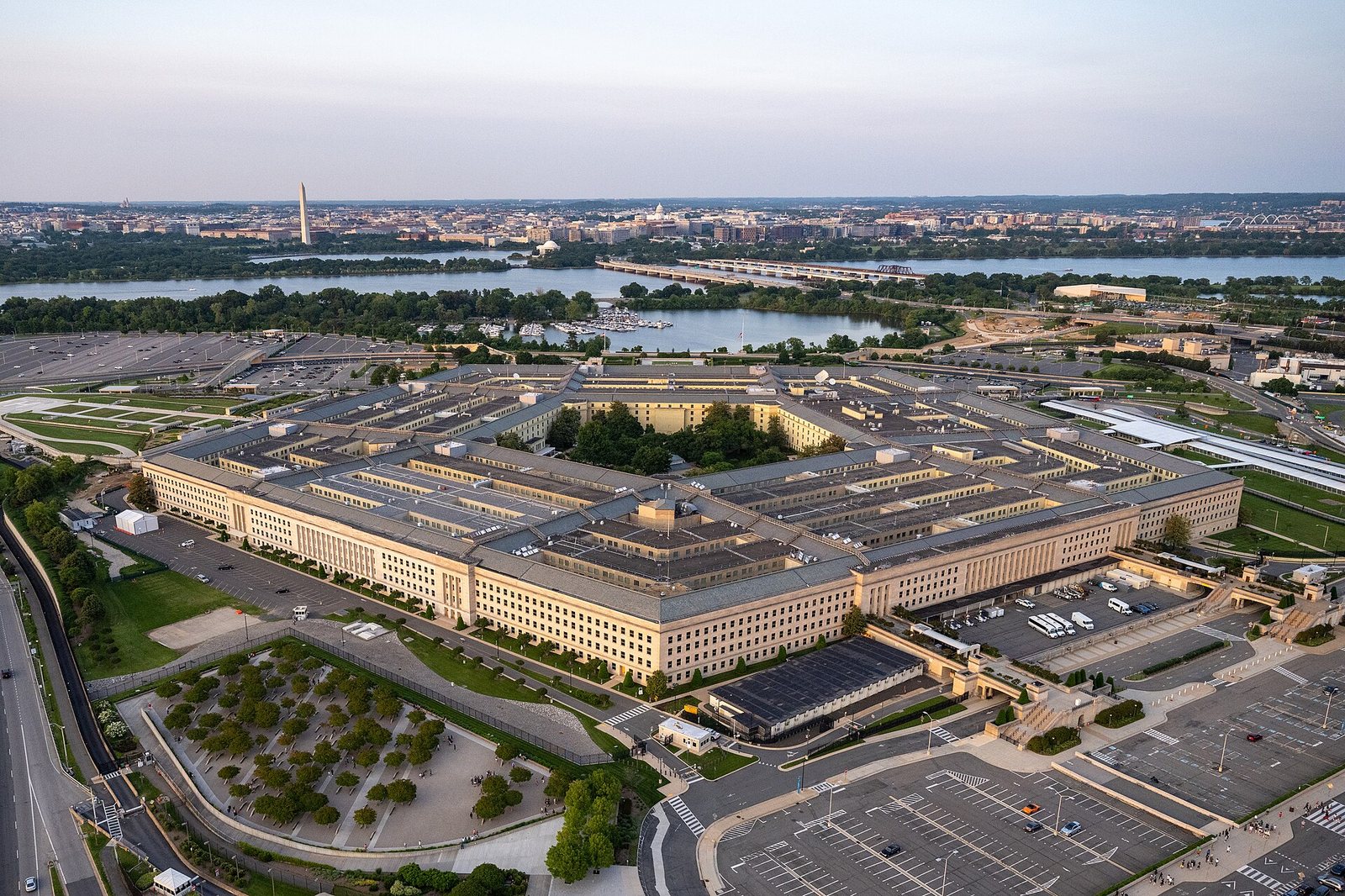
Federal contracting entered the final stretch of fiscal year 2026 this month, and the week of Sept. 14 through Sept. 21 produced one of the densest runs of large awards on the Pentagon’s public docket this year. Department of War contract announcements reviewed for this column show more than $10 billion in newly announced ceilings, modifications and task orders across seven business days, headlined by a $4.3 billion logistics award that will run through 2039.
The timing is not incidental. FY2026 closes Sept. 30, and Congress has already removed the immediate deadline pressure: the House voted 370-48 on Sept. 1 to extend federal funding at current levels through Dec. 11, after the Senate cleared the same continuing resolution in August, according to NPR’s reporting. What the stopgap does not change is the expiration of FY2026 annual appropriations. Funds that agencies fail to obligate by Sept. 30 generally revert, and the resulting compression of awards into September is a documented, decades-old pattern in federal contracting. This week’s docket is what that compression looks like in practice.
1. A $4.3 Billion Foreign Military Sales Logistics Contract Runs to 2039
The largest single announcement of the week went to S&K Aerospace LLC of St. Ignatius, Montana, which was awarded on Sept. 16 a $4,300,000,000 indefinite-delivery/indefinite-quantity contract for Parts and Repair Ordering System Seven, known as PROS VII. The announcement states the contract provides commercial buying services for non-standard and difficult-to-support standard items, covering logistics support, parts procurement and repair services for Foreign Military Sales customers across the Air Force, Army and Navy.
Two features of this award merit attention. The first is duration: work is to be performed at Warner Robins, Georgia, with an expected completion date of Sept. 1, 2039 — a thirteen-year performance window that commits a successor administration and at least six future Congresses to a single vendor relationship. The second is scope: the announcement states the contract involves foreign military sales to more than a hundred foreign partner nations, making it a central node in how allied governments obtain American spare parts.
The competition record here is comparatively strong. The announcement describes a two-phase competitive acquisition with four offers received in phase one and three advancing to phase two, with the Air Force Life Cycle Management Center at Wright-Patterson Air Force Base as the contracting activity (FA8630-26-D-B001). That distinguishes PROS VII from several other awards this week. Because it is an IDIQ ceiling rather than an obligation, the $4.3 billion figure represents maximum authorized value, not money spent — a distinction that recurs throughout this week’s docket and that readers should apply to nearly every headline number below.
2. A $2.5 Billion Ceiling, $11.8 Million Actually Obligated
The clearest illustration of that ceiling-versus-obligation gap came on Sept. 14, when the National Advanced Mobility Consortium Inc. of Ann Arbor, Michigan, was awarded an other transaction authority agreement with a ceiling of $2,500,000,000 to enhance the AGT 1500 gas turbine engine supporting the M1 Abrams fleet. The announcement states that fiscal 2026 research, development, test and evaluation Army funds in the amount of $11,831,430 were obligated at the time of the award, with an estimated completion date of March 14, 2029.
That is roughly 0.47 percent of the announced ceiling. The figure is not evidence of irregularity — consortium OTAs are structured precisely this way, with capacity established up front and individual projects funded as they are defined. But it does mean that press accounts treating the $2.5 billion as new Pentagon spending would substantially misstate what the Army has committed.
The vehicle itself warrants scrutiny for a different reason. Other transaction authority agreements are exempt from much of the Federal Acquisition Regulation, including standard competition requirements and cost-accounting standards. Congress expanded OTA use to speed prototyping and attract non-traditional defense suppliers, and the Army Contracting Command at Detroit Arsenal is the contracting activity here (W56HZV-23-9-D001). Whether a decades-old turbine engine sustainment program for a legacy tank fleet is the kind of work OTAs were designed to accelerate is a question oversight committees have raised about the instrument generally, and one that the size of this ceiling makes worth asking again.
3. A $1.2 Billion Missile Award Drew One Bid
Also on Sept. 14, Lockheed Martin Corp. of Grand Prairie, Texas, was awarded a $1,211,234,988 cost-plus-fixed-fee and firm-fixed-price IDIQ contract for the Precision Strike Missile Increment 2 Early Operational Capability. The announcement states plainly: “One bid was solicited with one received.” Work locations and funding are to be determined with each order, with an estimated completion date of Sept. 13, 2031.
Sole-source awards of this scale are routine in missile programs where a single vendor already holds the design and production base, and PrSM is a Lockheed program. The relevant accountability question is not whether the award was lawful — the record suggests a standard justification for other than full and open competition would apply — but what the government’s negotiating position looks like across a five-year, billion-dollar ordering period with no competitive benchmark. The cost-plus-fixed-fee portion of the hybrid structure places schedule and cost-growth risk substantially on the taxpayer.
4. A Correction on an $788 Million Ammunition Contract
Among the more revealing items of the week was an administrative correction. In its Sept. 16 announcements, the department corrected the record on a $788,361,894 contract (W519TC-26-D-A024) awarded to Olin Winchester LLC of Oxford, Mississippi, for 5.56mm, 7.62mm and caliber .50 ammunition, first announced Sept. 8. The original notice stated that “one bid was solicited with one received.” The corrected language states that bids “were actually solicited via the internet with one received.”
The distinction matters. The original wording suggested a directed sole-source solicitation; the correction indicates the requirement was publicly posted and still attracted exactly one offer. That is a different — and arguably more significant — finding, because it speaks to the depth of the domestic small-caliber ammunition industrial base rather than to a contracting officer’s decision. A market in which a nearly $800 million multi-year ammunition requirement draws a single response is a market with limited surge capacity, an issue that has drawn congressional attention as munitions stockpiles have been drawn down.
A comparable single-bid pattern appeared elsewhere on the same day. Modula S of Ketchum, Idaho, was awarded a $350,000,000 firm-fixed-price IDIQ for the design, supply, installation and support of Holistic Health and Fitness structures, buildings, technology, equipment and systems. The announcement states bids “were solicited via the internet with one received,” with an estimated completion date of Sept. 15, 2033 (W911S0-26-D-A010). Unlike missiles or ammunition, fitness facility construction and equipment is a commercial market with many capable vendors, which makes a single response to a seven-year, $350 million requirement a reasonable subject for further inquiry.
5. Modifications Quietly Doubling Program Values
Three awards this week were modifications that expanded existing contracts by large multiples, a mechanism that generates less scrutiny than new awards because the underlying contract was competed years earlier.
BAE Systems Land & Armaments LP of York, Pennsylvania, received an $818,355,026 modification (PZ0054) to contract W56HZV-23-C-0024 for armored multi-purpose vehicles on Sept. 14, bringing the total cumulative face value to $3,298,715,424. GM Defense LLC of Warren, Michigan, received a $697,686,693 modification (P00053) on Sept. 21 for engineering change proposals on the Infantry Squad Vehicle Utility and its winch kit, bringing that contract’s cumulative face value to $915,597,166. One bid was solicited and one received on the GM Defense action, with an estimated completion date of June 25, 2028.
The GM Defense figure is the more striking of the two: a single modification for engineering change proposals accounts for roughly 76 percent of the contract’s cumulative value. Engineering change proposals are the mechanism by which requirements evolve after award, and heavy reliance on them can indicate either responsiveness to field feedback or an original specification that did not survive contact with the program. Public records available at this stage do not establish which explanation applies here.
Lockheed Martin also received an $871,243,964 modification (P00002) on Sept. 18 raising the ceiling on a cost-plus-incentive-fee IDIQ (N0001926D0010) for F-35 Lightning II site activation and non-recurring sustainment hardware, with work split between El Segundo, California (90 percent) and Fort Worth, Texas (10 percent). And Boeing received a not-to-exceed $552,053,000 undefinitized modification (P00017) on Sept. 14 for three MQ-25A Stingray low-rate initial production aircraft. Undefinitized contract actions authorize work before price and terms are settled; the Government Accountability Office has repeatedly identified them as a cost-risk category because the contractor begins performance without a finalized price.
6. More Than $760 Million for Marine Corps Barracks and Hangars in Two Days
Military construction produced its own cluster. On Sept. 17, Consigli Construction Co. of Durham, North Carolina, was awarded a $364,872,171 firm-fixed-price contract for the Marine Corps Barracks Initiative at Marine Corps Air Station Cherry Point, North Carolina, with completion expected by August 2030. The same day, BL Harbert International of Birmingham, Alabama, was awarded $207,919,569 for construction of the P475 Aircraft Maintenance Hangar at MCAS Beaufort, South Carolina, due December 2029.
A day later, Walsh Federal LLC of Chicago was awarded a $191,286,000 firm-fixed-price contract for Marine Corps barracks construction at Marine Corps Base Camp Lejeune, North Carolina, with a maximum value including thirteen options of $270,999,119 and completion expected by August 2030. The announcement states fiscal 2026 Operations and Maintenance, Marine Corps funds were among those obligated.
Taken together, these three awards commit more than $764 million in base value to Marine Corps facilities in the Carolinas within 48 hours. The Barracks Initiative responds to documented deficiencies in enlisted housing that GAO and service inspectors have flagged in prior reporting, so the underlying need is well established in the public record. The concentration of awards in the fiscal year’s final weeks, however, is a scheduling artifact worth tracking: construction contracts awarded under end-of-year pressure have historically been more prone to subsequent modification.
7. The Oversight Backdrop: $186 Billion in Improper Payments
Against this contracting activity, the government’s payment-integrity picture has not improved. GAO reported in GAO-26-108694, published April 27, 2026, that 15 federal agencies estimated approximately $186 billion in improper payments across 64 programs in fiscal year 2025 — an increase of roughly $24 billion over the prior year. About $153 billion, or 82 percent, resulted from overpayments. Nineteen programs reported improper payment rates of at least 10 percent, and six exceeded 25 percent.
GAO also notes that the $186 billion figure understates the problem, because it excludes programs agencies have themselves determined are susceptible to significant improper payments, including the Department of Health and Human Services’ Temporary Assistance for Needy Families. Cumulative improper payment estimates since fiscal year 2003 total roughly $3 trillion. Of ten matters GAO recommended for congressional consideration in March 2022 to improve transparency and accountability of federal spending, nine remained open as of April 2026.
Compliance is a related weak point. GAO reports that according to inspector general findings, half of the 24 agencies accounting for 99 percent of government-wide improper payment estimates fully complied with Payment Integrity Information Act criteria in fiscal year 2024. The other twelve failed at least one criterion, with IGs citing inadequate risk assessments at five agencies and unreliable estimates at seven.
A September DHS inspector general audit illustrates the mechanics at the project level. In report OIG-26-25, dated Sept. 2, 2026, the inspector general reported that FEMA’s Public Assistance Division needs to resolve questioned costs of $3,113,810 across 12 projects. The report describes a municipality that claimed storm damage to two miles of road and nine culverts while submitting photographs documenting less than one-third of a mile of road and three culverts; FEMA obligated $534,888 on the claim on Oct. 4, 2023. The inspector general’s recommendation is that FEMA require photographic evidence of claimed damage. Those findings are recommendations to the agency, not adjudicated determinations, and FEMA’s formal response is recorded in the report itself.
What Warrants Deeper Investigation
Three patterns from this week’s records justify sustained attention rather than a single week’s coverage.
First, the gap between announced ceilings and obligated dollars is now wide enough to distort public understanding of federal spending. The $2.5 billion Abrams turbine OTA obligated under $12 million at award. The $4.3 billion PROS VII award obligates nothing until task orders issue. Aggregating announcement headlines produces a number with little relationship to Treasury outlays — a measurement problem that affects watchdogs and advocates across the political spectrum.
Second, single-bid outcomes on large, publicly solicited requirements deserve program-by-program examination. A nearly $800 million ammunition requirement and a $350 million facilities requirement both drew one response this month. In the first case that likely reflects genuine industrial base concentration; in the second, the explanation is less obvious. Federal Procurement Data System records for both actions should be examined as they post.
Third, the modification pipeline is where contract values actually grow. Roughly $2.9 billion of this week’s announced activity came through modifications to previously awarded contracts rather than new competitions. Those actions receive a fraction of the scrutiny applied to initial awards, yet in the GM Defense case a single modification accounted for the large majority of a contract’s cumulative value.
All contract figures in this column are drawn from Department of War daily contract announcements published at war.gov and are reproduced as stated in those notices. Oversight findings are drawn from published GAO and inspector general reports and reflect recommendations rather than final adjudications. Companies named in this column may respond to The Investigative Journal at any time, and this article will be updated to reflect any response received.
Sources
- Department of War, Contracts for Sept. 21, 2026
- Department of War, Contracts for Sept. 18, 2026
- Department of War, Contracts for Sept. 17, 2026
- Department of War, Contracts for Sept. 16, 2026
- Department of War, Contracts for Sept. 14, 2026
- GAO-26-108694, Payment Integrity: Agencies’ Estimated Improper Payments Increased to $186 Billion in Fiscal Year 2025
- DHS Office of Inspector General, OIG-26-25 (Sept. 2, 2026)
- USAspending.gov award search
- NPR, “Congress averts a government shutdown ahead of the midterms” (Sept. 1, 2026)