

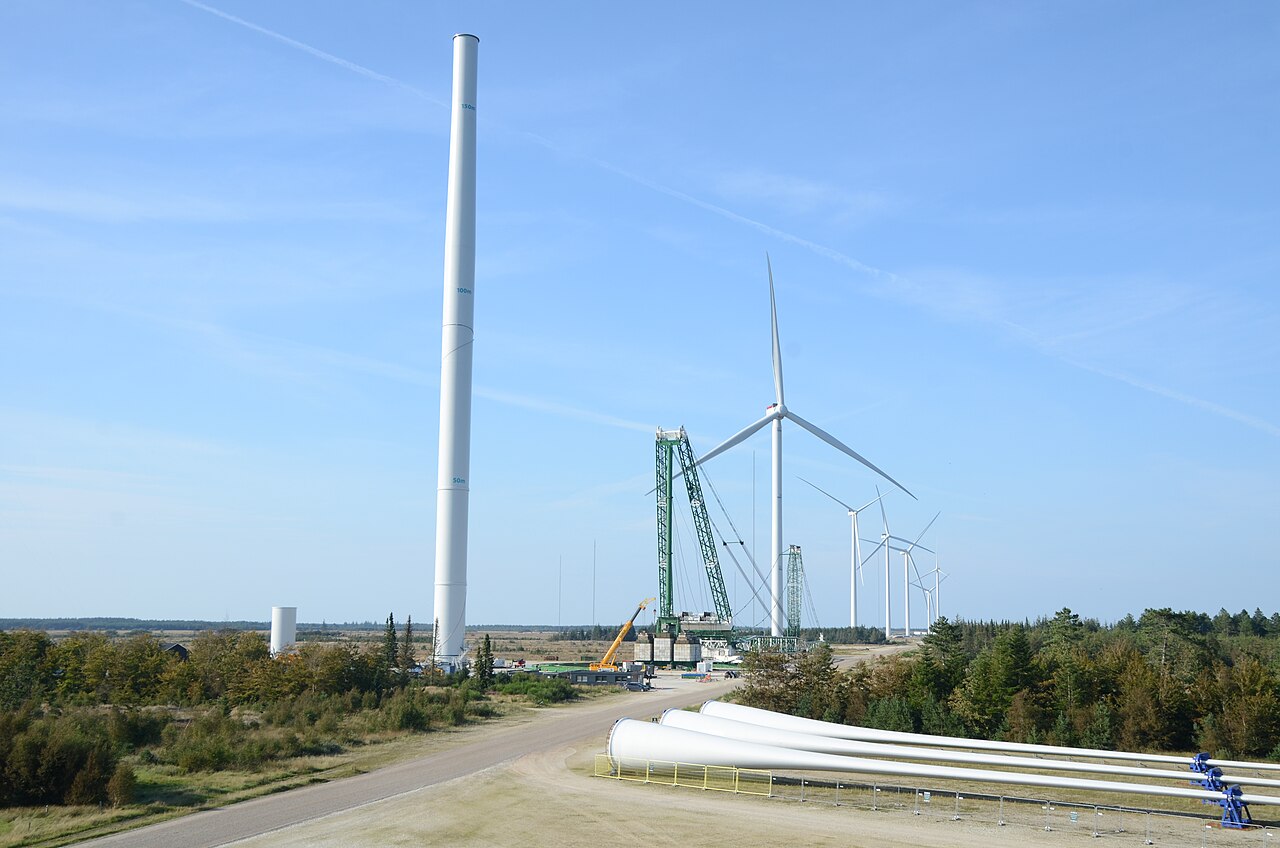
In the dusty plains of Wyoming, beneath the shadows of the massive turbines that once spun in service of Americas green energy future, lies a troubling reckoning. The Casper Regional Landfill has quietly become a graveyard for industrial-scale wind energy infrastructure, with more than 1,100 turbine blades buried since 2019. Each blade, stretching up to 123 meters long and weighing as much as 36 metric tons, represents a paradox at the heart of American energy policy: the technology celebrated as the solution to environmental challenges is creating an environmental crisis all its own, one that rural communities are forced to absorb while federal subsidies flow freely to the industry.
This is the story of wind turbine graveyards—the disposal problem that Big Wind prefers to keep out of the headlines, even as it extracts hundreds of millions of dollars annually in government tax credits from American taxpayers.
The Scale of the Problem
The numbers tell a stark story that contradicts the industrys environmental narrative. The National Renewable Energy Laboratory estimates that between 3,000 and 9,000 turbine blades are decommissioned annually in the United States, with projections suggesting this figure could jump to between 10,000 and 20,000 in the near future. As of today, approximately 800,000 tons of blade waste enters American landfills every year. This waste stream exists because wind turbine blades are constructed from fiberglass and epoxy resin composites that do not readily decompose and for which no economically viable recycling infrastructure has been developed at scale.
Over the past forty-five years, since wind turbine development accelerated in the early 1980s, more than 86,000 turbines have been constructed across the United States. Most of these installations are now reaching the end of their operational lives, and what was once a distant problem has become an immediate crisis. While wind energy companies and their political allies have celebrated record installations and expansion, they have systematically ignored—or deliberately obscured—the end-of-life challenge that their own technology creates.
Consider the specifications of modern turbine blades. A single blade can stretch between 80 and 123 meters in length and weigh between 10 and 36 metric tons. Moving these massive objects requires specialized equipment. Disposing of them requires either burial in landfills or open-air storage in enormous fields where they accumulate like monuments to corporate irresponsibility. For rural counties struggling with budget constraints, the presence of wind farms often came with implicit assumptions that the industry would handle its own waste. Those assumptions, as communities are now discovering, were naive.
The Casper Regional Landfill case illustrates how this problem manifests at ground level. Since 2019, the Wyoming facility has accepted more than 1,100 blades—representing thousands of tons of waste that will occupy valuable landfill space for generations. Wyoming accepted this burden partly because the wind industry is significant to the states economy, and partly because no one effectively prevented it. The regulatory frameworks governing wind farm decommissioning and waste management remain patchwork and often permissive, varying wildly between states and even between counties.
When Companies Abandon Responsibility
The situation deteriorated dramatically in Texas, where the lack of adequate oversight and enforcement created conditions for outright fraud. In Sweetwater, Texas, a location that has become symbolic of the industrys disposal failures, more than 3,000 turbine blades were dumped illegally in open fields. The company responsible, Global Fiberglass Solutions, promised to recycle these blades as part of a contract with wind farm operators. Instead, the company simply abandoned them. In March 2026, Texas Attorney General Ken Paxton sued Global Fiberglass Solutions for this egregious violation, seeking accountability for what amounts to environmental dumping on a massive scale.
This was not the first time Global Fiberglass Solutions faced legal action for deceptive practices. In September 2023, major wind turbine manufacturer GE Vernova sued the company for “fraud and deception,” alleging that Global Fiberglass had misrepresented its capabilities and intentions regarding blade recycling. The pattern is clear: a company positioned itself as a solution to the blade disposal crisis, extracted millions of dollars in contracts from desperate wind farm operators, and then failed to deliver on its promises, leaving mountains of hazardous composite waste scattered across rural America.
Internal company communications reveal the cynicism embedded in these operations. Don Lilly, the CEO of Global Fiberglass Solutions, instructed employees to “look busy” during inspections—a phrase that encapsulates the regulatory theater that characterizes much of the wind industrys approach to environmental responsibility. When federal subsidies make a business model profitable regardless of whether you actually solve the problem you claim to solve, there is little incentive to do anything other than extract value and move on.
The broader pattern extends beyond a single bad actor. In Sioux Falls, South Dakota, local officials were forced to stop accepting turbine blades after more than 100 were dumped from Iowa wind farms in 2019. The facility was overwhelmed, the waste posed logistical and environmental challenges, and no mechanism existed to force the wind farm operators who originated the waste to take responsibility for it. Instead, the burden fell on local governments and taxpayers who had no role in creating the mess.
What makes this particularly galling is the financial context in which these failures occur. Wind energy companies benefit from enormous federal tax subsidies, including the Production Tax Credit and the Investment Tax Credit, which together provide a 30 percent subsidy on renewable energy installations. These credits have been instrumental in making wind power economically competitive, and they have transferred billions of dollars from the federal treasury to the wind industry over the past two decades. Yet somehow, in the accounting of these companies, the cost of responsibly disposing of their product at the end of its life is treated as a problem for someone else to solve.
The math is simple and damning. Federal subsidies create the profitable conditions that make wind turbine installation attractive to investors and developers. Those same subsidies never account for the full lifecycle cost of the technology—particularly the disposal phase. The result is that taxpayers subsidize both the installation and, indirectly, the abandonment of the infrastructure when it no longer serves the companies interests.
Rural communities throughout Americas heartland have borne the hidden costs of this arrangement. They host the turbines that generate electricity and profits for distant corporations. They provide the land that companies develop with federal tax credits. And when the equipment reaches the end of its useful life, they inherit the waste. Meanwhile, venture capital firms and renewable energy companies book impressive returns, and executives make decisions with the secure knowledge that any failures in environmental stewardship will affect communities too small to generate national media attention.
The Path Forward
The wind turbine blade disposal crisis is not inevitable; it is a policy choice. Responsible governance would require that companies obtaining federal subsidies demonstrate credible plans for managing the full lifecycle of their products, including decommissioning and disposal. Responsible governance would hold companies accountable when they fail to meet those obligations, as Global Fiberglass Solutions has done repeatedly. And responsible governance would ensure that the burden of managing industrial waste does not fall disproportionately on the rural communities least equipped to bear it.
As stands now, Americas renewable energy future is being built on the assumption that someone else will clean up the mess. In Wyoming and Texas and South Dakota, that someone else is already paying the price.