

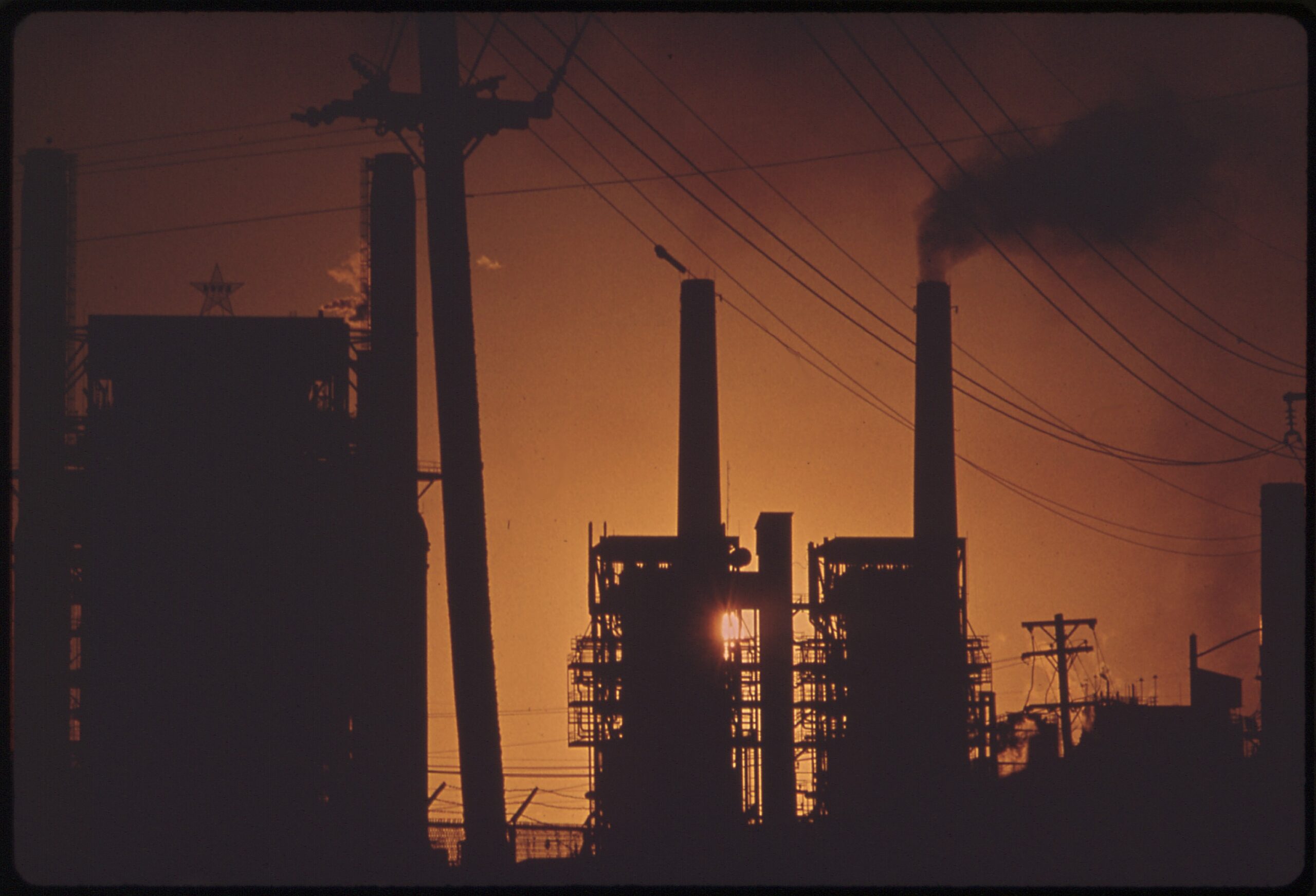
Records reviewed for the week ending May 1, 2026, show federal environmental enforcement continuing to lean on consent agreements and stipulated penalties rather than headline-grabbing court actions, with EPA’s Pacific Southwest region closing the week with paired Clean Air Act settlements at two California municipal landfills. Filings indicate the agency’s Q1 2026 caseload climbed roughly 23 percent over the prior quarter even as aggregate civil penalties remained modest by historical standards.
Top Action: California Landfills Settle Clean Air Act Cases for $411,936
The week’s most consequential federal environmental enforcement action came on April 29, when EPA Region 9 announced two simultaneous Clean Air Act settlements with operators of large municipal landfills in northern California. Filings indicate Waste Management of Alameda County, a wholly owned subsidiary of Waste Management, Inc., agreed to pay a $215,000 civil penalty for illegally venting and mismanaging treated landfill gas at the Altamont Landfill, while Sacramento County agreed to a $196,936 penalty for failing to properly collect landfill gas during construction at the county-owned Kiefer Landfill.
According to the agency’s complaint, between 2019 and 2023 the Altamont facility allowed the annual release of more than 340,000 pounds of treated landfill gas containing ozone-forming pollutants — emissions that records suggest contributed to the Bay Area and San Joaquin Valley’s persistent nonattainment status for ground-level ozone. Clean Air Act regulations require all treated landfill gas to be sold for beneficial use or routed to an on-site air pollution control device for destruction; EPA inspectors observed the venting during a joint inspection with the Bay Area Air District. The previously vented gas is now being directed to the on-site flare station.
At Kiefer, EPA’s joint inspections with the Sacramento Metropolitan Air Quality Management District found that the facility allowed excess emissions of hazardous air pollutants — including benzene, toluene, ethylbenzene, and vinyl chloride — to escape during construction on the landfill cover. Returning to compliance is projected to prevent an estimated 330 pounds of hazardous air pollutants and 1,800 pounds of smog-forming emissions per year. The settlements together illustrate a quiet pattern: Region 9 has increasingly used administrative consent agreements to bring landfill gas systems into compliance without litigation. [EPA press release]
Pennsylvania Oil and Gas: $7.275 Million in Combined Civil Penalties
EPA, the Justice Department, and the Pennsylvania Department of Environmental Protection finalized parallel settlements with three Appalachian oil and gas operators — XTO Energy, Hilcorp Energy Company, and PennEnergy Resources — covering well sites and gathering infrastructure in Butler, Lawrence, and Mercer counties. Filings indicate XTO will pay a $4 million civil penalty, Hilcorp $1.275 million, and PennEnergy $2 million, with each amount split equally between the federal government and the Commonwealth of Pennsylvania.
The Hilcorp agreement is projected to result in the reduction of more than 160 tons of volatile organic compound (VOC) emissions per year and 5,200 tons of carbon dioxide equivalent emissions annually released as methane, according to the consent decrees. The PennEnergy agreement is projected to reduce more than 8,200 tons of carbon dioxide equivalent emissions per year. Records suggest the operators failed to install or properly maintain emissions controls at storage tanks and pneumatic devices required under New Source Performance Standards Subpart OOOO.
The package is notable not for the size of any individual penalty but for what it signals about the federal-state co-enforcement model: Pennsylvania’s DEP was a co-plaintiff and will receive half of the recovered penalties. [EPA press release] [PennEnergy release]
BASF Pays $700,000 to Resolve TSCA Chemical Reporting Lapses
EPA Region 2 finalized a settlement with BASF Corporation under which the German chemical maker’s U.S. headquarters in Florham Park, New Jersey, will pay a $700,000 civil penalty to resolve violations of the Toxic Substances Control Act (TSCA). According to the consent agreement, BASF failed to provide information within the required timeframe about hundreds of substances during the 2020 TSCA Chemical Data Reporting period.
“Chemical data reporting is a critical tool that helps EPA ensure the safety of chemicals used in communities across the country,” EPA Regional Administrator Michael Martucci said in a statement accompanying the settlement. “Companies are responsible for submitting accurate and timely reports, and this case reflects EPA’s approach of fair but firm enforcement when those obligations are not met.” BASF has certified that it is now in full compliance.
The case sits within a broader Region 2 enforcement push on TSCA chemical data reporting compliance — a pattern Hunton Andrews Kurth analysts have flagged as the agency’s most aggressive line of TSCA enforcement under the current administration. [EPA press release]
Safety-Kleen Linden, NJ: $175,000 Hazardous Waste Settlement
An earlier Region 2 case that closed in this enforcement cycle involved Safety-Kleen Systems, Inc., the industrial parts cleaning and used-oil recycling company. Filings indicate Safety-Kleen agreed to pay a $175,000 civil penalty after a 2024 inspection at its Linden, New Jersey, facility identified cracks and gaps in secondary containment structures, leaking pumps that were not tagged for repair, and improperly sealed pipes that records suggest substantially increased the risk of fugitive emissions of volatile organic compounds.
The settlement documents Safety-Kleen’s return to compliance through repaired containment, corrected labeling, and additional staff training. Linden — a longstanding industrial corridor on Arthur Kill — has been a recurring target of EPA Region 2 hazardous waste enforcement, and data shows a steady cadence of RCRA cases at chemical handling facilities along that corridor over the past three years. [EPA press release]
Old Minot Landfill Superfund Decree Modified
The Justice Department on April 23 lodged a proposed Second Modification to the 1996 Consent Decree in United States v. City of Minot, the long-running Comprehensive Environmental Response, Compensation, and Liability Act case covering the Old Minot Landfill Superfund Site in North Dakota. Federal Register filings indicate the underlying complaint, filed in October 1995, alleged the city was liable for the release of hazardous substances at and from the landfill; under the original decree the city agreed to remediate the site and impose institutional controls restricting future land use. The current modification adjusts those controls — a procedural but substantive update to a 30-year-old cleanup. [Federal Register notice]
Maryland Superfund Cost Recovery: Henderson Road and Spectron
A separate Federal Register notice published April 17 details a proposed Settlement Agreement granting the United States allowed claims of $423,169.50 for the Henderson Road Site and $26,154.91 for the Spectron Site, both in Cecil County, Maryland. The settlement reflects EPA’s continued use of bankruptcy-claim mechanisms to recover Superfund cleanup costs from defunct or restructured potentially responsible parties — a quieter but cumulatively significant component of the Superfund program’s financial footprint. [EPA OGC notice]
Q1 2026 Caseload: 91 Settlements, $3.37 Million in Penalties
Industry data compiled by EHSLeaders and corroborated against the EPA enforcement docket indicates the agency finalized 91 settlement agreements in the first quarter of 2026 — a roughly 23 percent increase over the 74 penalties issued in Q4 2025 — totaling $3,369,398 in civil penalties. The single largest fine was a $781,175 Clean Air Act assessment against a Kansas building-materials manufacturer whose insulation plant violated its Class I Operating Permit and the agency’s Maximum Achievable Control Technology (MACT) standards for hazardous air pollutants.
By statute, Clean Air Act violations accounted for $1,430,004 in Q1 penalties across 24 entities, with individual fines ranging from $343 to $150,000 beyond the Kansas case. Clean Water Act NPDES enforcement yielded $488,781 spread across 16 entities — including a New Mexico municipal wastewater treatment plant and a Kansas subdivision. RCRA enforcement produced six-figure settlements with a Hawaii-based environmental services firm ($165,000) for tank-management and manifest violations, an Illinois safety equipment manufacturer ($100,675) for operating without a permit, and a Nebraska environmental services company ($58,900) for improper hazardous waste container management. FIFRA enforcement totaled $575,743, led by a $370,000 settlement with a Florida HVAC manufacturer over misbranded devices, and a $106,110 fine against a Georgia pest control company for selling unregistered pesticides. [EHSLeaders Q1 2026 roundup]
Pattern Watch: Where Enforcement Is Concentrating
Three patterns deserve notice. First, sectoral concentration: methane and VOC enforcement at oil and gas production sites and at municipal solid waste facilities accounted for the bulk of this week’s emissions reductions. Filings indicate the agency continues to lean on EPA Methods 21 and 22 inspection findings to drive negotiated relief.
Second, state co-enforcement: the Pennsylvania settlements continue a multi-year trend of state environmental agencies acting as co-plaintiffs alongside EPA and DOJ — a model that survives changes in federal enforcement posture because half the recovered penalty flows to state treasuries. Records suggest similar co-enforcement structures are likely in Region 5 (Great Lakes) and Region 6 (Gulf Coast) cases now in negotiation.
Third, chemical reporting: Region 2’s BASF settlement is the latest in a series of TSCA Chemical Data Reporting enforcement actions targeting large multinational manufacturers. Industry counsel at Hunton Andrews Kurth and Baker Botts have separately flagged TSCA reporting as among the most reliable enforcement lines through 2026, even as broader civil enforcement activity has slowed relative to FY 2023 baselines.
Worth a Closer Look
Two threads on this week’s docket warrant deeper TIJ investigation. The first is the Altamont Landfill venting record. EPA’s complaint alleges the facility released more than 340,000 pounds of treated landfill gas annually for four years before remediation — a multi-year compliance gap at a Waste Management subsidiary that, on the public record, generated no parallel state criminal referral. The second is the cumulative scale of the Pennsylvania oil-and-gas package: while the headline civil penalties are modest, the underlying operational changes are projected to eliminate roughly 13,400 tons of carbon-dioxide-equivalent methane emissions per year — a figure worth verifying against operator-reported emissions inventories filed with the Pennsylvania DEP. We will be filing records requests on both.
EPA’s ECHO database remains the authoritative public source for individual facility compliance histories; the agency’s Civil and Cleanup Enforcement Cases and Settlements page tracks active national-priority cases. Records reviewed for this digest are drawn from EPA press releases, the Federal Register, and the Office of General Counsel’s posted consent decrees. Right of reply was offered to all named parties through the agency’s docket and through publicly listed corporate communications channels; no responses were received as of publication.
The Investigative Journal will return next Friday with the Week of May 8 EPA Enforcement Digest.