

By Eduardo Bacci, The Investigative Journal
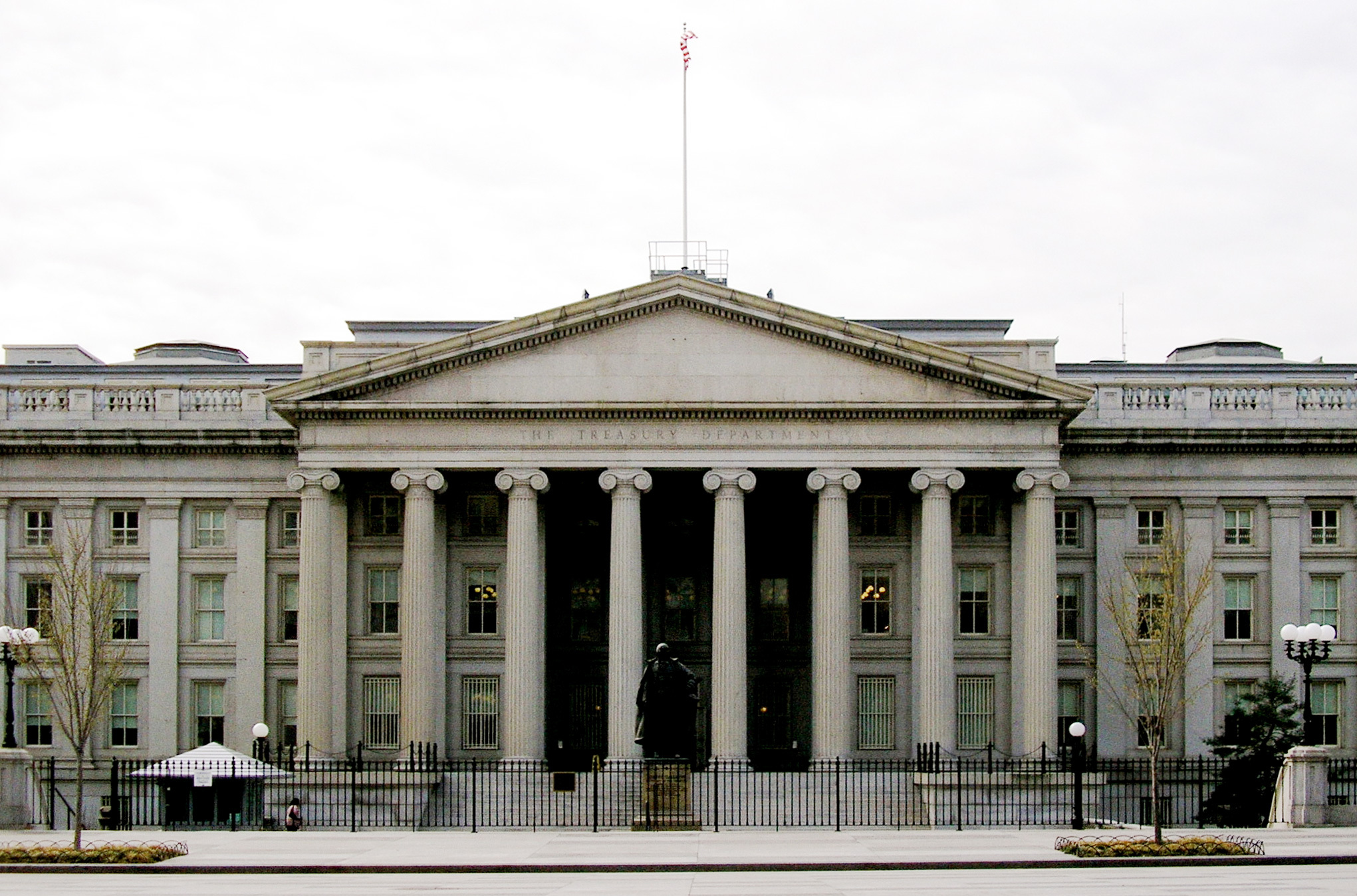
The first full week of May 2026 produced one of the densest stretches of sanctions and trade-enforcement activity of the year, with Treasury, State, the Department of Justice, and the U.S. Court of International Trade all moving in parallel. Records suggest the Trump administration is layering targeted financial measures on Cuba, Iran, and Russia-aligned networks while simultaneously navigating the legal limits of its broader tariff agenda. This week’s digest reviews eight notable actions, each anchored in the underlying public record, with a closing list of threads that warrant deeper investigation by TIJ.
1. State and OFAC designate GAESA under Executive Order 14404
On May 7, 2026, the U.S. Department of State and the Treasury’s Office of Foreign Assets Control (OFAC) executed the first round of designations under Executive Order 14404, the new Cuba authority signed on May 1. The headline addition to the Specially Designated Nationals (SDN) List is Grupo de Administración Empresarial S.A. (GAESA), the military-owned conglomerate that State Department records indicate controls a substantial share of Cuba’s tourism, retail, port, and remittance infrastructure. GAESA was designated under section 2(a)(i)(A) of E.O. 14404 for operating in the financial services sector of the Cuban economy.
The order’s most consequential feature, according to legal analyses of the text, is a secondary-sanctions hook that authorizes Treasury to act against foreign financial institutions that knowingly conduct or facilitate significant transactions with designated Cuban parties. That structure mirrors the secondary-sanctions architecture used against Iran’s financial sector and signals an intent to deter European, Canadian, and Latin American banks from clearing GAESA-linked transactions in dollars or euros.
To smooth implementation, OFAC issued Cuba-related General License 1, authorizing transactions that are otherwise permitted under the Cuban Assets Control Regulations, and FAQ 1254, which indicates a limited non-targeting posture for non-U.S. persons engaged in wind-down activity through June 5, 2026. Records suggest the practical impact will fall hardest on hotel joint ventures, port operators, and remittance corridors that have routed payments through GAESA subsidiaries; affected industries should expect compliance reviews of any counterparty that touches Cuban military-linked entities.
2. Economic Fury hits Iranian shadow-banking ring and a Chinese oil terminal
On May 11, 2026, Treasury announced a fresh “Economic Fury” tranche designating 12 individuals and entities tied to the Islamic Revolutionary Guard Corps’ (IRGC) oil sales to the People’s Republic of China. The action names three Iranian foreign-currency exchange houses and their front companies, as well as a China-based petroleum terminal operator that filings indicate has imported tens of millions of barrels of sanctioned Iranian crude since 2025.
According to the Treasury press release, the exchange houses play a central role in converting yuan-denominated oil revenues into currencies usable by Iran’s military and its proxies. The inclusion of a Chinese terminal operator is significant. Public sanctions practice has historically been cautious about adding mainland-China infrastructure to the SDN List, and the move tracks an April 2026 OFAC alert on sanctions risks tied to Chinese teapot refineries handling Iranian crude.
For affected industries, the implication is straightforward: any vessel call, bunkering arrangement, or trade-finance facility connected to the designated terminal now carries primary U.S. sanctions exposure, and foreign banks clearing related transactions face secondary-sanctions risk. Records suggest the maritime insurance market will tighten further on dark-fleet vessels in the Strait of Hormuz, an area also flagged in OFAC’s May 1 alert on Iranian demands for Strait passage.
3. Iraqi oil official and Iran-backed militia leaders sanctioned
In a separate Economic Fury action published by Treasury on May 7, OFAC designated Iraq’s Deputy Minister of Oil, Ali Maarij Al-Bahadly, alongside three senior leaders of the Iran-aligned militias Kata’ib Sayyid Al-Shuhada (KSS) and Asa’ib Ahl Al-Haq (AAH). Filings indicate Al-Bahadly is alleged to have facilitated the diversion of Iraqi oil for the benefit of the Iranian regime and its proxy network.
The designations are notable for explicitly tying KSS to Hizballah’s illicit-finance apparatus. Treasury’s release states that, since at least 2025, a senior KSS official has worked directly with Hizballah finance operatives on weapons purchases delivered into Iraq, arranging payments in the millions of dollars. Records suggest this is one of the most direct U.S. government attributions of operational coordination between Iraqi militias and Hizballah finance teams.
Industry implications run through the energy-trading and correspondent-banking sectors. Iraqi oil cargoes loaded out of southern terminals will face heightened scrutiny over end-buyer documentation, and banks with Iraqi exposure should expect questions on whether any official designated by OFAC retained signature authority over public-sector accounts during the relevant period.
4. DOJ probes roughly $2.6 billion in Iran-linked oil trades
The Justice Department has opened a criminal investigation into approximately $2.6 billion in oil transactions that authorities suggest may have violated U.S. sanctions against Iran. Reporting indicates that subpoenas have been issued to commodity-trading firms based in Geneva and Dubai, and that DOJ Fraud Section and OFAC analysts are reviewing trade records, vessel movements, and correspondent-bank transfers.
No charges have been filed at the time of publication, and the matter remains an investigation rather than a finding. The right of reply remains open to each named or implicated entity. That said, the case is significant because it appears to build on the trade-disruption work begun under the Economic Fury campaign and indicates DOJ is pursuing the buyer side of the trade rather than only the Iranian sellers — a posture that could expose Asian refiners, charterers, and trade-finance providers to multibillion-dollar civil and criminal exposure if records support charging decisions.
The investigation also fits a pattern visible in National Security Division enforcement over the past 12 months: the use of shell-company networks and commodity-trading houses to mask the Iranian origin of cargoes. Compliance teams in the commodities, shipping, and trade-finance industries should anticipate more aggressive document requests and depositions through the summer.
5. Court of International Trade strikes down Section 122 global tariffs
In a May 7, 2026 decision, the U.S. Court of International Trade held that the administration’s 10 percent global tariffs imposed under Section 122 of the Trade Act of 1974 were unlawful and unauthorized. The ruling does not eliminate the broader tariff regime, but it narrows one of the statutory levers the administration has used to support the across-the-board duty structure introduced earlier in the term.
The decision is on appeal and the tariffs remain in effect pending further review. For importers and customs brokers, the immediate operational question is whether to preserve protest rights on entries paid under Section 122 since the duties were imposed. Trade counsel will likely advise filing protective protests to safeguard refund claims if the ruling is affirmed on appeal.
The case underscores a structural risk the administration has taken on by relying on emergency and trade-statute authorities for broad-based tariffs: each authority carries its own statutory ceiling, and courts have begun to enforce those ceilings. TIJ will be tracking the appellate timeline, which is expected to extend into the fourth quarter.
6. USTR opens second statutory four-year review of China Section 301 tariffs
On May 6, 2026, the Office of the U.S. Trade Representative published a Federal Register notice initiating its second statutory four-year review of two sets of Section 301 actions on imports of certain Chinese products. The reviews concern tariff actions that are set to expire on their four-year anniversary dates of July 6 and August 23, 2026.
The notice opens a structured comment window for U.S. domestic producers and importers to argue for retention, modification, or expansion of the duties. Industry stakeholders, particularly in semiconductors, batteries, critical minerals, and personal protective equipment, should expect a competitive comment season; records suggest both sides will deploy company-specific economic evidence to influence the ultimate determination.
The review intersects with the broader U.S.–China trade dynamic, including the 90-day tariff truce reached in Geneva and the November 2025 extension of certain rollbacks through November 10, 2026. Whatever USTR concludes on the Section 301 dockets will set the baseline against which any new trade understanding is measured.
7. BIS Affiliates Rule countdown: 50 percent ownership trigger activates November 10
The Affiliates Rule finalized by the Bureau of Industry and Security in late 2025 remains on a one-year suspension and is scheduled to take effect November 10, 2026. Under the rule, any entity 50 percent or more owned, directly or indirectly, by one or more parties on the Entity List or the Military End-User (MEU) List will itself be subject to those restrictions automatically.
BIS guidance indicates the rule creates an affirmative duty for exporters and reexporters to determine the ownership of their counterparties. Significant minority ownership by Entity List, MEU, or SDN parties will continue to constitute a Red Flag requiring additional due diligence. Public filings suggest the rule’s downstream effect will be especially visible in the semiconductor, advanced materials, and aerospace supply chains, where complex Chinese ownership structures have historically defeated screening tools.
With six months until the trigger date, the window for compliance program upgrades is narrowing. Records suggest larger U.S. and allied exporters are already deploying ultimate-beneficial-ownership screening and contractual representations to manage the transition, while small and mid-sized exporters remain the most likely point of failure.
8. Earlier-week Economic Fury tranche disrupts Iranian UAV component chain
On May 8, 2026, Treasury published a separate Economic Fury action targeting 10 individuals and companies across the Middle East, Asia, and Eastern Europe alleged to enable Iran’s military procurement of weapons and raw materials with applications in Shahed-series unmanned aerial vehicles and the regime’s ballistic-missile program. The same day, OFAC executed Counter Terrorism and Counter Narcotics Designation Updates and recorded a Russia-related Designation Removal — the latter a reminder that the SDN List is dynamic in both directions.
Industry implications run through the electronics-distribution and dual-use components sectors. Filings indicate that the components at issue include navigation modules, microcontrollers, and motor components that move through complex broker chains across Hong Kong, the UAE, and Central Asia. Compliance officers should anticipate additional advisory guidance from BIS and FinCEN on red flags relevant to these flows.
What warrants deeper TIJ investigation
Four threads from this week’s record merit follow-up reporting. First, the identity and corporate genealogy of the China-based petroleum terminal operator named in the May 11 designation, including any U.S.-listed counterparties or insurers. Second, the buyer side of the DOJ’s $2.6 billion oil-trade probe — particularly whether any Asian refiner is cooperating under a non-prosecution framework. Third, the operational tempo behind the Cuba E.O. 14404 wind-down: which European and Canadian banks are reducing exposure, and on what timetable. Fourth, the appellate trajectory of the Court of International Trade’s Section 122 ruling, which could reshape the legal foundation for the broader tariff structure heading into the fall trade calendar.
TIJ will continue tracking each thread. Tips, document leaks, and corporate filings tied to these actions can be submitted to our secure intake.
Sources: OFAC Recent Actions | Treasury Press Release SB0498 (May 11, 2026) | Treasury Press Release SB0496 (May 8, 2026) | Treasury Press Release SB0492 (May 7, 2026) | State Department Cuba Designations | BIS Affiliates Rule | DOJ National Security Division Export Control News.