

The Investigative Journal’s daily survey of federal enforcement — indictments, convictions, civil settlements, and forfeitures from the Department of Justice, the FBI, and U.S. Attorney offices across the country. Every claim below is sourced to a public record; pending matters are flagged as allegations.
Comey Indictment Headlines a Crowded Week of Federal Enforcement
The Justice Department continued a heavy enforcement tempo through the second week of May 2026, with the Office of Public Affairs announcing a string of indictments, sentences, and civil actions spanning national security, healthcare fraud, public corruption, cybercrime, and Foreign Corrupt Practices Act-adjacent matters. The week’s most politically combustible action was the unsealing of a federal indictment of former FBI Director James B. Comey for alleged threats to harm President Donald Trump, a case the department disclosed on May 11. Filings indicate the matter was charged in the Eastern District of Virginia, where Comey resides.
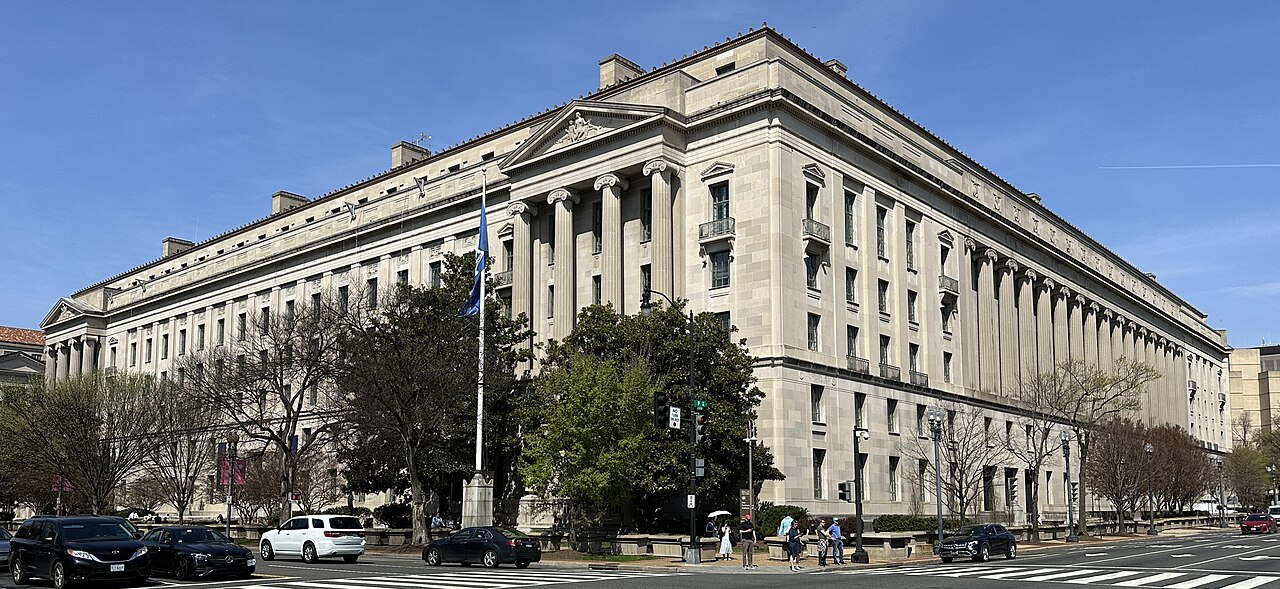
Court records show the case is being handled at the main Justice headquarters in coordination with the U.S. Attorney’s Office; the indictment itself is the only public charging document at this point, and records suggest the defendant is presumed innocent. The case is one of a small handful of public-corruption-adjacent matters DOJ has filed against a former senior federal official this year, and TIJ will track docket activity in United States v. Comey through arraignment and any pretrial motions.
The remainder of the week’s docket reflects what DOJ leadership has described as the National Fraud Enforcement Division’s effort to push high-dollar healthcare, pandemic-relief, and cybercrime cases to charging or sentencing. The cases summarized below are drawn from DOJ press releases, U.S. Attorney announcements, and the federal court system; links to source documents are provided throughout.
1. Former NIAID Senior Official Indicted Over Concealment of COVID-19 Records
On May 11, a federal grand jury returned an indictment against a former senior official at the National Institute of Allergy and Infectious Diseases (NIAID) on charges connected to the concealment of federal records during the COVID-19 pandemic, according to the DOJ press release. Filings indicate the defendant is accused of taking steps to evade Freedom of Information Act requests relating to federal grant research.
The case is significant because it represents one of the few criminal prosecutions to emerge from years of congressional scrutiny over how pandemic-era records were managed inside the U.S. Public Health Service. Records suggest the indictment focuses on documentation handling rather than substantive grant fraud, but TIJ will follow the docket for any expansion of the charging instrument.
The defendant is presumed innocent. The case is being prosecuted by DOJ Criminal Division attorneys in coordination with the U.S. Attorney’s Office; the indictment is the only operative charging document on the docket.
2. $46.6 Million Medicare Skin-Graft Fraud — $2 Million Seized From California Clinic
A federal court in Los Angeles authorized the seizure of approximately $2 million from Expert Wound Care PC, a California clinic accused of submitting more than $46.6 million in fraudulent Medicare claims for skin graft substitutes and procedures between September 2025 and April 2026, according to DOJ records. Roughly $34 million of those claims were approved before the alleged scheme was disrupted.
The civil seizure was announced on May 13, 2026, and was the latest action by DOJ’s National Fraud Enforcement Division targeting the wound-care segment of the Medicare program, where DOJ data shows a sharp uptick in suspected fraud. Filings indicate the clinic billed Medicare for services that were never provided. The provider has not been criminally charged at this stage; the seizure is a civil asset forfeiture action.
This case warrants deeper TIJ investigation because wound-care fraud has emerged in 2025–2026 as one of the highest-loss Medicare schemes, with multiple parallel investigations in California, Texas, and Florida. We will examine corporate ownership of Expert Wound Care PC and related entities through state corporate records.
3. Brooklyn Tax Preparer Sentenced in $600 Million Pandemic-Relief Scheme
A Brooklyn tax preparer was sentenced to 36 months in federal prison for her role in a fraud conspiracy that fraudulently claimed more than $600 million in pandemic-era tax credits, records on the DOJ press release page show. The sentence was imposed in the Eastern District of New York and announced on or around May 13.
According to filings, the defendant participated in preparing and filing Internal Revenue Service Forms 941 and related schedules that improperly claimed Employee Retention Credit and other pandemic-era refundable credits on behalf of businesses that were not entitled to them. The scheme is one of the larger ERC-related prosecutions DOJ has announced in 2026.
The Employee Retention Credit, originally authorized under the 2020 CARES Act, has been a recurring subject of Treasury Inspector General for Tax Administration (TIGTA) findings of widespread overclaiming. Data shows the IRS has formally paused processing of suspect ERC submissions while DOJ prosecutes the larger schemes.
4. Tennessee Pandemic-Relief Conspiracy — $80 Million Plea
A Tennessee tax preparer pleaded guilty to participation in an $80 million pandemic-relief fraud scheme, according to a DOJ Office of Public Affairs release. Filings indicate the defendant prepared returns claiming Employee Retention Credits and Sick and Family Leave Credits for businesses that did not qualify and, in some instances, did not exist as functioning enterprises during the qualifying periods.
The plea is part of a broader DOJ push against return-preparer fraud, which the Tax Division has flagged as a priority enforcement area for 2026. Records suggest the defendant faces a statutory maximum at sentencing, though actual exposure under the Sentencing Guidelines will depend on loss-amount calculations and any cooperation credit.
5. Canadian National Charged in $13 Million Cryptocurrency Scam
Federal prosecutors in the Southern District of Florida unsealed an indictment on May 11 charging Trenton Richard David Johnston, a 19-year-old Canadian citizen who had overstayed a U.S. visitor visa, with conspiracy to commit wire fraud and money laundering tied to a roughly $13 million cryptocurrency scam, according to court filings reported by federal records sources. The case is being prosecuted by the U.S. Attorney’s Office in Miami.
Filings indicate the alleged scheme targeted victims through social-engineering attacks that induced them to move funds to attacker-controlled crypto wallets. The defendant is presumed innocent.
The case is one of several DOJ has charged in 2026 involving young, U.S.-based operators of social-engineering cryptocurrency schemes, an enforcement pattern that overlaps with broader FBI work on the so-called “Scattered Spider” and adjacent threat clusters. TIJ will track the docket for any superseding indictments or co-conspirator charges.
6. Latvian National Sentenced to 102 Months for Russian Ransomware Role
On May 7, 2026, Deniss Zolotarjovs, a Latvian national, was sentenced to 102 months in federal prison for his role as a negotiator inside a major Russian ransomware organization that records suggest extorted more than 54 companies, according to a DOJ Office of Public Affairs press release. The case was prosecuted in coordination with the Criminal Division’s Computer Crime and Intellectual Property Section.
Filings indicate Zolotarjovs’s role included escalating pressure on victims and weaponizing exfiltrated data — including, in at least one matter, sensitive pediatric health information. The sentence is among the longest imposed in 2026 on a ransomware-related defendant who was not the named principal of the criminal organization. It also reflects a trend in which DOJ is securing custodial outcomes against the operational layer of ransomware affiliates, not just the technical developers.
7. BlackCat / ALPHV Ransomware Defendants Sentenced to Four Years Each
Ryan Goldberg, 40, of Georgia, and Kevin Martin, 36, of Texas, were each sentenced to four years in federal prison for facilitating ransomware attacks during 2023 using the ALPHV/BlackCat ransomware-as-a-service platform, according to a DOJ release. Both defendants had prior pleas; a third co-conspirator, Angelo Martino of Florida, is set for sentencing in July.
What makes this case notable is the defendants’ professional background: filings indicate that both Goldberg and Martin previously worked in cyber-incident response, the very industry that exists to defend victims against ransomware. The case is a rare example of insider-defender prosecution and is likely to influence how cybersecurity employers conduct continuous monitoring and offboarding.
8. Justice Department Sues D.C. Bar Disciplinary Authorities
On May 13, the Justice Department filed a civil complaint against the D.C. Bar disciplinary authorities, alleging what the department characterized as a weaponization of the bar disciplinary process against federal government attorneys, according to the DOJ Office of Public Affairs. The complaint is on file in the U.S. District Court for the District of Columbia.
The action is one of a growing set of civil filings by the department concerning the regulation of federal government counsel by state and local bar authorities. Filings indicate DOJ is seeking declaratory and injunctive relief. Right-of-reply status: counsel for the D.C. Bar disciplinary authorities has not publicly responded as of publication, and the case is at the pleadings stage.
9. Antero Resources Clean Air Act Settlement
On the civil-enforcement side, the Justice Department’s Environment and Natural Resources Division and the West Virginia Department of Environmental Protection announced a proposed settlement with Antero Resources Corporation resolving alleged Clean Air Act and West Virginia Air Pollution Control violations at the company’s oil and gas production operations in West Virginia and Ohio, per a DOJ press release. Records suggest the settlement requires emissions controls and supplemental environmental projects.
The action follows a multi-year EPA investigation. The settlement is subject to a public comment period and court approval, and the company has not admitted liability. Right-of-reply status: Antero is represented by outside counsel and may issue a public statement on entry of the consent decree.
10. Aetna Pays $117.7 Million to Resolve False Claims Act Allegations
Aetna agreed to pay $117.7 million to resolve False Claims Act allegations relating to its participation in the federal health benefits program, according to the DOJ press release. The settlement was announced on March 11 and is among the larger FCA recoveries DOJ has booked this year. Filings indicate the resolution does not constitute an admission of liability.
The recovery, while announced earlier this quarter, continues to color the enforcement landscape this week as DOJ leadership cites it in remarks about False Claims Act priorities. According to data published in white-paper form by DOJ’s Civil Division, FCA recoveries in fiscal year 2025 set records, with healthcare-related matters again dominating the docket.
Cases Warranting Deeper TIJ Investigation
Three matters from this week warrant additional TIJ reporting beyond the daily digest format. First, the Expert Wound Care PC seizure intersects with a broader pattern of suspected Medicare fraud in the wound-care market that public records suggest may involve interlocking corporate ownership across multiple states; TIJ will trace the corporate family tree. Second, the BlackCat insider-defender sentencings raise unresolved questions about how cybersecurity incident-response firms screen and supervise employees with privileged access; that is a story about industry practice as much as criminal conduct. Third, the NIAID concealment indictment, if it leads to broader charges or related disclosures, would represent a notable expansion of DOJ’s record-handling prosecutions following the pandemic.
TIJ will continue to publish the DOJ Watch daily, drawing on the Department of Justice news feeds, U.S. Attorney’s Office announcements, federal court PACER dockets, and FBI press releases. Pending matters discussed above are allegations; defendants are presumed innocent unless and until proven guilty. Where the chain of attribution from a claim to a verifiable public record could not be established, the claim was excluded from this report.
This report is part of The Investigative Journal’s accountability coverage of federal enforcement activity. Tips: editor@tij.news.
Sources
- U.S. Department of Justice — Press Releases
- DOJ: Former Senior NIAID Official Indicted for Concealing Federal Records During COVID-19 Pandemic
- DOJ: Federal Grand Jury Indicts Former FBI Director James Comey for Threats to Harm President Trump
- DOJ: Tennessee Tax Preparer Pleads Guilty to $80M Pandemic-Relief Fraud Scheme
- DOJ: Member of Prolific Russian Ransomware Group Sentenced to Prison
- DOJ: Two Americans Plead Guilty to Targeting Multiple U.S. Victims Using ALPHV BlackCat Ransomware
- DOJ: Aetna Agrees to Pay $117.7 Million to Resolve False Claims Act Allegations
- DOJ: Antero Resources Settlement on Clean Air Act Violations
- U.S. Attorneys — All USAO Press Releases
- FBI — White Collar Crime News