

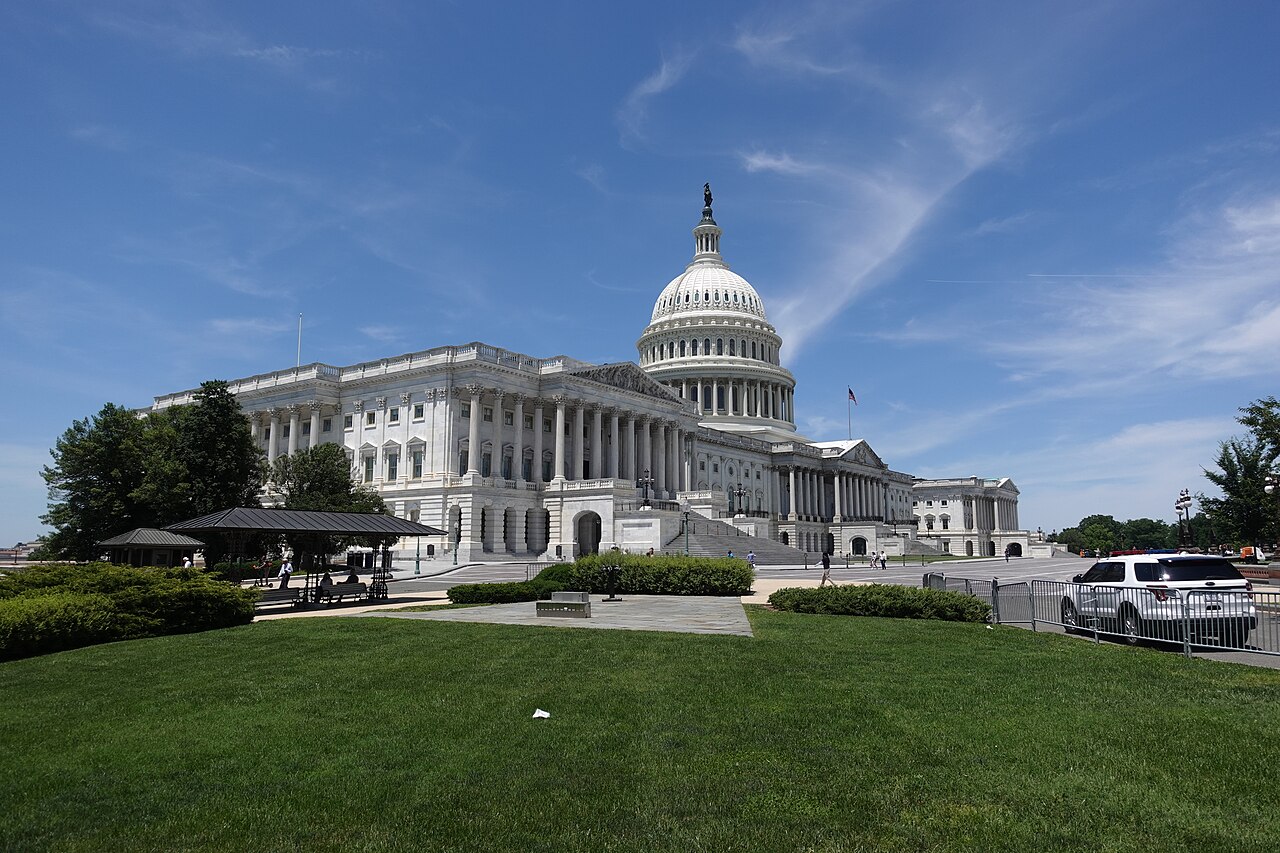
Capitol Watch is The Investigative Journal’s daily digest of floor action, committee work, oversight, and budget developments inside the 119th Congress. Every claim below is sourced to a public record; pending matters are flagged as such.
1. House Appropriations clears FY 2027 Interior-Environment bill cutting EPA by roughly 20 percent
The House Appropriations Committee convened a full-committee markup at 11:00 a.m. Wednesday in 2359 Rayburn to advance the Fiscal Year 2027 Interior, Environment, and Related Agencies bill alongside the Fiscal Year 2027 Transportation, Housing and Urban Development, and Related Agencies measure. Subcommittee Chairman Mike Simpson (R-Idaho) opened the Interior debate noting that the draft funds the Bureau of Indian Education at $1.55 billion — an increase of $181.6 million over enacted — and the Indian Health Service at $8.7 billion, up $639.8 million. The Environmental Protection Agency, by contrast, is reduced by nearly $1.8 billion, or about 20 percent below the enacted FY 2026 level, according to Simpson’s prepared remarks.
The EPA cut sets up a near-certain confrontation with Senate appropriators, who in prior cycles have rejected reductions of that magnitude. Records on the committee’s markup page indicate that funding for the National Park Service, Bureau of Land Management, and the U.S. Fish and Wildlife Service tracks closer to enacted levels, with most of the savings concentrated in EPA regulatory programs, climate grants, and environmental justice line items. The companion THUD measure was advanced in the same session and now joins the queue of FY 2027 bills awaiting floor scheduling.
Data shows the FY 2027 appropriations cycle is moving on the House side notably faster than the Senate’s: filings indicate the Senate Appropriations Committee originally scheduled an Agriculture-FDA, Legislative Branch, and Commerce-Justice-Science markup the same week, but the schedule was listed as “to be rescheduled” as of Wednesday morning, pushing comparable Senate action into the days ahead. See the full House Appropriations markup notice and the Congress.gov weekly committee schedule.
2. Senate teed up for 2:15 p.m. cloture-style vote on EPA hazardous-air-pollutants disapproval (S.J. Res. 188)
Under a unanimous-consent order entered Tuesday, the Senate was scheduled to vote at 2:15 p.m. Wednesday on a motion to proceed to S.J. Res. 188, a Congressional Review Act resolution of disapproval targeting the EPA rule on National Emission Standards for Hazardous Air Pollutants. Senator Sheldon Whitehouse (D-R.I.) or his designee was set to make the motion. The CRA resolution would, if enacted, nullify the agency rule and bar the EPA from issuing a substantially similar rule absent new statutory authority.
Senate Environment and Public Works minority records indicate Whitehouse has led a parallel investigation into the EPA’s exemption decisions for toxic-chemical emitters, framing the resolution as part of a broader fight over Clean Air Act enforcement. Procedural posture matters: the motion to proceed itself can clear with a simple majority under CRA expedited procedures, but the underlying vote on passage — when and if it occurs — is the consequential one. Reporters tracking the chamber should distinguish between Wednesday’s procedural posture and a final-passage roll call.
The resolution is one of several CRA disapprovals queued behind the FY 2027 appropriations debate. See the Senate floor today page and the Whitehouse investigation announcement for the procedural and substantive context.
3. House takes up “No Funds for Repeat Child Care Violations Act” on the floor
The House moved Wednesday to consideration of H.R. 7726, the No Funds for Repeat Child Care Violations Act of 2026, sponsored by Representative Mary Miller (R-Ill.). The bill — reported out of the Committee on Education and Workforce on March 5 by a 20-15 party-line vote — strengthens the Department of Health and Human Services Secretary’s authority to withhold Child Care and Development Block Grant funds from states that repeatedly fail to comply with program requirements. The committee report (H. Rept. 119-592) frames the measure as an anti-fraud tool; the minority views in the report describe it as duplicative of existing HHS authority.
Records suggest H.R. 7726 is one of eight CCDBG-related bills moved by the committee in March, six of which advanced along party lines. The bill’s path forward in the Senate is uncertain: no companion has been formally taken up by the Senate Health, Education, Labor and Pensions Committee as of this writing. Advocates for state child-care administrators have warned in public comments that the bill’s withholding triggers could create cash-flow disruptions for providers in states with audit findings unrelated to safety violations.
See the bill text and status on Congress.gov, the House Report 119-592, and the CBO cost estimate for H.R. 7726.
4. Energy and Commerce subcommittees hold parallel hearings on data security and Clean Air Act mobile-source rules
Two subcommittees of the House Energy and Commerce Committee held hearings Wednesday on subjects with significant downstream regulatory implications. The Subcommittee on Commerce, Manufacturing, and Trade convened at 10:15 a.m. in 2123 Rayburn on the SECURE Data Act, a discussion draft aimed at restricting the sale and transfer of bulk sensitive data of U.S. persons to entities tied to designated foreign adversaries. The Subcommittee on Environment held its own hearing at 2:00 p.m. in the same room on legislation to modernize the Clean Air Act’s mobile-source provisions — the statutory regime governing vehicle and engine emission standards.
The pairing illustrates the committee’s twin policy fronts this session: data-supply-chain restrictions on one side and a renewed push from the majority to narrow EPA’s vehicle-emissions authority on the other. The mobile-source hearing in particular is being watched closely by auto-industry counsel, since any statutory rewrite would directly affect EPA’s pending and finalized greenhouse-gas standards for light- and medium-duty vehicles.
The committee posted the panel rosters and discussion drafts on its hearings page. See the House Energy and Commerce hearings calendar for the witness lists and recorded video.
5. DHS Secretary Mullin’s Tuesday Appropriations testimony reverberates into Wednesday’s news cycle
Although the formal hearing occurred Tuesday, the political fallout from Homeland Security Secretary Markwayne Mullin’s appearance before the Senate Appropriations Subcommittee on Homeland Security carried into Wednesday’s floor debate and committee corridors. According to reporting from PBS NewsHour and the Boston Globe, Senator Chris Van Hollen (D-Md.) pressed Mullin on a “pattern” of DHS-involved shooting incidents — naming the deaths of Venezuelan national Julio Cesar Sosa-Celis and the Minnesota cases involving activists Renee Good and Alex Pretti. Mullin pushed back, calling the framing “an exaggeration of words.”
Separately, Senator Chris Murphy (D-Conn.) pressed Mullin to commit to abiding by court orders, citing a federal judge’s finding that DHS had violated nearly 100 orders in Minnesota. Mullin said his department would “never break the Constitution or break the law” but did not explicitly commit to complying with specific court rulings, according to transcripts cited by The New Republic and NOTUS. The testimony is now a reference point in two pending oversight tracks: the Senate Judiciary Committee’s continuing immigration-enforcement inquiry and Senate Homeland Security and Governmental Affairs (HSGAC) members’ questions about World Cup security funding.
The DHS budget request itself remains the immediate vehicle for follow-up. See the HSGAC hearings calendar and the DHS official testimony archive.
6. CBO’s reconciliation score and 2026 fiscal outlook frame the appropriations debate
The Congressional Budget Office’s most recent cost estimates and outlook documents continue to shape the appropriations and reconciliation conversation. CBO’s score of the Senate Judiciary and HSGAC committees’ draft FY 2026 reconciliation legislation pegs the bill’s deficit impact at roughly $72 billion over a decade, rising to about $94 billion when interest costs are included. CBO’s January 2026 Budget and Economic Outlook projects a $1.9 trillion federal deficit for FY 2026 — 5.8 percent of GDP — with debt held by the public rising from 101 percent of GDP in 2026 to 120 percent by 2036.
Those numbers are doing work on both sides of the aisle. Majority members cite them to justify EPA and discretionary reductions; minority members cite them to argue against further tax-side reductions. CBO Director Phillip Swagel’s prior testimony noted the agency was tracking 282 active cost estimates as of March 31, the vast majority for legislation already reported out of committee — a backlog that will translate into a flood of scores over the coming appropriations cycle.
See the CBO Budget and Economic Outlook: 2026 to 2036, the CRFB summary of the reconciliation score, and the CBO publications and work in progress as of March 31, 2026.
7. Oversight: Epstein-files subpoena fight and prediction-markets inquiry remain active
The House Committee on Oversight and Government Reform continues to work two high-profile investigative tracks. Records indicate the committee voted 24-19 in March to subpoena Attorney General Pam Bondi for testimony on the Department of Justice’s handling of records related to Jeffrey Epstein. On April 14, Bondi did not appear for her scheduled deposition, prompting Ranking Member Robert Garcia (D-Calif.) and Oversight Democrats to file a civil contempt resolution. Chairman James Comer (R-Ky.) has stated separately that DOJ is “complying” with a parallel records subpoena, though minority members dispute the completeness of the production.
In a second track, Representative Chris Pappas (D-N.H.) has called for committee subpoenas of online prediction-market operators following public reporting on a single trader who allegedly cleared close to $1 million wagering on unannounced U.S. and Israeli military operations against Iran, including bets placed hours before strikes in October 2024, June 2025, and February 2026. Chairman Comer has confirmed that the committee’s investigation is in progress and that subpoenas may follow; pending matters should be flagged as allegations rather than findings until the inquiry produces a report.
The committee has separately scheduled a June 9 hearing titled “Amnesty and Chaos: Abuse of U.S. Immigration Policy.” See the House Oversight hearings archive, the Epstein subpoena release, and the Pappas-Comer prediction-markets exchange.
8. Looking ahead: Senate Appropriations markups Thursday; Oversight immigration hearing Monday
The Senate Appropriations Committee is scheduled to begin marking up three FY 2027 bills — Agriculture-Rural Development-FDA, Legislative Branch, and Commerce-Justice-Science — at 10:00 a.m. Thursday, June 4, in 106 Dirksen. The Senate Foreign Relations Committee has a business meeting at the same hour, and the House Oversight immigration hearing comes Monday, June 9. Committee filings indicate Senate appropriators intend to wait until after the Fourth of July recess to begin full markup of most other FY 2027 bills, which will compress the legislative calendar in July and September.
Floor calendars indicate the Senate has continued processing district-court nominations on largely party-line votes, with recent confirmations of Kathleen S. Lane (District of Montana) and Jeffrey M. Kuhlman (District of Kansas), each 52-46. Filings suggest additional judicial votes are likely on the executive calendar later this week.
See the Senate Appropriations Committee page, the Senate Executive Calendar, and the Civilian nominations confirmed page for the running list.
TIJ investigative beats — items to watch
Three items in Wednesday’s docket connect directly to TIJ’s accountability beats. First, the EPA-related fights — both the appropriations cut and the S.J. Res. 188 CRA vote — are the clearest current test of whether Congress will use its statutory tools to roll back hazardous-air-pollutant standards rather than defer to agency rulemaking, and the roll-call records will create a clean attribution chain for future reporting. Second, the Oversight Committee’s prediction-markets inquiry, if it produces subpoenas, is a candidate for sustained TIJ coverage given the cross-border insider-trading dimension and the documented bets preceding kinetic military operations; allegations remain unproven and should be treated as such. Third, the Bondi contempt track raises an Article I-versus-Article II question — namely whether and how the House will enforce a subpoena against a sitting cabinet officer — that has not been resolved since the Holder and Barr contempt episodes; the procedural posture will determine whether this becomes a constitutional confrontation or a political talking point.
TIJ has reached out to the offices of Chairman Comer, Ranking Member Garcia, Senator Whitehouse, and Senator Mullin for comment on the items above; right-of-reply status is open and any responses will be published in subsequent Capitol Watch entries.
— Eduardo Bacci, The Investigative Journal. Reach the desk at editor-sc@tij.news.