

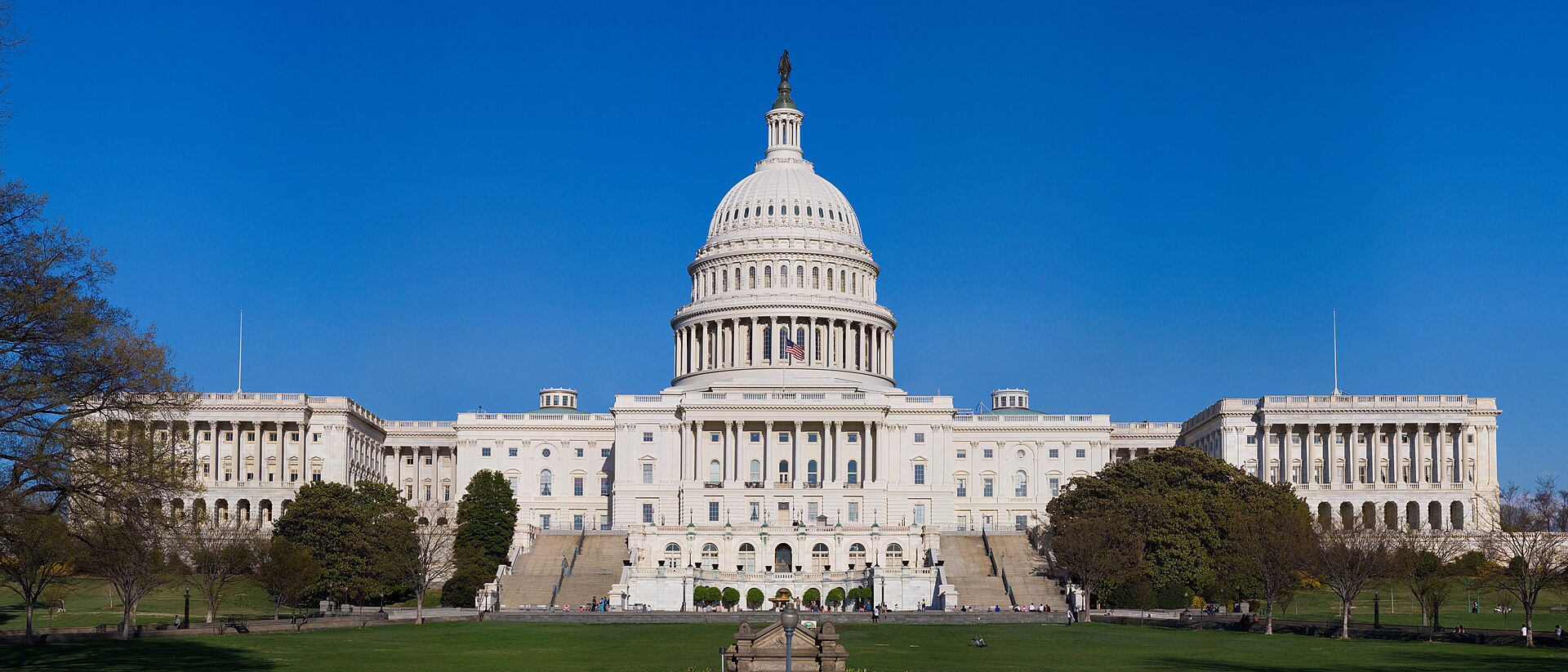
Capitol Watch is The Investigative Journal’s daily digest of congressional activity, compiled from public records, roll-call tallies, committee notices, and official budget documents.
The Senate carried the legislative week while the House of Representatives operated in a district work period, according to chamber schedules. Senators worked through a War Powers showdown over the ongoing conflict with Iran, advanced a sweeping bipartisan housing package, confirmed a federal appeals-court judge, turned back an immigration-related challenge to an executive-branch rule, and held a marathon confirmation hearing for nominees spanning disaster response, federal personnel oversight, and the national archives. Below is what the record shows, with direct links to the underlying vote pages, bill files, and budget estimates.
1. Senate blocks discharge of Iran War Powers resolution, 47–48
On June 16, the Senate rejected a motion to discharge S.J.Res. 172 from the Foreign Relations Committee by a vote of 47 to 48. The joint resolution would direct the removal of United States Armed Forces from hostilities “within or against the Islamic Republic of Iran that have not been authorized by Congress,” according to the measure’s text. Because the discharge motion failed, the resolution did not advance to a floor vote on the merits.
The roll call shows the caucuses did not divide cleanly. Records indicate four Republicans — Bill Cassidy, Susan Collins, Lisa Murkowski, and Rand Paul — voted to discharge the measure, while one member of the Democratic caucus, John Fetterman, voted against it. Five senators did not vote: Michael Bennet, Cory Booker, Josh Hawley, Mitch McConnell, and Bernie Sanders. The tally reflects a procedural defeat for the resolution’s sponsors, who have sought repeated votes invoking the 1973 War Powers Act.
The Senate action followed a House vote on June 3, when that chamber passed its own war powers resolution 215 to 208, with four Republicans joining Democrats, according to NPR’s reporting. House Speaker Mike Johnson defended the administration’s handling of the conflict, which according to that reporting began on February 28 with strikes by U.S. and Israeli forces. The administration has characterized the congressional measures as largely symbolic and has questioned the constitutionality of the War Powers Act. Proponents, including Rep. Brian Fitzpatrick, framed their support as a matter of statutory compliance once the act’s 60-day clock had elapsed. The competing positions remain unresolved between the chambers.
2. Senate advances bipartisan housing bill, 87–8
Also on June 16, the Senate agreed, 87 to 8, to the motion to proceed to the House message accompanying H.R. 6644, described in the measure as “a bill to increase the supply of housing in America, and for other purposes.” The lopsided tally underscores the rare cross-party support the housing package has attracted as it moves between the chambers.
The bill, known as the 21st Century ROAD to Housing Act, was introduced by Rep. French Hill of Arkansas. According to legislative records and the Congressional Research Service, it passed the House on February 9 by 390 to 9, was amended and passed by the Senate in March, and was returned with further House changes in May before this week’s renewed Senate action. The legislation aims to expand housing supply, reduce construction costs, and modernize federal housing and community-development programs; summaries of the bill also describe provisions addressing institutional investor purchases of single-family homes and incentives tied to opportunity zones.
Because the two chambers have exchanged competing amendments, the package has not yet been sent to the President. The motion-to-proceed vote sets up further Senate consideration of the House message, and final disposition will depend on whether the chambers reconcile their remaining differences.
3. Senate confirms Eighth Circuit judge, 48–43
On June 15, the Senate confirmed Justin D. Smith of Missouri, by a vote of 48 to 43, to be a U.S. Circuit Judge for the Eighth Circuit. The chamber had invoked cloture on the nomination on June 11 by 47 to 43, clearing the way for final action.
The confirmation reflects the Senate’s continued focus on judicial nominations alongside its legislative calendar. Circuit-court seats carry particular weight because the federal appeals courts resolve the large majority of cases that are never reviewed by the Supreme Court. The party-line character of the vote is consistent with recent patterns in contested appellate confirmations, according to the roll call.
4. Senate turns back immigration-rule challenge, 46–48
The Senate on June 16 rejected, 46 to 48, a motion to proceed to S.J.Res. 190, a resolution of disapproval under the Congressional Review Act targeting a rule submitted by the Executive Office for Immigration Review relating to “Appellate Procedures for the Board of Immigration Appeals.”
The Congressional Review Act allows Congress to overturn certain agency rules by simple majority, but the procedural vote fell short of the threshold needed to bring the resolution to the floor. As a result, the underlying rule remains in effect. The vote is one of several CRA efforts that have surfaced this session as lawmakers test oversight of executive-branch rulemaking.
5. Homeland Security panel vets a slate of senior nominees
The Senate Homeland Security and Governmental Affairs Committee held a confirmation hearing during the week for a broad slate of nominees, according to the Congress.gov committee schedule. Among those before the panel: Bradford Pentony Wilson to be Archivist of the United States; Hal Duncan to be Deputy Director of the Office of Management and Budget; Brian Cavanaugh to be Under Secretary for Management at the Department of Homeland Security; David Cummins to be Administrator of the Transportation Security Administration; Cameron Hamilton to be Administrator of the Federal Emergency Management Agency; Don Richard Berthiaume Jr. to be Inspector General of the Department of Justice; Charles Baldis to be Special Counsel at the Office of Special Counsel; and James Woodruff to be Chairman of the Merit Systems Protection Board.
The breadth of the slate places several accountability-focused posts before the committee at once, including a department inspector general, the head of the Office of Special Counsel, and the chair of the board that adjudicates federal employee appeals. Each nomination remains pending before the committee; advancement would require a committee vote followed by floor action. Additional materials are available through the committee’s hearings page.
6. CBO scores small-business measures
The Congressional Budget Office published cost estimates on June 16 for several small-business bills reported by the House Committee on Small Business. According to the CBO estimate for H.R. 8882, the Main Street Competes Act, the bill would not affect direct spending or revenues — meaning pay-as-you-go procedures would not apply — but implementing it would increase spending subject to appropriation over the 2026–2031 period.
CBO released companion estimates the same day for related measures, including H.R. 8881, the SBA Artificial Intelligence Utilization Act, and H.R. 8880, the Small Business Cybersecurity Assistance Evaluation Act. The estimates are routine but consequential inputs to the appropriations process, because spending “subject to appropriation” depends on later action by the Appropriations Committees. Readers can review CBO’s full catalog of recent scores on the agency’s cost-estimates page.
7. Budget, education, and defense hearings round out the week
Beyond the floor, committees held a series of hearings reflected on the official schedule. The Senate Budget Committee examined the nomination of Hal Duncan to be Deputy Director of OMB. The Senate Health, Education, Labor, and Pensions Subcommittee on Education and the American Family convened a hearing “to examine the future of K-12 education in the age of artificial intelligence,” a topic that has drawn bipartisan interest as districts weigh classroom uses and guardrails for the technology.
On national security, the Senate Armed Services Subcommittee on Airland held a hearing on Army force modernization in connection with the Defense Authorization request for fiscal year 2027, part of the annual cycle that produces the National Defense Authorization Act. The Senate Select Committee on Intelligence held a closed business meeting to receive a briefing on intelligence matters, and the Senate Foreign Relations Committee took up a group of State Department nominations, including Kari Lake to be Ambassador to Jamaica and Juan Segura to be an Assistant Secretary of State for Western Hemisphere Affairs.
Looking ahead
The Senate is positioned to continue working through the House message on H.R. 6644, leaving the housing package’s final shape to further negotiation between the chambers. A number of nominations advanced in committee this week could reach the floor in the coming days, and the fiscal year 2027 defense authorization and appropriations process will continue to generate hearings through the summer. The War Powers question over Iran also remains live: proponents in both chambers have signaled they may seek additional votes, even as the administration maintains that diplomacy to end the conflict is ongoing.
On the accountability beat
Several items this week intersect directly with The Investigative Journal’s government-accountability coverage. The simultaneous consideration of nominees to be Justice Department Inspector General, Special Counsel at the Office of Special Counsel, and Chairman of the Merit Systems Protection Board places three of the federal government’s principal watchdog and whistleblower-protection roles before a single committee — a confluence worth tracking as the nominations move. The FEMA and TSA leadership choices arrive as both agencies face scrutiny over readiness and management. And the FY2027 defense authorization debate will test how aggressively Congress exercises oversight of military spending and force structure. TIJ will follow each of these threads as votes are scheduled and as the underlying records become available.
Sources: U.S. Senate roll-call vote records; Congress.gov bill files and committee schedules; the Congressional Budget Office; and the Senate Homeland Security and Governmental Affairs Committee. Every factual claim above is drawn from public records linked in the text. Nominations and bills described here remain pending; tallies and statuses reflect the records available at publication.