

Global Corruption Watch is The Investigative Journal’s weekly briefing on international kleptocracy, money laundering, sanctions enforcement and the cross-border networks that move illicit wealth. This edition covers developments reported in the week of June 17–24, 2026.
The week’s strongest signal came out of Nicosia, where Cyprus’ anti-corruption authority recommended criminal charges against a former head of state over an alleged influence-trading scheme tied to Russian money. It landed against a backdrop of intensifying enforcement elsewhere: the Financial Action Task Force reshuffled its “grey list,” Britain’s Serious Fraud Office opened a fresh fraud-and-laundering probe, and the U.S. Treasury continued a run of designations targeting transnational criminal networks and Iran’s crypto economy. The context is a global anti-corruption climate that Transparency International, in its 2025 Corruption Perceptions Index released in February, described as deteriorating, with the global average score falling to a record low of 42 and traditional enforcement leaders — including the United States, Canada and France — slipping on the measure.
1. Cyprus anti-graft authority recommends charges against ex-President Anastasiades
Cyprus’ Independent Authority Against Corruption has identified seven suspected criminal offenses connected to former President Nicos Anastasiades, including at least one felony, according to OCCRP, which reviewed the findings published on June 17. The allegations against the former president include three counts of trading influence and three counts of abuse of power, plus one felony count. Investigators concluded that Anastasiades, his former law firm and several associates engaged in influence trading and abuse of power to fast-track residence-by-investment proceedings for two Russian oligarchs. These are recommendations, not convictions: the authority can refer findings but cannot itself prosecute.
The probe also implicated Anastasiades’ former firm, Nicos Chr. Anastasiades & Partners, and its managing partners, Stathis Lemis and Theophanis Phillipou, who face potential charges of trading in influence; the firm and partners also stand accused of money laundering, the authority said. Records cited in the report indicate the former president leveraged his influence to bypass standard procedures and fast-track “golden passport” citizenships for Russian oligarchs Alexander Abramov and Leonid Lebedev. Some of the findings stem from OCCRP’s 2019 Troika Laundromat investigation, which first linked the president’s former firm to a vast shell-company network. A separate felony count concerns the 2013 collapse of Laiki Bank, once the island’s second-largest lender.
Anastasiades has vehemently denied all allegations, calling them false, defamatory and politically motivated, and noting that many accusations were never put to him during the inquiry; he has previously filed defamation suits against the journalist whose book prompted the probe. The significance is institutional as much as personal: Cyprus’ attorney general and deputy attorney general — both appointed under Anastasiades — announced they were recusing themselves, leaving open the question of who will decide whether to indict. The case is a rare instance of a EU member state’s own machinery turning on its golden-visa apparatus, long flagged by anti-corruption groups as a kleptocratic on-ramp into Europe.
2. Undercover probe maps Russia’s sanctions-busting payment underground
A joint investigation by OCCRP, the UK outlet SourceMaterial and Delfi Estonia, published June 17, documented a flourishing market of payment brokers openly advertising sanctions-evasion services on Telegram. Posing as Russian businessmen, reporters approached nine apparent providers; in five cases, agents agreed to route money to European suppliers while concealing its Russian origin. “There will be no trace of the Russian company, and the payment will be successful,” one broker wrote. The intermediaries proposed layering payments through firms in Hong Kong, Dubai, Indonesia, Canada and Germany — a structure experts say is designed to keep any single national regulator from seeing the whole picture.
Reporting indicates several of the suggested intermediaries had personnel overlapping with the TGR network, which the U.S. and U.K. have accused of running a billion-dollar laundering operation. TGR’s alleged leaders, George Rossi and Elena Chirkinyan, were sanctioned by U.S. authorities in December 2024, and the network featured in Britain’s National Crime Agency “Operation Destabilise.” The named individuals and intermediary firms denied wrongdoing or any connection to TGR when contacted. The investigation also spotlighted A7A5, a ruble-pegged stablecoin launched by Russian-Moldovan oligarch Ilan Shor’s sanctioned A7 company alongside state-owned Promsvyazbank; blockchain analytics firm Chainalysis estimated A7A5 had moved roughly $93.3 billion in 10 months.
The takeaway for investigators is structural. As one cited expert put it, payment systems are “one or two years ahead of regulators” in developing circumvention mechanisms — a constantly mutating ecosystem blending crypto rails with hawala-style trust networks. For accountability reporters, the story is a roadmap: the same Estonian, Lithuanian, Canadian and Latvian corporate vehicles recur across multiple schemes, suggesting a finite set of enablers worth sustained scrutiny.
3. ‘Worldclear Files’ trace millions to a sanctioned Belarusian tycoon
Leaked documents from a small New Zealand payment firm, Worldclear, and the Vanuatu-based Pacific Private Bank underpin a joint OCCRP investigation — with partners including Interest.co.nz, the Belarus Investigative Center, Lithuania’s 15min.lt and Sweden’s Expressen — into cash flows connected to Belarusian businessman Aliaksei Aleksin. The files show that apparent loan repayments from a Cypriot firm called Wallitus to Aleksin, totaling nearly $2 million, were processed through the Vanuatu bank and the New Zealand provider, according to OCCRP, in the period before he and his companies were placed under international sanctions.
Finance specialists who reviewed the arrangements — including a former banker turned fraud investigator and a certified anti-money-laundering expert — said features such as an interest-free loan with no clear commercial rationale, repeatedly cancelled oil contracts, and transactions blocked by banks raise compliance questions about the true purpose of the transfers. The reporting frames these as questions, not findings of criminality. The first installment of the series examined how the Hamilton-based firm moved money for high-risk clients before being struck off. The case is a textbook illustration of how obscure intermediaries in lightly supervised jurisdictions — here, the South Pacific and New Zealand — can sit astride flows linking Cyprus shell companies to politically connected wealth.
4. FATF adds Iraq and Bosnia to grey list as UK takes the chair
At its plenary in Paris on June 17–19, the Financial Action Task Force added Bosnia and Herzegovina and Iraq to its list of jurisdictions under increased monitoring — the so-called grey list — while removing Algeria and Namibia following successful on-site visits, the body announced. Grey-listing signals strategic deficiencies in a country’s defenses against money laundering and terrorist financing, and typically raises compliance friction and capital costs for the listed economy until remediation is verified.
The plenary, the last under Mexico’s presidency, also adopted mutual-evaluation reports for Canada and Türkiye (to be published later this year), updated Recommendation 6 to protect humanitarian flows, and opened a consultation on cross-border payment transparency. From July 1, the United Kingdom assumes a two-year FATF presidency under Giles Thomson, with a declared focus on combating the global fraud epidemic and the money-laundering risks from “scam compounds.” That priority dovetails with the enforcement actions surfacing elsewhere this week, and signals that payment transparency and fraud will dominate the standard-setter’s agenda into 2028.
5. UK’s Serious Fraud Office opens telecoms fraud and laundering probe
Britain’s Serious Fraud Office announced on June 22 a criminal investigation into Internet Mobile Communications Ltd (IMC), a collapsed Chelmsford-based telecoms firm, over suspected fraud, false accounting and money laundering, according to the SFO. The company, which for more than a decade presented itself as one of the largest virtual telecom marketplaces of its kind, processing millions of internet-telephony minutes and SMS transactions annually, abruptly collapsed in 2024, leaving creditors exposed. The SFO said it is working alongside a parallel U.S. investigation. The allegations are unproven, and no charges have been filed.
The move follows the SFO’s May 1 deferred prosecution agreement with defense manufacturer Ultra Electronics, which agreed to pay nearly £15 million over its failure to prevent bribery tied to contracts in Oman and Algeria, as documented by the watchdog Spotlight on Corruption. Taken together, the two actions suggest an agency trying to demonstrate renewed momentum under new leadership, leaning on cross-border cooperation and signaling to corporates that failure-to-prevent exposure remains live.
6. FCPA still bites: ex-coal executive faces sentencing in Egypt bribery case
Charles Hunter Hobson, a former vice president of Corsa Coal Corp., is scheduled to be sentenced on June 25 after a Pennsylvania federal jury convicted him in February of conspiracy to violate the Foreign Corrupt Practices Act, two substantive FCPA counts, money laundering and a wire-fraud conspiracy, the Department of Justice said. Prosecutors established that Hobson agreed to bribe Egyptian officials to win and keep business with Al Nasr Company for Coke and Chemicals, then a state-owned manufacturer. He faces a statutory maximum of five years on each FCPA count and up to 20 years on the money-laundering counts.
The case carries weight beyond one defendant. After the administration paused and then recalibrated FCPA enforcement in 2025 — redirecting it toward cartels, transnational criminal organizations and conduct that harms U.S. competitiveness or national security — observers questioned whether foreign-bribery cases would continue. The Hobson conviction and pending sentence indicate that individual accountability for overseas bribery remains very much on the table, a data point general counsels and compliance teams will read closely.
7. Treasury keeps up the designation tempo on TCOs, Russia and Iran’s crypto rails
The Office of Foreign Assets Control logged another active week, with a June 23 tranche covering transnational criminal organization designations, Cuba designations, the removal of certain Russia-related designations, and the publication of a comparative overview of U.S. and U.K. sanctions regimes, per OFAC’s recent-actions log. The TCO focus aligns with the administration’s stated priority of treating cartels and criminal networks as national-security threats, while the U.S.–U.K. comparative document points to deepening transatlantic coordination on illicit finance.
The month’s most consequential illicit-finance action came earlier, on June 2, when Treasury designated Iran’s largest crypto exchange, Nobitex, alongside Wallex, Bitpin and Ramzinex and four associated individuals, in what officials called the largest U.S. action to date against Iran’s digital-asset economy. According to the Treasury announcement, the platforms facilitated sanctions evasion and processed transactions for IRGC-linked actors, helping regime insiders move wealth abroad. The designations carry significant secondary-sanctions risk for any foreign institution still dealing with the named entities — a reminder that crypto is now a central front, not a sideshow, in sanctions enforcement.
Leads worth watching
Several threads merit deeper TIJ reporting. First, the prosecutorial vacuum in Cyprus: with both senior law officers recused, the choice of an independent prosecutor will test whether the recommendations against Anastasiades translate into an actual indictment, or stall. Second, the A7A5 stablecoin deserves standalone scrutiny as a purpose-built sanctions-evasion rail; the recurrence of the same Baltic and Pacific corporate vehicles across the Telegram and Worldclear investigations suggests a mappable enabler network. Third, the FATF’s incoming UK presidency and its fraud-and-scam-compound agenda will shape which jurisdictions face pressure next. Finally, beneficial-ownership enforcement — the connective tissue across nearly every story above, from Cypriot shells to Vanuatu banking — remains the single highest-leverage reform, and the gap between disclosure rules on paper and verification in practice is where the next round of investigations will live. TIJ will track each as it develops.
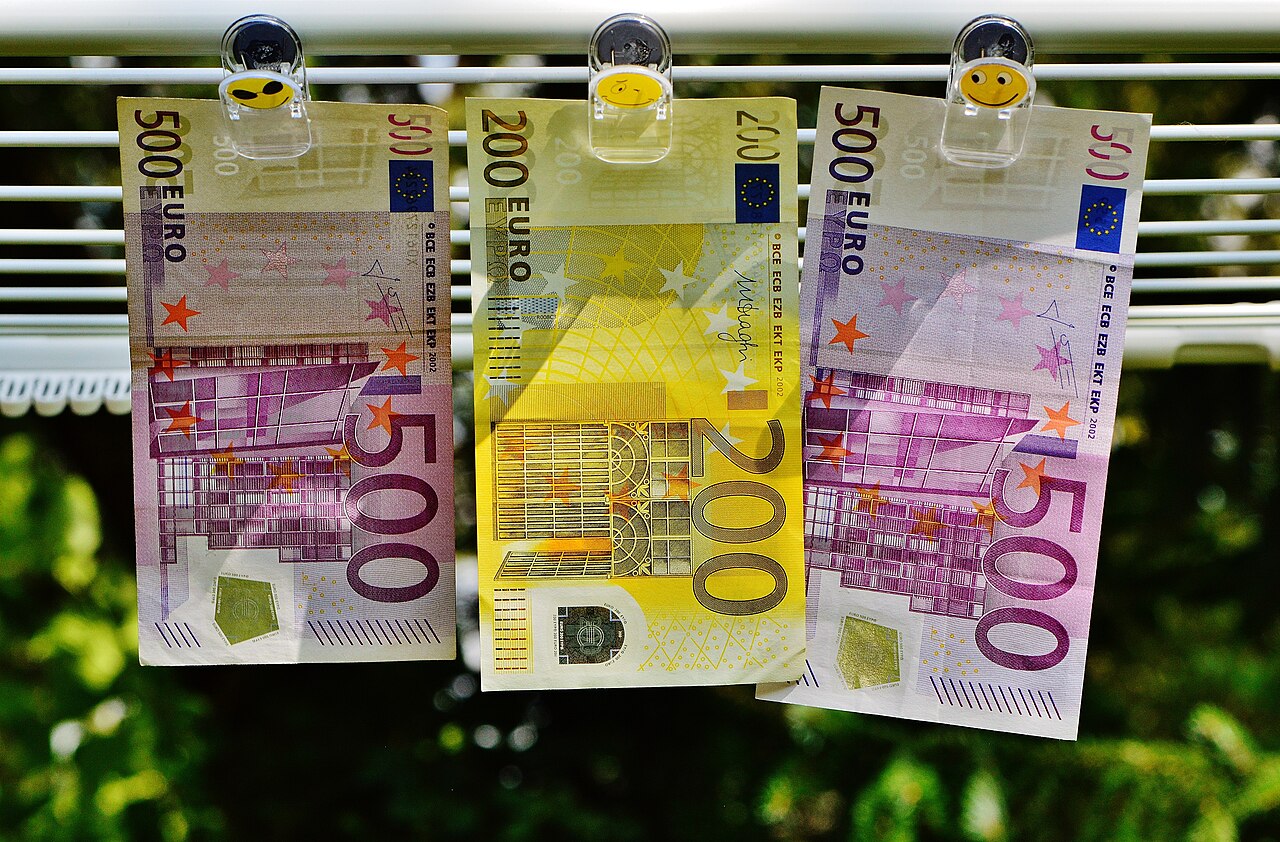
Every factual claim in this briefing is attributed to a public record or named source; allegations are identified as such, and pending matters carry no presumption of guilt. Individuals and entities named in the underlying investigations have, where reported, denied wrongdoing or declined to comment. Featured image: public-domain (CC0) photograph via Wikimedia Commons.