

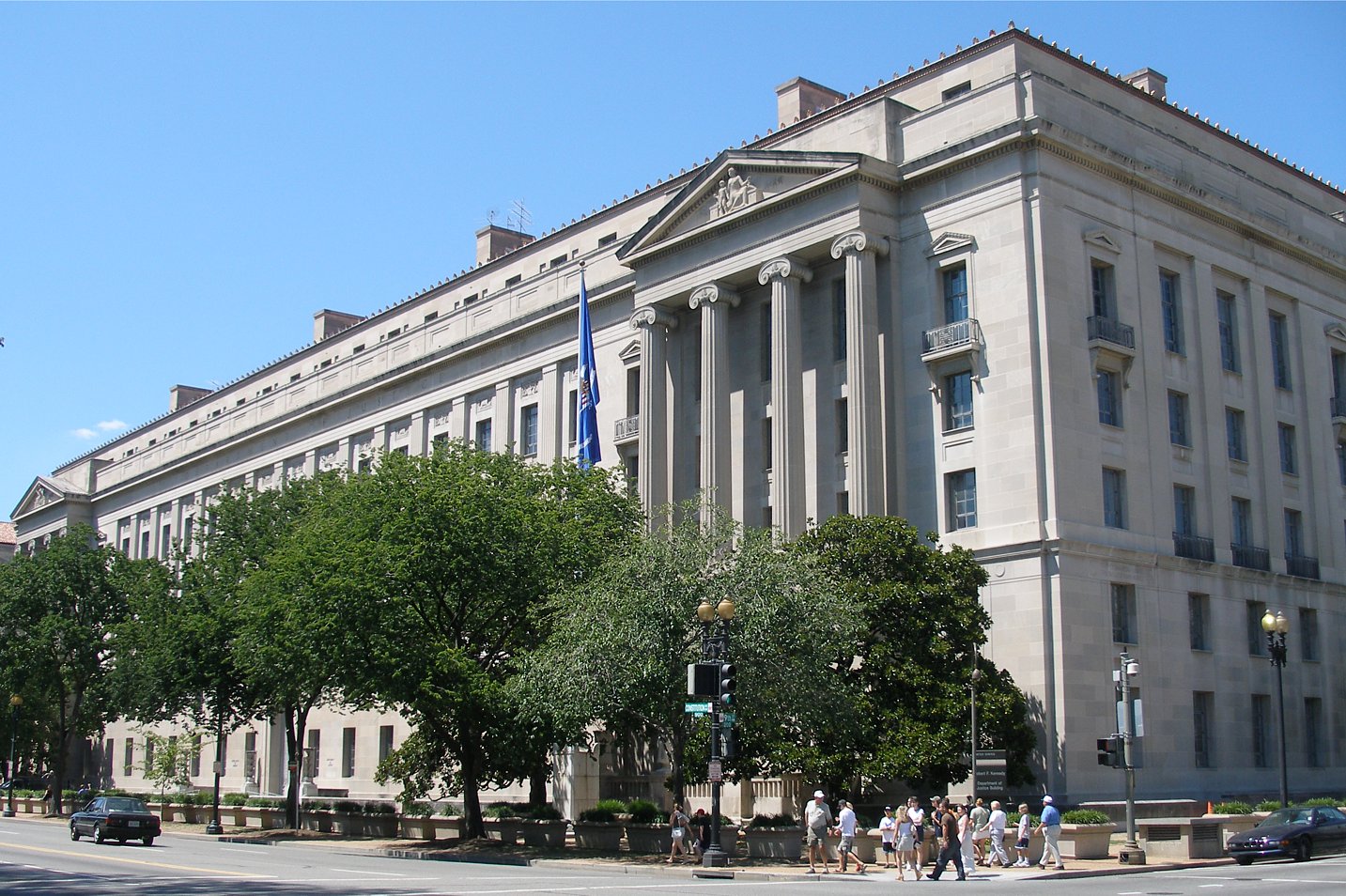
Week in Review is The Investigative Journal’s Saturday analysis column, connecting the threads that run through the week’s reporting. Every analytical point below is anchored to a public record or to TIJ’s own sourced coverage, linked throughout. Where a matter remains an allegation, it is identified as such; pending cases are noted.
The number that led the week was $6.5 billion. On June 23, the Justice Department announced what it called the largest coordinated health care fraud enforcement action in its history — 455 defendants across 56 federal districts, tied to more than $6.5 billion in allegedly false claims, according to the DOJ announcement that TIJ tracked through five daily editions of DOJ Watch and a weekly Oversight Watch. The defendants are charged, not convicted, and are presumed innocent unless and until a court finds otherwise.
But a takedown is a rear-view mirror. It counts money that has already left the Treasury and measures the fraction the government hopes to claw back. Read against the rest of the week’s filings — a Government Accountability Office tally of improper payments, a fresh accounting of the F-35, a Treasury sweep against an overseas scam empire, and a courtroom defeat for the Securities and Exchange Commission — the $6.5 billion looks less like a clean headline victory than a single data point in a much larger pattern: the persistent distance between what the government recovers after the fact and what its own records show slipping away first. Call it the recovery gap. This week’s coverage, read together, is a map of it.
The loophole beneath the takedown
The clearest illustration of that gap sits inside the takedown itself. TIJ’s own investigation this week traced the fastest-growing category in the sweep — bioengineered “skin substitutes” used in wound care — back to a Medicare pricing formula that, records suggest, all but invited abuse. As TIJ reported, one company allegedly billed Medicare $1,450 per square centimeter for relabeled human placental tissue it had purchased from a tissue bank and marked up roughly 2,000 percent. Federal spending data reviewed by TIJ shows outlays on the product category climbed nearly fortyfold in five years — a surge driven, the reporting found, less by sick patients than by a reimbursement rule that pegged payment to a manufacturer-reported average sales price with little check on the underlying number.
That sequence is the point. The pricing gap opened years before the indictments; the money moved through a rule, not around it; and prosecutors and regulators, TIJ’s reporting notes, did not act decisively until billions had already gone out the door. The takedown closes the back end of a story whose front end was a policy design flaw. The same two institutions — the Justice Department and the inspector general at the Department of Health and Human Services — appear on both sides of that ledger, as enforcers of last resort and as the agencies whose own systems paid the claims in the first place.
The larger figures in the same week’s records
Set the $6.5 billion beside two other numbers that surfaced in the week’s filings. The first: the GAO reported that federal agencies estimated roughly $186 billion in improper payments in fiscal year 2025, an increase of about $24 billion over the prior year, bringing cumulative estimates since 2003 to nearly $2.8 trillion. TIJ flagged the figure in its Spending Watch review. An essential caveat travels with that number, and the GAO states it plainly: an improper payment is not the same as fraud. It is a payment that should not have been made, was made in the wrong amount, or lacked the documentation to confirm it was proper — a category that captures clerical error and eligibility mistakes alongside deliberate theft. The point of setting it next to the takedown is not to equate the two, but to show scale: the government’s own auditors concede that improper spending in a single year runs to nearly thirty times what its largest-ever fraud sweep sought to recover.
The second number is the F-35. A new GAO assessment cited in the same Spending Watch put the fighter program’s lifetime acquisition-and-sustainment cost above $2 trillion, even as the services plan to fly the aircraft less than once projected. GAO has recommended dozens of fixes across its spending portfolio; TIJ noted the auditors’ running estimate that some $251 billion in potential savings remains tied up in recommendations agencies have not implemented. None of this is fraud. All of it is money the government’s own record-keepers have flagged as lost, misspent, or recoverable — and it dwarfs the enforcement column.
Chart concept — the recovery gap, one bar at a time. A single horizontal bar chart makes the mismatch legible: one bar for the $6.5 billion charged in the takedown; a second for the $186 billion in FY2025 improper payments; a third for the $251 billion in unimplemented GAO savings; a fourth for the F-35’s $2 trillion lifetime cost. Color-code the enforcement bar distinctly from the “conceded loss” bars, and annotate each with its definitional footnote so the categories are not read as interchangeable. The visual argument is not that these are the same kind of dollar — they are not — but that the recovery bar is the shortest one on the page.
The transnational mirror
The recovery gap is not only domestic. The week’s Sanctions Watch led with Treasury’s move against the Prince Group, a Southeast Asian cyber-scam syndicate. The Office of Foreign Assets Control designated the network and its associates; the Justice Department has separately indicted its chairman over forced-labor scam compounds and cryptocurrency fraud, in an action accompanied by what DOJ described as its largest-ever forfeiture. OFAC designations are administrative determinations, not criminal convictions, and named parties may petition for removal; the indictment’s allegations remain to be proven.
What makes the sanctions relevant to the domestic story is the data point behind them. A U.S. government estimate cited in the reporting holds that Americans lost at least $10 billion to Southeast Asia–based scam operations in 2024, a 66 percent jump over the prior year. That figure is nearly identical to the $10 billion wound-care boom TIJ documented at home — two distinct $10 billion fraud stories surfacing in the same week, one built on a Medicare pricing formula and the other on trafficked labor in overseas compounds. The connective tissue runs further: TIJ’s Investigative Monitor summarized an Associated Press and FRONTLINE investigation into how American technology and payment infrastructure underwrite that same global scam economy. The enforcement response — sanctions, forfeitures, indictments — again arrives downstream of losses already realized.
Chart concept — two curves, one shape. Plot Medicare skin-substitute outlays over the past five years against the estimated annual American losses to Southeast Asian scam networks over the same span. Both climb steeply; both crossed the $10 billion threshold before the enforcement actions of June 2026. Drawn on a shared axis, the parallel makes the argument that fraud — domestic or transnational — scales faster than the machinery built to answer it.
The thinning watchdog
That machinery, meanwhile, shows strain. The same Oversight Watch that led with the takedown documented the countercurrent beneath it: inspector-general vacancies, questions over the independence and funding of the Council of the Inspectors General on Integrity and Efficiency, ethics complaints at the Labor Department’s watchdog, and a whistleblower-award program at the SEC that has slowed even as the parallel program at the Commodity Futures Trading Commission paid out. The institutional finding of the week is a contrast: watchdogs delivered record enforcement output while the framework supporting them absorbed cuts and questions.
The courtroom underlined it. In SEC Watch, TIJ reported that a federal judge in Ohio dismissed the Commission’s civil fraud case against a former FirstEnergy chief executive, ruling that he had no legal duty to disclose the payments at issue to investors. The dismissal is a defeat for the SEC’s disclosure theory, not a verdict on the broader House Bill 6 matter — the largest corruption case in Ohio history, in which the company itself paid a $100 million SEC penalty in 2024 and related state criminal proceedings remain pending. But as an enforcement data point it fits the week’s pattern: even when the government pursues a named executive, the recovery is neither automatic nor complete.
The historical context matters here, because none of this is new. Improper-payment estimates have exceeded $100 billion in most years of the past decade, and the cumulative total GAO has tracked since 2003 now approaches $2.8 trillion. The recovery gap is not a product of any single administration’s policy; it is a structural feature of a payment system that moves trillions of dollars quickly and audits them slowly. What this administration has added, as this column noted last week, is a visible tilt toward prosecution over prevention — a strategy that produces large recovery headlines while leaving the upstream rules that generate the losses largely intact.
What the pattern implies
The skin-substitute case is the week’s strongest argument for the prevention side of that ledger. Had the reimbursement formula been corrected when spending first began its fortyfold climb, the savings would almost certainly have exceeded what the June takedown now seeks to recover. Enforcement recovers cents on the dollar; a rule change recovers the dollar. The government appears to grasp this in places — the 2025 takedown was accompanied by a new Health Care Fraud Data Fusion Center built around real-time analytics, an explicit bet on moving upstream — and the prevention posture is visible elsewhere in the week’s filings, from the EPA’s proposed nationwide PFAS testing rule to the $450 million Chemours settlement that pairs penalty with cleanup obligations. The open question is whether the upstream fixes arrive fast enough to change the arithmetic, or whether they remain the slower of the two tracks while the enforcement headlines do the public-facing work.
What to watch in the coming week
Four threads will test the pattern. First, whether the Centers for Medicare and Medicaid Services finalize a revised skin-substitute payment rule — the prevention-side answer to the takedown, and the clearest signal of whether the loophole gets closed or merely litigated. Second, the FY2027 defense authorization, which stalled as the House broke for the July 4 recess per TIJ’s Capitol Watch and Legislative Watch; watch for whether F-35 sustainment draws oversight riders when members return. Third, further Prince Group–related designations or forfeitures, which would show whether Treasury and DOJ can convert a single sweep into sustained pressure on the scam economy. Fourth, whether the SEC signals an appeal of the FirstEnergy dismissal, and whether the inspector-general vacancies flagged in Oversight Watch move toward confirmation or deepen. Each is a place where the recovery gap could narrow — or widen. The reporting will follow the records.
This analysis draws on The Investigative Journal’s published coverage from the week of June 29, 2026, and on primary records from the Department of Justice, the Government Accountability Office, and the Department of the Treasury, each linked above. Matters described as charges, indictments, or designations are allegations or administrative determinations and are not criminal convictions; named parties retain all applicable rights of response and appeal.