

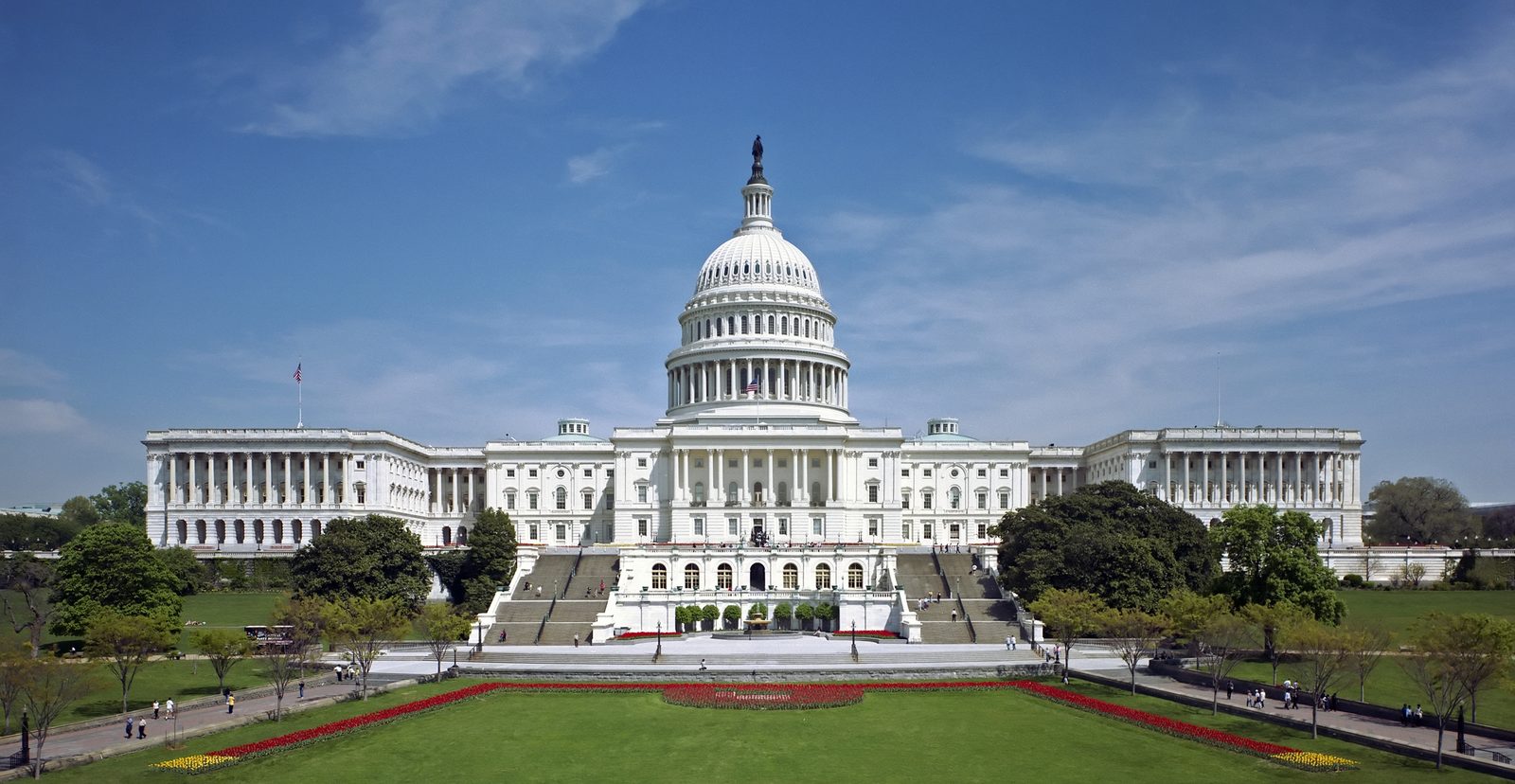
Capitol Watch is The Investigative Journal’s daily record of congressional activity — floor votes, committee oversight, nominations, and the budget machinery that shapes federal policy. All figures below are drawn from public records; links to primary sources are provided throughout.
Congress closed out the week of June 22 with one of its most consequential bipartisan achievements of the 119th Congress — and an unusual standoff over whether the measure would actually be signed. Lawmakers in both chambers sent the 21st Century ROAD to Housing Act (H.R. 6644) to the president’s desk, only for the planned signing ceremony to be abruptly canceled. Meanwhile, the House Oversight Committee escalated its highest-profile investigation with on-the-spot subpoenas, the Senate Armed Services Committee pressed the Pentagon on the F-35 program, and the Senate set the stage for a contested judicial confirmation in mid-July. Below are the week’s notable actions, with context and what to watch next.
1. Congress clears landmark housing bill; signing ceremony canceled
The House voted 358-32 on Tuesday, June 23, to pass the 21st Century ROAD to Housing Act, days after the Senate cleared the measure by a similarly lopsided bipartisan margin, according to NPR’s reporting and the bill’s Congress.gov record, which lists the legislation as enrolled on June 25. The bill is a substitute that combines the Senate’s ROAD to Housing Act with elements of the House’s housing-supply package, and is co-sponsored across the aisle by Senate Banking Chairman Tim Scott (R-S.C.) and Sen. Elizabeth Warren (D-Mass.).
Supporters describe it as the most comprehensive federal housing legislation in decades. Public summaries of the measure indicate it expands financing for affordable housing, provides grants for local planning and community development, and includes provisions limiting certain institutional investors from purchasing single-family homes. In an interview cited by NPR, Warren said housing affordability had become a top constituent concern, stating that “every time every member of Congress goes back home they hear how urgent it is to bring down home prices.”
The legislative win was complicated by an executive-branch development. Records of the president’s public statements indicate the planned signing ceremony was canceled, with the administration tying further action to passage of the SAVE America Act, a voter-identification measure the president described as a national emergency. The president characterized the housing bill as of “minor importance” by comparison in his public post. As of publication, the enrolled bill awaits presidential action; The Investigative Journal will report the final disposition once the public record reflects it. Both the bill’s bipartisan margins and the signing delay are matters of public record rather than interpretation.
2. House Oversight issues subpoenas to Leon Black in Epstein-related probe
House Oversight and Government Reform Chairman James Comer (R-Ky.) issued two subpoenas to financier Leon Black during a voluntary transcribed interview on Friday, June 26, according to a committee press release. The first compels Black to appear for a deposition on July 16, 2026; the second requires him to produce nondisclosure agreements to the committee. The committee stated that Black declined to answer questions about NDAs during the voluntary session.
Black, co-founder of Apollo Global Management, previously retained Jeffrey Epstein as a financial adviser, a relationship that has drawn congressional scrutiny. It should be emphasized that the committee’s action is an investigative step: Black appeared voluntarily, the matter remains an open inquiry, and the records sought have not been characterized as evidence of wrongdoing. Reporting by CBS News and CNBC indicates the July deposition is to be conducted under oath and videotaped.
The subpoenas fit a broader pattern of Oversight activity this month. The same committee has separately released Epstein-related records provided by the Department of Justice and, per committee statements, secured agreement from former President Bill and Secretary Hillary Clinton to appear for depositions. These are procedural developments in pending inquiries; no findings have been issued.
3. Senate Armed Services scrutinizes the F-35 program
The Senate Armed Services Subcommittee on Airland held a hearing on June 23 to receive an update on the F-35 aircraft program, according to the committee’s hearing notice. Subcommittee Chairman Kevin Cramer (R-N.D.) described the program as “a cornerstone of American airpower” in a statement released by his office. Lt. Gen. Gregory Masiello, program executive officer for the F-35 Joint Program Office, provided testimony.
Senators pressed on sustainment costs and contractor performance. Cramer’s office noted that a recent Government Accountability Office report had been critical of aspects of the prime contractor’s delivery performance and the program office’s use of contract incentive fees, and that the chairman followed up on multi-year procurement authorities included in this year’s defense authorization bill. Public materials cite a 2025 delivery figure of 191 aircraft. The figures and the GAO’s prior findings are part of the documented oversight record; the hearing represents continued congressional review rather than a final determination on the program’s trajectory.
The hearing connects to the broader defense-policy debate playing out in the National Defense Authorization Act for Fiscal Year 2026 (S. 2296), which sets policy and authorization levels for Defense Department programs. As the Congressional Budget Office notes, authorization bills like the NDAA establish policy and authorize spending but do not themselves provide budget authority, which flows through separate appropriations legislation.
4. Senate advances Second Circuit nominee on a near party-line vote
The Senate invoked cloture on the nomination of Matthew A. Schwartz to be U.S. Circuit Judge for the Second Circuit by a vote of 52-45 on June 24, according to Senate floor records. The vote fell largely along party lines. Under a unanimous-consent agreement reflected in the chamber’s scheduling, the final confirmation vote is set for noon on Tuesday, July 14, after the chamber returns from its scheduled state work period.
The procedural posture illustrates the calendar pressure now shaping the Senate’s confirmation pipeline: with the chamber moving toward a series of pro forma sessions, several pending nominations have been queued for action in mid-July. Records suggest the Schwartz nomination will be among the first matters the Senate takes up upon its return.
5. Oversight opens parallel investigations on tax compliance and foreign tech
Beyond the Epstein-related matter, the Oversight Committee disclosed additional lines of inquiry this week, according to its press-release archive. Chairman Comer launched an investigation into tax delinquency among current and retired federal employees, requesting information from the Internal Revenue Service on compliance efforts. Separately, the Subcommittee on Military and Foreign Affairs, chaired by Rep. William Timmons (R-S.C.), convened a roundtable examining national-security risks posed by repressive foreign regimes and digital technologies.
These actions are framed in committee materials as oversight of federal operations and national-security exposure. As with all pending inquiries, the committee has requested information and documents; it has not issued findings. The Investigative Journal notes that the subjects — federal workforce tax compliance and foreign technology threats — overlap directly with this publication’s accountability beats and will be tracked as the inquiries develop.
6. Senate committees hold a busy nominations and oversight week
The committee schedule for the week of June 22 reflected a heavy slate of nomination hearings. The Energy and Natural Resources Committee examined Interior and Energy Department nominees, including William Hague (assistant secretary nominee), Kevin Lilly (Fish and Wildlife) and Kaveh Farzad (Energy, international affairs). The Commerce, Science, and Transportation Committee took up a slate that included a National Transportation Safety Board member, a Department of Transportation chief financial officer, a Surface Transportation Board member, and two Consumer Product Safety Commission nominees.
The same committee held a hearing on improving safety across the National Airspace System — a continuation of congressional attention to aviation safety oversight. Confirmation hearings of this kind rarely generate headlines individually, but collectively they populate the agencies that carry out federal policy, and the records they produce are a useful index of where Senate attention is concentrated.
7. Senate Banking turns to the affordability agenda
The Senate Banking, Housing, and Urban Affairs Committee held a hearing examining what members described as an affordability agenda, according to the week’s committee schedule. The session dovetailed with the housing legislation moving through both chambers and reflects sustained bipartisan focus on cost-of-living pressures. Banking Chairman Tim Scott’s role as a co-sponsor of the ROAD to Housing Act underscores the committee’s central position in the housing-policy debate.
Affordability framing has become a throughline across multiple committees this Congress, spanning housing finance, consumer costs, and regulatory policy. Filings and hearing notices indicate the topic is likely to remain prominent into the fall appropriations cycle.
8. The appropriations and budget backdrop
Behind the week’s headline actions, the Senate Appropriations Committee has continued moving fiscal year 2026 spending bills, including measures covering Commerce-Justice-Science, Defense, Interior-Environment, Labor-HHS-Education, and Transportation-HUD. The Congressional Budget Office continues to publish cost estimates and budget-authority analyses tied to those bills. Because appropriations measures provide the actual budget authority that funds federal operations, their progress — and the CBO scoring that accompanies them — is a leading indicator of the funding posture heading into the new fiscal year.
Readers tracking the numbers can consult CBO’s appropriations cost-estimate page and the Congress.gov roll-call vote records for primary documentation as the process advances.
What to watch next
The House has votes scheduled for Monday, June 29, with the Rules Committee meeting that afternoon to tee up floor action, per the chamber’s published schedule. On Tuesday, June 30, a House Foreign Affairs subcommittee on Europe and a House Judiciary subcommittee on courts, intellectual property, artificial intelligence, and the internet are set to convene. The Senate, moving toward its state work period, has queued the Schwartz confirmation vote for July 14, and the Oversight Committee’s deposition of Leon Black is scheduled for July 16. Both chambers are expected to observe the Independence Day district work period, a customary pause that will slow floor activity into mid-July.
On the TIJ accountability beat
Several of this week’s developments sit squarely on The Investigative Journal’s core beats. The Oversight Committee’s document-driven inquiries — the Epstein-records review, the federal-employee tax-compliance investigation, and the foreign-technology roundtable — are accountability stories we will continue to follow through their public filings. The F-35 hearing, anchored to a critical GAO report, is a textbook case of legislative oversight of major federal contracts, and the program’s sustainment costs warrant ongoing scrutiny. And the housing bill’s unusual path — overwhelming bipartisan passage followed by a signing delay — illustrates how procedural and political dynamics can shape even broadly popular legislation. As always, Capitol Watch reports what the public record demonstrably shows, distinguishes allegations from findings, and links directly to primary sources so readers can verify each claim for themselves.
Sources: Congress.gov (H.R. 6644); Congress.gov (Schwartz nomination); Congress.gov (S. 2296, FY2026 NDAA); House Oversight Committee; Senate Armed Services Committee; Congress.gov committee schedule; Congressional Budget Office; NPR.