

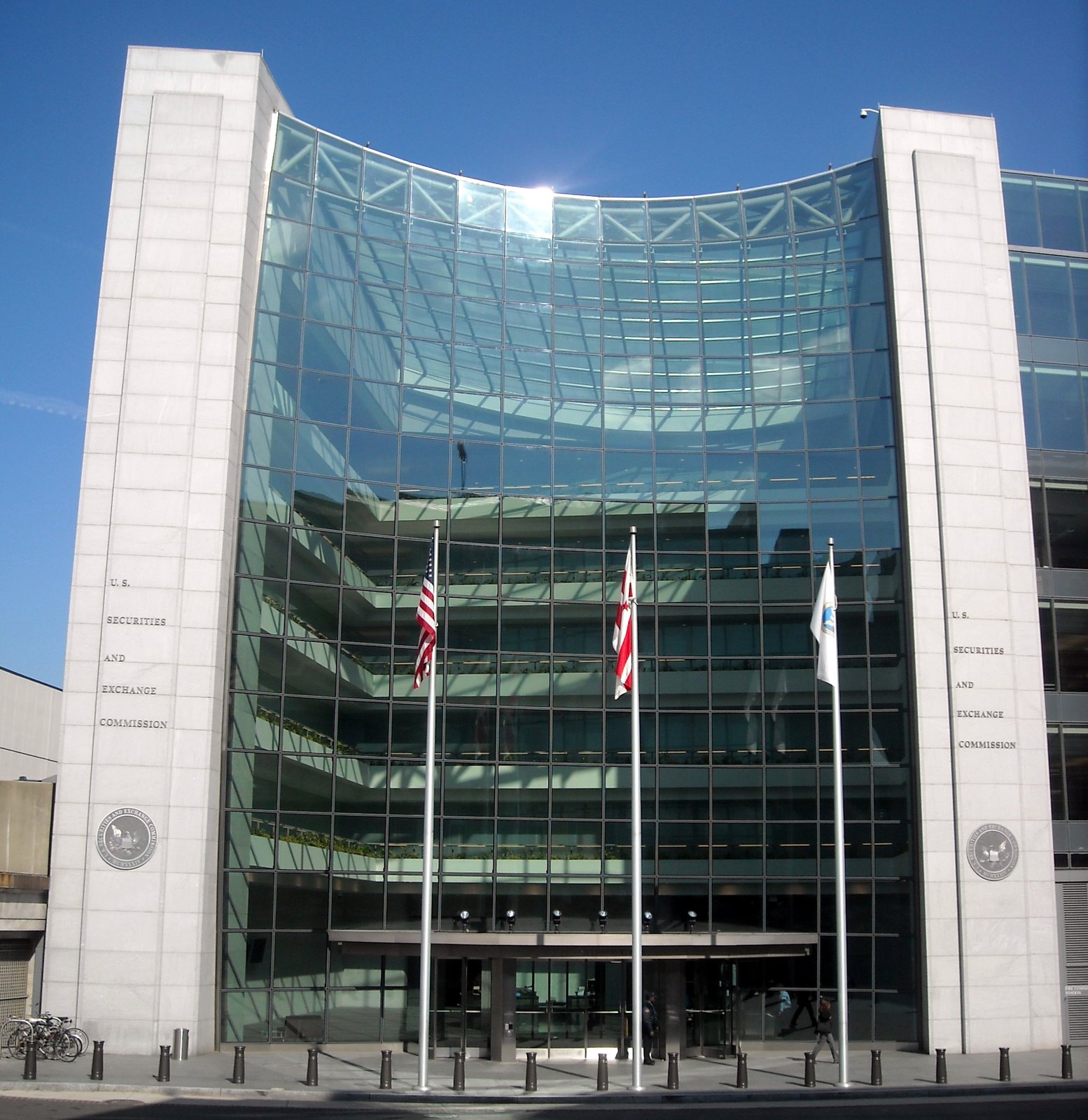
The U.S. Securities and Exchange Commission closed June 2026 pressing a deregulatory disclosure agenda under Chairman Paul S. Atkins while its enforcement division leaned heavily on default and settled judgments in fraud matters — and absorbed a notable courtroom defeat in one of its higher-profile executive cases. This edition of SEC Watch reviews the most consequential actions posted to the Commission’s public dockets through June 30, drawing exclusively on primary records from SEC.gov and EDGAR.
Two threads run through the last stretch of the month. On enforcement, the Commission booked final judgments against crypto “relationship investment” operators and unregistered securities salespeople, even as a federal judge in Ohio dismissed its case against a former Fortune 500 chief executive. On rulemaking, the agency continued to propose peeling back post-2020 disclosure obligations, including the mandatory climate-reporting regime and the decades-old requirement that public companies report on a quarterly basis. What follows are the filings that stood out, with direct links to the underlying records and notes on which threads may warrant deeper reporting.
Enforcement docket
1. Court dismisses SEC’s case against former FirstEnergy CEO
The single most significant enforcement development of the week was a loss for the Commission. In a litigation release dated June 30, the SEC disclosed that on June 27, U.S. District Judge J. Philip Calabrese of the Northern District of Ohio granted a motion to dismiss filed by Charles E. Jones, the former chief executive of Akron-based electric utility FirstEnergy Corp. According to the release, the court found that the Commission’s complaint, “as alleged, did not state a claim against Jones for violations of federal securities laws.”
The SEC filed its complaint against Jones in September 2024 (SEC v. Charles E. Jones, No. 5:24-cv-01560-JPC), and the Commission’s own record ties the matter to an earlier litigation release, No. 26105. Because the case was resolved on a motion to dismiss, the allegations were never tested on the merits, and, on the current pleading, Jones faces no securities-law liability. The June 30 release does not state whether the Commission intends to appeal or to seek leave to amend its complaint.
The dismissal is a meaningful setback for an executive-accountability action against a large publicly traded issuer, and it lands at a moment when the enforcement division is being reorganized and its manual revised. Data from the Commission indicate that recent months have skewed toward settlements and uncontested default judgments; a contested dismissal in a marquee matter is the exception rather than the rule, and its reasoning merits close reading once the court’s opinion is fully digested.
2. Settled actions target sales agents in alleged $56 million real-estate Ponzi
On June 24, the SEC announced settled actions against Sanders Family Office, LLC and its principal, Margaret Sanders, and separately against Francisco J. Herrera, for their alleged roles as unregistered sales agents in a fraudulent securities offering. According to the Commission’s complaints, the offering was orchestrated by Wells Real Estate Investment, LLC, its owner Janalie C. Bingham, and her husband Jean Joseph, and raised at least $56 million from roughly 660 investors nationwide through the sale of promissory notes.
The filings indicate that Sanders Family Office and Sanders solicited approximately $40 million from about 600 investors and earned at least $2.97 million in transaction-based commissions without being registered as a broker-dealer. Without admitting the allegations, they consented to a judgment ordering disgorgement of $2,977,099.53 plus prejudgment interest of $506,228.74, with a $100,000 civil penalty for Sanders. Herrera, who the SEC alleges raised about $10 million from roughly 190 investors — promoting the notes online and on his radio program — and collected at least $488,244 in commissions, consented to a bifurcated judgment that leaves monetary relief for the court to determine. The Commission notes that it previously charged Wells Real Estate, Bingham, and Joseph in August 2024, obtained a receiver, and that Bingham and Joseph have since pleaded guilty in a parallel criminal case in the Southern District of Florida.
3. Default judgment in NanoBit crypto “relationship investment” scam
On June 29, the SEC reported that the Eastern District of New York had entered a final judgment by default on June 16 against four entities and two individuals connected to NanoBit, an allegedly fake crypto-asset trading platform. The Commission’s complaint, filed in September 2024, describes a “relationship investment” scheme — the pattern popularly known as “pig butchering” — in which participants posed as financial professionals in WhatsApp groups, built victims’ trust, and then steered them into the purported platform.
According to the filing, NanoBit falsely claimed that an affiliate, “NanobitUS Securities,” was an SEC-registered broker, and promoted fake initial coin offerings; in reality, the SEC alleges, no genuine transactions occurred and more than $2 million was wired to bank accounts in Hong Kong. The default judgment enjoins the defendants under Section 17(a) of the Securities Act and Section 10(b) of the Exchange Act and imposes disgorgement and penalties, including a $1,182,251 penalty against NanoBit Limited and identical penalties against several co-defendants. As with most default judgments against offshore actors, collectibility — and any meaningful recovery for victims — remains an open question.
4. Adviser penalized over false Form ADV claims
Also on June 29, the SEC obtained a final default judgment in the District of Colorado against AI Financial Education Foundation Ltd., a purported investment adviser the Commission charged in November 2025. According to the complaint, the entity’s July 2024 Form ADV represented that it was an Exempt Reporting Adviser operating from Denver-area office space and managing $10 million in assets for a private fund. Filings indicate none of that held up: the SEC alleges the business occupant of the stated office had never heard of the firm or its purported chief executive, no corresponding private-fund reporting could be found, and the entity did not respond to a request to substantiate its filing.
The judgment permanently enjoins the firm from violating Sections 204(a) and 207 of the Investment Advisers Act, bars it and its officers from filing a Form ADV as an Exempt Reporting Adviser, and orders a civil penalty of $1,182,254. The case is a reminder that Form ADV — a self-reported disclosure form — remains a soft target for misrepresentation, and that the Commission continues to police it even amid a broader deregulatory turn.
These actions arrived against a busier enforcement backdrop earlier in the quarter, including the SEC’s May 6 charges against 21 individuals in an alleged wide-reaching insider-trading scheme, and a late-May complaint alleging a Texas man raised roughly $12.3 million from about 150 investors on false promises of AI-driven crypto trading bots. Notably, on May 18 the Commission also rescinded its long-standing “no-deny” policy under Rule 202.5(e), which for decades had barred settling defendants from publicly denying the agency’s allegations — a change Atkins framed as protecting “speech critical of the government.”
Corporate disclosure watch
5. SEC moves to rescind the climate-disclosure mandate
On the rulemaking side, the Commission’s most consequential recent action is its May 29 proposal to rescind, in their entirety, the climate-related disclosure rules the agency adopted in March 2024. Those rules would have required most public companies to disclose greenhouse-gas emissions, climate-risk management, and the financial-statement effects of severe weather. The Commission stayed the rules in April 2024, ended its legal defense of them in March 2025, and now proposes formal repeal, arguing the requirements exceed its statutory authority.
“SEC disclosure obligations should comply with the Commission’s statutory authority, be guided by materiality as the North Star, avoid the practical effect of dictating corporate behavior, and be imposed only when the expected benefits justify the likely costs and burdens,” Atkins said in a statement accompanying the proposal. The public comment period runs 60 days after publication in the Federal Register; the proposing release is docketed as No. 33-11421. For issuers that had begun building climate-reporting infrastructure, the reversal — if finalized — would remove a significant compliance obligation, while investor advocates are likely to contest the materiality rationale during the comment window.
6. Quarterly reporting could become optional under a Form 10-S plan
Equally significant for the cadence of corporate disclosure is the Commission’s May 5 proposal to let public companies file semiannual reports on a new Form 10-S in place of quarterly reports on Form 10-Q. Under the proposal, an electing company would file one semiannual report and one annual report each fiscal year rather than three quarterly reports and an annual report, with the semiannual filing due 40 or 45 days after the first half ends, depending on filer status. The plan (release No. 33-11414) would also streamline Regulation S-X.
Atkins argued that “the rigidity of the SEC’s rules has prevented companies and their investors from determining for themselves the interim reporting frequency that best serves their business needs.” The proposal revives a long-running debate over whether quarterly reporting encourages short-termism or, conversely, whether reducing its frequency would leave investors with less-timely information. The comment file (s7-2026-15) will be a venue worth monitoring, particularly for the positions taken by large asset managers and retail-investor groups.
7. On EDGAR: a routine 8-K illustrates the board-turnover signal
Beyond the marquee rulemakings, EDGAR’s day-to-day flow continues to surface the material-event filings that often precede larger stories. A representative example is a Form 8-K filed June 22 by CompX International Inc. (NYSE American: CIX), disclosing under Item 5.02 that director Mary A. Tidlund notified the company on June 17 of her resignation from the board, effective June 30. The filing states the departure “did not result from any disagreement with the registrant” — the standard, and legally meaningful, language issuers use to signal an amicable exit. Individually, such filings are unremarkable; in aggregate, clustered board departures are among the earliest public indicators of governance strain, and they remain a productive vein for systematic EDGAR screening.
What merits a closer look
Four items from the past week stand out as candidates for deeper TIJ reporting. First, the Jones dismissal: the court’s reasoning on why the SEC’s complaint failed to state a claim could carry implications for the agency’s theory of executive liability in disclosure cases, and the question of an appeal or amended complaint remains live. Second, the NanoBit default judgment: with more than $2 million allegedly routed to Hong Kong, the realistic prospects for victim recovery — and the cross-border enforcement gap in crypto “pig-butchering” cases — deserve follow-through. Third, the Wells Real Estate receivership: roughly 660 investors are owed restitution, and the receiver’s recovery, alongside the parallel criminal pleas, is a story that will develop over months. Fourth, the disclosure rollbacks: the climate-rule repeal and the semiannual-reporting proposal together represent the most substantial rethinking of mandatory corporate disclosure in years, and the comment records will reveal where issuers, investors, and state regulators line up.
As always, this digest summarizes public records and quotes them sparingly. Enforcement matters resolved by settlement were consented to without any admission of the allegations; default judgments reflect the absence of a defense rather than a contested finding; and the Jones matter was dismissed, meaning the Commission’s allegations there were not proven. Readers can consult the linked SEC releases and EDGAR filings for the complete records.
Photo: “U.S. Securities and Exchange Commission headquarters” by Wikimedia Commons user AgnosticPreachersKid, licensed under CC BY-SA 3.0. Sources for this report: SEC.gov litigation releases and press releases and SEC EDGAR, all linked inline.