

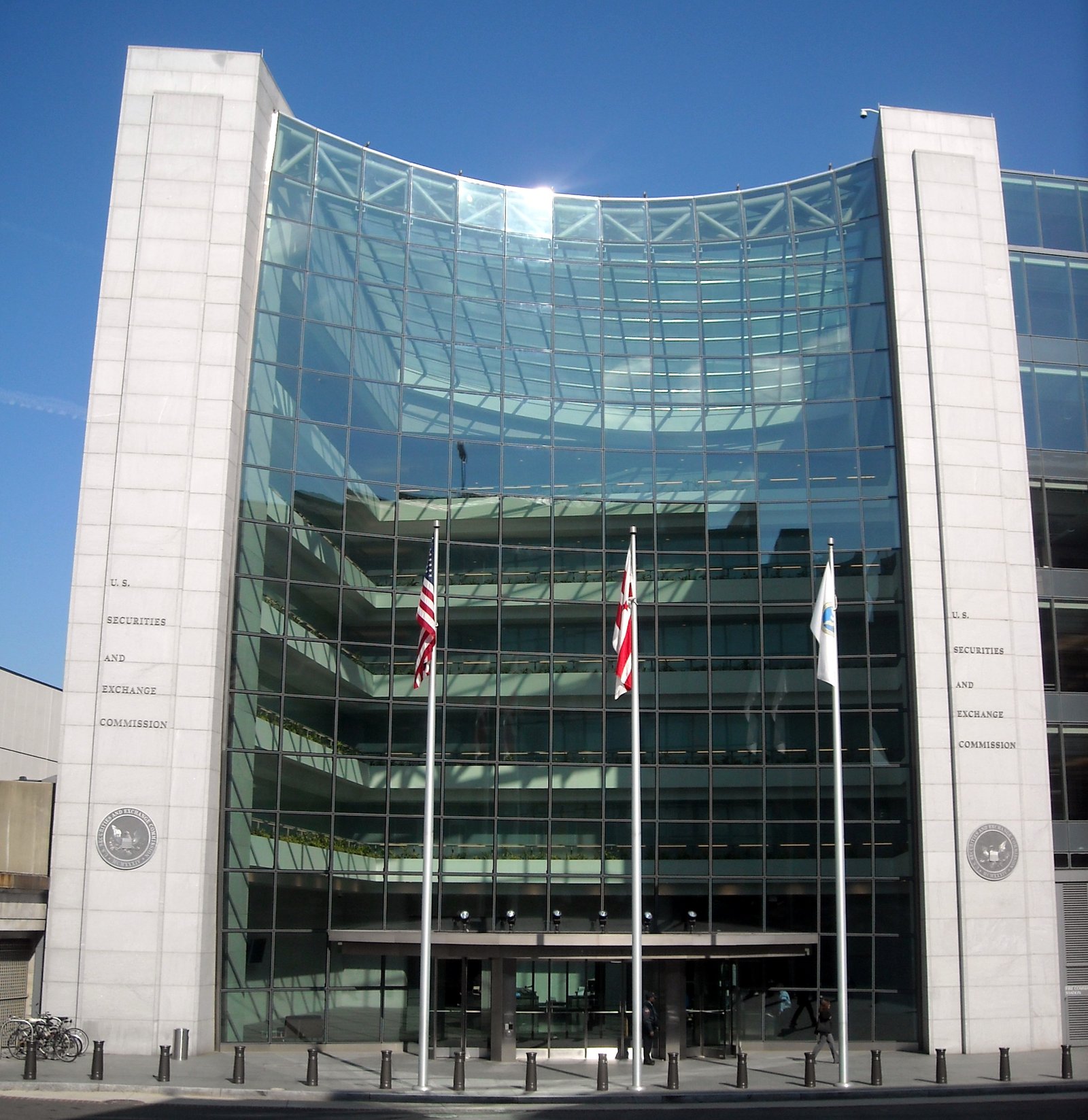
SEC Watch is The Investigative Journal’s daily digest of notable filings and enforcement actions drawn from the U.S. Securities and Exchange Commission’s EDGAR system and public records. Every item below links to its primary source. Allegations described in civil complaints are unproven unless a court or settlement has resolved them.
The most consequential securities-law development on the public record this week did not come from a new case but from the collapse of an old one. Filings indicate that a federal judge in Ohio has dismissed the SEC’s fraud action against the former chief executive of FirstEnergy Corp., ending — at least for now — one of the agency’s highest-profile attempts to hold an individual executive accountable for a corporate political-corruption scandal. That ruling anchors today’s digest, which also covers a fresh set of fraud judgments, two settled offering-fraud actions tied to real estate, a pioneering medical-imaging company’s exit from public markets, and a bank holding company’s auditor change.
The backdrop matters. In its most recent enforcement report, covering fiscal year 2025, the Commission said it filed 456 enforcement actions and obtained orders for monetary relief totaling $17.9 billion, though it noted that figure falls to roughly $1.4 billion in disgorgement and $1.3 billion in penalties once amounts “deemed satisfied” by parallel actions and the long-running Allen Stanford Ponzi litigation are excluded. Under Chairman Paul S. Atkins, the agency has publicly recentered its program on fraud and away from what it now calls “regulation by enforcement.” The cases surfacing on EDGAR this month reflect that stated emphasis on individual accountability and retail-investor harm. (SEC press release 2026-34.)
1. Court dismisses SEC fraud case against FirstEnergy’s former CEO
According to Litigation Release No. 26578, dated June 30, 2026, U.S. District Judge J. Philip Calabrese of the Northern District of Ohio on June 27 granted a motion to dismiss filed by Charles E. Jones, the former chief executive of FirstEnergy Corp. The SEC release states that the court found the Commission’s complaint, as alleged, “did not state a claim” against Jones for violations of the federal securities laws. The case is SEC v. Charles E. Jones, No. 5:24-cv-01560-JPC.
The dismissal closes a chapter that began in September 2024, when the SEC charged Jones in connection with what it described as a years-long corruption scheme. The agency alleged that from 2017 to 2020, FirstEnergy funneled roughly $60 million to the former Speaker of the Ohio House, Larry Householder, through tax-exempt 501(c)(4) organizations to secure legislation favorable to the company, and that Jones misled investors when he publicly stated that “FirstEnergy acted ethically in this matter” and “transparently.” FirstEnergy itself settled with the Commission at the time, agreeing to pay a $100 million civil penalty. Those allegations against Jones were never proven, and the court’s ruling means the SEC did not clear the threshold required to take them to trial.
For accountability reporting, the significance is twofold. The underlying conduct that FirstEnergy paid to resolve remains a matter of public record, but the agency’s pursuit of the executive it identified as a central actor has now faltered on the pleadings. Records do not yet indicate whether the Commission intends to appeal or to seek leave to amend its complaint. TIJ will monitor the docket for any further filings.
2. SEC seeks judgments against Florida advisory-firm owner in $2.1 million fraud
In Litigation Release No. 26579, dated July 1, 2026, the Commission said it filed proposed partial judgments against David Kushner of Boca Raton, Florida, and his company, La Mancha Funding Corp. The SEC’s complaint, originally filed in November 2024 in the Southern District of New York, alleges that Kushner and La Mancha raised approximately $10.49 million from investors by selling membership interests in a series of limited liability companies intended to fund short-term loans to borrowers that included sports agents and professional athletes.
According to the complaint, the defendants made material misrepresentations about how investor money would be used, took undisclosed “origination” and “broker” fees, and misappropriated at least $2.14 million. The filing alleges Kushner directed misappropriated funds toward personal expenses including credit-card bills, a child’s college tuition, country-club dues, a Mercedes-Benz, and a rental home in the Hamptons. Kushner and La Mancha consented to the entry of judgments, subject to court approval, that would permanently enjoin them from violating the antifraud provisions of the Securities Act, the Securities Exchange Act, and the Investment Advisers Act, and would impose an officer-and-director bar on Kushner; the question of monetary relief was reserved for the court.
The SEC release adds that Kushner previously pleaded guilty to a seven-count indictment brought by the Manhattan District Attorney’s Office, including five counts of second-degree grand larceny. The parallel criminal guilty plea distinguishes this matter from the many civil-only actions on the docket and strengthens the evidentiary record behind the Commission’s allegations.
3. Settled actions target sales agents in alleged $56 million real estate Ponzi scheme
Litigation Release No. 26571, dated June 24, 2026, describes settled actions against Sanders Family Office, LLC and its principal, Margaret Sanders, and separately against Francisco J. Herrera, for their roles as unregistered sales agents in what the SEC characterizes as a fraudulent offering orchestrated by Wells Real Estate Investment, LLC. The Commission alleges that Wells Real Estate raised at least $56 million from roughly 660 investors nationwide through promissory notes.
According to the complaints, Sanders Family Office and Sanders solicited approximately $40 million from about 600 investors and earned at least $2.97 million in transaction-based commissions without being registered as a broker-dealer, while Herrera raised roughly $10 million from about 190 investors — promoting the notes online and on his radio program — and received at least $488,244 in commissions. Without admitting the allegations, Sanders and her firm consented to a judgment that would order disgorgement of $2,977,099.53 plus $506,228.74 in prejudgment interest, with a $100,000 civil penalty for Sanders; Herrera consented to a bifurcated judgment leaving monetary relief for later determination.
The SEC notes it previously charged Wells Real Estate and its principals, Janalie C. Bingham and Jean Joseph, in August 2024, obtained the appointment of a receiver, and that both principals have pleaded guilty in a parallel criminal case. These filings illustrate a recurring accountability theme worth tracking: the enforcement focus on the network of unregistered agents whose commissions help fuel offering frauds, not merely the scheme’s architects.
4. Hotel-fund manager and president settle claims of untrue statements to retail investors
In Litigation Release No. 26560, dated June 5, 2026, the Commission announced a settled action against Phoenix American Hospitality, LLC, a Texas-based manager of real estate investment vehicles, and its president, William Lee “Perch” Nelson of Dallas. The SEC’s complaint alleges that the firm and Nelson raised approximately $86 million from more than 2,000 retail investors across two hotel-focused funds between March 2022 and July 2024.
The complaint alleges the defendants told investors that one fund owned as many as 11 hotels when, in reality, it held only a preferred-equity interest in a single hotel until January 2024, and that both funds made regular distributions of up to 12 percent per year when neither fund was profitable and distributions were “primarily funded by returns of investor capital” — a hallmark pattern regulators watch for in troubled private offerings. Without admitting the allegations, Phoenix American Hospitality and Nelson each consented to permanent antifraud injunctions; the proposed judgments would impose a $591,127 civil penalty on the firm, a $118,225 penalty on Nelson, and a five-year officer-and-director bar on Nelson.
Because the fund interests were sold to retail investors rather than institutions, the matter fits squarely within the Commission’s stated fiscal-2025 priority of protecting individual investors from misrepresentations in private real estate vehicles — a category that has drawn repeated enforcement attention.
5. FONAR, an MRI pioneer, completes going-private merger and exits Nasdaq
On the corporate-disclosure side, a Form 8-K filed by FONAR Corporation reports that on June 3, 2026, the Melville, New York medical-imaging company — long identified with the development of MRI scanning technology — completed a merger taking it private. Under the agreement dated December 23, 2025, a subsidiary of FONAR, LLC merged into the company, which survives as a wholly owned subsidiary of the new parent.
The filing states that outstanding shares were converted into the right to receive cash: $19.00 per share for common and Class B common stock, $6.34 for Class C common stock, and $10.50 for Class A non-voting preferred stock. In connection with the closing, the company and its new parent entered a credit agreement with OceanFirst Bank providing a $20 million term loan and a $15 million revolving facility. FONAR notified Nasdaq of its intent to delist, requested the filing of a Form 25, and said it intends to file a Form 15 to suspend its reporting obligations — meaning a company that has filed with the SEC for more than four decades will go dark to public investors. The 8-K specifies that four directors resigned in connection with the merger and “not because of any disagreement with the Company,” and was signed by President and CEO Timothy R. Damadian.
6. Investar Holding discloses a change in auditors
An Exhibit 16.1 letter attached to a Form 8-K shows that Investar Holding Corporation, a bank holding company, reported a change in its independent registered public accounting firm under Item 4.01 for an event that occurred on June 17, 2026. In the standard letter, dated June 19, the departing firm, BDO USA, P.C., stated that it agrees with the statements made in the company’s Item 4.01 disclosure “insofar as they relate to our Firm.”
Auditor transitions are routine and, on their own, do not indicate any problem; public companies change firms for many reasons, including fee, rotation, and scope considerations. The disclosure is included here because Item 4.01 filings are a standard signal that accountability-focused readers monitor: the presence or absence of reported disagreements between a company and its outgoing auditor can be an early indicator of accounting or controls friction. The BDO concurrence letter here reflects no disclosed disagreement. TIJ notes the item as a data point rather than a red flag.
Filings that may warrant deeper TIJ investigation
Several actions filed in the final days of June remain at the complaint stage — meaning the allegations are unproven and the defendants are entitled to a defense — but are worth watching as they develop. They include SEC v. Mingran Wang (Litigation Release No. 26574, June 25), SEC v. Justin Jennings and Vortex Strategies LLC (No. 26570, June 23), and SEC v. Charles J. Cole, Torben M. Welch, et al. (No. 26563, June 11), the last of which names a relief defendant identified in the release as “The Indigenous Nations’ Bank.” Each is accompanied by a publicly posted SEC complaint on the Commission’s litigation-releases page.
Two threads merit follow-up reporting. First, the dismissal of the FirstEnergy case raises the question of whether the Commission’s theory of executive liability for corporate political-influence spending can survive judicial scrutiny, and whether the agency will refile or appeal. Second, the pattern across this month’s settled actions — unregistered agents, real estate promissory notes, and distributions funded by investor capital — suggests a fertile area for examining which intermediaries and marketing channels repeatedly surface in retail-facing private offerings. TIJ welcomes tips from readers with knowledge of any entity named above; every claim we publish is tied to a public record, and subjects of pending actions are presumed to have a right of reply.
Sources: U.S. Securities and Exchange Commission EDGAR filings and litigation releases, linked inline above, and SEC press release 2026-34. This digest summarizes public records; civil allegations are unproven unless resolved by a court or consent judgment. Featured image: U.S. Securities and Exchange Commission headquarters, Washington, D.C. Photo by AgnosticPreachersKid, CC BY-SA 3.0, via Wikimedia Commons.