

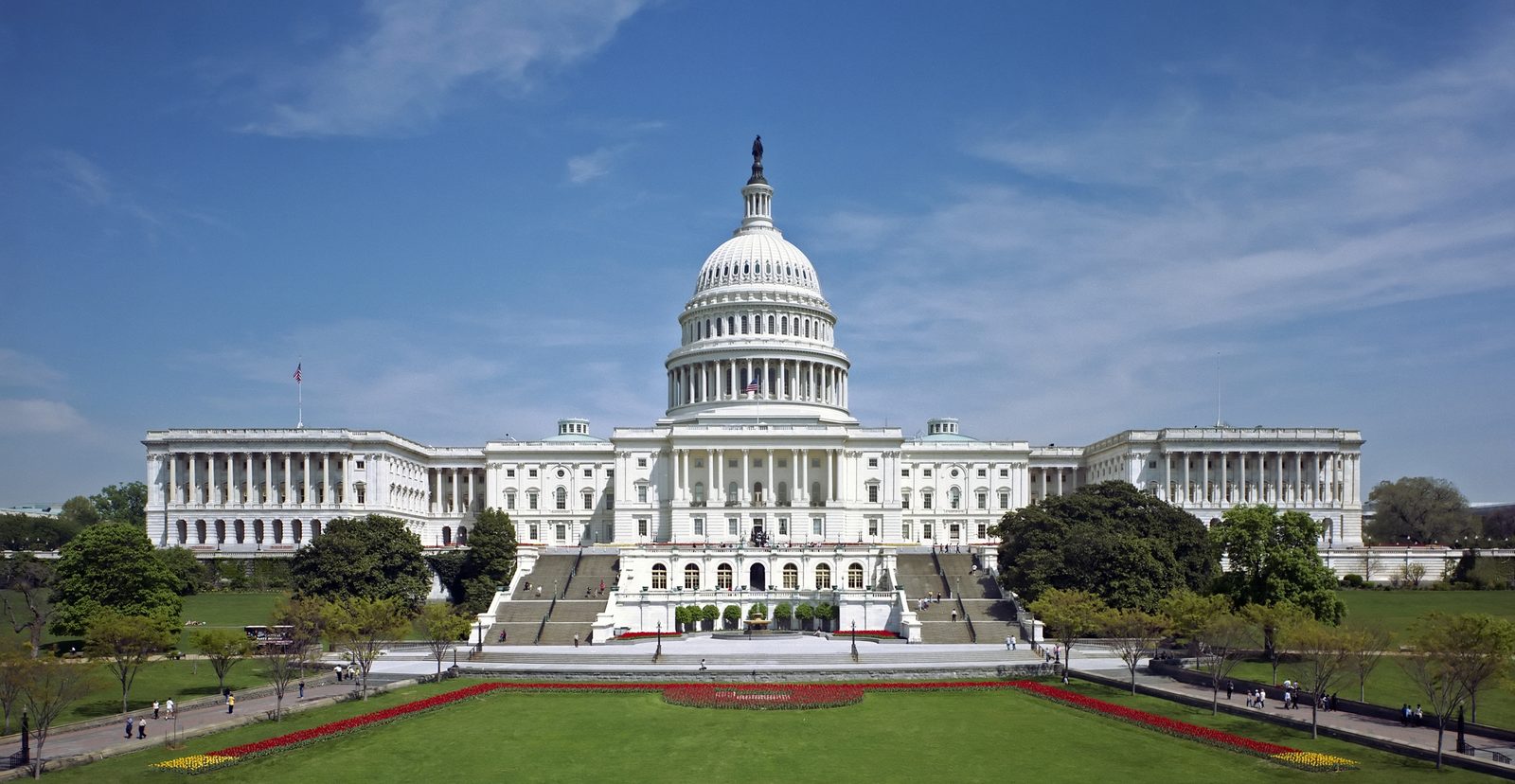
Congress spent the final week of June clearing its desk ahead of the July 4 district work period, and the House used the runway to move an unusually broad slate of legislation. Members sent two bills to the Senate under suspension of the rules, teed up the sprawling annual defense-policy bill for floor debate, and continued grinding through a fiscal 2027 appropriations cycle that is running against the clock. The Senate wound down its own pre-recess business on nominations and conference work.
The backdrop for all of it is a federal ledger deep in the red. The Congressional Budget Office projects a $1.9 trillion deficit for fiscal 2026, and lawmakers are negotiating next year’s spending in the shadow of three separate government funding lapses during the current fiscal year. Below is a tracker of the week’s most consequential legislative and regulatory developments, with bill status, cost estimates where available, and links to the underlying public records.
1. FY2027 Defense Authorization Heads Toward the House Floor (H.R. 8800)
The centerpiece of the pre-recess agenda is the National Defense Authorization Act for Fiscal Year 2027 (H.R. 8800), which the House Armed Services Committee ordered reported on June 15 (H. Rept. 119-698) and placed on the Union Calendar. Sponsored by Armed Services Chairman Mike Rogers (R-AL) and introduced May 13, the measure was positioned for floor consideration this week, with the Rules Committee convening June 29 to structure debate on more than 1,300 filed amendments, according to the committee’s docket.
A Bloomberg Government analysis pegs the bill’s discretionary national-security authorization at roughly $1.15 trillion — a figure the administration frames as part of a broader $1.5 trillion defense posture, with an additional tranche routed through the 2025 reconciliation law rather than the traditional authorization vehicle. CBO has published cost estimates tied to the committee-reported text.
The Congressional Research Service summary indicates the bill sets active-duty and reserve personnel strengths, authorizes procurement of aircraft and ships, tightens acquisition and contracting rules, and directs the Pentagon to establish an expedited qualification process for domestic and allied sources of strategic materials such as critical metals and magnets. It also addresses cybersecurity, artificial intelligence, and force-posture policy toward Israel, Europe, and the Indo-Pacific. As the single largest annual policy bill Congress passes, its floor management will be an early test of the majority’s ability to hold its coalition together on defense priorities.
2. House Passes the KIDS Act, Sending Online-Safety Fight to the Senate (H.R. 7757)
The House on June 29 passed the Kids Internet and Digital Safety Act (H.R. 7757), or KIDS Act, by a bipartisan 267-117 vote (Roll No. 228) under suspension of the rules. Sponsored by Energy and Commerce Chairman Brett Guthrie (R-KY) and reported jointly with the Judiciary Committee, the bill requires online platforms to build in protections for minors.
According to the CRS summary, platforms on which more than one-third of content is sexual material harmful to minors would be required to adopt age-verification technology; social-media and online-gaming services would have to apply default settings that limit compulsive-use features and stranger contact for minors; and AI chatbots would be required to disclose their non-human status to underage users. The measure now moves to the Senate, where a companion children’s online-privacy bill, S. 836, is pending. CBO estimated that S. 836 would cost the Federal Trade Commission and the Government Accountability Office roughly $3 million over the 2026–2030 period to complete required studies and reports.
The vote reflects a durable, cross-party appetite for tech accountability on child-safety grounds, even as civil-liberties groups continue to raise questions about age-verification mandates and their implications for adult users’ privacy. The bill’s Senate path remains the decisive variable.
3. Terrorism Risk Insurance Reauthorized Through 2034 in Lopsided Vote (H.R. 7128)
By an overwhelming 373-15 margin (Roll No. 229), the House also passed the TRIA Program Reauthorization Act of 2026 (H.R. 7128) on June 29. Sponsored by Rep. Mike Flood (R-NE) and reported by the Financial Services Committee (H. Rept. 119-561), the bill extends the federal Terrorism Risk Insurance Program — the government backstop for private property-and-casualty insurers against terrorism losses — through 2034.
The measure also raises the insured-loss threshold required to trigger program certification beginning in 2029 and codifies Treasury Department public-notification requirements around the process for certifying whether an event qualifies as an act of terrorism. The near-unanimous tally underscores the program’s standing as one of the least controversial items in the financial-services portfolio; insurers, real-estate developers, and lenders have long treated the backstop as essential to the availability of terrorism coverage in major metropolitan markets. As with the KIDS Act, the bill’s fate now rests with the Senate.
4. FY2027 Appropriations: One Bill Down, and a Shutdown Hangover
The House has begun clearing individual fiscal 2027 spending bills, led by the Military Construction, Veterans Affairs, and Related Agencies Appropriations Act (H.R. 8469). Sponsored by Rep. John Carter (R-TX) and reported as H. Rept. 119-622, the bill cleared the House and was received in the Senate on May 20 — the first of the twelve annual appropriations measures to pass a chamber. Committee materials put its discretionary total near $157 billion, with roughly $469 billion in overall budget authority once mandatory veterans’ programs are included.
Beyond MilCon-VA, the Appropriations Committee has advanced additional bills at subcommittee and full-committee level through June, and the panel approved its 302(b) suballocations on April 22 by a party-line 32-28 vote, according to the Committee for a Responsible Federal Budget’s appropriations tracker. The partisan split on the allocations foreshadows the harder fights ahead on Labor-HHS, Homeland Security, and other contested measures.
The stakes are elevated by recent history. CRFB records show that fiscal 2026 funding was not finalized until April 2026, following three funding lapses: a shutdown from October 1 to November 12 over Affordable Care Act tax credits, a brief lapse from January 31 to February 3, and a Department of Homeland Security shutdown from February 14 to April 30. The final DHS bill excluded Immigration and Customs Enforcement and border-operations funding, which lawmakers have sought to provide through the reconciliation process instead. With that pattern fresh, the September 30 deadline for FY2027 will test whether appropriators can restore a more orderly process.
5. CBO’s Fiscal Backdrop: A $1.9 Trillion Deficit and Rising Interest Costs
Every spending debate this summer is unfolding against the numbers in CBO’s Budget and Economic Outlook: 2026 to 2036, released in February. The office projects a $1.9 trillion deficit in fiscal 2026 — about 5.8 percent of GDP — rising to $3.1 trillion, or 6.7 percent of GDP, by 2036. Debt held by the public is projected to climb from 101 percent of GDP this year to 120 percent by 2036, surpassing the post-World War II record.
Perhaps the most consequential trend for future Congresses is the trajectory of interest costs: CBO expects net interest outlays to double from roughly $1.0 trillion in 2026 to $2.1 trillion by 2036. The office attributed a substantial share of the deterioration to the 2025 reconciliation act, which it estimated added about $4.7 trillion to projected deficits after accounting for economic and debt-service effects. Interim Treasury data cited by CBO show the government ran a roughly $1.2 trillion deficit through the first eight months of fiscal 2026. These figures are the gravitational center of the appropriations and authorization debates described above, and they are the reason fiscal hawks are pressing for spending restraint even as defense and veterans’ accounts grow.
6. Ways and Means Advances COVID Unemployment-Fraud Recovery Bill (H.R. 8873)
On the accountability front, the House Ways and Means Committee ordered reported the Recover COVID Unemployment Fraud in Banks Act (H.R. 8873) on May 21 by a unanimous 41-0 vote. Sponsored by Rep. Beth Van Duyne (R-TX) and introduced May 19, the bill targets unclaimed pandemic-era unemployment-compensation funds held by financial institutions, creating a mechanism to recover money tied to fraudulent claims filed during the COVID-19 emergency.
The unanimous committee vote signals rare bipartisan consensus on clawing back pandemic-relief losses, an issue that federal watchdogs have flagged repeatedly since 2021. The measure awaits floor time, and its progress is worth tracking as a marker of how aggressively Congress intends to pursue recovery of improper payments — a recurring theme across the oversight committees and one closely aligned with taxpayer-accountability priorities.
7. Small-Business Package Clears Committee With CBO Scores in Hand
The House Small Business Committee reported a cluster of measures now awaiting floor action, led by the Main Street Competes Act (H.R. 8882), sponsored by Rep. Hillary Scholten (D-MI) and reported June 3 (H. Rept. 119-682). Companion bills include the Oversight and Transparency for Small Business Certifications Act (H.R. 8879), the Small Business Cybersecurity Assistance Evaluation Act (H.R. 8880), and the SBA Artificial Intelligence Utilization Act (H.R. 8881).
CBO released cost estimates for the package during the week of June 16, part of the office’s routine scoring of committee-reported legislation available through its cost-estimates portal. The bills’ bipartisan committee origins — a Democratic lead sponsor moving through a Republican-led panel — suggest a smoother floor path than the more contentious authorization and appropriations fights, and they reflect continued congressional interest in cybersecurity readiness and responsible AI adoption within the federal small-business ecosystem.
8. Regulatory Front: A ‘Revolutionary’ Overhaul of Federal Procurement Rules
Outside the legislative calendar, one of the most far-reaching regulatory actions of the month is the “Revolutionary FAR Overhaul,” a proposed rule published June 23 in the Federal Register (FAR Case 2026-001) by the Office of Federal Procurement Policy, the Defense Department, the General Services Administration, and NASA. The proposal revises definitions in FAR 2.101 and multiple other parts as part of a broader effort to streamline the government-wide acquisition rulebook.
The public comment period runs through July 23. Because the Federal Acquisition Regulation governs how the government buys everything from office supplies to weapons systems, changes of this scope carry significant implications for contractors and for oversight of federal spending. TIJ will track the comment record and any subsequent interim or final rule, given the accountability questions that attend any large-scale rewrite of procurement standards.
9. FDIC Moves to Raise Resolution-Planning Threshold to $100 Billion
In banking regulation, the Federal Deposit Insurance Corporation board on June 25 approved a notice of proposed rulemaking that would raise the asset threshold at which insured depository institutions must file resolution submissions — so-called “living wills” — from $50 billion to $100 billion in total assets.
The proposal, which will be open for public comment, would narrow the set of banks subject to the most detailed resolution-planning requirements. Supporters frame it as right-sizing regulatory burden for mid-size institutions; critics of threshold increases generally caution that raising such lines can reduce visibility into firms that proved consequential during past stress episodes. The rulemaking is one to watch for readers following financial-stability policy and the post-2023 debate over regional-bank supervision.
10. State Privacy and AI Laws Take Effect July 1, Raising Federal Stakes
Finally, a wave of state legislation with national reach takes effect this week. Comprehensive consumer-privacy statutes in Connecticut, Utah, and Arkansas carry July 1, 2026, effective dates, according to industry compliance trackers compiled by the International Association of Privacy Professionals. Connecticut’s amended law adds algorithmic-pricing disclosures, expanded profiling rights, tighter restrictions on precise-geolocation data, and data-broker registration; Utah adds a consumer right to correct inaccurate personal data.
The cumulative effect is a widening patchwork of state rules — now spanning roughly two dozen states — that regulated firms must reconcile in the absence of a federal standard. That fragmentation is precisely the pressure point behind congressional interest in a national privacy framework and in AI-governance measures such as the KIDS Act. For companies operating across state lines, the compliance calculus increasingly argues for federal preemption; for privacy advocates, the state laws set a floor that any federal bill would have to match. Either way, the July 1 effective dates keep the data-governance debate squarely on Washington’s radar.
What This Means for TIJ’s Beats
This week’s docket touches every one of our core coverage areas. On fiscal accountability, the collision between a $1.9 trillion deficit and growing defense and veterans’ accounts will define the appropriations endgame before September 30. On national security, the defense authorization’s emphasis on strategic-materials sourcing, allied procurement, and AI signals where the Pentagon’s priorities are heading. On oversight, the unanimous push to recover pandemic unemployment fraud and the sweeping procurement-rule rewrite both bear directly on how carefully public money is tracked. And on technology policy, the KIDS Act and the July 1 state-law wave show a governance vacuum that Congress is only beginning to fill.
We will continue tracking each of these items as bills move between chambers, as comment periods close, and as CBO issues further cost estimates. Readers can follow the primary records directly through the linked Congress.gov bill pages, CBO reports, and Federal Register notices above. — Eduardo Bacci, The Investigative Journal