

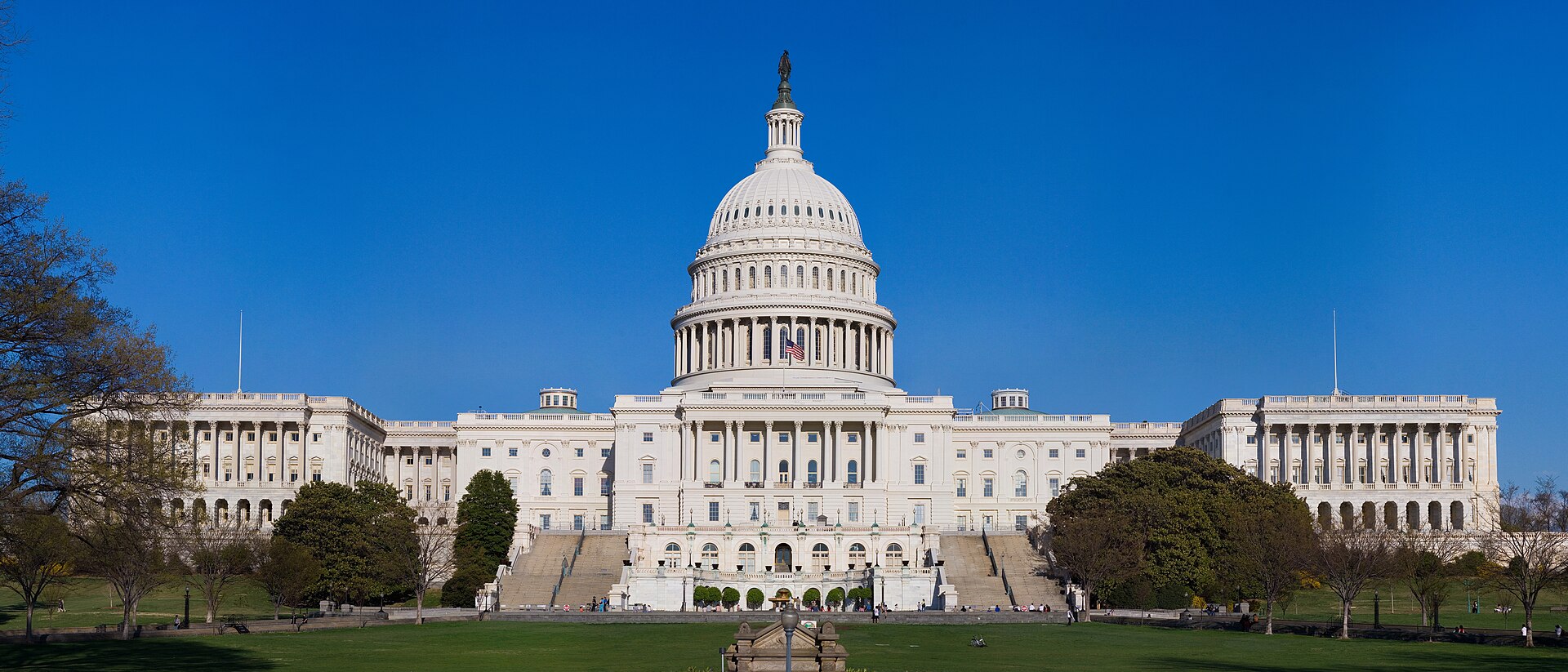
WASHINGTON, July 2, 2026 — Federal Washington heads into the Independence Day weekend — the nation’s 250th — with a crowded ledger. The Bureau of Labor Statistics moved its June jobs report a day early, the North American trade pact known as USMCA formally lapsed into review, and the Supreme Court closed a term that measurably expanded presidential power. This Afternoon Wire tracks the day’s developments across government, the courts, and abroad, and previews what to watch tomorrow. Every item below is tied to a public record or on-the-record reporting; where matters remain unsettled, we say so.
Government
June jobs report arrives a day early. The Bureau of Labor Statistics’ Employment Situation for June was due at 8:30 a.m. Eastern this morning — a day ahead of the customary first-Friday schedule, because federal offices observe Independence Day on Friday, July 3. Economists surveyed before the release expected a cooler month: consensus estimates clustered around 100,000 to 115,000 jobs added, with the unemployment rate seen holding at 4.3 percent, according to previews from CNN and other outlets. That would extend a steady-but-unspectacular stretch. In May, payrolls rose 172,000 and unemployment held at 4.3 percent, BLS data show, and the agency revised March and April up by a combined 93,000. Analysts cautioned that part of May’s strength in leisure and hospitality — buoyed by early-summer and World Cup-related activity — could give back in June. Whatever the headline figure, the print will shape expectations for the Federal Reserve’s next move.
United States declines to renew USMCA. On July 1, at the trade pact’s mandated six-year joint review, the United States declined to renew the U.S.-Mexico-Canada Agreement in its current form. In a statement, U.S. Trade Representative Jamieson Greer said that after the three governments met virtually, “the United States did not agree to renew the USMCA in its current form. As a result, the USMCA is not renewed.” Greer said the agreement “remains in force pending resolution” of U.S. concerns — chiefly trade deficits — and that Washington will meet Mexico the week of July 20 for a third round of bilateral negotiations. As CNBC and CBC News reported, a formal withdrawal would require six months’ notice — which no party has given — and talks with Canada have not yet begun. The pact continues to operate for now, but the non-renewal opens a period of uncertainty for cross-border manufacturers, particularly in autos.
Trump disclosure lists crypto as top income source. A financial disclosure released June 30 shows President Trump reported more than $1.4 billion in cryptocurrency-related income for 2025, with digital assets his single largest source of personal earnings, according to CNBC and NBC News. The filings indicate roughly $580 million connected to World Liberty Financial — the family-linked venture behind the WLFI governance token and the USD1 stablecoin — and about $635 million tied to sales of the $TRUMP meme coin, alongside property income that included $122 million from Trump Doral and $77.5 million from Mar-a-Lago. Asked about his holdings on July 1, Trump said outside managers “run my money.” The disclosure is a required public filing; it documents income, not any finding of wrongdoing.
Defense bill moves in the House. With the Senate out of session this week, the House is advancing the Fiscal Year 2027 National Defense Authorization Act (H.R. 8800). The Rules Committee took up the measure alongside more than 1,300 filed amendments, according to GovTrack and Congress.gov floor records. The annual bill sets Pentagon policy, procurement priorities, and service-member pay, and typically draws bipartisan support before a longer reconciliation with the Senate later in the year.
Courts
A term that expanded presidential power. The Supreme Court closed its term with rulings that, together, enlarged the president’s control over the executive branch. On June 29, in Trump v. Slaughter, a 6-3 majority overturned the 1935 precedent Humphrey’s Executor, holding that President Trump’s without-cause removal of Federal Trade Commissioner Rebecca Kelly Slaughter was lawful. Writing for the majority, Chief Justice John Roberts said “subordinates who exercise the President’s power are subject to removal by him.” As NPR reported, the decision effectively makes commissioners at independent, multimember agencies removable at will and casts doubt on similar protections at bodies such as the Equal Employment Opportunity Commission and the Consumer Product Safety Commission.
Fed independence preserved — for now. The same day, in a 5-4 order, the justices allowed Federal Reserve Governor Lisa Cook to remain in her post while litigation over her attempted removal proceeds in the lower courts (Trump v. Cook). The order leaves the central bank’s independence intact for the moment, even as the Slaughter ruling narrowed such protections elsewhere in the government.
Birthright citizenship upheld. On June 30, in Trump v. Barbara, the Court struck down the administration’s executive order seeking to end birthright citizenship. The justices divided 6-3 on the result but 5-4 on the reasoning: Chief Justice Roberts’s opinion rested on the Fourteenth Amendment, while Justice Brett Kavanaugh concurred on statutory rather than constitutional grounds, according to SCOTUSblog. Justice Clarence Thomas dissented in a lengthy opinion joined by Justice Neil Gorsuch. A CNN analysis noted the outcome was closer than the headline suggests and not “an entire loss” for the administration, given the fractured rationale. The full opinion is posted on the Court’s site.
Party spending limits loosened. In a separate 6-3 decision during the term’s final stretch, the Court struck down federal limits on spending that political parties coordinate with their candidates, according to SCOTUSblog’s roundup of the latest rulings — a change election-law analysts say could reshape party finance heading into the 2026 midterms.
International
Iran framework enters its technical phase. A U.S.-Iran ceasefire framework reached in mid-June — a memorandum of understanding mediated by Pakistan — set a roughly 60-day window for a technical agreement to freeze and monitor Iran’s nuclear program and to reopen the Strait of Hormuz to commercial shipping, Axios reported. That points to an effective deadline in mid-August. Sanctions relief and the potential release of up to $25 billion in frozen Iranian assets are tied to compliance, according to a UK House of Commons Library briefing. Negotiators still face unresolved questions over enrichment levels and verification.
Kharkiv strike kills teenager. In Ukraine, seven Russian guided-bomb strikes hit Kharkiv on July 1, killing a 15-year-old boy and wounding more than 30 people, the Kyiv Post reported, part of a broader wave of Russian strikes across the country this week. Ukrainian officials said several children were among the injured.
Hormuz still rated a warzone for mariners. Even as diplomats work toward reopening the strait, maritime labor and shipowner groups have continued to designate the Strait of Hormuz a warzone — a classification that roughly doubles seafarers’ pay and reflects persistent risk to commercial traffic, according to WORLD’s July 2 news summary. The designation is a useful gauge of how far conditions on the water still lag the diplomatic timeline.
Tomorrow’s Watch
Friday, July 3, is a federal holiday: U.S. government offices are closed and equity markets are dark for the observed Independence Day, so official data and releases will be sparse. Attention shifts to the National Mall, where “A Capitol Fourth” stages its concert Friday evening (8 p.m. ET, on PBS) ahead of Saturday’s main event — the nation’s Semiquincentennial, marking 250 years since the Declaration of Independence under the White House’s Salute to America 250 banner. The Great American State Fair continues on the Mall through July 11. Abroad, watch the Iran technical talks against their mid-August clock and the U.S.-Mexico USMCA track, with the next bilateral round set for the week of July 20. And with the June jobs print in hand, traders will return Monday to weigh its implications for the Federal Reserve’s July meeting.
The Investigative Journal will update this wire as developments warrant. Figures and filings cited above are drawn from public records and on-the-record reporting; pending matters are noted as such.