

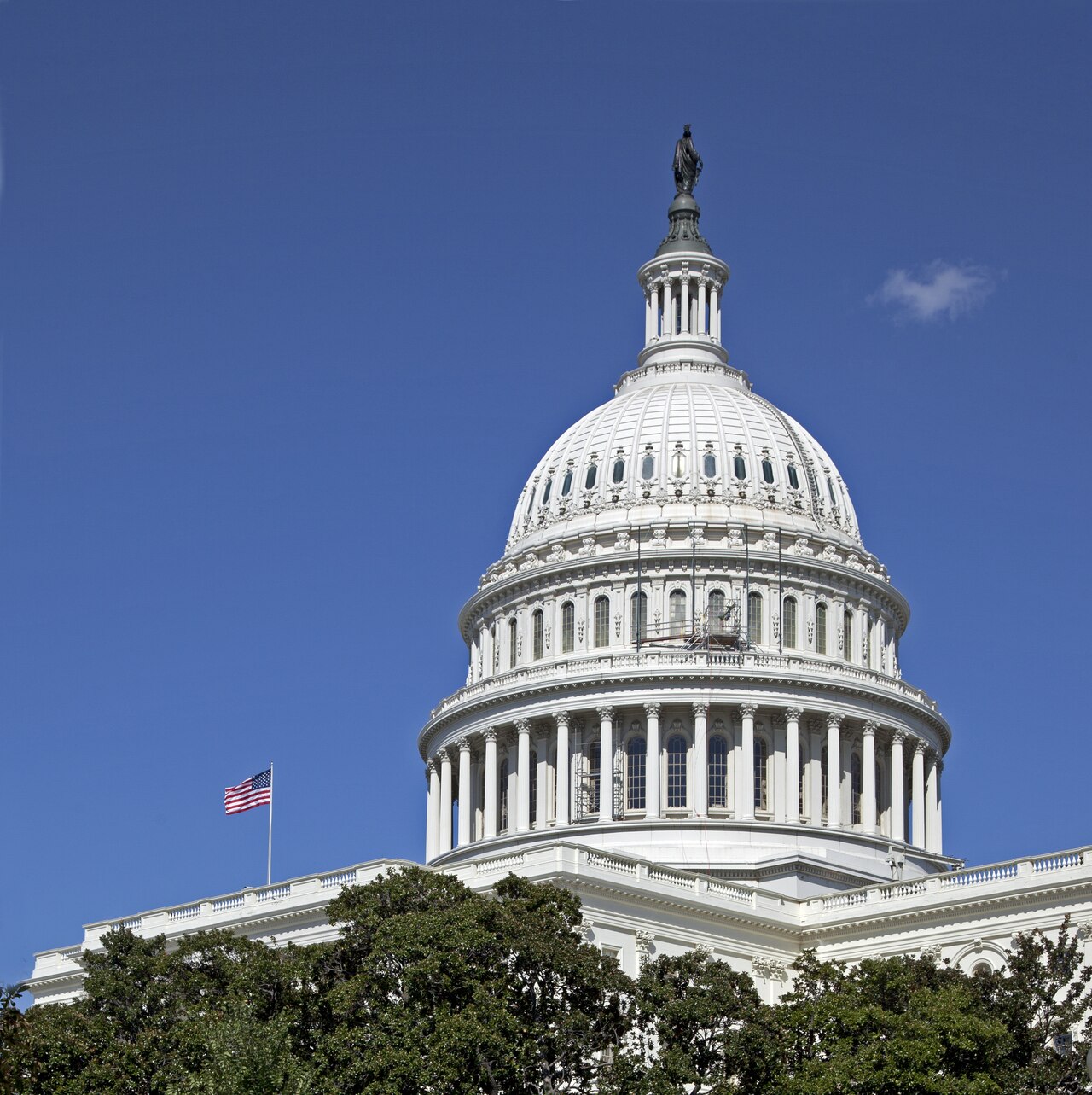
The Investigative Journal’s Weekly Fact-Check Spotlight tests specific, quantifiable public claims against primary sources — federal statistical releases, official records, and nonpartisan research built directly on government data — rather than aggregating other outlets’ conclusions. This week we examine four claims circulating in the national debate: two associated with the administration and the right, two with Democrats and the left. As always, the evidence, not the politics, drives each verdict.
Claim 1: The United States has the “best economy ever” and “it’s raining jobs”
The claim. President Donald Trump has repeatedly described the current economy in superlative terms, touting the “BEST ECONOMY EVER” with “Record Jobs Numbers,” and declaring on Truth Social in June that, with strong readings in April and May, “IT’S RAINING JOBS.”
The evidence. The Bureau of Labor Statistics Employment Situation for June 2026, released July 2, shows total nonfarm payrolls rising by just 57,000 for the month, with the unemployment rate at 4.2 percent. BLS described that gain as “roughly in line with the average monthly change over the prior 12 months (+36,000)” — a pace well below the roughly 150,000–200,000 monthly gains that characterized recent years. In the same release, BLS revised May payrolls down from 172,000 to 129,000 and April down to 148,000, so that employment over those two months was 74,000 lower than previously reported. The President’s “raining jobs” post had cited the initial May figure that the government subsequently cut by 43,000. Labor-force participation also edged down 0.3 percentage point to 61.5 percent, and leisure and hospitality shed 61,000 jobs, with hiring concentrated in health care, social assistance, and professional and business services.
On wages, BLS reports average hourly earnings up 3.5 percent over the year. The most recent inflation reading, the Consumer Price Index for May 2026, shows prices up 4.2 percent over the year — the largest 12-month increase since April 2023. On those figures, annual wage growth has not kept pace with inflation, meaning average real hourly earnings have slipped over the past year.
Verdict: Exaggerated — not supported by the government’s own data. The labor market is still expanding, and 4.2 percent unemployment remains low by historical standards; those are real bright spots. But BLS data describe a cooling labor market — monthly job gains averaging about 36,000, repeated downward revisions, falling participation, and inflation modestly outrunning wages — not a record-setting boom. The superlative “best economy ever” is not borne out by the primary data.
Claim 2: ACA premiums are “more than doubling,” and Americans are “paying thousands more”
The claim. Democrats have argued that because Republicans allowed the Affordable Care Act’s enhanced premium tax credits to lapse at the end of 2025, Marketplace costs are rising sharply, with enrollees “paying thousands more” and premiums more than doubling in 2026.
The evidence. An analysis by KFF, built on federal enrollment and rate data, estimates that if the enhanced credits expire, the average subsidized Marketplace enrollee’s net premium payment more than doubles — a 114 percent increase, from an average of $888 in 2025 to $1,904 in 2026, or about $1,016 more per year. That figure reflects what enrollees actually pay after subsidies. The underlying “sticker” premium is rising less steeply: insurers filed for a median increase of about 18 percent for 2026, the largest since 2018. The enhanced credits themselves were created by the American Rescue Plan in 2021 and extended by the Inflation Reduction Act through the end of 2025 — that is, they were scheduled to sunset. KFF also notes the administration’s Marketplace Integrity and Affordability rule raised the share of income enrollees must contribute.
Verdict: True — with an important distinction. For the roughly 22 million subsidized enrollees, the amount paid out of pocket does, on average, more than double if the enhanced credits expire, and many households face hundreds to thousands of dollars in additional annual cost, consistent with KFF’s primary-data estimate. The distinction readers should keep in mind: the “doubling” describes enrollees’ net payments after shrinking subsidies, not the gross premium (up roughly 18 percent at the median); and the enhanced subsidies were always slated to end in 2025. The core assertion — that Marketplace enrollees face sharply higher costs, in many cases more than double — holds up.
Claim 3: This is the “most secure border in history,” with crossings at lows not seen in decades
The claim. The President and the Department of Homeland Security have repeatedly called this “the most secure border in American history.” DHS announced on June 19 that the administration had delivered “13 straight months of zero releases” at the border and described apprehensions at levels not seen in decades.
The evidence. U.S. Customs and Border Protection’s own encounter statistics show 237,538 Southwest land-border encounters in fiscal year 2025 (October 2024 through September 2025) — which CBP and DHS describe as the lowest fiscal-year total since 1970. That is down from more than 1.5 million encounters in FY2024 and a record above 2.2 million in FY2022. The nonpartisan Pew Research Center, analyzing the same federal data, likewise concludes encounters are at their lowest level in more than 50 years. Monthly Border Patrol apprehensions in 2026 have run in the single-digit thousands.
Verdict: True — with context on timing. The numerical core of the claim is accurate: CBP’s primary data confirm Southwest border encounters at their lowest since 1970. “Most secure border in history” is partly a value judgment, but the underlying statistic is sound. The context worth noting is that the decline did not begin in 2025; CBP’s monthly figures show encounters falling sharply from mid-2024 onward, following tighter U.S. asylum rules that summer and stepped-up enforcement by Mexico, before dropping further and remaining low through 2026. The milestone is real; the trend reflects policy shifts across two administrations and in Mexico.
Claim 4: The 2025 Republican law will cause “16 million” people to lose coverage — the “largest loss in U.S. history”
The claim. Democrats, including House Budget Committee Ranking Member Brendan Boyle, have said the 2025 budget reconciliation law will mean “a total of 16 million people will lose their health care — the largest loss of health care coverage in U.S. history.” The figure remains a central Democratic argument as the law’s provisions phase in.
The evidence. Congressional Budget Office estimates, as apportioned by KFF, put the reconciliation law’s own effect at about 10 million additional uninsured people in 2034 — roughly 7.5 million from Medicaid changes, 2.1 million from ACA Marketplace changes, and 0.4 million from other provisions and interactions (CBO publication 61367). Combined with the separately scheduled expiration of the ACA’s enhanced premium tax credits, CBO’s numbers imply more than 14 million additional uninsured. Adding the administration’s Marketplace Integrity rule — which CMS estimates would raise the uninsured by 0.7 million to 1.8 million in 2026 — brings the combined total near the 16 million Boyle cited from a June 2025 CBO analysis. CBO also projects the losses accrue gradually: only about 1.3 million more uninsured in 2026, rising through 2034.
Verdict: Needs context — partially accurate. The “16 million” number traces to genuine CBO analysis, but it bundles three distinct policy actions: the reconciliation law (about 10 million by 2034), the separately scheduled lapse of the enhanced tax credits (about 4.2 million), and a regulatory rule (up to 1.8 million). Attributing all 16 million to “this bill” alone overstates the law’s own CBO-scored effect of roughly 10 million, and the impact builds over a decade rather than arriving at once. Democrats’ broader point — that the combined policies would substantially increase the number of uninsured Americans — is grounded in CBO’s figures; the compressed “16 million from this bill” framing is where the claim outruns the underlying score.
How TIJ conducts fact-checks
The Investigative Journal tests claims against primary sources rather than relying on other fact-checkers. For this edition, we drew on the Bureau of Labor Statistics (jobs and inflation), the Congressional Budget Office and the Centers for Medicare & Medicaid Services (coverage and premiums), U.S. Customs and Border Protection (border encounters), and analyses by KFF and the Pew Research Center that are built directly on those federal records. We separate value judgments, which we do not rate, from checkable factual assertions. We flag when a figure is an estimate or projection, when accuracy depends on context, and when losses or gains phase in over time. Where a claim cannot be traced to a primary record, we omit it rather than repeat it. We deliberately select claims from across the political spectrum and let the documented evidence determine each verdict — which is why the assessments above do not fall along partisan lines. The public officials quoted here made these statements publicly; TIJ welcomes documented corrections and will update the record where warranted.