

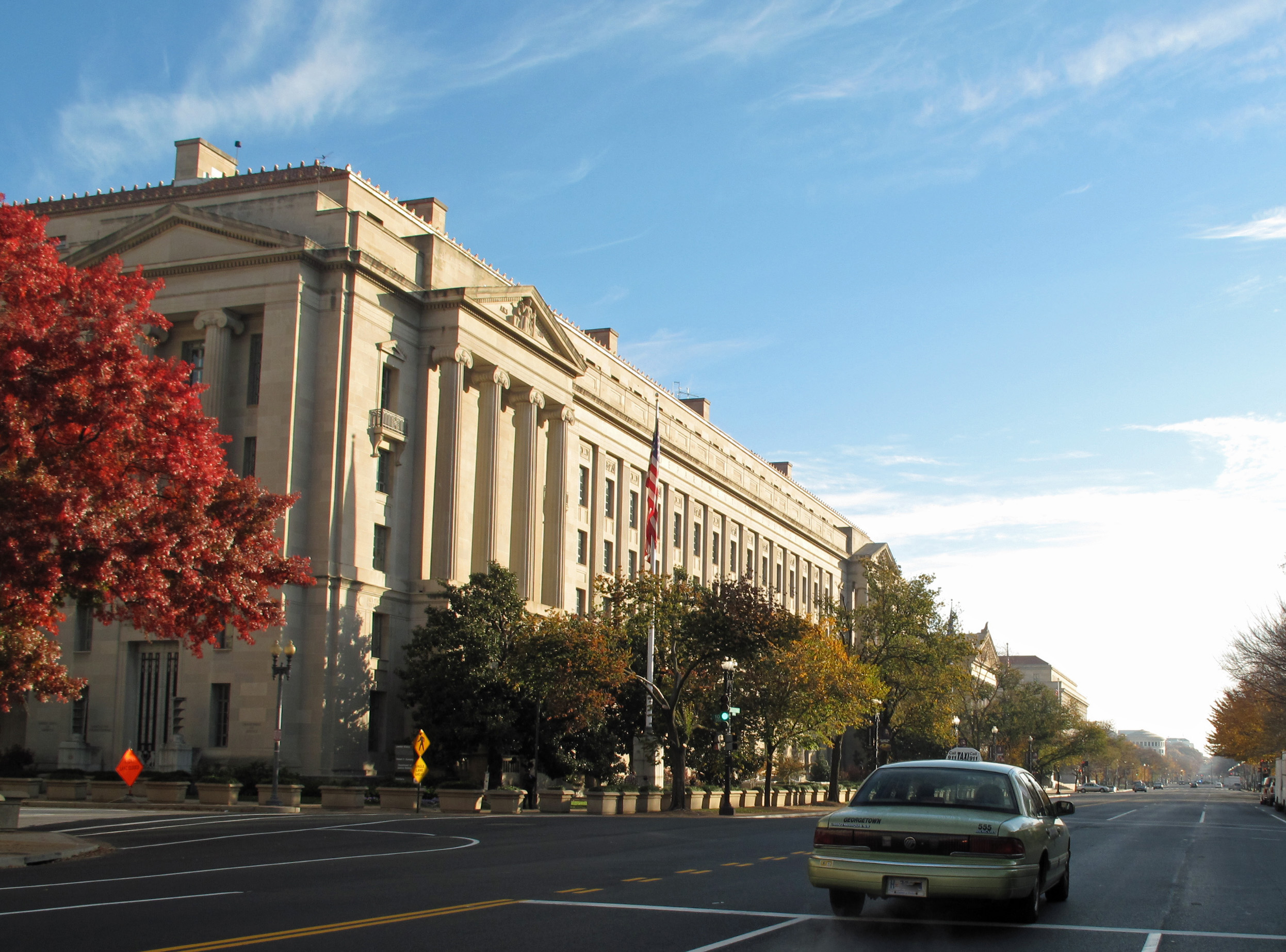
DOJ Watch is The Investigative Journal’s daily digest of federal enforcement activity. This edition summarizes eight notable Justice Department actions announced between July 7 and July 10, 2026, drawn directly from the department’s official press releases. Charges described as indictments or complaints are allegations only; the defendants are presumed innocent unless and until proven guilty. Civil settlements resolve contested allegations without a determination of liability.
The Justice Department closed the first full week of July 2026 with a run of enforcement actions that stretched from an international narcotics-and-weapons complaint against a former Afghan government official to a multimillion-dollar environmental settlement over the largest spill in the Keystone Pipeline’s history. Prosecutors also secured prison terms in a ransomware-insider case, a decade-spanning investment fraud, and a fentanyl-trafficking conspiracy sourced from China, while the department’s Civil Rights Division obtained a sentence against a former federal law-enforcement officer. Below, TIJ walks through the week’s most consequential matters and flags the ones that merit closer scrutiny.
1. Former Afghan General Extradited to Face Heroin, Meth, and Military-Weapons Charges
Federal prosecutors in Manhattan unsealed a complaint on July 10 charging Abdul Zahir Qadeer — also known as “Haji Abdul Zahir,” a former general in Afghanistan’s Border Force and a former First Deputy Speaker of Afghanistan’s National Assembly — with conspiring to import heroin and methamphetamine into the United States and related firearms offenses. According to the Justice Department, Qadeer was arrested in Nairobi, Kenya, in April 2025 and extradited to the United States on July 10, 2026.
The complaint alleges that beginning around November 2024, Qadeer negotiated with a confidential source working at the direction of the Drug Enforcement Administration over a partnership to traffic hundreds of kilograms of narcotics. As an early step, prosecutors say, Qadeer sold a two-kilogram methamphetamine “test shipment” delivered to an associate in Johannesburg, South Africa, in December 2024 for roughly $14,000, then discussed supplying heavy machine guns, sniper rifles, rocket-propelled grenade launchers, and grenades that the purported trafficking organization said it would use to protect its operations from U.S. interdiction.
Qadeer faces a narcotics-importation conspiracy count carrying a 10-year mandatory minimum and weapons counts that add a 30-year mandatory minimum, according to the department. U.S. Attorney Jay Clayton for the Southern District of New York called the alleged scheme a “brazen effort,” and DEA Administrator Terrance Cole said the case shows former officials are “not out of our reach.” The charges remain allegations, and Qadeer is presumed innocent.
2. South Bow to Pay $26.8 Million Over 2022 Keystone Pipeline Rupture in Kansas
The Justice Department, acting for the Environmental Protection Agency and the State of Kansas, filed a complaint and proposed consent decree on July 10 to resolve Clean Water Act allegations against South Bow (USA) LP and South Bow Infrastructure Operations Inc., the owner and operator of the Keystone Pipeline. According to the department, the settlement addresses the December 7, 2022, rupture that released nearly 13,000 barrels of oil — about 543,000 gallons — over land and into Mill Creek in Washington County.
Filings describe the event as one of the largest inland oil spills in recent U.S. history and the largest ever from the Keystone system, with crude oil reported an inch thick across the creek for 3.5 miles downstream and more than 2,700 animals killed or affected. Under the proposed decree, South Bow would pay a civil penalty of $26,867,789, complete work the company estimates at roughly $40 million to prevent future discharges, and contribute more than $3 million to Kansas for natural-resource restoration.
The consent decree, filed in the U.S. District Court for the District of Kansas, is subject to a 30-day public comment period before a court decides whether to approve it. Because the agreement resolves alleged violations, it carries no admission or finding of liability.
3. Florida Ransomware Negotiator Sentenced to 70 Months in BlackCat Insider Case
Angelo Martino, 41, of Land O’Lakes, Florida, was sentenced on July 9 to 70 months in prison for his role in conspiring with actors behind the BlackCat/ALPHV ransomware variant, according to the Justice Department. Court documents state that Martino, employed at a U.S. cyber-incident-response firm, was paid by BlackCat attackers beginning in April 2023 to hand over the confidential negotiating positions of his employer’s clients so the criminals could maximize ransom payments.
Prosecutors said Martino also conspired with two other former cybersecurity professionals — Kevin Martin of Texas and Ryan Goldberg of Georgia, each sentenced in May to 48 months — to deploy BlackCat ransomware against additional victims, splitting a roughly $1.2 million Bitcoin ransom from one victim three ways. Martino pleaded guilty in April to conspiring to interfere with interstate commerce through extortion, and authorities say they have seized about $10 million in assets, including digital currency, vehicles, a food truck, and a luxury fishing boat.
The department framed the sentence as part of “Operation Riptide,” an FBI campaign against cyber-enabled crime, noting Americans reported more than $20 billion in cybercrime losses last year. A restitution hearing is set for September 17.
4. Two Sentenced in $45 Million Scheme That Defrauded More Than 10,000 Investors
Neil Suresh Chandran, 54, and Bryan Lee, 60, of Las Vegas, were sentenced on July 9 for their roles in a scheme that defrauded thousands of investors between 2018 and 2022, according to the Justice Department. Chandran received 136 months in prison and Lee received 36 months. Prosecutors said Chandran created companies he falsely claimed were about to be acquired by a consortium of billionaires at extraordinary valuations, soliciting more than $45 million from over 10,000 investors.
According to court documents, Lee served as the nominee owner of ViMarket, a Chandran-controlled entity that took in investor money, and knew the representations made to investors were false. The men are said to have spent investor funds on luxury cars and real estate. Chandran pleaded guilty to mail fraud and Lee to conspiracy to commit mail and wire fraud in April 2026.
U.S. Attorney Lesley Woods for the District of Nebraska described such schemes as “personal crimes” with lasting consequences for victims. The FBI’s Washington Field Office investigated, and the Criminal Division’s Fraud Section prosecuted the case alongside Nebraska federal prosecutors.
5. Three Michigan Tax Preparers Indicted on Fraud Conspiracy Counts
A federal grand jury in the Eastern District of Michigan returned an indictment on July 9 charging three tax preparers — Jamar Harten of Shelby Township, Tabitha Scott of Davisburg, and Tyree Monroe Jr. of Detroit — with conspiring to defraud the United States and preparing false tax returns, according to the Justice Department. The three allegedly operated out of Harten’s business, First Class Tax and Consulting.
The indictment alleges that for tax year 2022 the defendants prepared returns containing fraudulent deductions and credits that lowered clients’ reported taxable income and generated refunds they were not entitled to receive, with prosecutors asserting that clients provided no information supporting the claimed credits. Harten and Scott are also alleged to have prepared fraudulent returns in 2021 and 2023. If convicted, each faces up to five years for the conspiracy count and three years for each false-return count.
The matter is being handled by the department’s newly created National Fraud Enforcement Division, with IRS Criminal Investigation leading the probe. An indictment is only an allegation, and all three defendants are presumed innocent.
6. Former Deputy U.S. Marshal Sentenced for Assaulting a Shackled Prisoner
Joshua Firmin, 49, a former Deputy U.S. Marshal, was sentenced on July 10 to 45 months in prison after a federal jury in the Western District of Louisiana convicted him in April of deprivation of rights under color of law and falsification of records, according to the Justice Department. The case was investigated by the DOJ Office of the Inspector General and prosecuted by the Civil Rights Division.
According to evidence presented at trial, Firmin learned in February 2024 that a prisoner awaiting a court appearance at the federal courthouse in Lafayette had made insulting remarks about him. Prosecutors said Firmin then entered the cellblock, pulled the restrained prisoner from his cell by the hair, and slammed his head into a wall, causing a scalp laceration that required staples. He later wrote a use-of-force report falsely claiming the prisoner had tried to spit on him and struck his head accidentally; another deputy who witnessed the assault reported it.
Assistant Attorney General Harmeet Dhillon of the Civil Rights Division said the “great majority of law enforcement officers” act honorably but that Firmin “knowingly overstepped his authority.” The case reflects the department’s continued use of color-of-law statutes to prosecute misconduct by government officers.
7. Former ODNI Chief Operating Officer Pays $20,000 Over Revolving-Door Rules
Deirdre Walsh, the former Chief Operating Officer of the Office of the Director of National Intelligence, agreed to pay a $20,000 civil penalty to resolve allegations that she violated federal post-employment restrictions during the one-year “cooling off” period after leaving government, according to the Justice Department. The claims are allegations only, with no determination of liability.
The government alleged that within a year of her departure, Walsh — then working for a government contractor — contacted an ODNI employee about a request for equitable adjustment valued at roughly $18 million, and that her employer’s leadership had identified her as part of a “pressure campaign” on the matter. The conduct, the department said, implicated 18 U.S.C. § 207(c), which bars senior former executive-branch officials from lobbying their former agencies for a year.
The resolution followed a coordinated effort between the Civil Division and the Intelligence Community Office of the Inspector General. Though modest in dollar terms, the settlement is a reminder that the department continues to police the movement of senior national-security officials into the contracting world.
8. Two New Jersey Men Sentenced in China-Sourced Fentanyl Ring
Sean Tighe, 50, of North Haledon, and Juan Rodriguez, 51, of Irvington, were sentenced on July 7 and July 8 to 151 months and 60 months in prison, respectively, for their roles in a drug-trafficking organization that imported fentanyl analogues from China and pressed them into counterfeit pills for distribution across Northern New Jersey, according to the Justice Department. Both men had pleaded guilty.
The department said nine people have been charged and convicted in connection with the organization, which imported more than a metric ton of fentanyl-related substances and other drugs and wired hundreds of thousands of dollars to China, including via Bitcoin, to pay suppliers. Five defendants have so far received a combined 685 months in prison. Court records state Tighe admitted conspiring to distribute more than nine kilograms of furanyl fentanyl and nine kilograms of 4-fluoroisobutyryl fentanyl, along with other controlled substances, and to laundering drug proceeds.
The prosecution was brought under the Homeland Security Task Force initiative and led by Immigration and Customs Enforcement’s Homeland Security Investigations in Newark. Additional co-conspirators await sentencing, with one hearing scheduled for July 29.
Cases TIJ Is Watching
Two threads from this week warrant deeper reporting. The Qadeer complaint raises questions about how a sitting or former Afghan parliamentary official allegedly transitioned into large-scale narcotics and weapons brokering, and how that fits into the post-2021 collapse of Afghan state institutions — a story that reaches well beyond a single Manhattan docket. Separately, the Walsh settlement, while small, is the kind of revolving-door enforcement that rarely generates headlines yet speaks to persistent conflict-of-interest exposure at the top of the intelligence community; the identity of the contractor and the fate of the $18 million equitable-adjustment request are worth tracking. TIJ will continue to follow both, along with the sentencings still pending in the New Jersey fentanyl case.
Sources: All facts above are drawn from official U.S. Department of Justice press releases dated July 7–10, 2026, linked inline. Statutory maximum penalties are set by Congress and do not reflect the sentence any defendant will ultimately receive. TIJ summarizes public records and quotes them sparingly; parties named in pending matters are entitled to a response, and this report will be updated to reflect any statement provided.