

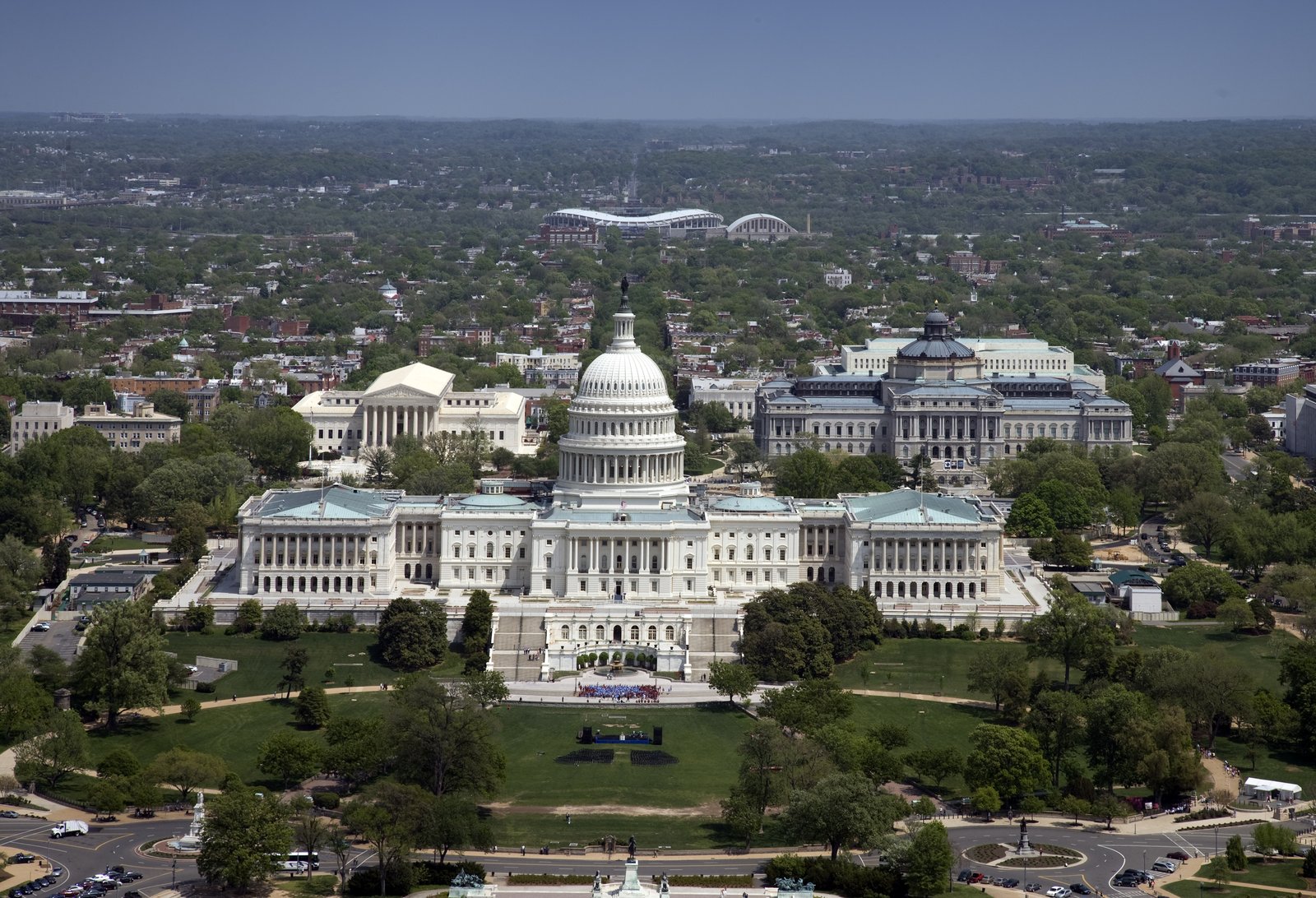
Capitol Watch is The Investigative Journal’s daily record of congressional activity — the votes, hearings, and oversight actions that move public money and public policy. All figures below are drawn from official House and Senate schedules, roll-call records, committee releases, and nonpartisan budget documents.
Congress returned to Washington this week for one of its most consequential legislative stretches before the August recess, with the House floor agenda dominated by a $1.14 trillion defense authorization, a fiscal 2027 budget blueprint, and a stopgap spending measure intended to keep the government funded past September 30. The Senate, meanwhile, opened the week on judicial nominations. Records from House Majority Leader Steve Scalise’s office and the Senate’s floor schedule indicate a compressed calendar in which several high-dollar measures will move in close succession.
1. House teed up to pass $1.14 trillion defense authorization
The centerpiece of the week is the National Defense Authorization Act for Fiscal Year 2027 (H.R. 8800), sponsored by House Armed Services Committee Chairman Mike Rogers (R-Ala.), which the House is scheduled to consider under a rule Tuesday through Thursday, according to the Majority Leader’s weekly schedule. The measure would authorize roughly $1.14 trillion in national-defense spending — an amount that matches the administration’s request, according to the committee report.
A Congressional Research Service summary notes that the bill would authorize about $252.4 billion — or 28 percent — more than the $891.4 billion in discretionary defense funding appropriated for 2026, though that comparison sets the full NDAA topline against defense-only appropriations. The legislation would also raise active-duty end strength by 40,100 personnel, to roughly 1,342,900, and selected-reserve strength by 4,400, to about 777,800. The Congressional Budget Office has published its cost estimate for the measure.
The bill reaches the floor after a lengthy committee process. Records indicate the House Armed Services Committee approved its version in early June by a vote of 44-12 following roughly 900 amendments considered over some 14 hours of markup. As with prior years, the House and Senate will need to reconcile competing versions before a final authorization can reach the president’s desk.
2. Fiscal 2027 budget blueprint and stopgap funding move in tandem
Alongside the defense bill, the House is scheduled to take up a concurrent resolution establishing the congressional budget for fiscal year 2027, sponsored by Budget Committee Chairman Jodey Arrington (R-Texas), and a Continuing Appropriations Act, 2027, sponsored by Appropriations Committee Chairman Tom Cole (R-Okla.). The stopgap measure is designed to prevent a funding lapse when the current fiscal year ends on September 30, a recurring pressure point given the incomplete state of the annual appropriations process.
The fiscal backdrop is substantial. The Congressional Budget Office, in its Budget and Economic Outlook: 2026 to 2036, projects a federal deficit of roughly $1.9 trillion for fiscal 2026. Budget resolutions are non-binding blueprints that do not carry the force of law, but they set the topline spending targets that shape the appropriations bills that follow.
Passage in the House would not resolve the larger impasse. Reporting from Roll Call indicates the Senate’s appropriations process remains at a standstill amid the absence of Sen. Mitch McConnell (R-Ky.), the death of Sen. Lindsey Graham (R-S.C.), and a partisan stalemate over topline spending levels — factors that complicate any path to full-year funding before the deadline.
3. State Department spending bill clears House on near party-line vote
The week’s floor action follows the House’s passage last Wednesday of the fiscal 2027 National Security, Department of State, and Related Programs appropriations bill (H.R. 8595). According to Roll Call and the chamber’s roll-call record, the $47.3 billion measure passed 217-209 in a mostly party-line vote. The total represents a decrease of about $2.7 billion from the fiscal 2026 enacted level, but about $11.7 billion more than the administration requested.
The bill’s path exposed fissures in both parties. An amendment from Rep. Thomas Massie (R-Ky.) to bar the bill’s funds from going to Israel was rejected 104-314, but it split Democratic leadership: Minority Leader Hakeem Jeffries (D-N.Y.) opposed the amendment as overly broad, while Minority Whip Katherine Clark (D-Mass.) supported it. Separate Massie and Chip Roy (R-Texas) amendments targeting funding for Jordan and the United Nations were also rejected, while a Greg Steube (R-Fla.) amendment conditioning aid to Nigeria was approved by voice vote.
Republicans defended the package on fiscal grounds. The bill “makes a clear statement about American leadership,” Chairman Cole said on the floor, according to Roll Call. Rep. Rosa DeLauro (D-Conn.), the Appropriations Committee’s ranking member, opposed the measure, arguing it “undercuts humanitarian assistance” and “undermines global health programs.” Passage merged the bill with voter-identification legislation, a move that House leaders used to break an earlier floor standoff but that complicates the measure’s prospects in the Senate.
4. Accountability and transparency bills headline the suspension calendar
Monday’s suspension calendar — reserved for measures expected to draw broad support — was heavy with spending-oversight and transparency legislation, several of it reported from the Committee on Oversight and Government Reform. According to the Majority Leader’s schedule, the slate included the Billion Dollar Boondoggle Act (H.R. 1722, Rep. Mariannette Miller-Meeks), which would require reporting on significantly over-budget or delayed federal projects; the Stop Secret Spending Act (H.R. 2069, Rep. Barry Moore); the Value Over Cost Act (H.R. 1118, Rep. Byron Donalds); and the Ensuring Federal Purchasing Efficiency Act (H.R. 7283, Rep. Pat Fallon).
The package also carried the Expanding Whistleblower Protections for Contractors Act (H.R. 5578, Rep. Robert Garcia), which would extend protections to employees of federal contractors, and the Campaign Finance Transparency Act (H.R. 8720, Rep. Bryan Steil) from the House Administration Committee. Later in the week, under a rule, the House is scheduled to consider the Stop Insider Trading Act (H.R. 7008), also sponsored by Steil, which addresses securities trading by federal officials.
The suspension calendar was rounded out by a large bloc of health legislation from the Energy and Commerce Committee, including the FDA Modernization Act 3.0 (H.R. 2821, Rep. Buddy Carter), a reauthorization of the Kay Hagan Tick Act (H.R. 4348, Rep. Chris Smith), and the NIH IMPROVE Act (H.R. 6238, Rep. Lauren Underwood). Bills passed under suspension require a two-thirds majority, which typically signals bipartisan sponsorship.
5. Senate weighs Blanche and Clayton nominations
On the Senate side, two high-profile confirmation hearings took place last week. Acting Attorney General Todd Blanche appeared before the Senate Judiciary Committee as the nominee for a permanent appointment. According to Roll Call, Blanche pushed back on Democratic concerns about a proposed “anti-weaponization” fund, while committee Democrats pressed him on the Justice Department’s handling of records related to the Jeffrey Epstein investigation. As a nominee testifying under oath, Blanche had the opportunity to respond to each line of questioning; his nomination remains pending before the committee.
Separately, Jay Clayton, the nominee to be Director of National Intelligence, testified before the Senate Intelligence Committee. Roll Call reported that Clayton defended the use of subpoenas directed at journalists during what the outlet described as a tense hearing. Both nominations now await committee votes before any floor consideration.
The Senate opened this week on the judiciary as well. Per the chamber’s floor schedule, senators were set to hold a 5:30 p.m. cloture vote Monday on the nomination of Benjamin M. Flowers to be a judge on the U.S. Court of Appeals for the Sixth Circuit, with a confirmation vote to follow if cloture is invoked.
6. Fed chair delivers semiannual policy report amid inflation concerns
Federal Reserve Chair Kevin Warsh delivered the central bank’s Semiannual Monetary Policy Report to Congress, appearing before the Senate Banking Committee. In prepared testimony published by the Federal Reserve and in remarks reported by CNBC, Warsh said elevated inflation has continued to burden American households and businesses, stated that the Federal Open Market Committee has “no tolerance” for persistently elevated inflation, and expressed a commitment to restoring price stability.
The semiannual report is a statutory requirement that gives lawmakers a formal opportunity to question the Fed chair on interest rates, employment, and the broader economic outlook. The testimony carries weight for the appropriations and budget debates unfolding in parallel, as deficit projections and debt-servicing costs remain closely tied to the trajectory of interest rates.
7. Oversight panel escalates Epstein-related and market inquiries
The House Committee on Oversight and Government Reform continued to press several investigations that fall squarely within TIJ’s accountability beat. According to a committee release, Chairman James Comer (R-Ky.) issued two subpoenas to financier Leon Black in connection with the panel’s review of the federal government’s handling of the Jeffrey Epstein and Ghislaine Maxwell investigations. The committee states that one subpoena compelled Black to sit for a deposition on July 16 and the other sought the production of nondisclosure agreements; the release notes Black had previously participated in a voluntary transcribed interview on June 26. The subpoenas are compulsory process in an ongoing inquiry, not findings of wrongdoing, and Black’s counsel has the standard opportunity to respond.
In a separate matter, Rep. Chris Pappas (D-N.H.) said Chairman Comer confirmed that a committee investigation into prediction-market platforms is in progress and that subpoenas may follow. That inquiry remains at an early stage. These actions build on an oversight thread that dates back several months: in a March 2026 vote, the committee — with five Republicans joining Democrats — approved a subpoena to Attorney General Pam Bondi over the Justice Department’s handling of the Epstein files, according to Associated Press reporting carried by PBS News. The Justice Department has defended its handling of the files.
8. Bipartisan corner, CBO scores, and what’s ahead
Cross-party legislating continued away from the floor spotlight. Roll Call reported that a bipartisan bill aimed at eliminating hepatitis C was unveiled in the House, sponsored by Rep. Miller-Meeks, a physician. On the budget-analysis front, the Congressional Budget Office released cost estimates for the BUILD America 250 Act (H.R. 8870) and the Critical Access for Veterans Care Act (S. 1868) on July 9, and for the NASA Authorization Act of 2026 (S. 933) on July 8, according to the agency’s cost-estimates catalog.
Looking ahead, the House is expected to hold its final votes of the week by roughly 3:00 p.m. Thursday, per the Majority Leader’s schedule, clearing the way for members to depart for district work. The Senate is expected to continue processing nominations. Should the defense authorization, budget resolution, and stopgap funding measure all clear the House this week, attention will shift to a Senate calendar that Roll Call describes as constrained by leadership absences and unresolved spending disputes.
TIJ beats to watch: The concentration of federal-spending oversight bills on this week’s calendar — measures targeting over-budget projects, secret spending, and contractor accountability — offers a data-rich window into how Congress is framing waste and transparency ahead of the fiscal 2027 appropriations fight. The Oversight Committee’s Epstein-related subpoenas and its nascent prediction-markets inquiry remain live threads that The Investigative Journal will continue to track through public filings, deposition transcripts, and committee records. As always, this digest reports what the public record demonstrably shows; allegations referenced above remain allegations unless and until established through formal findings.
Sources: U.S. House Majority Leader’s weekly schedule; Congress.gov; Congressional Research Service; Congressional Budget Office; U.S. House Committee on Oversight and Government Reform; the office of Rep. Chris Pappas; the Federal Reserve Board; Roll Call; GovTrack; CNBC; and PBS News. Direct links are embedded throughout.