

Monday, July 20, 2026 — The Investigative Journal Newsroom. Oil markets and geopolitics moved in tandem on Monday as the widening conflict between the United States and Iran pushed Brent crude past $90 a barrel, Washington kept a naval blockade of Iranian ports in place, and Britain swore in a new prime minister. Below, the Afternoon Wire rounds up the day’s most consequential developments across the U.S. government, the federal courts, and the wider world, followed by a look at what to watch tomorrow. Every item is sourced to public records and independent reporting; where accounts differ, that is noted.
Government
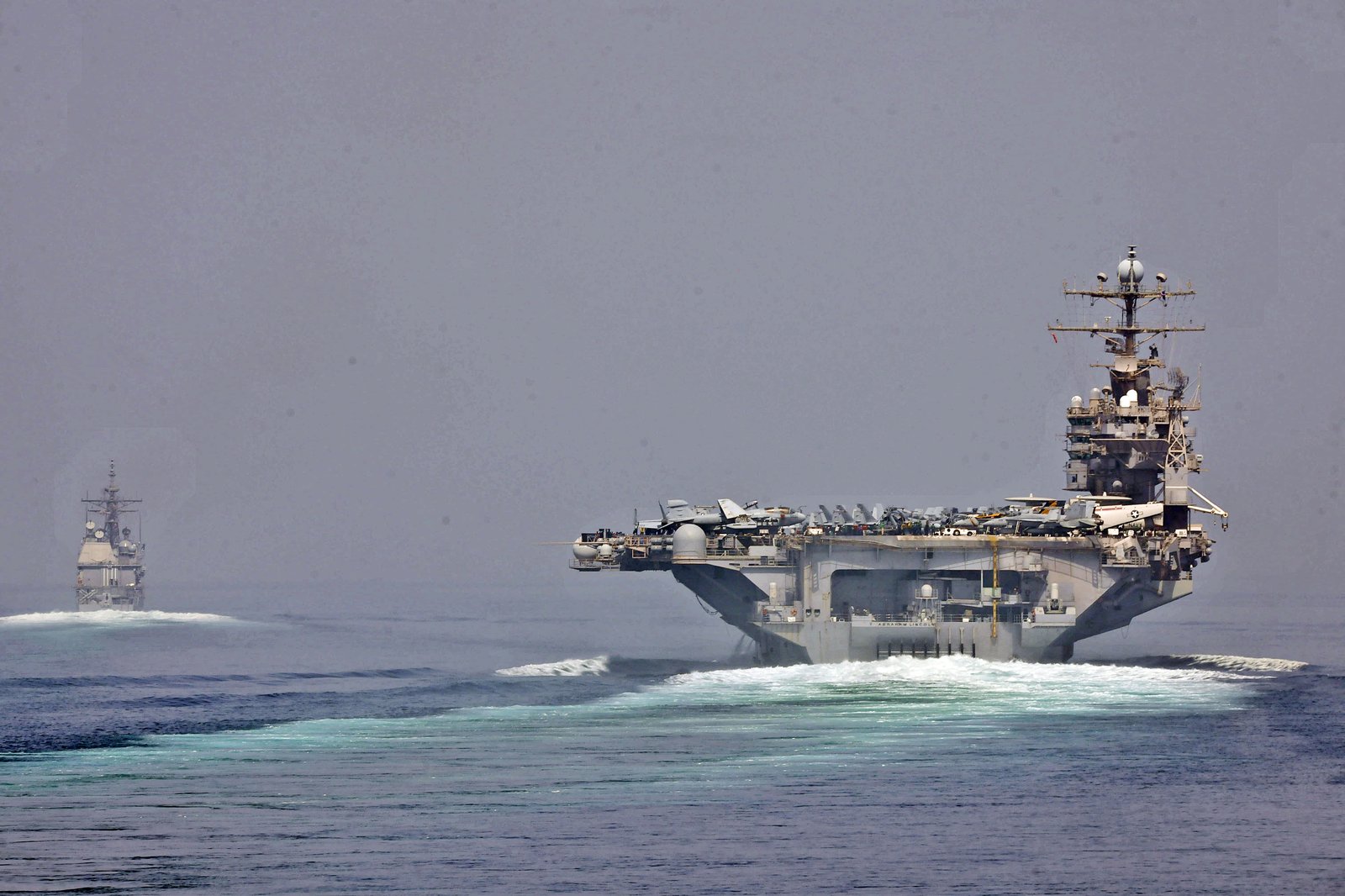
Hormuz blockade holds as White House drops proposed transit fee. The administration has kept in place a naval blockade of Iranian ports near the Strait of Hormuz after an interim truce with Tehran collapsed on July 8, according to market and defense reporting compiled by CNBC. President Trump had initially floated a 20% fee on all cargo transiting the strait — framed as reimbursement for the cost of U.S. security guarantees — in a proposal detailed by CNBC and CNN Business. Within days, however, the president walked back the toll, according to The Washington Times, while moving to reinstate the port blockade.
The International Maritime Organization, a United Nations agency, publicly opposed the idea. A spokesperson said the body “stands firmly against charging fees for passage through straits used for international navigation,” CNBC reported. Records indicate the Treasury Department’s authorization permitting the sale of Iranian oil, granted during earlier negotiations, lapsed on July 17, tightening the economic pressure on Tehran as fighting resumed.
Congress presses its war-powers claim. Both chambers have this summer passed resolutions directing the president to remove U.S. forces from the Iran conflict absent congressional authorization. The House approved its measure 215–208 on June 3, according to The Washington Post, and the Senate followed on June 23 by a vote of 50–48, with four Republicans — Bill Cassidy, Susan Collins, Rand Paul and Lisa Murkowski — joining Democrats, NPR reported. As CNN noted, the resolutions are not legally binding and were not sent to the White House for signature, but they mark the first time both chambers have invoked the War Powers Act to direct the removal of forces from an active conflict.
Diplomacy continues in the Pacific. The State Department’s public schedule indicates Secretary of State Marco Rubio is traveling in the Philippines from July 19 to 23, while Deputy Secretary Christopher Landau met Solomon Islands Prime Minister Matthew Wale in Washington on Monday, per the department’s July 20 release. Separately, filings indicate the administration allowed a national emergency tied to Hong Kong’s national security law to expire on July 17 while retaining the underlying executive order and most related sanctions.
Courts
D.C. Circuit lets Postal Service advance mail-voting rule. A unanimous three-judge panel of the U.S. Court of Appeals for the D.C. Circuit on July 17 paused a lower-court order, allowing the U.S. Postal Service to continue advancing a Trump-backed mail-voting rule while litigation proceeds, The Hill reported. The panel indicated the challenge appeared premature because the rule has not been finalized. The ruling is not a final green light: a separate injunction issued by a federal judge in Massachusetts remains in force, and the underlying case continues.
Appeals court clears expanded fast-track deportations. A divided D.C. Circuit panel earlier cleared the administration to resume an expanded use of expedited removal — so-called fast-track deportations — overturning a lower-court order that had blocked the policy, according to NPR and PBS News. Immigrant-rights groups have signaled they will continue to press challenges, and the dispute is widely expected to return to the appellate courts as the policy is implemented.
The Supreme Court’s term still reverberates. The recently concluded term produced several rulings that continue to shape the executive branch’s authority. On June 29, the Court limited the reach of the 1935 precedent Humphrey’s Executor, expanding a president’s power to remove officials at agencies long considered independent, NPR reported. A day later, the justices affirmed constitutional birthright citizenship in a 6–3 decision authored by Chief Justice John Roberts. Those decisions followed the Court’s February ruling striking down most of the administration’s emergency tariffs imposed under the International Emergency Economic Powers Act — a reminder that the year’s docket has cut in more than one direction.
International
U.S.–Iran strikes intensify. U.S. Central Command has carried out repeated nightly strikes on Iranian military targets since the July 8 collapse of the late-June truce, while Iran has launched missile and drone attacks on U.S. bases and facilities in several Gulf states, including Bahrain, Jordan, Kuwait, Oman, Qatar and Saudi Arabia, according to live coverage by CBS News and NBC News. CENTCOM commander Admiral Brad Cooper said on July 15 that Iran had deliberately attacked seven commercial vessels in the preceding week, with nearly a dozen civilian crew members killed, wounded or missing.
The human cost has reached American forces. CENTCOM has confirmed U.S. service members killed in the exchanges, including two reported killed in action in Jordan over the weekend; reporting by Reuters and The Wall Street Journal, as compiled in public conflict records, places the number of U.S. deaths since renewed strikes began this month at roughly 16, with hundreds wounded over the course of the broader conflict that began in late February. Indirect diplomacy continues, mediated by Qatar and Pakistan, with what officials have described as “active conversations” to restore a ceasefire, The Washington Times reported.
Oil vaults higher. Brent crude surpassed $90 a barrel on Monday, with West Texas Intermediate trading near $84.49, according to market data cited in daily coverage of the conflict — the highest levels in months and a gain of well over 10% across the week as the blockade and strikes stoked supply fears, consistent with the trajectory tracked by CNBC. Analysts have cautioned that any sustained disruption to Hormuz traffic, through which a large share of seaborne crude passes, would carry outsized consequences for global energy and shipping costs.
Britain gets a new prime minister. Sir Keir Starmer resigned on Monday, traveling to Buckingham Palace to tender his resignation to King Charles III, and was succeeded by Andy Burnham, who took office after the King invited him to form a government, NPR and CNN reported. Burnham, who won the governing Labour Party’s leadership contest on July 17, becomes Britain’s seventh prime minister in a decade. In a notable diplomatic wrinkle, President Trump used the transition to criticize Britain’s economy, calling the country a “Poverty Stricken Disaster,” according to CNBC.
U.S. truce push in Sudan hits resistance. A U.S.-backed framework to halt Sudan’s civil war — calling for a 90-day humanitarian truce, a political process and reconstruction — remained stalled over withdrawal terms. Senior presidential adviser Massad Boulos discussed the plan with Arab League Secretary-General Nabil Fahmy on July 18, both sides stressing the need to end the fighting, GlobalSecurity.org reported. Reporting by Sudan Tribune indicates the paramilitary Rapid Support Forces have accepted a truce in principle but rejected a demand to withdraw from territory it holds, a sticking point Washington views as altering the substance of its immediate-ceasefire proposal.
Tomorrow’s Watch
Burnham’s first full day. The new British prime minister is expected to name his senior ministerial team, with the fate of Chancellor Rachel Reeves among the most closely watched questions and Home Secretary Shabana Mahmood reported as a leading contender for a promotion, Euronews reported. Burnham has already signaled a break from his predecessor, moving to cancel a proposed national digital-identity scheme and redirect the savings toward cost-of-living relief.
Earnings and the economy. The second-quarter earnings season accelerates, with dozens of companies reporting Tuesday and marquee results later in the week — Alphabet and Intel among them, according to the week’s calendar tracked by Kiplinger. Markets will read the results against a jittery energy backdrop, and investors are already looking ahead to the Federal Reserve’s next interest-rate decision, scheduled for July 29.
The war and the wire. Watch for CENTCOM’s now-familiar pattern of nightly strikes paired with pauses intended to preserve room for diplomacy, and for any signal from the Qatar- and Pakistan-mediated channel on reviving the ceasefire. Secretary Rubio’s Philippines visit continues through July 23. The Investigative Journal will track each thread and report what the record shows.
This briefing summarizes public reporting and official records available as of Monday afternoon. Pending legal matters are noted as such; casualty figures in active conflicts are preliminary and subject to revision. Parties named in this report may seek a right of reply through the newsroom.