

The Senate spent the final stretch of its pre-recess workweek racing to clear a December government funding patch, a bipartisan Russia-Iran sanctions package, and a backlog of executive-branch nominations — all with the House already gone until August 31. Here is where each of the week’s major actions stood as of Thursday, according to official floor records and congressional reporting.
Senate pushes December 11 stopgap toward passage
The Senate’s central task this week is H.R. 6500, a House-passed measure the chamber is using as the legislative vehicle for a continuing resolution that would extend current government funding through December 11. Senators voted 89-4 on Monday to limit debate on taking up the vehicle, Roll Call reported, and Majority Leader John Thune (R-S.D.) filed cloture Wednesday on a substitute amendment from Appropriations Chair Susan Collins (R-Maine) carrying the negotiated text, according to the Senate Press Gallery’s floor record. Leadership in both parties has said it wants the bill passed before senators leave town.
Thune framed the unusually early stopgap — the new fiscal year does not begin until October 1 — as a stability measure. “Unfortunately, I think after two government shutdowns that have extended for a long period of time, it’s better for everybody if there’s predictability, certainty, and just to take that issue off the table,” he told reporters Monday, per Roll Call. Minority Leader Charles E. Schumer (D-N.Y.) called the bill a “responsible pathway” that “allows us to continue negotiating a budget that won’t leave working families behind.”
Roll Call’s reporting indicates the Senate text includes several funding adjustments requested by the White House, including accelerated Navy shipbuilding funds and support for 2028 Olympics preparations, while omitting others — among them $1 billion in advance procurement for a new battleship and $1.1 billion for North Carolina water infrastructure tied to Hurricane Helene recovery. Because the House passed its own leaner stopgap on July 21 before departing — running through December 4, according to Bloomberg Government’s Loren Duggan — the two chambers will still need to reconcile their versions in September before the October 1 deadline.
Grant-rule fight embedded in the funding bill
One accountability item buried in the stopgap deserves attention: the bill reflects a bipartisan agreement to temporarily delay a proposed Office of Management and Budget rule that would give political appointees greater influence over federal grant approvals, according to Roll Call. Senators in both parties have objected to the proposal, though Sen. Patty Murray (D-Wash.), the top Democratic appropriator, said Republicans “rejected killing the proposed rule outright.”
Rep. Rosa DeLauro (D-Conn.), the House Appropriations Committee’s ranking member, urged more permanent action on the rule before the December 11 deadline, and Collins has signaled continued interest in the issue, per Federal News Network. Records suggest this dispute over who controls the federal grant pipeline — career staff or political appointees — will resurface when funding negotiations resume this fall.
Russia-Iran sanctions bill advances 86-12 after Graham’s death
The Senate voted 86-12 to advance the Lindsey O. Graham Sanctioning Russia and Iran Act, The Hill reported, days after the South Carolina senator’s death and a Capitol Rotunda ceremony honoring him on July 28. Ukrainian President Volodymyr Zelenskyy personally appealed to senators before the procedural vote, according to that reporting.
The legislation would authorize tariffs of up to 200 percent on the largest purchasers of Russian oil and natural gas, expand sanctions on Russian financial institutions and the “shadow fleet” used to evade existing restrictions, and extend Iran sanctions authorities through 2031. The Senate Foreign Relations Committee’s Democratic staff compiled statements of support from U.S. and Ukrainian officials on Wednesday. Final Senate passage was still pending as of Thursday morning, and the House cannot take the bill up until it returns — a September test of whether the measure’s bipartisan Senate momentum carries across the Capitol, as Roll Call has noted.
CDC gets its first permanent director in roughly a year
The Senate confirmed Dr. Erica Schwartz as director of the Centers for Disease Control and Prevention on a 51-44 vote Wednesday, STAT reported, hours after a 51-43 cloture vote recorded in the Senate floor record. Schwartz, a former deputy surgeon general and retired U.S. Coast Guard officer, becomes the agency’s first permanent, Senate-confirmed director in roughly a year, according to The Hill.
The vote fell largely along party lines, with Sen. Tim Kaine (D-Va.) crossing over to support the nomination, CNN reported. Schwartz inherits an agency that has cycled through acting leadership during a turbulent period, and her early staffing and budget decisions will be worth watching when Congress returns to full-year appropriations this fall.
74-nomination bloc — including FEMA and TSA chiefs — nears the finish line
The Senate voted 50-44 Wednesday to invoke cloture on a package of 74 nominations moving under S.Res. 817, the executive resolution authorizing en bloc consideration, per the Senate floor record. According to Majority Leader Thune’s office, the batch includes 17 ambassadorships, four U.S. attorneys, four U.S. marshals, the commissioner of labor statistics, the deputy director of the Office of Management and Budget, and the administrators of FEMA and the Transportation Security Administration. A final confirmation vote was expected before senators depart.
The FEMA slot carries particular weight: confirmation of Cameron Hamilton would give the agency its first permanent administrator of the current term in the middle of hurricane season, a gap E&E News has documented. Hamilton served as FEMA’s acting chief until May 2025, when he was removed after publicly breaking with administration proposals to restructure the agency, according to Government Executive; the Homeland Security and Governmental Affairs Committee reported his nomination 8-4, with Sen. John Fetterman (D-Pa.) joining Republicans. Thune’s office says this fifth en bloc batch would bring total civilian confirmations processed under the chamber’s rules change to 375 — about 63 percent of all civilian confirmations this term, a figure that reflects how thoroughly the confirmation process has shifted to batch processing.
Attorney general nomination hits turbulence
Not everything moved. The Senate Judiciary Committee canceled a scheduled vote on the nomination of Todd Blanche, currently serving as acting attorney general, after Sens. John Cornyn (R-Texas) and Thom Tillis (R-N.C.) sought assurances regarding a $1.8 billion fund created earlier this year as part of a legal settlement, Bloomberg Government’s Duggan said on Federal News Network. President Trump has suggested he might withdraw the nomination and leave Blanche in an acting capacity, per the same account. The committee’s handling of the fund question — and whether members receive the documentation they have requested — is a transparency story this publication will continue to track.
What’s ahead
The Senate is aiming to wrap its work and begin the August recess by week’s end, with several items slipping to September: a cryptocurrency market-structure bill still under negotiation, college sports legislation, and a possible budget resolution that some Republicans want as a vehicle for election-administration provisions, according to Federal News Network. The House calendar shows next votes on August 31, leaving both chambers roughly four working weeks in September to finish the stopgap, act on the sanctions bill, and address surface transportation programs — extended only through December 11 in the Senate’s funding text, per Roll Call.
On the accountability beat
Three oversight threads worth following through the recess. First, the tri-committee investigation of ActBlue: House Judiciary, Administration, and Oversight chairmen threatened contempt proceedings on June 22 over the platform’s assertion of privilege on more than 420 documents responsive to the committees’ July 2025 subpoenas, and followed with a June 25 records request to law firm Covington & Burling. ActBlue has maintained its privilege assertions are proper; the dispute remains unresolved, and any contempt vote would await the House’s return.
Second, the House Oversight Committee’s review of the federal Epstein investigations continues to generate records: the committee released the transcript of Kathryn Ruemmler’s July 15 transcribed interview on July 29. Third, a GAO report delivered July 23 examined fraud risks in federally funded, state-administered programs — the first in a series Chairman James Comer requested in March, and a data source this publication expects to draw on as those programs face December funding decisions.
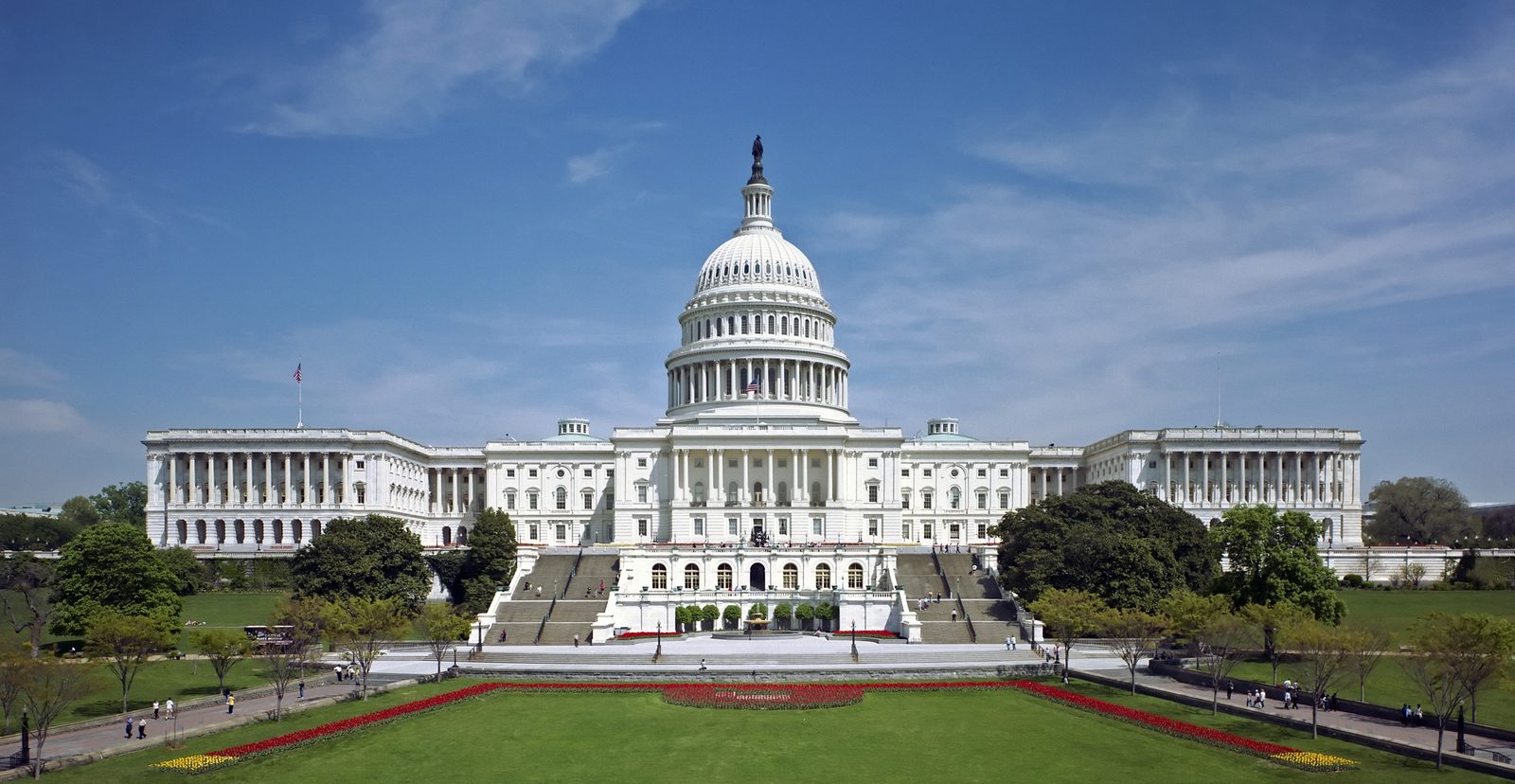
Featured image: U.S. Capitol west front, Wikimedia Commons (public domain).