

The Investigative Journal’s weekly tracker of bills, budget scores, and rulemaking that move money and power in Washington. All items below are drawn from public records — Congress.gov, the Congressional Budget Office, the Federal Register, and committee publications — with links to the primary documents.
1. Senate advances stopgap to push the funding fight past the midterms
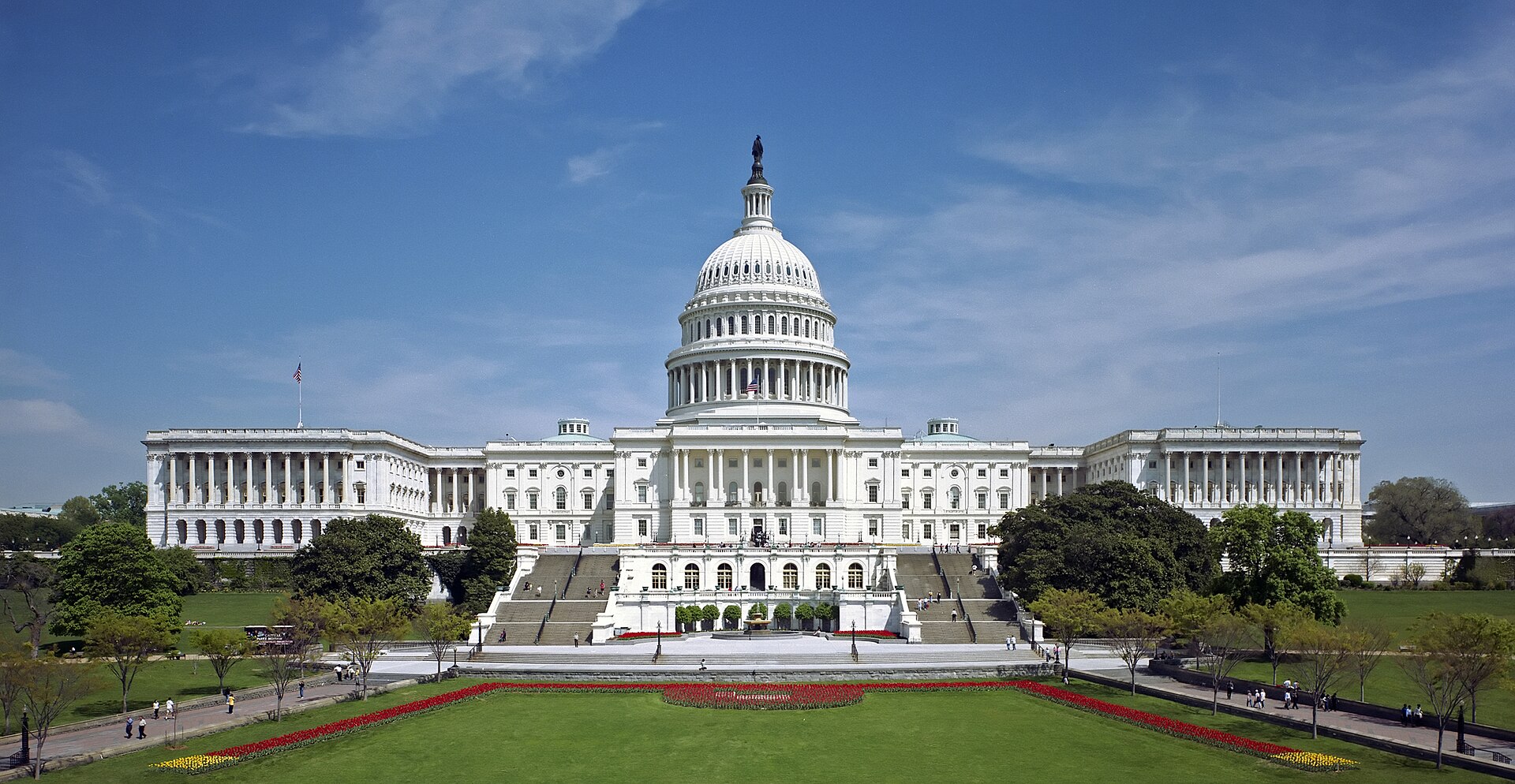
The week’s defining development is procedural but consequential: the Senate moved a bipartisan continuing resolution that would keep the government funded at current levels through December 11 — safely past the November midterm elections. The measure, negotiated by Senate Appropriations Chair Susan Collins (R-Maine) and Vice Chair Patty Murray (D-Wash.), was unveiled Sunday; on Monday the chamber voted 89-4 to limit debate on the legislative vehicle, and the Senate’s daily press record shows the motion to proceed to H.R. 6500, the shell for the stopgap, was agreed to by voice vote Wednesday, with Majority Leader John Thune (R-S.D.) filing the amendment tree. Thune told reporters he expects to pass the bill “in the next few days,” according to NBC News.
The Senate text is not the same bill the House passed. On July 21 the House approved H.R. 9770, a stopgap running only through December 4, with six Democrats joining Republicans, according to a summary by the American Subcontractors Association. The same summary indicates the Senate package includes administration-requested funding “anomalies” but omits the defense increase the White House sought, temporarily bars the Office of Management and Budget from finalizing a proposed rule requiring senior political appointees to approve federal grants, and restricts new funding for immigration enforcement activities during the extension period. Engineering News-Record reports an additional split over infrastructure-law transportation programs. Because the House has already left for August recess, final resolution waits until September — leaving roughly four legislative weeks before the September 30 deadline. The Committee for a Responsible Federal Budget’s appropriations tracker shows how much of the FY2027 process remains unfinished.
2. The vehicle itself matters: AGOA renewal rides along
The stopgap’s legislative shell is substantive in its own right. H.R. 6500, the AGOA Extension Act, would revive the African Growth and Opportunity Act’s duty-free treatment for qualifying African imports — a program that lapsed September 30, 2025 — and extend it through December 31, 2028, while also extending customs user fees. Congress.gov records show the House passed the bill in January and the Senate took it up this week, invoking cloture on the motion to proceed 89-4. For U.S. importers and African exporters who have operated without the preference program for ten months, the trade stakes of the funding fight are unusually direct.
3. Senate passes bankruptcy threshold fix by unanimous consent
With little fanfare Monday, the Senate passed S. 3977, the Bankruptcy Threshold Adjustment Act of 2026, without amendment by unanimous consent. The bill, sponsored by Senate Judiciary Chairman Chuck Grassley (R-Iowa) with Ranking Member Dick Durbin (D-Ill.), would restore the Subchapter V small-business debt limit to $7.5 million and the Chapter 13 eligibility limit to $2.75 million, according to Grassley’s office. Those thresholds, first set by a 2022 law, expired in 2024 and reverted to lower levels — cutting off streamlined reorganization for a large tier of small firms. The bill text is available at GovInfo; the measure now awaits House action in September.
4. CBO: Navy battleship program would cost $275 billion
The Congressional Budget Office published its analysis of the Navy’s new battleship program Wednesday, estimating the lead nuclear-powered Trump-class battleship (BBG(X)) at roughly $23 billion and a 15-ship program at about $275 billion in 2026 dollars through 2056 — an average near $18 billion per hull. The report, requested by Senate Budget Committee Ranking Member Jeff Merkley (D-Ore.), assumes a lead-ship order in 2028 and finds the program would more than double the Navy’s annual surface-combatant shipbuilding budget relative to the FY2025 plan, from $6.9 billion to $15.2 billion, as USNI News detailed.
CBO flags its own numbers as “highly uncertain” given sparse public specifications, and notes a conventionally powered variant would cost about 13 percent less to build, though more to operate. The fiscal context is significant: the Pentagon’s FY2027 request includes $1 billion in advance procurement for the program, while Congress has directed the Navy to keep developing a smaller next-generation destroyer alongside the battleship, according to USNI News. Defense News notes the 2027 shipbuilding plan would require building a battleship roughly every other year through 2056 while sustaining destroyer production — a substantial test of shipyard capacity that appropriators will confront well before the first hull is ordered.
5. FY2027 NDAA: passed the House, stalled in the Senate
The annual defense authorization remains split-screen. The House passed its $1.15 trillion FY2027 National Defense Authorization Act, H.R. 8800, on a narrow 216-212 vote in July, as Breaking Defense reported. The Senate Armed Services Committee advanced its version 18-9 and filed S. Rept. 119-127, but floor consideration has stalled; Breaking Defense reports Democratic objections tied to U.S. military operations against Iran and to the bill’s spending growth. The Congressional Research Service maintains a status tracker and a funding-authorization summary. The NDAA has become law for more than six consecutive decades; whether the streak survives an election-year September is now a live question.
6. CBO scores a $2.8 billion AI education push
Among a batch of cost estimates released Tuesday, CBO scored H.R. 5351, the NSF AI Education Act of 2026, ordered reported by the House Science, Space, and Technology Committee in June. The bill would authorize roughly $1.06 billion annually from 2027 through 2031 for National Science Foundation AI-education programs — scholarships, research awards, a K-12 educator pilot, and outreach. CBO estimates outlays of $2.8 billion over 2026-2031 and $4.8 billion over ten years, subject to appropriation. The score arrives as Washington debates a federal AI framework (see item 9), and it gives appropriators a concrete price tag for one of the more bipartisan planks of that agenda. Bill history is at Congress.gov.
7. Committee docket: investor data privacy and terror-alert modernization
Two other newly scored committee-stage bills merit tracking. H.R. 1483, the Protecting Investors’ Personally Identifiable Information Act, ordered reported by House Financial Services on June 30, addresses how regulators handle investor data — a perennial accountability concern after repeated breaches of government-held financial records. And H.R. 7448, the Modernizing and Improving the National Terrorism Advisory System Act of 2026, ordered reported by House Homeland Security on June 24, would update the Department of Homeland Security’s public alert system. Both now carry the CBO paperwork required for floor scheduling; their estimates were published August 4.
8. Veterans overdose bill scores under $500,000
CBO also scored S. 3758, the End Veterans Overdose Act of 2026, reported by the Senate Veterans’ Affairs Committee in March. The bill would require the VA for one year to furnish opioid-overdose-reversal medications at no charge and to provide addiction-treatment and suicide-prevention information, then report to Congress on whether to continue. Because the VA already distributes such medications through its pharmacies and mobile units, CBO puts the cost below $500,000 over five years — a rounding error by federal standards, which typically improves a bill’s floor prospects under expedited procedures. Bill status is at Congress.gov.
9. Regulatory watch: airfare advertising, EEO-1 rescission, and the grants rule
Three rulemaking items are on the clock. The Department of Transportation’s proposed rule on air fare price advertising flexibility is taking comments through August 21, per the Federal Register — a change consumer groups and airlines read very differently, since it revisits how carriers may display full-fare pricing. The EEOC’s proposal to rescind EEO-1 race-and-sex reporting requirements is moving toward an August 11 public hearing, according to DirectEmployers Association’s summary of the notice of proposed rulemaking. And the OMB proposal to require senior political-appointee sign-off on federal grants — the rule the Senate CR would temporarily freeze, per the ASA summary cited above — has become a proxy fight over executive control of grantmaking that will outlast the stopgap itself. The Federal Railroad Administration also extended comments on its dispatcher-certification rule to August 13.
10. State watch: California’s AI Transparency Act takes effect
California’s SB 942, the AI Transparency Act, took effect August 2, requiring large generative-AI providers to offer content watermarks, latent disclosures, and free detection tools. It joins Colorado’s AI Act, effective June 30, as the vanguard of state AI regulation — and with roughly twenty comprehensive state privacy laws now in force, according to MultiState’s tracker, the compliance patchwork is thickening. That patchwork is precisely what the White House’s March legislative framework proposes to address through federal preemption, as Ropes & Gray’s analysis outlines. Whether Congress attaches AI preemption language to must-pass vehicles this fall is one of the more consequential open questions for the technology sector — and for the states that moved first.
On TIJ’s beats
For our accountability coverage, three threads from this week bear watching. The investor-data bill (H.R. 1483) and the terror-alert modernization measure (H.R. 7448) both touch how federal agencies handle sensitive information — territory this publication has examined in prior reporting on government data stewardship. The OMB grants-rule standoff embedded in the stopgap goes to the heart of who controls federal money between elections, and the December 11 funding date guarantees a lame-duck spending fight. We will track the Senate’s final CR vote, the September House calendar, and the NDAA’s path when Congress returns. As always: the records cited above are linked directly; readers should consult the primary documents.