
The Investigative Journal’s daily review of notable filings on the SEC’s EDGAR system and enforcement actions announced by the Commission. Every item below is drawn directly from public records, with links to the underlying documents.
The first full week of August produced an unusually dense disclosure docket: two multibillion-dollar cash mergers memorialized in 8-K filings, a pair of abrupt executive transitions with rich compensation detail, a quietly dismissed insider-trading case, a crypto market-manipulation settlement, and a structural change inside the SEC’s own Division of Enforcement. Here is what the filings show, and what The Investigative Journal will be watching next.
1. MarketAxess signs $167-per-share cash merger with Intercontinental Exchange
An 8-K filed by MarketAxess Holdings Inc. (Nasdaq: MKTX) discloses that the electronic bond-trading platform entered into an Agreement and Plan of Merger on July 29, 2026 with Intercontinental Exchange, Inc. (NYSE: ICE) and ICE subsidiary Igloo Merger Sub II. Under the agreement, each MarketAxess share will convert into the right to receive $167.00 in cash, and the company will survive as a wholly owned ICE subsidiary. The filing states the MarketAxess board unanimously approved the deal and recommends shareholder adoption.
The termination provisions are notable for their asymmetry. MarketAxess would owe ICE a $148.8 million fee if it walks away for a superior proposal or the board changes its recommendation; ICE would owe MarketAxess $327.4 million if the deal dies on antitrust grounds — a signal, records suggest, of where the parties see execution risk in combining two major market-infrastructure operators. The agreement runs to July 29, 2027, with up to two automatic six-month extensions if only regulatory conditions remain outstanding.
The same filing discloses, under Item 5.02, that on the day the merger was signed MarketAxess amended severance arrangements for CEO Christopher Concannon, CFO Ilene Fiszel Bieler, and General Counsel Scott Pintoff — including an expanded “Good Reason” definition and accelerated equity vesting during a change-of-control period. Those amendments will be quantified in the merger proxy, which the company says it intends to file with the SEC.
2. Prysmian to acquire Atkore for $95.00 per share in cash
Electrical-infrastructure maker Atkore Inc. (NYSE: ATKR) disclosed in an 8-K that it signed a merger agreement on August 2, 2026 with Italy’s Prysmian S.p.A., under which Prysmian’s Trinity Merger Sub will acquire all outstanding Atkore shares for $95.00 in cash. The board approved the transaction unanimously, according to the filing, and the deal carries no financing contingency and requires no vote of Prysmian’s shareholders.
Closing conditions include Atkore shareholder approval, expiration of the Hart-Scott-Rodino waiting period, and clearances in Austria, Australia, and Canada. The agreement sets an outside date of August 3, 2027, subject to two automatic three-month extensions tied to regulatory approvals. Atkore would owe Prysmian a termination fee of $115,920,000 if it exits for a superior proposal, and the company agreed to cap quarterly dividends at $0.33 per share while the deal is pending. Prysmian also committed, per the filing, to “reasonable best efforts” on regulatory remedies, including specified divestitures subject to negotiated limits — language that will matter if antitrust reviewers in any of the four jurisdictions push back. Atkore says a definitive proxy statement will follow; investor materials are posted at investors.atkore.com.
3. TELA Bio removes its CEO “without cause” — with separation terms still unwritten
Medical-device maker TELA Bio, Inc. (Nasdaq: TELA) filed an 8-K reporting that its board determined on August 3, 2026 that co-founder Antony Koblish “will no longer serve” as chief executive, effective the same day, with the departure “treated as a termination without cause.” Mr. Koblish also resigned from the board. The filing states the decision did not result from any disagreement over operations, policies, or practices — standard language, but notable here because the company concedes the separation agreement itself “has not been finalized,” with material terms to be disclosed in a future amendment. That amendment, when it arrives, deserves scrutiny: severance economics negotiated after a CEO’s exit is announced are a classic governance pressure point.
Incoming CEO Heather Getz, a former Butterfly Network and BioTelemetry executive, receives a $650,000 base salary, a 100% target bonus, and inducement grants comprising 1,365,000 standard options, 1,005,000 premium-priced options, and 500,000 restricted stock units. Filings indicate an unusual feature: if TELA Bio raises equity within 18 months, Ms. Getz is entitled to “top-up” grants keeping her awards at 5% of shares outstanding post-financing — a provision existing holders, already facing potential dilution from any capital raise, will want to model carefully.
4. DXC installs a new president — effective today
IT-services provider DXC Technology Company (NYSE: DXC) disclosed that Chris Drumgoole resigned as President, Global Infrastructure Services, effective July 30, with no separation arrangements, and that the company appointed Paul J. Taylor as President, DXC, effective August 10, 2026 — today. Mr. Taylor, formerly chief executive of HUB Platform Technology Partner Ltd. and a partner at IHS Markit, receives a base salary of £769,820 (derived from $1,000,000), a 200% target bonus, annual equity awards with an initial target of 900% of base salary, and a one-time $3.75 million inducement award split between time-vesting RSUs and performance units. The filing notes his employment agreement will be filed with a future periodic report — another document worth reading in full when it lands.
5. SEC dismisses its insider-trading case against Terren Peizer — with one paragraph of explanation
In the week’s most striking enforcement development, the Commission announced in Litigation Release No. 26603 (August 7) that it filed a joint stipulation dismissing, with prejudice, its civil action against Terren S. Peizer and his investment vehicle Acuitas Group Holdings, LLC. The original 2023 complaint alleged that Mr. Peizer, then executive chairman of Ontrak, Inc., sold more than $20 million in Ontrak stock through Rule 10b5-1 trading plans while aware of material nonpublic information about the company’s largest customer, avoiding what the SEC then calculated as more than $12.7 million in losses. Those were allegations; they were never adjudicated in the civil case, and the dismissal with prejudice now ends it permanently.
The stipulation’s stated rationale is spare: the dismissal is “in the exercise of its discretion” and “does not necessarily reflect the Commission’s position on any other case.” The case had been a flagship of the SEC’s data-driven initiative scrutinizing executive 10b5-1 plans, and the 2023 release noted a parallel criminal action announced by the Department of Justice. The public record released Friday does not explain what changed. TIJ has requested the underlying stipulation and will report on the docket.
6. Gotbit crypto “wash trading” case moves to settlement; claims against executive dropped
Per Litigation Release No. 26598 (August 3), the SEC filed a proposed final judgment in the District of Massachusetts that would settle its fraud and market-manipulation claims against Gotbit Consulting LLC, the self-styled “hedge fund” charged in October 2024 with generating artificial trading volume in a crypto asset through self-trading. If approved, the judgment would permanently enjoin Gotbit from violating antifraud and manipulation provisions and bar it from participating in any securities issuance, purchase, offer, or sale. The Commission separately filed a voluntary dismissal of its claims against Gotbit’s Fedor Kedrov. The release notes that in the parallel criminal case, Gotbit pleaded guilty to wire fraud and conspiracy and was sentenced in June 2025 to five years’ probation.
7. SEC stands up a new Financial Reporting and Accounting Unit
The Commission announced August 5 a new specialized enforcement unit dedicated to accounting and financial-reporting fraud and auditor misconduct, to be led by Timothy Zimmerman, a former deputy general counsel at an international accounting firm who joined the Division of Enforcement in May. Enforcement Director David Woodcock said the unit “expands on the Division’s current and historical efforts to crack down on bad actors in the accounting and auditing profession.” Staffed by both attorneys and accountants, the unit is a signal of where enforcement resources are heading — and companies with aggressive revenue-recognition practices or restatement histories should take note. Its first docket of cases will show whether the reorganization has teeth.
8. The earnings wave: dividends, refinancings, and Q2 results
Among routine but noteworthy Item 2.02 filings: CRA International (Nasdaq: CRAI) reported quarterly results on August 6 alongside a $0.57-per-share dividend and an increase and extension of its credit facility with a six-bank syndicate; Sunoco LP (NYSE: SUN) furnished second-quarter results on August 4; and LegalZoom (Nasdaq: LZ) and SiTime (Nasdaq: SITM) filed parallel earnings 8-Ks on August 5. None disclosed material surprises in the 8-K bodies themselves; the exhibits and investor decks carry the substance.
On TIJ’s radar
Five threads from this week’s records warrant follow-up. First, TELA Bio’s promised 8-K amendment disclosing Mr. Koblish’s separation economics. Second, the merger proxies from both MarketAxess and Atkore, which will reveal the bankers’ fairness analyses, the deal-shopping history, and executives’ change-of-control payouts. Third, Thursday’s quarterly deadline for institutional investment managers to file Form 13F holdings reports — due 45 days after the June 30 quarter end — which will refresh the public map of institutional ownership across U.S. equities. Fourth, the first enforcement actions out of the new Financial Reporting and Accounting Unit. And fifth, the Peizer dismissal: when the Commission ends a flagship insider-trading case with a single sentence of explanation, the docket, and any future Commission statements, merit continued attention.
Methodology and right of reply: This digest summarizes documents filed with or published by the U.S. Securities and Exchange Commission; every factual claim above is drawn from and linked to those public records. Allegations in SEC complaints are claims by the Commission, not findings of wrongdoing, and dismissed or settled cases are noted as such. TIJ did not seek comment from the companies named for this filings roundup; companies and individuals referenced may submit responses to the editor and they will be appended to this article.
Sources: MarketAxess 8-K | Atkore 8-K | TELA Bio 8-K | DXC 8-K | SEC Lit. Rel. 26603 | SEC Lit. Rel. 25658 | SEC Lit. Rel. 26598 | SEC Press Release 2026-72 | CRA 8-K | Sunoco 8-K | LegalZoom 8-K | SiTime 8-K | SEC EDGAR Latest Filings
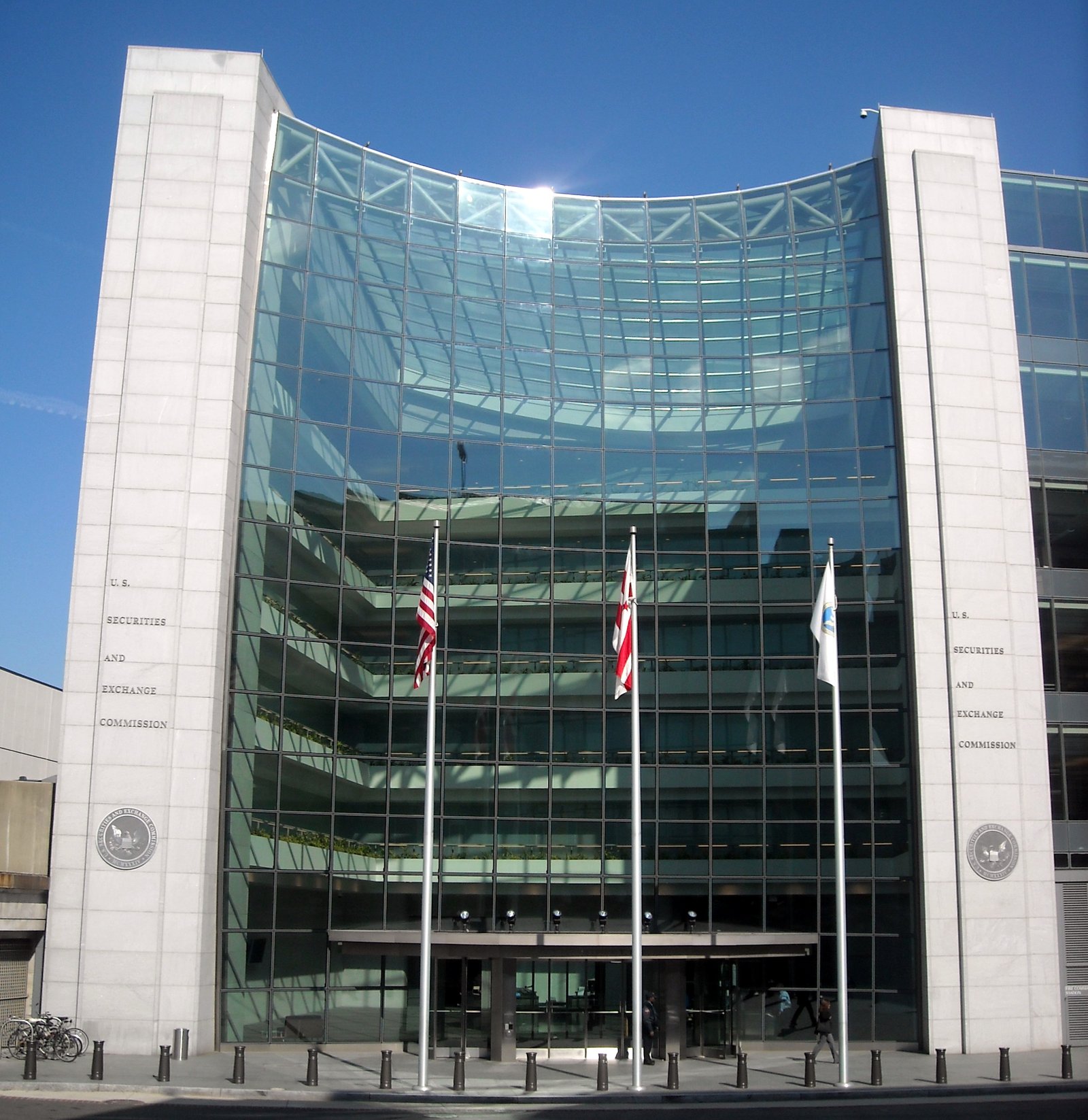
Featured image: U.S. Securities and Exchange Commission headquarters, Washington, D.C. Photo by AgnosticPreachersKid via Wikimedia Commons, CC BY-SA 3.0.
