

The Investigative Journal’s weekly review of Inspector General reports, whistleblower developments, and False Claims Act enforcement. All items are drawn from public records linked below.
This week’s oversight docket runs from a record-setting kickback resolution in Massachusetts to an escalating dispute over the independence of the Interior Department’s watchdog office. The common thread: the machinery of government accountability — Inspectors General, qui tam whistleblowers, and congressional referrals — continued to generate results and controversy in roughly equal measure.
Interior’s Watchdog Office Becomes the Story
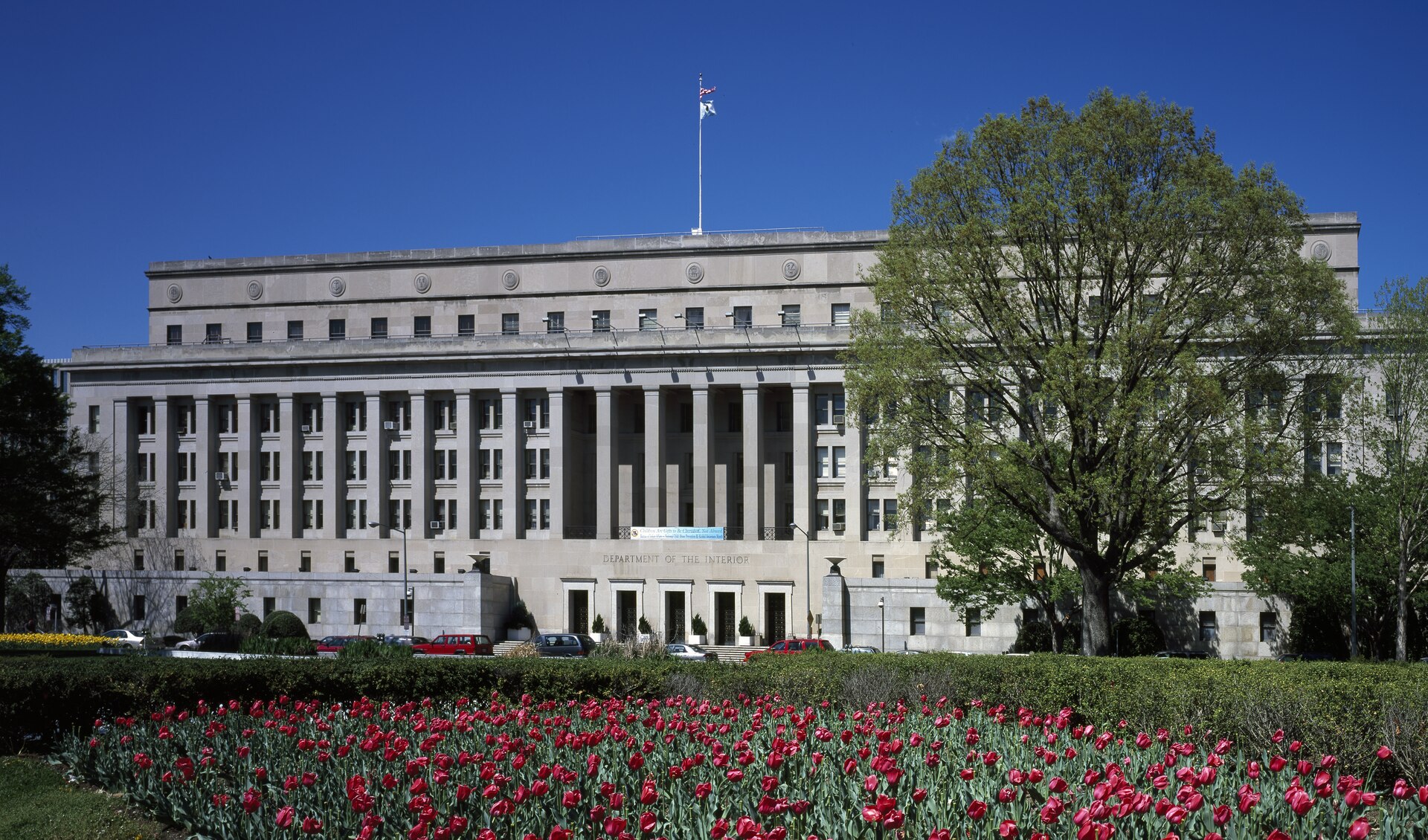
The Department of the Interior’s Office of Inspector General, which has operated without a Senate-confirmed Inspector General since January 2025, spent the week at the center of an independence dispute. On August 4, former Interior Inspector General Mark Lee Greenblatt published a statement responding to reports that Dennis Kirk — a former senior personnel official and co-author of the federal workforce chapter of Project 2025 — had been placed inside the OIG. Greenblatt, who was among the Inspectors General dismissed in January 2025, wrote that installing a political appointee inside an independent oversight office creates a conflict that erodes public confidence in the office’s work. According to reporting by Public Domain, the OIG declined to confirm the hire, and no official announcement has been made — a point worth underscoring, since the personnel move itself remains unconfirmed by the department.
Congressional interest compounded quickly. On August 5, House Natural Resources Committee Democrats issued a statement objecting to the reported placement, and Senators Sheldon Whitehouse and Martin Heinrich asked Acting Inspector General Caryl Brzymialkiewicz to examine how Interior handled evidence in the Lincoln Memorial Reflecting Pool vandalism case. Court filings in that matter indicate that on July 31, U.S. Attorney Jeanine Pirro moved to dismiss the felony vandalism charge against David Hearn, telling the court that prosecutors would not have sought an indictment had the department turned over evidence already in its possession; a federal judge dismissed the charge on August 6, according to the Washington Post. Separately, POLITICO reported August 7 that three Interior staffers described routine document shredding and use of disappearing messages at the department; Interior has characterized meetings flagged by ethics reporters as personal in nature, and the allegations remain just that — allegations, not findings. The broader context, per the Partnership for Public Service, is that more than three-quarters of presidentially appointed IG positions remain vacant, leaving acting officials to referee disputes of exactly this kind.
Veloxis Pays $46 Million — the Largest Sunshine Act Recovery on Record
The Justice Department announced August 10 that Veloxis Pharmaceuticals, a Cary, North Carolina drug manufacturer, agreed to pay more than $46 million to resolve criminal and civil allegations that it paid kickbacks — lavish meals, resort stays, and sham consulting fees — to induce prescriptions of Envarsus XR, a kidney-transplant immunosuppression drug. The resolution includes a deferred prosecution agreement with a criminal penalty above $10 million, a $34.45 million civil False Claims Act settlement, and a $1.55 million penalty for failing to report physician payments to CMS — which DOJ says is the largest Open Payments (“Sunshine Act”) recovery since the law’s 2010 enactment.
Two details merit attention. First, per the settlement documents, Veloxis admitted it concealed payments by falsifying expense reports — adding phantom attendees to dinners and omitting physician names to duck Sunshine Act reporting. Second, the case originated in part from a qui tam whistleblower suit filed in the District of Massachusetts in 2020, and the investigation drew on five separate Inspector General offices — HHS-OIG, the Defense Criminal Investigative Service, OPM OIG, VA OIG, and USPS OIG — alongside the FBI. Veloxis also entered a five-year Corporate Integrity Agreement with HHS-OIG. The scale of the coordination is a reminder that the IG community’s investigative capacity, whatever its current leadership vacancies, remains formidable.
AVIC-Linked Aerospace Firm Returns $11.8 Million in PPP Funds
On August 11, DOJ announced that Continental Aerospace Technologies, an Alabama-based aircraft engine maker, agreed to pay $11,772,680 to resolve allegations that it obtained a Paycheck Protection Program loan for which it was ineligible. According to the department, Continental was at the time part of a multinational group partially owned by Aviation Industry Corporation of China (AVIC) — itself wholly owned by an arm of the Chinese state — and PPP rules barred both government-owned applicants and companies exceeding size standards once global affiliates were counted. The claims are allegations only; there has been no determination of liability.
The whistleblower angle is notable: the settlement resolves two qui tam suits, and one relator, GNGH2 Inc., will receive $1,765,902 of the recovery. Serial pandemic-fraud relators have become a fixture of PPP enforcement, and this case — five years after the program closed — filings indicate the statute of limitations runway still has distance left. The SBA’s Office of Inspector General assisted the investigation.
Navy Wire Supplier Settles for $1 Million After Self-Disclosure
Also on August 10, Judd Wire Inc. of Turners Falls, Massachusetts agreed to pay $1,014,000 to resolve allegations that, from September 2011 to August 2021, it failed to perform tests required under 29 wire and cable specifications for products used by the U.S. Navy. The government acknowledged that Judd Wire voluntarily disclosed the lapses, cooperated, and remediated — earning formal cooperation credit that likely reduced the settlement figure substantially.
The case is small in dollars but significant as a signal: DOJ and the Navy’s Acquisition Integrity Office are advertising the self-disclosure pathway to defense suppliers, and the contrast with contested qui tam litigation is deliberate. For a decade of untested military wire, a seven-figure resolution with no admission of liability is a comparatively soft landing — records suggest the department wants contractors to notice.
SEC Whistleblower Awards: Totals Up, Typical Award Sharply Down
An analysis published August 10 by Whistleblower Network News, based on the SEC’s public final orders, finds the Commission has awarded more than $88 million to roughly 27 whistleblowers so far in fiscal year 2026 — up from about $60 million in all of FY2025, but with a striking skew: nearly 90 percent of the total went to just three individuals ($50 million, $20 million, and $7 million), while 14 whistleblowers received less than $500,000 each. By comparison, the program paid $600 million to 68 whistleblowers in FY2023.
Whistleblower advocates argue the shrinking typical award undercuts the incentive structure Congress built into Dodd-Frank, which contemplated awards of 10 to 30 percent of sanctions precisely because insiders risk their careers by coming forward. The National Whistleblower Center’s Stephen Kohn called the current pattern of small awards and technical denials “self-defeating.” The counterpoint, which the data does not yet resolve, is that award size tracks sanction size — smaller enforcement recoveries mechanically produce smaller awards. Either way, the trendline is one for compliance officers and securities lawyers to watch into FY2027.
Grassley-Fetterman Bill Would Triple the CFTC Whistleblower Fund Cap
Senators Chuck Grassley and John Fetterman have introduced the CFTC Whistleblower Protection and Program Improvement Act of 2026, with Senators Susan Collins and Raphael Warnock cosponsoring — a rare four-corner bipartisan lineup for financial-regulatory legislation. As reported this week, the bill would raise the Customer Protection Fund cap from $100 million to $300 million, make permanent the account funding the CFTC Whistleblower Office, expedite award processing, and close a court-created loophole that has denied awards when a sanctioned company declares bankruptcy.
The fiscal mechanics matter here. The CFTC program has paid over $430 million to whistleblowers and generated more than $3.7 billion in sanctions since 2014 — money collected from wrongdoers, not appropriated by taxpayers. But because the fund is capped at $100 million and overflow reverts to Treasury, large awards can leave the office unable to pay new claims or fund operations. The bill sits with the Senate Agriculture Committee; its progress will be a test of whether whistleblower-program plumbing can move in an election year.
HHS OIG: Home Health Billing and Payment-Integrity Compliance
The HHS Office of Inspector General’s August output included a provider compliance audit of Deistic Home Health Care, Inc. published August 6, which found the agency complied with Medicare billing requirements on 63 of 100 sampled claims; the remaining 37 claims produced $8,332 in net overpayments in the sample. The report notes the broader stakes: the 2023 improper payment error rate for home health claims was 7.7 percent — roughly $1.2 billion. Separately, OIG reported that HHS met many requirements but did not fully comply with the Payment Integrity Information Act for fiscal year 2025 — the statute that forces agencies to measure and reduce improper payments across programs.
Individually modest, these reports matter in aggregate: home health remains one of Medicare’s most error-prone benefit categories, and a department that administers more than a trillion dollars annually remaining out of full PIIA compliance is a structural finding, not a rounding error.
Also on the Radar
The DOJ Office of the Inspector General released two grant audits on August 6 examining Office of Justice Programs victim assistance funds: one covering subawards by Nevada’s Division of Child and Family Services to United Citizens Foundation, Inc. of Las Vegas, and another covering grants to the North Dakota Department of Corrections and Rehabilitation. Victim-assistance grant audits rarely make headlines, but they are the routine pressure-testing that keeps subgrantee spending honest. For context on the enforcement backdrop, DOJ’s January statistics release showed False Claims Act settlements and judgments exceeded $6.8 billion in FY2025 — a single-year record — with whistleblowers filing 1,297 qui tam suits, also a record.
What Warrants a Deeper Look
Three threads from this week merit sustained TIJ attention. First, the Interior OIG situation: the office is fielding at least five congressional investigation requests while its own staffing and independence are in dispute — whether those referrals move, stall, or disappear over the next quarter is a measurable test of the acting-IG system, and the department’s formal response to the Whitehouse-Heinrich letter should be tracked. Second, the identity and track record of GNGH2 Inc., the corporate relator collecting $1.77 million in the Continental Aerospace settlement — serial-relator business models in pandemic fraud enforcement deserve scrutiny on both effectiveness and incentives grounds. Third, the SEC award-size data: if the median award continues to fall while tips hold steady, the program’s deterrence theory is being live-tested, and FY2026’s year-end report to Congress will be the document to parse. We will follow all three.
Corrections and responses: The Investigative Journal contacted no individuals for this digest; all statements are drawn from public records and published reports linked above. Parties described in settlement announcements resolved allegations without determinations of liability except where admissions are noted. Responses from any party named above will be published upon receipt.
Featured image: Main Interior Building, Washington, D.C. Photo: Carol M. Highsmith, Library of Congress (public domain).