

Federal Register Watch is The Investigative Journal’s daily review of the rules, proposed rules, and notices that move policy — and money — in Washington.
The Federal Register’s Monday, August 17, 2026 issue runs 176 pages and carries 84 documents from 34 agencies: five final rules, eight proposed rules, 70 notices, and one presidential document. The most consequential item comes from the Commerce Department, where the National Oceanic and Atmospheric Administration has formally opened the environmental review of a deep-sea mining exploration license sought by The Metals Company — a proceeding with implications for critical-mineral supply chains, ocean policy, and the reach of a 46-year-old statute that has sat largely dormant. Below, the entries that matter most, with comment deadlines for readers who want a say.
1. NOAA opens environmental review of The Metals Company’s “USA-B” seabed mining license
NOAA announced its intent to prepare an Environmental Impact Statement for the proposed issuance of an exploration license to The Metals Company USA, LLC for an area the company designates “USA-B” (Docket No. 260707-0164). According to the notice, the license — sought under the Deep Seabed Hard Mineral Resources Act of 1980 (DSHMRA) — would authorize ten years of seabed mining exploration in an area beyond national jurisdiction, including vessel and autonomous-vehicle operations, sonar use, and the deployment of box corers to sample the ocean floor.
The filing marks the start of formal scoping under the National Environmental Policy Act, and it is the clearest signal yet that the administration’s push to revive DSHMRA — a statute that operates outside the international licensing regime run by the International Seabed Authority, to which the United States does not belong — is moving from paper to process. The April 2025 executive order on offshore critical minerals directed agencies to expedite review of seabed mineral applications, and polymetallic nodules of the kind found in the central Pacific are rich in nickel, cobalt, copper, and manganese — inputs for batteries and defense manufacturing where records show China dominates midstream processing. Supporters frame a domestic licensing pathway as a supply-chain hedge; critics, including several ISA member governments and marine-science organizations, have argued that unilateral licensing in international waters undercuts the treaty framework and risks harm to little-studied abyssal ecosystems. The EIS process now underway is where those disputes get an official docket.
Comment deadline: NOAA says it will consider written comments received by September 16, 2026. The notice also invites input under the National Historic Preservation Act.
2. CDC renews public-health order suspending entry of certain migrants
The Centers for Disease Control and Prevention published an order continuing the suspension of the right to introduce certain persons from countries where a quarantinable communicable disease exists (Docket No. CDC-2026-0892). The order, issued under sections 362 and 365 of the Public Health Service Act, took effect at 5:00 p.m. EDT on August 12, 2026, and runs through 4:59 p.m. EDT on September 11, 2026, unless amended or rescinded sooner, according to the notice.
These are the same statutory provisions that underpinned the border expulsion policy commonly known as Title 42 between 2020 and 2023, and the “continuing” language indicates this is a renewal of an existing suspension rather than a new action. The short, roughly 30-day term suggests a rolling series of renewals subject to the CDC Director’s discretion — which makes the public docket one of the few places to track the policy’s evolution. The published order text contains the operative details on scope and covered populations; the notice itself carries a comment period, a procedural opening for supporters and opponents alike to build a record.
Comment deadline: written comments must be received on or before September 1, 2026.
3. NHTSA proposes dropping two legacy crash tests from the 5-star rating program
The National Highway Traffic Safety Administration is requesting comment on removing two test procedures from the New Car Assessment Program — the consumer-facing regime behind window-sticker star ratings (Docket No. NHTSA-2026-1651). On the block: the Dynamic Rollover Resistance Test, known as the “Fishhook” maneuver, and the Side Air Bag Out-of-Position testing protocols. The agency states that these program elements “have achieved their original safety goals” and that the change would focus resources on crash scenarios and technologies with the greatest remaining potential for injury reduction.
The notice also proposes updates to the mid- and long-term components of NCAP’s 10-year roadmap. The practical question for consumers and automakers is whether retiring legacy tests trims genuinely obsolete requirements or removes public data points that still discipline vehicle design — precisely the kind of tradeoff the comment record is meant to surface. Fleet safety advocates, insurers, and manufacturers all have stakes here.
Comment deadline: October 16, 2026.
4. FDA finalizes down-classification of cancer companion diagnostics — and proposes two more device rollbacks
The Food and Drug Administration issued a final order reclassifying in situ hybridization (ISH) test systems used with corresponding approved oncology therapeutics from class III to class II (Docket No. FDA-2025-N-1243). The change moves these companion diagnostics — product codes NYQ, MVD, OWE, and PNK — from the premarket-approval pathway to the lighter-touch 510(k) premarket notification route, subject to newly established special controls the agency says provide reasonable assurance of safety and effectiveness. The order is effective September 16, 2026.
The same issue carries two companion proposals pointing in the same deregulatory direction: a proposed reclassification of diagnostic endoscopic light source systems, to be renamed cystoscopic systems intended as an aid for detecting bladder cancer (Docket No. FDA-2026-N-8249), and a proposed list of device accessories suitable for class I, the lowest-risk tier (Docket No. FDA-2025-N-6224). Taken together, the three documents show the agency systematically revisiting device classifications — a trend worth watching for its effects on both time-to-market and postmarket safety data. Comments on both proposals are due October 16, 2026.
5. IRS moves to drop a trust reporting requirement
The Internal Revenue Service proposed regulations (REG-109082-25) that would relieve certain trusts from filing Form 1041-A, the information return for trust accumulation of charitable amounts, in years when the trust’s only claimed charitable deduction flows through from a passthrough entity in which it owns an interest. The proposal would also clarify that split-interest trusts satisfy their filing obligations with Form 5227 rather than Form 1041-A.
It is a modest but real paperwork reduction for fiduciaries — and a data point in the broader deregulatory ledger this administration is assembling across Treasury. Filings indicate the change affects reporting only, not the underlying deductibility rules.
Comment deadline: written or electronic comments and requests for a public hearing must be received by October 16, 2026.
6. SNAP cost-sharing rule gets two more weeks of public comment
USDA’s Food and Nutrition Administration extended the comment period on its June 24, 2026 proposed rule revising federal-state administrative cost sharing in the Supplemental Nutrition Assistance Program (Docket No. FNS-2026-0595). The deadline moves from August 24 to September 8, 2026, “to give the public additional time to review the proposed rule,” according to the notice.
The underlying proposal implements changes to how the costs of running SNAP are split between Washington and the states — a shift with direct consequences for state budgets and, potentially, for how aggressively states administer eligibility. State human-services agencies and county governments are the parties most exposed; the extension is their window.
7. FERC opens scoping on Venture Global’s CP2 LNG expansion
The Federal Energy Regulatory Commission opened the environmental scoping period for the proposed CP2 LNG Expansion Project in Cameron Parish, Louisiana, and Jasper County, Texas (Docket Nos. CP26-530-000 and CP26-533-000). According to the notice, the expansion would add six liquefaction blocks and a 720-megawatt power plant at the CP2 terminal, raise peak liquefaction capacity by 11.7 million metric tonnes per annum, and boost the CP Express pipeline system’s capacity by roughly 1.9 million dekatherms per day, anchored by a new 227,000-horsepower compressor station in Jasper County.
The notice includes FERC’s standard advisory to landowners that, if the project is approved, the Natural Gas Act conveys eminent-domain rights for facilities certificated under section 7 — a recurring flashpoint in Gulf Coast pipeline fights. Public scoping sessions are set for August 25 in Cameron, Louisiana, and August 26 in Buna, Texas, both 4:30–6:30 p.m. CDT.
Comment deadline: scoping comments must reach the Commission by 5:00 p.m. Eastern on September 11, 2026.
On TIJ’s accountability beats
Four smaller entries intersect with beats this publication tracks closely. The Export-Import Bank disclosed an application for a long-term loan or guarantee exceeding $100 million (EIB-2026-0199) supporting development of critical mineral resources; comments received by September 11, 2026 go to EXIM’s board before final action — one of the few public checkpoints on nine-figure taxpayer-backed financing. Commerce’s International Trade Administration published final results of its antidumping review of aluminum extrusions from China, finding all 18 companies under review ineligible for separate rates and therefore part of the China-wide entity for the May 2024–April 2025 period — a decision importers will feel at the cash-deposit line. The State Department published Delegation of Authority No. 628, handing the Assistant Secretary for Economic, Energy, and Business Affairs the power to review and deny requests for reconsideration of sanctions designations — a quiet procedural change worth noting for anyone tracking how delisting petitions get decided. And the issue’s lone presidential document is Proclamation 11054, designating National Substance Use Primary Prevention Month.
All items above are drawn from the public record of the Federal Register issue of August 17, 2026; document links go to the unofficial FederalRegister.gov editions, which link to the official versions on govinfo.gov. Comments on open dockets can be filed at regulations.gov (or via FERC’s eFiling system for docket CP26-530-000). This digest describes agency filings and proposals; it does not allege wrongdoing by any party named.
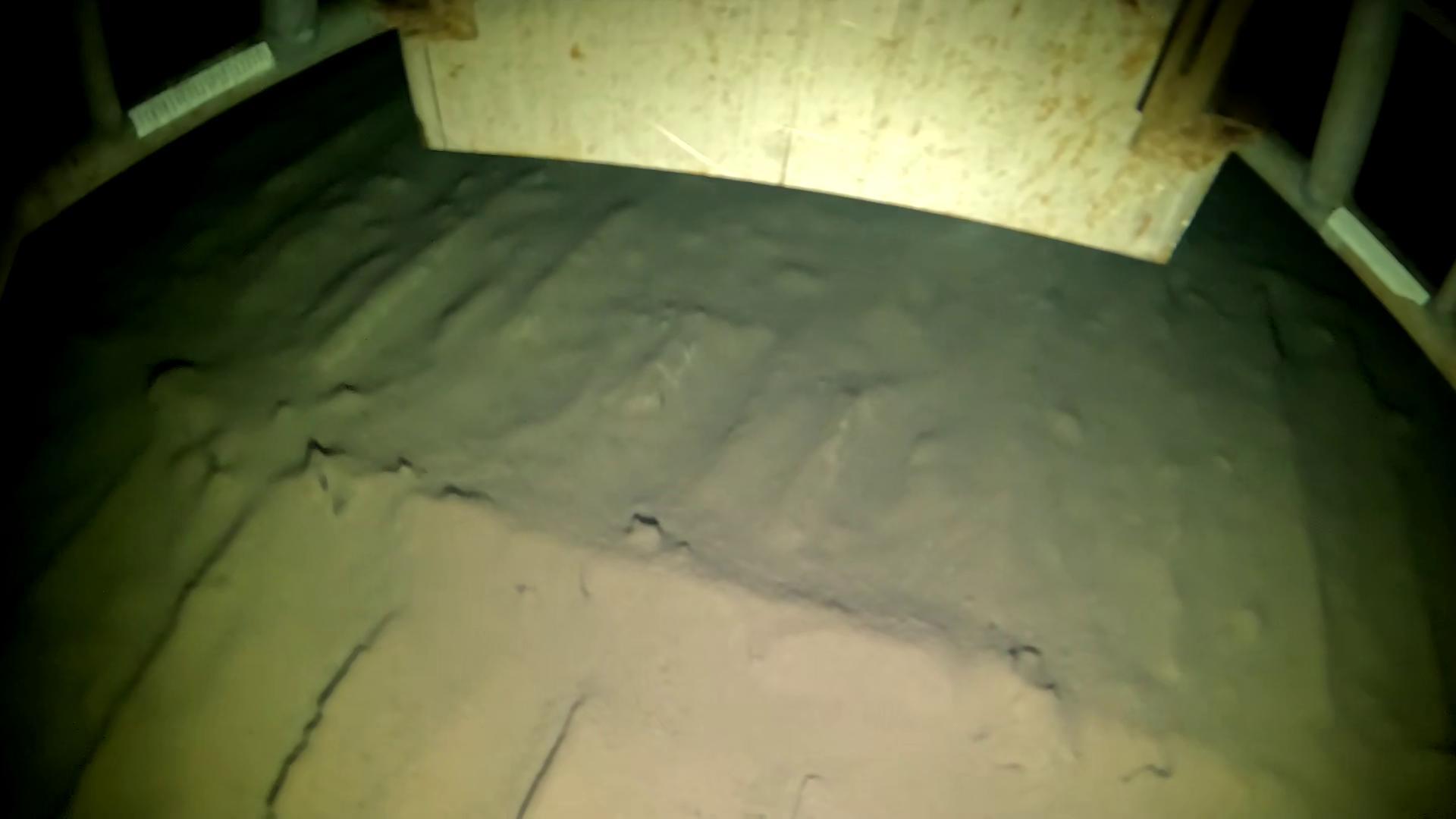
Featured image: A polymetallic nodule field on the abyssal Pacific seafloor, photographed during Ifremer’s EDEN campaign, showing traces of a 2021 nodule-collection trial by the robot Patania. Credit: Florian Besson / Pierre-Antoine Dessandier, Ifremer, CC BY 4.0, via Wikimedia Commons.
.jpg)