

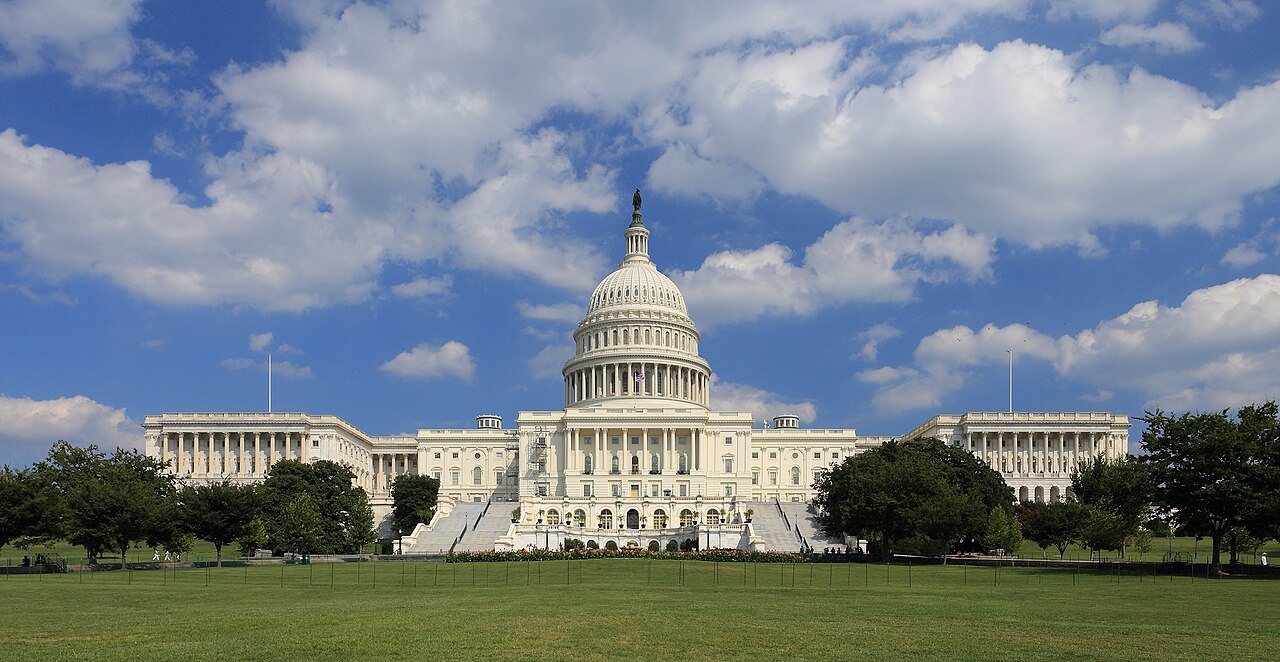
WASHINGTON — The Capitol opens the week of Aug. 17 in near-silence. The Senate’s published schedule calls for a pro forma session at 1:30 p.m. Monday — a gavel-in, gavel-out convening with no votes or debate expected — one of a string of brief sessions scheduled through early September. The House is likewise in its district work period, with the House calendar showing members back in Washington the week of Aug. 31. But the quiet is deceptive: the pre-recess blitz of Aug. 7–8 left a full docket of unfinished business, a hard fiscal deadline on Oct. 1, and several oversight tracks that continued to move during the break. Here is where congressional action stands, item by item, with links to the official record.
1. Stopgap funding bill heads back to the House with a Dec. 11 horizon
The Senate’s last major act before leaving town was passage of H.R. 6500, the Continuing Appropriations and Extensions Act, 2027, on a 90–6 vote on Aug. 7, according to the Senate floor record. The measure would fund the government at fiscal 2026 levels through Dec. 11 once the new fiscal year begins Oct. 1. An analysis by NARFE notes the amended bill carries targeted funding allocations and rescissions and delays implementation of the Office of Management and Budget’s overhaul of Uniform Guidance — the rulebook governing federal grant administration — until the same Dec. 11 date.
Because the Senate amended the House-passed text, the bill returns to the House for concurrence, per the Congress.gov bill record. That leaves a narrow runway: the House is scheduled back Aug. 31, and the Congress.gov appropriations status table for FY2027 shows the full-year bills far from complete. Cloture on the substitute amendment was invoked 91–6, with one senator voting present, according to the Senate leadership wrap-up — margins that suggest broad, bipartisan buy-in for avoiding a shutdown fight before the midterms, though final House action remains the open question.
2. Senate passes Russia-Iran sanctions package bearing Lindsey Graham’s name, 86–11
On Aug. 7 the Senate passed H.R. 5334, the legislative vehicle for the Lindsey O. Graham Sanctioning Russia and Iran Act of 2026, by a vote of 86–11, according to Roll Call and the Senate’s roll call vote record. As described in reporting by PBS News, the package would authorize the president to impose tariffs on the largest purchasers of Russian oil and natural gas — a list that includes China and India — and layers sanctions on senior Russian political and military leadership, financial institutions, and energy projects, alongside penalties aimed at Iran’s energy revenues.
The bill carries the name of the late Sen. Lindsey Graham (R-S.C.), who announced a negotiated framework with the White House on July 10 and died suddenly the following day, according to CBS News. The Hill reported that Ukrainian President Volodymyr Zelenskyy watched the late-July procedural vote from the Senate gallery on the day of Graham’s funeral. The measure now awaits House action; a bipartisan House companion was introduced by Reps. Michael McCaul (R-Texas) and Steny Hoyer (D-Md.), according to The Hill.
3. Blanche confirmed as attorney general, 50–49, in a 4:31 a.m. vote
In the early hours of Aug. 8, the Senate confirmed Todd Blanche as attorney general on a 50–49 vote, according to The Washington Post and The Hill. Reports indicate Republican Sens. Susan Collins (Maine) and Lisa Murkowski (Alaska) joined all Democrats in opposition, while Sen. Mitch McConnell (R-Ky.), who has been absent following a fall in June, did not vote. Blanche, who served on President Trump’s personal legal team before joining the Justice Department, had led the department in an acting capacity since April, per PBS News.
The confirmation capped a marathon session in which the Senate also confirmed 74 nominations en bloc on a 51–47 vote, according to the Senate leadership wrap-up — a reminder that the nominations calendar, not just legislation, drove the chamber’s late-night schedule before the break.
4. Photo-ID voting bill stalls on a 52–46 cloture vote
The Senate’s final roll call before recess came on S. 5271, a bill to amend the Help America Vote Act of 2002 to require photo identification for voting, including requirements tied to mail ballots. The official roll call shows the motion to invoke cloture on proceeding to the bill failed 52–46, short of the 60 votes required; the yes votes were all Republicans, and two senators did not vote. Supporters have signaled the measure will return in the fall, according to One America News, and the vote positions election administration as a live issue heading into the September work period.
5. CBO raises the FY2026 deficit projection to $2.1 trillion on weaker tariff receipts
During the recess itself, the Congressional Budget Office published its Monthly Budget Review for August 2026, and the numbers moved. CBO now projects the fiscal 2026 deficit at roughly $2.1 trillion — about $200 billion above its February projection — according to The Hill’s account of the report. The data shows the deficit for the first 10 months of the fiscal year totaled $1.8 trillion, about $169 billion more than the same period a year earlier.
The Hill reports the revision is driven largely by customs collections coming in below expectations after the Supreme Court’s February decision striking down tariffs imposed under emergency authorities, with CBO estimating 2026 tariff and customs receipts will run roughly $250 billion below earlier projections. For appropriators returning to a Dec. 11 funding cliff, the widening deficit forms the fiscal backdrop against which every spending decision this fall will be measured.
6. NDAA remains stalled: House-passed, Senate blocked, informal talks underway
The House passed H.R. 8800, the National Defense Authorization Act for Fiscal Year 2027, on a narrow 216–212 vote on July 22, according to Breaking Defense. The Senate Armed Services Committee completed its own markup in June, but the bill has not reached the Senate floor; Breaking Defense reports Democrats have blocked consideration amid disputes over defense spending growth and war policy, and that members have opened informal conference-style negotiations to reconcile the two versions, with final action possibly slipping to late autumn. The Congressional Budget Office has published its cost estimate for H.R. 8800, and CRS maintains a status tracker for the legislation. The annual defense bill has become law for more than six consecutive decades; whether that streak survives an election-year calendar crunch is now a genuine question for the fall.
7. Oversight watch: fundraising-platform probes and a contempt precedent
Two oversight threads relevant to this publication’s accountability beat continued to develop around the recess. First, the multi-committee investigation into online political fundraising platforms remains active. The House Judiciary, Administration, and Oversight Committees have issued subpoenas to individuals associated with ActBlue as part of an inquiry into whether platforms accepted fraudulent or foreign-sourced donations, according to committee releases, and committee chairmen earlier this year demanded compliance with outstanding subpoenas. Scrutiny runs in both directions: The Hill reports that Democratic ranking members have sought a transcribed interview and documents from the CEO of WinRed, the Republican platform, over foreign-donation screening. It bears emphasis that subpoenas and document demands are investigative steps, not findings; no tribunal has adjudicated wrongdoing by either platform, and both companies have contested aspects of the inquiries in prior public statements.
Second, the legal architecture behind congressional subpoena power was reinforced this summer. A Holland & Knight analysis notes that on July 21 the D.C. Circuit affirmed the criminal contempt-of-Congress conviction of former White House adviser Peter Navarro — a ruling that strengthens committees’ hands as enforcement fights over pending subpoenas, including in the fundraising-platform probe, move toward the fall.
Looking ahead
The near-term calendar, per official schedules: the Senate holds pro forma sessions Aug. 17, 20, 24, 27 and 31, and Sept. 1 and 4, before returning Monday, Sept. 14, according to the published schedule — a cadence that, under the Supreme Court’s Noel Canning framework, keeps any break shorter than the 10 days generally required before recess appointments become available. The House returns Aug. 31 for a one-week session, where the Senate-amended stopgap and the sanctions package await, before the Oct. 1 start of fiscal 2027. The Hill has reported that House leadership’s fall priorities also include additional defense funding, election-related legislation, and a proposed ban on stock trading by members of Congress. The Investigative Journal will track each of these threads — particularly the appropriations endgame, subpoena enforcement, and the fundraising-platform investigations — as members return.
Editor’s note: This digest is compiled from official sources — Congress.gov, Senate and House records, committee releases, and the Congressional Budget Office — supplemented by contemporaneous news reporting, with direct links provided for each item so readers can consult the primary record. Where investigations are described, allegations remain unproven unless otherwise noted, and the subjects of pending inquiries are presumed to have acted lawfully absent adjudicated findings.
Featured image: The U.S. Capitol, west front. Photo: Architect of the Capitol via Wikimedia Commons (public domain).