

Every Monday, The Investigative Journal surveys the public record — federal audits, inspector general findings, state auditor reports, FOIA releases, and declassified files — and flags the documents that deserve attention. This installment covers records made public during the week of August 10, 2026, along with several releases from the first days of the month that continued to draw scrutiny. Every item below links directly to the source document or the agency page hosting it.
Federal Audits: GAO
State Department housing standards for diplomats abroad haven’t been updated since 1991
The week’s most consequential federal audit may be GAO-26-107965, published August 10, which examined how the State Department houses more than 9,000 Foreign Service employees overseas. According to the report, State’s stated goal is to provide housing comparable to what an employee would occupy in the Washington, D.C., metropolitan area — yet the department has not updated its maximum housing space standards in 35 years. Over that same period, GAO notes, Washington-area housing has grown more expensive and smaller in square footage. The auditors’ conclusion is blunt: State “may be paying for larger residential units than necessary.”
The underlying data tells a more nuanced story. Records show State’s posts largely adhered to cost and space standards — 87 percent and 81 percent of units, respectively — and rental cost waivers produced overages of under 2 percent of annual lease costs in 2025, about $8.8 million of $497 million in total lease costs. But the report found waiver use varied by rank and family size, with executive officers and smaller families using cost and space waivers most frequently. GAO also found State’s method for measuring overseas housing does not align with the industry standards U.S. appraisers use, which makes the department’s own comparability benchmark difficult to apply.
GAO issued two recommendations — update the space standards and align the measurement method with domestic industry practice — and the report states that State concurred with both. The full 54-page report includes post-level detail from Côte d’Ivoire, France, and Thailand.
GAO investigators posed as pilots in covert calls to airport service providers
In a methodologically unusual review published August 11, GAO-26-108578, congressional auditors made covert phone calls — posing as recreational pilots — to 45 fixed base operators (FBOs) at 40 airports, then compared what they were told about fuel prices and service fees against what those businesses publish online. The review was required by the FAA Reauthorization Act of 2024.
The findings suggest fuel price transparency is largely working: prices were readily available online and generally matched what GAO was quoted by phone, with discrepancies usually under 50 cents per gallon. Required service fees were another matter — for FBOs that disclosed mandatory fees by phone, online information about those fees was limited. The report notes that FAA officials said they were unaware of any formal complaints, and FTC officials said they were unaware of any enforcement actions related to FBO price transparency. The 10-page report stops short of recommendations, but it puts a data point on the record for the next reauthorization debate.
Army depot maintenance, and the DOGE savings review that kept echoing
Also on August 10, GAO published GAO-26-108681, a descriptive review of Army depot maintenance workload, workforce, and challenges — worth a read for defense-industrial-base watchers as depot capacity debates continue on the Hill.
And while it was published August 6, just before this roundup’s window, GAO-26-108615 — “DOGE Wall of Receipts: More Transparency Needed on How Savings Are Derived from Contract, Grant, and Lease Terminations” — continued to generate reaction through the week. Federal News Network reported that GAO found 96 percent of DOGE’s claimed savings on federal grants could not be verified, and CNBC reported the review examined roughly $110 billion in claimed savings. Sens. Gary Peters and Richard Blumenthal, who released the report, characterized the figures as plagued by unreliable data and unexplained calculations; readers should note that framing is the senators’ own. The report itself is the primary record, and its core finding — that the published savings figures cannot be traced to verifiable documentation — is a transparency problem whoever holds the calculator.
Inspector General Findings
VA watchdog: tens of thousands of veterans’ mail packets wrongly written off, claimants “likely underpaid”
The Department of Veterans Affairs Office of Inspector General published a review of the Veterans Benefits Administration’s unidentifiable mail certification process on August 12, and its headline number deserves attention: of more than 164,000 unidentified mail packets in the Centralized Mail Portal sample the OIG examined, approximately 35,100 were incorrectly certified as unidentifiable even though the packets contained enough information to identify the claimants. As a result, the OIG concluded, “veterans and other claimants were likely underpaid.”
Mail certification sounds like plumbing, but in the benefits system it is the difference between a claim that gets processed and one that disappears. Documents wrongly marked unidentifiable can mean missed effective dates, delayed decisions, and underpayments that compound over years. The report merits a close read alongside VA OIG’s audit of program management for the Benefits Enterprise Platform modernization, published August 11, which evaluated whether VA’s overhaul of a mission-critical benefits-processing system complies with applicable legislation, VA policy, and federal standards.
The same office also released healthcare facility inspections for VA systems in Kansas City, Fort Harrison (Montana), Houston, and Honolulu on August 13–14, plus a hotline inspection of a patient discharge from the inpatient mental health unit at the Central Virginia VA Health Care System in Richmond — all available on the VA OIG reports page. Per the office’s public dashboard, VA OIG has published 159 reports with 659 recommendations and roughly $4.9 billion in monetary impact over the past 12 months — a reminder of how much oversight material this single office generates.
State Records
California posts its statewide federal compliance audit
The California State Auditor posted Report 2025-002 this month — the state’s annual federal compliance audit, containing the independent auditor’s reports on internal control over financial reporting and on compliance tied to the state’s Schedule of Expenditures of Federal Awards. Single audits rarely make headlines, but they are the primary public record of how a state spends federal money, and California’s version covers one of the largest federal-funds portfolios in the country. Program-level findings in these audits frequently seed later investigations; the office’s reports page hosts the full catalog.
Ohio’s semiweekly audit machine keeps producing findings for recovery
The Ohio Auditor of State releases audits twice weekly, and the office’s August 4 release advisory is a useful window into the cadence: dozens of local-government audits in a single batch, including a City of Lorain financial audit for 2023 flagged with findings for recovery — Ohio’s formal designation for public money identified as illegally expended, collected but unaccounted for, or otherwise owed back. The individual reports are searchable on the AOS audit search portal. For accountability reporters, state auditor release calendars like Ohio’s remain one of the most underused sources of documented, adjudicated findings about local government finances.
Declassified Documents & FOIA Access
Pentagon posts fifth batch of declassified UAP records
On August 7, the Pentagon released its fifth batch of declassified files on unidentified anomalous phenomena through the PURSUE database, according to CBS News — 41 new documents, images, and videos, including infrared footage and pilot accounts. The records reportedly originate from the Pentagon, FBI, CIA, State Department, and the Executive Office of the President, with the oldest dating to 1950. Whatever one makes of the subject matter, the release is a substantial declassification event on a rolling schedule, and the documents’ provenance across five agencies makes them a useful test case for how consistently redaction standards are being applied across government.
EPA’s FOIA archive migration restores access to 1.8 million records
According to the EPA’s FOIA page, updated August 12, roughly 1.8 million records previously released to the public through the retired FOIAonline system are now available through the agency’s FOIAXpress public access reading room. Archive migrations like this one matter more than they appear to: when FOIAonline shut down, years of previously released records became effectively unreachable for researchers who lacked the original files. Restored bulk access to past releases is a genuine win for records users — and a body of documents worth mining, since previously processed records carry no new FOIA wait time.
Records That Warrant a Closer Look
Three threads from this week’s records merit deeper investigation. First, the VBA mail certification review: the OIG’s finding that roughly 35,100 packets were wrongly certified invites obvious follow-ups — how far back does the practice extend, what is VA’s plan for retroactive payments, and what did the error rate look like at individual processing sites? The underlying sample data would be a natural FOIA target. Second, the DOGE savings documentation gap: the GAO report points to specific categories — contract, grant, and lease terminations — where claimed savings could be cross-referenced against USAspending and agency termination notices; TIJ has not yet independently reviewed the underlying data, and it deserves that review. Third, State’s overseas housing waivers: post-level waiver data showing which ranks and posts exceed standards, and by how much, is exactly the kind of record that rewards a systematic request.
Editor’s note: Every claim above is drawn from the linked public records or attributed press reporting. Where agencies responded to audit findings, those responses appear in the linked source documents — State concurred with both GAO recommendations in the housing report, and agency comment letters are appended to the IG reports cited. Characterizations by members of Congress are attributed to them and should be read as such.
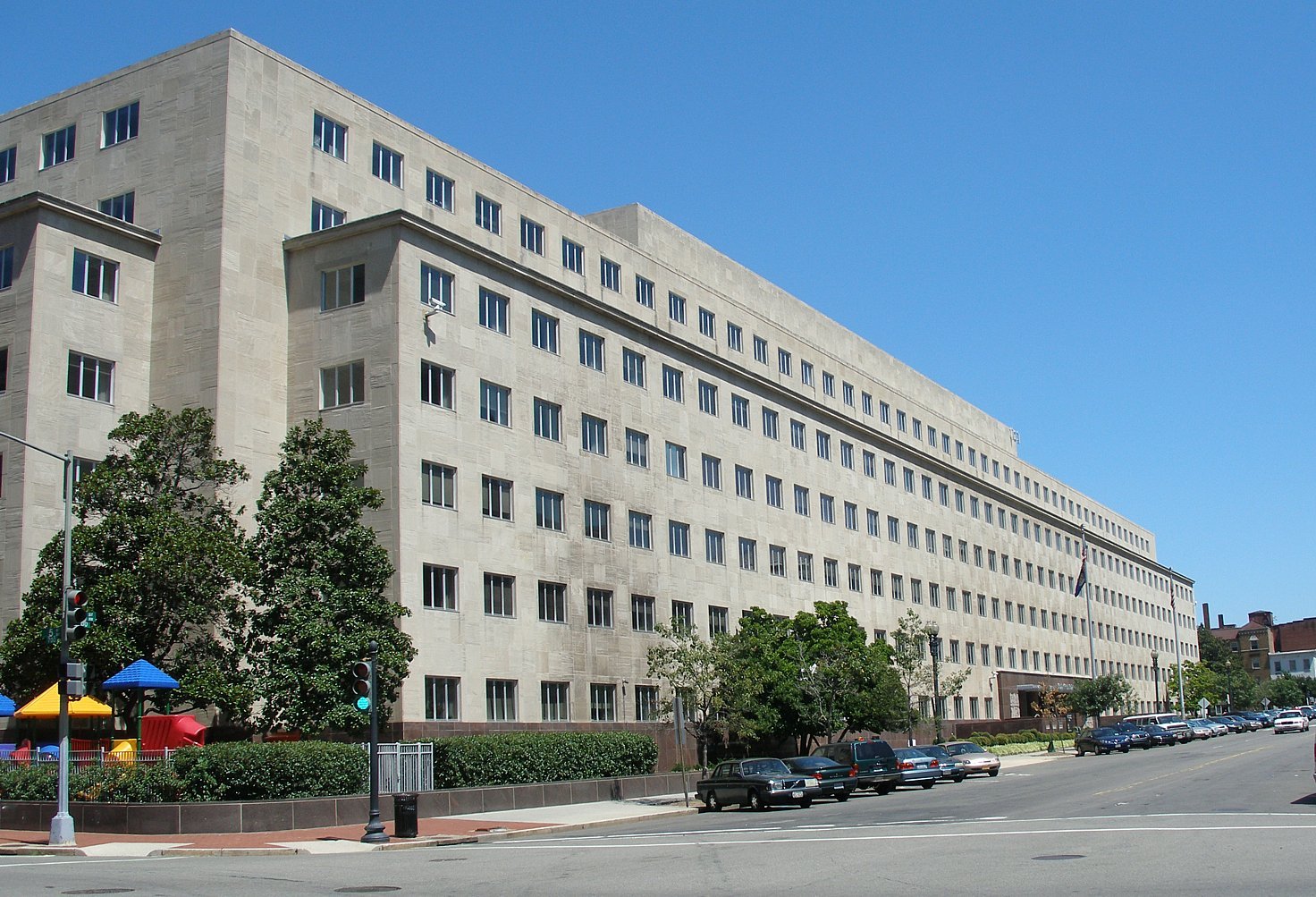
Featured image: U.S. Government Accountability Office headquarters, Washington, D.C. Photo by Coolcaesar via Wikimedia Commons, CC BY-SA 3.0.